

Worldly Christian vs. Spiritual Christian
Carnal or Christ-Centered?
“For to be carnally minded is death; but to be spiritually minded is life and peace.”
— Romans 8:6 (KJV)
One of the most misunderstood realities in modern Christianity is the assumption that salvation automatically produces spiritual maturity. Scripture simply does not support that idea. The Apostle Paul, writing under inspiration, made it unmistakably clear that a believer can be genuinely saved and yet live in a way that is indistinguishable from the world. This tension—between position and practice, between identity and behavior—forms the heart of the distinction between a worldly Christian and a spiritual Christian.
The issue is not whether Christ has saved a person. The issue is whether that person is walking in the truth of what Christ has already accomplished.
Paul’s rebuke of the Corinthians exposes this reality with uncomfortable clarity. He did not question their salvation. He called them “brethren.” Yet he described them as “carnal,” “babes,” and spiritually immature. Their problem was not unbelief—it was carnality. They were saved by grace, but they were living as though grace had never reshaped their thinking.
This distinction matters profoundly in the present Dispensation of Grace. God is not dealing with believers today under law, fear, or ritual obligation. He is forming a Body—grounded in grace, instructed by Pauline revelation, and called to walk by faith in a completed work. When believers fail to understand this, the result is confusion, compromise, and spiritual stagnation.
The contrast between a worldly Christian and a spiritual Christian is not found in church attendance, religious vocabulary, or outward morality. It is found in mindset, motivation, and submission to truth.
At the foundation of this contrast lies identity. Paul consistently begins with who the believer is before addressing how the believer should live. Christianity does not start with behavior modification; it begins with a radical positional change. At the moment of salvation, the believer is placed into Christ, blessed with all spiritual blessings, and accepted in the Beloved. This position is not earned gradually—it is granted instantly.
Yet many believers live as though this positional truth were theoretical rather than transformative. The worldly Christian knows they are saved, but still thinks and lives as though they are fundamentally unchanged. Old patterns of fear, performance, and self-reliance remain dominant. Though no longer in Adam, they continue to live as though Adam still defines them.
This is why worldly Christianity is so exhausting. When identity is misunderstood, effort replaces rest. The believer tries to “be spiritual” rather than living from who they already are. Life becomes a cycle of striving, failing, resolving, and repeating. Assurance weakens, joy fades, and grace is quietly replaced with pressure.
The spiritual Christian, by contrast, lives from a settled understanding of identity. They know they are in Christ—not striving to get there, not hoping to remain there, but permanently positioned there by grace. This understanding changes everything. Life is no longer driven by insecurity but by gratitude. Obedience flows from acceptance, not the other way around. Faith replaces fear because identity is settled, not questioned.
From identity flows perspective. Paul teaches that the battle between carnality and spirituality is fundamentally a battle of the mind. “They that are after the flesh do mind the things of the flesh,” he writes, while those who are spiritual set their minds on the things of the Spirit. The difference is not intelligence or sincerity—it is focus.
The worldly Christian’s mind is shaped primarily by the same influences shaping the culture around them. Entertainment, social media, popular opinion, and emotional reaction quietly form their worldview. Scripture may be respected, but it is not dominant. Spiritual decisions are often reactive rather than reflective, driven by circumstances rather than doctrine.
This mindset produces instability. When circumstances are favorable, faith appears strong. When circumstances shift, anxiety rises. Peace becomes conditional. Joy fluctuates. The believer is saved, yet continually unsettled.
The spiritual Christian, however, is intentional about renewing the mind. Paul’s exhortation to “set your affection on things above” is not poetic language—it is practical instruction. The spiritual Christian learns to interpret life through truth rather than emotion. Scripture becomes the lens through which circumstances are understood, not the other way around.
This does not remove hardship, but it reframes it. Trials are no longer interpreted as evidence of God’s displeasure but as opportunities to trust grace. Stability grows because the mind is anchored to eternal truth rather than temporal conditions.
Perspective inevitably shapes priority. What a believer values most will determine how they invest time, energy, and affection. Worldly Christians often structure life around comfort, success, and immediate satisfaction. While they may acknowledge eternity, their daily decisions are governed largely by present convenience. Spiritual goals are postponed until they feel less costly.
Paul describes this mindset soberly when he speaks of those who “mind earthly things.” It is possible to be doctrinally correct about heaven while functionally living for earth.
The spiritual Christian lives differently because eternity is not theoretical—it is central. Their citizenship is in heaven, and that reality influences their choices. This does not mean abandoning responsibilities or rejecting earthly enjoyment, but it does mean ordering life around Christ rather than self. Comfort becomes secondary to calling. Obedience is valued more than applause. Temporary loss is weighed against eternal gain.
Priority reveals allegiance. Where Christ is first, decisions change.
Power is another dividing line between carnality and spirituality. Worldly Christians often rely heavily on personal strength—discipline, emotion, motivation, and willpower. When these resources are strong, the Christian walk feels manageable. When they weaken, failure follows.
This produces inconsistency. Spiritual highs are followed by deep discouragement. Victory feels fragile because it depends on fluctuating human resources. The flesh, no matter how sincere, cannot sustain spiritual living.
Paul’s answer is not self-improvement but Spirit-dependence. “Walk in the Spirit,” he writes, “and ye shall not fulfil the lust of the flesh.” The spiritual Christian learns that victory is not achieved by trying harder, but by trusting deeper. Dependence on the indwelling Spirit replaces confidence in personal resolve.
This dependence produces consistency rather than perfection. Growth becomes steady, not dramatic. Obedience flows from truth rather than emotion. Life becomes less reactive and more rooted.
As power shapes the walk, practice reveals it. Worldly Christianity often mirrors the culture it inhabits. Compromise is justified, sin is excused, and holiness is viewed as extreme or outdated. Grace is misunderstood as permission rather than transformation.
Paul dismantles this misunderstanding. Grace, he teaches, does not excuse sin—it trains believers to deny it. Transformation replaces conformity. The spiritual Christian does not reject sin out of fear of judgment, but out of love for Christ. Obedience becomes a response to grace, not a requirement for acceptance.
This difference is visible over time. Worldly Christians may remain spiritually stagnant for years, active but unfruitful. Spiritual Christians, though imperfect, mature steadily. Their lives increasingly reflect Christ’s character, not because they are trying to impress God, but because they are walking in truth.
Nowhere is the contrast between worldly and spiritual Christians more evident than in how Scripture is understood. Worldly believers often experience confusion—mixing law and grace, Israel and the Church, commands and doctrine. The Bible feels contradictory because it is not rightly divided.
This confusion leads to frustration. Assurance weakens. Growth stalls. The Christian life feels heavy because Scripture is being applied incorrectly.
The spiritual Christian learns to rightly divide the Word of truth. Paul’s unique apostleship to the Gentiles is understood. The mystery revealed to the Body of Christ becomes clear. Scripture harmonizes rather than conflicts. Grace is no longer vague—it becomes precise, powerful, and liberating.
From clarity flows fruit. Worldly Christianity often produces activity without impact. Programs multiply, but spiritual maturity remains limited. Works of the flesh—envy, strife, division—surface even in religious environments.
Spiritual Christianity produces fruit organically. Love, joy, peace, patience, and spiritual discernment grow naturally from a life rooted in Christ. The focus shifts from self-expression to God’s glory. The believer becomes a vessel rather than a performer.
Peace, finally, becomes the distinguishing mark. Worldly Christians are often anxious, unsettled, and reactive. Circumstances dictate emotional stability. Fear quietly governs decisions.
Spiritual Christians rest. Justified by faith, they possess peace with God. Their inner life is anchored, not because life is easy, but because Christ is sufficient. Peace becomes a constant rather than a condition.
This peace is sustained by hope. Worldly Christians often cling tightly to temporal joy, fearing loss because their hope is rooted here. Spiritual Christians live with anticipation. The blessed hope—the return of Christ—shapes endurance, courage, and perspective. Eternity is not an escape; it is an anchor.
In the end, the difference between a worldly Christian and a spiritual Christian is not salvation. Both are saved. Both are loved. Both are secure.
The difference is submission.
Salvation is instant. Spiritual growth is intentional. God is not calling believers in this Dispensation of Grace to religious performance, but to spiritual maturity grounded in the revelation given through Paul.
A worldly Christian is saved but stagnant.
A spiritual Christian is saved and surrendered.
The question is not whether you belong to Christ.
The question is whether you are walking in who you already are.
“Christ in you, the hope of glory.”
— Colossians 1:27
Related posts:
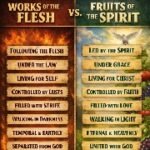 𝗪𝗢𝗥𝗞𝗦 𝗢𝗙 𝗧𝗛𝗘 𝗙𝗟𝗘𝗦𝗛 𝘃𝘀 𝗙𝗥𝗨𝗜𝗧𝗦 𝗢𝗙 𝗧𝗛𝗘 𝗦𝗣𝗜𝗥𝗜𝗧
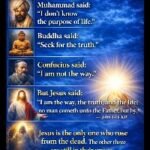 𝗝𝗘𝗦𝗨𝗦 𝗖𝗛𝗥𝗜𝗦𝗧: 𝗧𝗛𝗘 𝗢𝗡𝗟𝗬 𝗥𝗜𝗦𝗘𝗡 𝗥𝗘𝗗𝗘𝗘𝗠𝗘𝗥
 𝗪𝗛𝗢 𝗜𝗦 𝗝𝗘𝗦𝗨𝗦?
 𝗩𝗔𝗟𝗘𝗡𝗧𝗜𝗡𝗘’𝗦 𝗗𝗔𝗬: 𝗟𝗢𝗩𝗘 𝗨𝗡𝗗𝗘𝗥 𝗚𝗥𝗔𝗖𝗘 𝗢𝗥 𝗟𝗨𝗦𝗧 𝗨𝗡𝗗𝗘𝗥 𝗧𝗛𝗘 𝗙𝗟𝗘𝗦𝗛?
 𝗠𝗨𝗛𝗔𝗠𝗠𝗔𝗗 𝗩𝗦. 𝗝𝗘𝗦𝗨𝗦 𝗖𝗛𝗥𝗜𝗦𝗧 — 𝗔 𝗠𝗔𝗧𝗧𝗘𝗥 𝗢𝗙 𝗧𝗥𝗨𝗧𝗛, 𝗡𝗢𝗧 𝗧𝗥𝗔𝗗𝗜𝗧𝗜𝗢𝗡
 𝗙𝗔𝗟𝗦𝗘 𝗙𝗥𝗜𝗘𝗡𝗗𝗦: 𝗧𝗛𝗘 𝗗𝗔𝗡𝗚𝗘𝗥 𝗢𝗙 𝗣𝗥𝗘𝗧𝗘𝗡𝗗𝗘𝗗 𝗙𝗘𝗟𝗟𝗢𝗪𝗦𝗛𝗜𝗣
 𝗧𝗛𝗘 𝗕𝗥𝗔𝗜𝗡 𝗠𝗨𝗦𝗧 𝗕𝗘 𝗪𝗔𝗧𝗘𝗥𝗘𝗗 𝗪𝗜𝗧𝗛 𝗧𝗛𝗘 𝗪𝗢𝗥𝗗 𝗢𝗙 𝗚𝗢𝗗 𝗗𝗔𝗜𝗟𝗬
 𝗧𝗛𝗘 𝗥𝗔𝗣𝗧𝗨𝗥𝗘: 𝗙𝗢𝗥 𝗕𝗘𝗟𝗜𝗘𝗩𝗘𝗥𝗦, 𝗡𝗢𝗧 𝗥𝗘𝗟𝗜𝗚𝗜𝗢𝗡
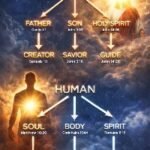 𝗚𝗢𝗗 𝗔𝗡𝗗 𝗠𝗔𝗡: 𝗥𝗜𝗚𝗛𝗧𝗟𝗬 𝗗𝗜𝗩𝗜𝗗𝗘𝗗 𝗗𝗘𝗦𝗜𝗚𝗡
 𝗜𝗡𝗙𝗟𝗨𝗘𝗡𝗖𝗜𝗡𝗚 𝗢𝗧𝗛𝗘𝗥𝗦 𝗧𝗢 𝗛𝗔𝗧𝗘: 𝗧𝗛𝗘 𝗦𝗣𝗜𝗥𝗜𝗧𝗨𝗔𝗟 𝗗𝗔𝗡𝗚𝗘𝗥
 𝗝𝗘𝗦𝗨𝗦: 𝗢𝗨𝗥 𝗖𝗢𝗠𝗣𝗟𝗘𝗧𝗘 𝗦𝗧𝗔𝗡𝗗𝗜𝗡𝗚 𝗜𝗡 𝗚𝗥𝗔𝗖𝗘
 𝗟𝗜𝗚𝗛𝗧 𝗦𝗛𝗜𝗡𝗘𝗦 𝗜𝗡 𝗧𝗛𝗘 𝗗𝗔𝗥𝗞𝗡𝗘𝗦𝗦
 𝗧𝗛𝗘 𝗦𝗣𝗜𝗥𝗜𝗧𝗨𝗔𝗟 𝗗𝗨𝗧𝗜𝗘𝗦 𝗢𝗙 𝗧𝗛𝗘 𝗖𝗛𝗥𝗜𝗦𝗧𝗜𝗔𝗡
 𝗣𝗥𝗔𝗬: 𝗔 𝗣𝗔𝗨𝗟𝗜𝗡𝗘 𝗣𝗔𝗧𝗧𝗘𝗥𝗡 𝗙𝗢𝗥 𝗧𝗛𝗘 𝗕𝗢𝗗𝗬 𝗢𝗙 𝗖𝗛𝗥𝗜𝗦𝗧