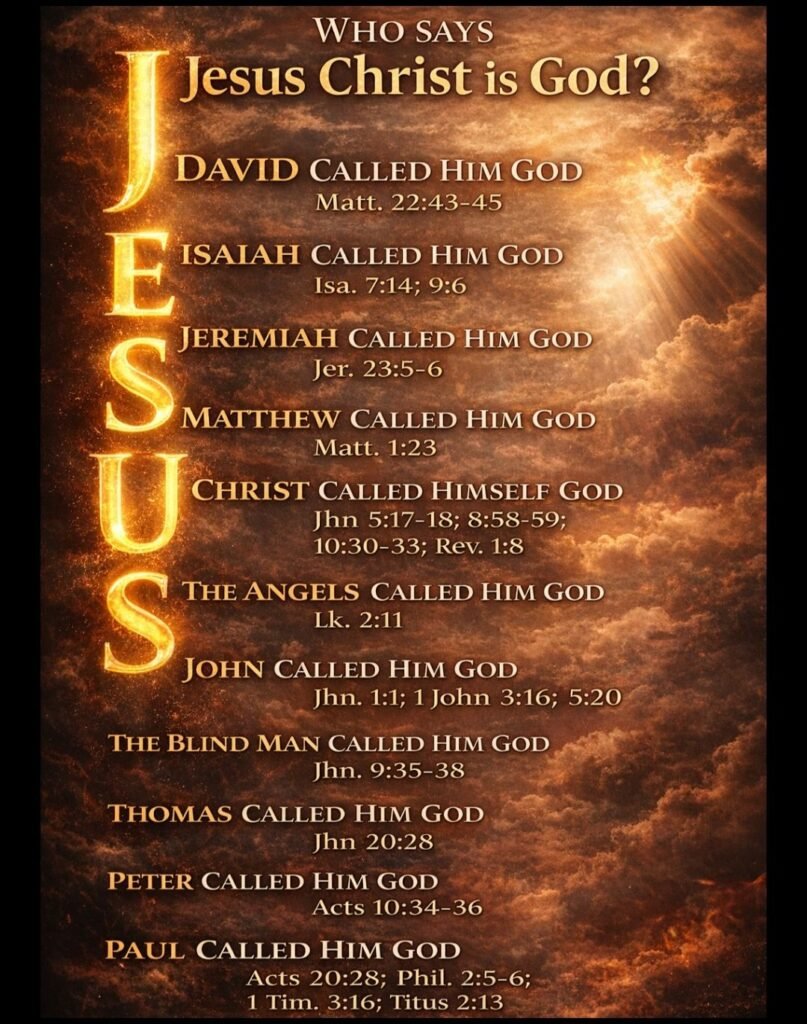
In the specialized field of theological forensics, the determination of the identity of Jesus Christ stands as the single most critical data point in the history of human existence. While contemporary society frequently prioritizes inquiries regarding denominational affiliation, moral performance, or religious tradition, a clinical audit of the Scriptural record reveals that these variables are secondary to the primary question of Christ’s ontological status. Under a rigorous dispensational framework, the evidence indicates that if Jesus Christ is not God, He possesses no judicial authority to save; however, if He is indeed God, He must be believed as the ultimate authority. This investigative report seeks to analyze the cumulative testimony regarding the deity of Christ, spanning from the prophetic program of Israel to the doctrinal clarity found in the Pauline mystery.
A foundational pillar of this inquiry begins with the prophetic ledger, where the prophets of Israel identified the coming Messiah not merely as a human deliverer, but as Jehovah Himself manifested in time. Isaiah 9:6 provides the administrative data, identifying the Child born and the Son given as “The mighty God” and “The everlasting Father.” This record establishes that the Messianic office was inextricably linked to divine nature. Furthermore, the prophecy in Isaiah 7:14 pronounces His name as “Immanuel,” which is interpreted as “God with us.” The investigation into the lineage of the Savior in Jeremiah 23:5–6 concludes that the “righteous Branch” raised unto David is to be called by the specific title: “THE LORD OUR RIGHTEOUSNESS.” In the Hebrew text, this title utilizes the Tetragrammaton, indicating that the prophetic program identified the Messiah as the self-existent God.
King David, acting as both a monarch and a prophet, provided a sophisticated witness to this divine identity by distinguishing the Messiah from a mere earthly descendant. In Psalm 110:1, David records a conversation within the Godhead: “The LORD said unto my Lord, Sit thou at my right hand, until I make thine enemies thy footstool.” The clinical significance of this statement was later highlighted by Christ Himself in Matthew 22:43–45, where He challenged the religious scholars of His day to explain how the Messiah could be David’s son if David, by the Spirit, called Him “Lord.” The investigative conclusion is that David discerned a divine authority in his descendant that transcended biological sonship. This is corroborated in Psalm 45:6, where the throne of this specific King is addressed directly: “Thy throne, O God, is for ever and ever.”
The celestial record adds an objective layer of evidence through the announcements of the angelic host. In the accounts surrounding the nativity, the heavenly testimony preceded human comprehension. Luke 2:11 documents the angelic proclamation to the shepherds: “For unto you is born this day in the city of David a Saviour, which is Christ the Lord.” The use of the title “Lord” (Kurios) in this context was understood as the Greek equivalent of the divine name. This was not a report of a great teacher’s birth but of the arrival of the Sovereign. The subsequent adoration by the heavenly host in Luke 2:13–14 confirms that the divinity of the infant was acknowledged by the principalities and powers of the spiritual realm long before it was doctrinally codified by the apostles.
Internal evidence from the life of Christ reveals that He made explicit claims to equality with the Father, claims that were legally recognized as blasphemy by those who rejected His deity. In John 8:58, Jesus employed the absolute divine self-designation: “Verily, verily, I say unto you, Before Abraham was, I am.” This statement was an overt reference to the “I AM” of Exodus 3:14, asserting His eternal pre-existence. The unity of essence was further clarified in John 10:30, where He stated, “I and my Father are one.” These claims were not misunderstood metaphors; the investigative record shows the observers took up stones to kill Him because He, being a man, made Himself God. In His high priestly prayer in John 17:5, He requested the restoration of the glory which He had with the Father “before the world was,” establishing a claim to eternal, uncreated existence.
The forensic proof of the resurrection serves as the final confirmation of these divine claims, a reality that forced even the most skeptical witnesses to a confession of Godhead. Thomas, who initially demanded physical evidence, reached a clinical conclusion upon touching the risen Lord. John 20:28 records his testimony: “And Thomas answered and said unto him, My Lord and my God.” Jesus did not correct Thomas for this attribution of deity but instead commended the faith of those who would believe this report without physical sight. The resurrection was the judicial act of the Father that vindicated the Son’s identity, proving that death could not hold Him because He was the Author of life.
John, the beloved disciple, justified the Godhead of Christ by opening his Gospel with a profound ontological declaration. John 1:1 states with clinical precision: “In the beginning was the Word, and the Word was with God, and the Word was God.” This record identifies Jesus as the “Word” (Logos) who was eternally joined with God yet distinct in personality. John concludes his first epistle with a summary of his investigative findings in 1 John 5:20, identifying Jesus Christ as “the true God, and eternal life.” For John, the deity of Christ was not an additive doctrine but the very foundation upon which the entire reality of eternal life was constructed.
Peter’s transitional ministry in the book of Acts maintained this focus on the supremacy of Christ. In Acts 10:36, Peter preached the word which God sent unto the children of Israel, identifying Jesus Christ with the universal summary: “He is Lord of all.” The investigation of Peter’s sermon reveals that he presented Christ as the one “ordained of God to be the Judge of quick and dead” (Acts 10:42). The authority to judge all of humanity is a prerogative reserved strictly for the Almighty, yet Peter presented this role as being vested in the man Christ Jesus. This transitional preaching bridges the prophetic expectation of a divine Messiah with the doctrinal revelation that would follow through the Apostle Paul.
The Apostle Paul, as the designated steward of the Mystery, provided the most comprehensive doctrinal clarification of Christ’s deity for the Body of Christ. In Titus 2:13, Paul instructs the believer to look for “that blessed hope, and the glorious appearing of the great God and our Saviour Jesus Christ.” Here, the “great God” and “Saviour” are grammatically linked to a single Person. Paul’s Christology is further detailed in Philippians 2:5–6, where he describes Christ as being “in the form of God” and thinking it “not robbery to be equal with God.” Furthermore, in Acts 20:28, Paul issues a charge to the elders of Ephesus, reminding them that the Church of God was purchased “with his own blood.” This creates a remarkable investigative conclusion: the blood shed on the cross was the blood of One whom the Scripture identifies as God.
Scripture settles the supremacy of Christ by describing the totality of the Godhead residing in Him. Colossians 2:9 states: “For in him dwelleth all the fulness of the Godhead bodily.” This is not a partial or delegated deity; it is the absolute fullness of the divine essence localized in a physical body. Colossians 1:16–17 provides the cosmological data, identifying Christ as the Sovereign Creator of all things, whether they be thrones, dominions, principalities, or powers. He is described as being “before all things,” and the one by whom “all things consist.” The investigative findings conclude that Christ is not a created being of high rank, but the uncreated Sustainer of the entire universe.
The dispensational clarity of this report identifies that while the programs of God change, the Person of Christ remains constant. In the Prophetic program, He was revealed as the Jehovah of Israel who would come to reign on David’s throne. In the Mystery program, He is revealed as the Head of the Body, the Church. He is the same Lord throughout both: the King of Israel, the Head of the Church, the Savior of sinners, and the Judge of all. The Pauline epistles anchor the believer in the understanding that our salvation is secure precisely because it was accomplished by the Lord of Glory Himself.
The theological landscape of the current dispensation is marked by a profound strategic complexity that remains largely unexamined by the secular world: the specific judicial and military reasons for the concealment of the Cross. In a professional investigative audit of the Pauline record, particularly 1 Corinthians 2:7–8, it becomes evident that the crucifixion of Jesus Christ was not merely a tragic historical event but a sophisticated tactical maneuver executed by the Godhead to achieve a total defeat of the principalities and powers. Paul documents this as “the wisdom of God in a mystery, even the hidden wisdom, which God ordained before the world unto our glory: Which none of the princes of this world knew: for had they known it, they would not have crucified the Lord of glory.” This forensic inquiry seeks to establish that the deity of Christ was the hidden strength of the sacrifice, and the ignorance of the demonic hierarchy was the catalyst for their own legal and ontological overthrow.
A foundational pillar of this investigation recognizes that the execution of the Son of God was the ultimate “sting operation” in the spiritual theater. The investigative findings suggest that the adversary, identifying Jesus as the Messianic claimant, believed that His physical death would terminate the divine plan for the redemption of humanity. However, the forensic data confirms that the death of Christ was the very mechanism required to satisfy the righteous demands of God’s law. Romans 3:26 clarifies that through this act, God remains “just, and the justifier of him which believeth in Jesus.” By keeping this plan “hid from ages and from generations” (Colossians 1:26), the Godhead allowed the enemy to overplay his hand, unwittingly providing the perfect sacrifice that would pay the infinite debt of sin.
The investigation further observes that the “hidden wisdom” mentioned by Paul was an administrative secret of the highest order. While the prophets of Israel spoke of a suffering Servant and the glory that should follow (1 Peter 1:11), the specific strategic outcome—the formation of the Body of Christ and the reconciliation of both Jew and Gentile in one new man—was completely withheld. This “Mystery” was “kept secret since the world began” (Romans 16:25). The investigative audit concludes that had the princes of this world—the spiritual rulers of darkness—perceived that the death of Christ would result in a multi-national, spirit-sealed army of believers who are “complete in him” (Colossians 2:10), they would have aborted the crucifixion to prevent their own disenfranchisement.
The clinical audit of Colossians 2:15 provides the post-battle report: “And having spoiled principalities and powers, he made a shew of them openly, triumphing over them in it.” The term “spoiled” in this investigative context implies a total stripping of authority and legal standing. By crucifying the Lord of Glory, the demonic hierarchy committed a judicial error of cosmic proportions. They shed the blood of an innocent, divine Person, thereby providing the legal currency to redeem all who were held under the “handwriting of ordinances that was against us” (Colossians 2:14). The cross, which appeared to be a site of demonic triumph, was in fact the site of their total legal eviction.
The investigation into the “power of God” identifies that the Cross is the epicenter of divine strength precisely because it utilized the enemy’s malice to accomplish God’s mercy. 1 Corinthians 1:18 states that “the preaching of the cross is to them that perish foolishness; but unto us which are saved it is the power of God.” This power is not physical force but judicial finality. The investigator finds that the resurrection was the public declaration that the debt had been paid and the “prince of this world” had been judged. Under the Pauline dispensation of grace, the believer stands in a position of “no condemnation” (Romans 8:1) because the legal victory won at the cross is immutable and eternally settled.
The report concludes that the tactical concealment of the Cross was necessary to ensure the “redemption of the purchased possession” (Ephesians 1:14). The Godhead operated with a level of strategic foresight that far surpassed the collective intelligence of the demonic realm. For the believer today, this means that our security is not based on our ability to fight spiritual battles, but on our recognition of the victory already secured by Christ. We are instructed to “stand fast in the liberty wherewith Christ hath made us free” (Galatians 5:16). The Mystery of the Cross is the definitive proof that God’s wisdom will always outmaneuver the enemy’s craftiness, resulting in the eternal glory of those who are called according to His purpose.
The investigation into the “Mystery” reveals that the indwelling of Christ in the believer is a primary source of spiritual power. Colossians 1:27 describes this as “Christ in you, the hope of glory.” This indwelling is only significant because the one who indwells is the Almighty. If a mere man or an angel inhabited the believer, there would be no “power that worketh in us” (Ephesians 3:20) to exceed our expectations. The fact that the fullness of the Godhead dwells in Christ, and the believer is “complete in him” (Colossians 2:10), provides a forensic basis for the believer’s security and spiritual vitality.
The investigative report also notes that the rejection of Christ’s deity in the modern era is often a result of “philosophy and vain deceit” (Colossians 2:8). Intellectual movements that attempt to strip Christ of His divinity usually do so by ignoring the clear declarations of Scripture in favor of humanistic reasoning. However, the “word of God is not bound” (2 Timothy 2:9), and the record remains consistent. Whether in the Old Testament shadows or the New Testament light, the identification of the Messiah as God is the unifying thread of the biblical narrative. The investigator concludes that any system of thought that presents a “different Jesus” (2 Corinthians 11:4) must be rejected as an invalid source of truth.
The study of the “Godhead” in the Pauline epistles also provides clarity on the relationship between the Father, Son, and Spirit. While distinct in personality, they are one in essence. Paul’s benedictions frequently include the Father and the Lord Jesus Christ on equal footing, as seen in the salutations of every epistle. This “equality of address” is a subtle but powerful witness to the deity of the Son. In the Pauline economy, the grace of the Lord Jesus Christ is indistinguishable from the grace of God the Father. To receive one is to receive the other, and to honor the Son is to honor the Father who sent Him.
The investigation concludes that the historical manifestation of God in the flesh was the “great mystery of godliness” (1 Timothy 3:16). It was a strategic move in the spiritual war that caught the “princes of this world” by surprise. Had they known who He was—the Lord of Glory—they would not have crucified Him (1 Corinthians 2:8). Their ignorance of His true identity was their undoing, as His death and resurrection provided the legal means to spoil principalities and powers. The deity of Christ was the hidden strength of the cross, turning an apparent defeat into an eternal triumph.
Final assessment: The evidence for the deity of Jesus Christ is overwhelming, multifaceted, and doctrinally integrated into every aspect of the Christian faith. From the ancient scrolls of the prophets to the final revelations of the apostles, the testimony is unanimous. Jesus Christ is not a way to God; He is God who has made a way for man. He is the “image of the invisible God” (Colossians 1:15), the one in whom we see the Father. To know Him is to know the Almighty. To trust Him is to trust the Eternal. The case for His deity is closed, and the verdict of Scripture is final.
The report recommends that the reader move beyond mere historical acknowledgment of Jesus and enter into a personal, forensic reliance on His finished work. The “power of God unto salvation” (Romans 1:16) is only operational for those who believe in the Christ who is truly God. Standing in the grace of God requires standing on the truth of who Christ is. Let this record be the anchor for your mind and the foundation for your faith. The King of Kings and Lord of Lords has accomplished all that was necessary. Believe the record, rest in the Savior, and give glory to the Great God who came to redeem.
The final word of this investigation remains the word of the Apostle Paul in 1 Corinthians 16:22: “If any man love not the Lord Jesus Christ, let him be Anathema Maranatha.” This stern warning emphasizes the gravity of the question. To miss the identity of Christ is to miss everything. To find Him is to find life eternal. The investigative findings are summarized: He is the Word made flesh. He is the Lord of David. He is the Savior announced by angels. He is the I AM. He is the risen God of Thomas. He is the God-Word of John. He is the Lord of All of Peter. He is the Great God and Savior of Paul. He is Jesus Christ, and He is God. Amen.
Related posts:
 “𝗜 𝗔𝗡𝗗 𝗠𝗬 𝗙𝗔𝗧𝗛𝗘𝗥 𝗔𝗥𝗘 𝗢𝗡𝗘”
 𝗧𝗛𝗘 𝗥𝗘𝗩𝗘𝗟𝗔𝗧𝗜𝗢𝗡 𝗢𝗙 𝗧𝗛𝗘 𝗧𝗥𝗜𝗡𝗜𝗧𝗬
 𝗚𝗢𝗗 𝗔𝗡𝗗 𝗠𝗔𝗡: 𝗥𝗜𝗚𝗛𝗧𝗟𝗬 𝗗𝗜𝗩𝗜𝗗𝗘𝗗 𝗗𝗘𝗦𝗜𝗚𝗡
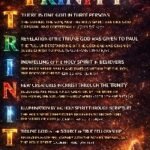 𝗧𝗛𝗘 𝗗𝗢𝗖𝗧𝗥𝗜𝗡𝗘 𝗢𝗙 𝗧𝗛𝗘 𝗧𝗥𝗜𝗡𝗜𝗧𝗬
 𝗧𝗛𝗘 𝗖𝗥𝗢𝗦𝗦: 𝗚𝗢𝗗’𝗦 𝗣𝗢𝗪𝗘𝗥 𝗙𝗢𝗥 𝗦𝗔𝗟𝗩𝗔𝗧𝗜𝗢𝗡
 𝗝𝗘𝗦𝗨𝗦 𝗖𝗛𝗥𝗜𝗦𝗧 𝗧𝗛𝗘 𝗠𝗘𝗦𝗦𝗜𝗔𝗛 𝗣𝗥𝗢𝗩𝗘𝗡 𝗪𝗜𝗧𝗛 𝗔𝗕𝗦𝗢𝗟𝗨𝗧𝗘 𝗖𝗘𝗥𝗧𝗔𝗜𝗡𝗧𝗬 𝗕𝗬 𝗗𝗔𝗡𝗜𝗘𝗟 𝟵
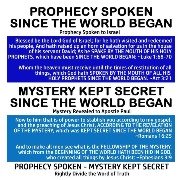 𝗙𝗥𝗢𝗠 𝗣𝗥𝗢𝗣𝗛𝗘𝗖𝗬 𝗧𝗢 𝗠𝗬𝗦𝗧𝗘𝗥𝗬. 𝗧𝗛𝗘 𝗞𝗘𝗬 𝗧𝗢 𝗨𝗡𝗗𝗘𝗥𝗦𝗧𝗔𝗡𝗗𝗜𝗡𝗚 𝗦𝗖𝗥𝗜𝗣𝗧𝗨𝗥𝗘 – 𝗚𝗢𝗗 𝗜𝗦 𝗡𝗢𝗧 𝗧𝗛𝗘 𝗔𝗨𝗧𝗛𝗢𝗥 𝗢𝗙 𝗖𝗢𝗡𝗙𝗨𝗦𝗜𝗢𝗡!