INTRODUCTION: ERROR RARELY ANNOUNCES ITSELF
False doctrine seldom arrives wearing the label false. It does not usually deny Christ outright, nor does it openly attack the Bible. Instead, it enters the Church quietly—through reinterpretation, redefinition, and theological “development.” Over time, it replaces clarity with confusion, authority with opinion, and grace with systems built on human reasoning.
Throughout church history, doctrinal error has followed a consistent pattern: Scripture is not rejected, but reframed. Words remain, but meanings change. Promises are preserved in language, yet emptied of their original intent. The danger, therefore, is not found merely in what is said—but in what is subtly altered.
Three doctrines in particular have gained widespread acceptance in modern Christianity while undermining foundational biblical distinctions. These teachings often operate under the banner of orthodoxy, scholarship, or cultural relevance, yet they share a common trait: they reject right division of Scripture and displace Pauline revelation.
Those doctrines are:
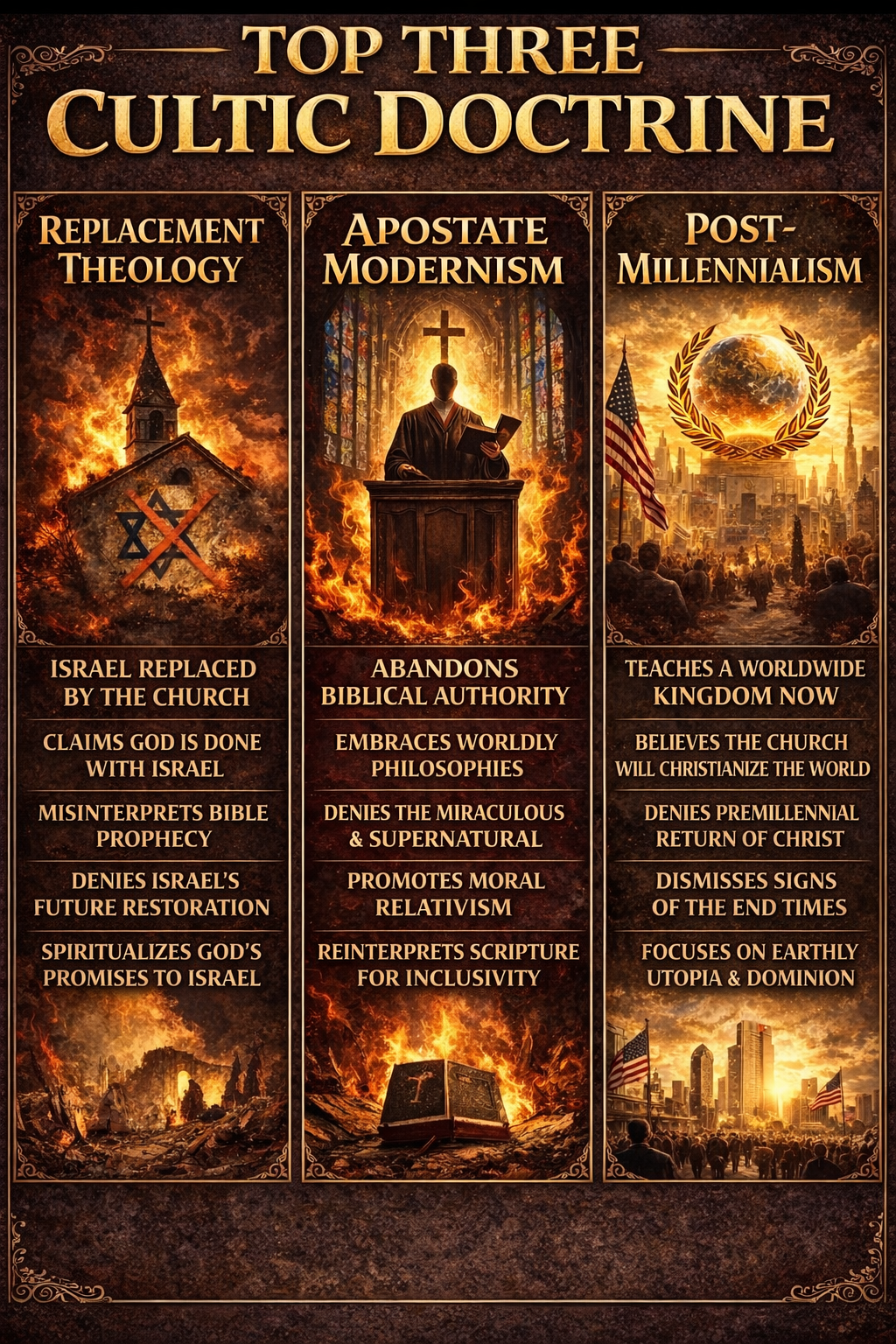
- Replacement Theology
- Apostate Modernism
- Post-Millennialism
Each presents itself as thoughtful, historic, or progressive. Each claims biblical grounding. Yet all three ultimately distort God’s revealed plan by confusing Israel with the Church, minimizing the authority of Scripture, or reordering prophetic truth.
At stake is not a peripheral debate, but the integrity of the gospel of grace itself.
The apostle Paul warned that deception would not come through blatant heresy alone, but through philosophy and tradition—ideas that appear wise yet lead believers away from Christ-centered truth. In an age saturated with theological voices, discernment is no longer optional; it is essential.
DISPENSATIONAL TRUTH: THE FOUNDATION MANY IGNORE
Central to understanding these doctrinal errors is a principle often neglected or misunderstood: dispensational truth.
Scripture reveals that God has worked with humanity in distinct ways at different times. While God’s character never changes, His administrative dealings do. The Bible itself testifies to this progressive revelation.
Paul identifies a truth previously hidden—now revealed—concerning the Body of Christ:
“Now to him that is of power to stablish you according to my gospel, and the preaching of Jesus Christ, according to the revelation of the mystery, which was kept secret since the world began.”
—Romans 16:25 (KJV)
This “mystery” was not revealed to Israel’s prophets. It was committed uniquely to Paul, the apostle to the Gentiles. Through him, God revealed the doctrine of justification by grace alone, the formation of the Church as the Body of Christ, and the believer’s heavenly position in Christ.
When this Pauline revelation is ignored or absorbed into Israel’s prophetic program, confusion follows. Promises meant for Israel are reassigned. Kingdom language is misapplied. Grace is diluted.
All three doctrines examined in this article reject or undermine this essential distinction.
REPLACEMENT THEOLOGY: ISRAEL ERASED, PROPHECY DISTORTED
Replacement Theology—also known as supersessionism—teaches that the Church has permanently replaced Israel in God’s redemptive plan. According to this view, Israel forfeited its role through unbelief, and all promises once given to the nation are now fulfilled spiritually in the Church.
At first glance, this doctrine may appear logical. Israel rejected Christ; the Church embraced Him. Yet this reasoning collapses under careful biblical examination.
1. The Peril of Positional Confusion
(Israel vs. the Church)
Replacement Theology begins by erasing the distinction between Israel and the Church.
Israel is a nation chosen through Abraham, Isaac, and Jacob, governed by covenant, law, and prophecy. The Church is a spiritual body formed by the baptism of the Holy Spirit, composed of Jew and Gentile without distinction, and governed by grace.
Paul addresses this confusion directly:
“I say then, Hath God cast away his people? God forbid.”
— Romans 11:1 (KJV)
The question itself proves the controversy existed even in Paul’s day. His answer is emphatic: God has not rejected Israel.
Replacement Theology ignores this clear declaration and instead asserts that Israel’s role is finished. The result is a theological merging that Scripture never authorizes.
2. The Perversion of Prophetic Promises
(Literal Becomes Allegorical)
To sustain its claims, Replacement Theology must reinterpret Old Testament prophecy. Land promises become metaphors. National restoration becomes spiritual renewal. Covenants become symbolic language.
Yet God explicitly ties Israel’s future to the permanence of creation:
“Thus saith the LORD… If those ordinances depart from before me… then the seed of Israel also shall cease from being a nation before me for ever.”
— Jeremiah 31:35–36 (KJV)
The prophet’s language is unmistakably literal. Israel’s national identity is guaranteed as long as the sun, moon, and stars remain.
Spiritualizing these promises not only undermines Israel’s future but calls into question God’s faithfulness to His word.
3. Pride Against Pauline Revelation
(Grace Displaced)
At its core, Replacement Theology elevates theological systems above Scripture. It often dismisses Paul’s distinction between Israel and the Church as unnecessary or divisive.
Yet Paul warns against such presumption:
“For the gifts and calling of God are without repentance.”
— Romans 11:29 (KJV)
If God can permanently revoke promises made to Israel, what assurance does the Church have? Replacement Theology unintentionally weakens confidence in God’s character by portraying Him as conditional and inconsistent.
APOSTATE MODERNISM: AUTHORITY ABANDONED, TRUTH REDEFINED
Apostate Modernism does not attack Christianity from outside; it reshapes it from within. It claims to preserve faith while discarding its foundation. Scripture is no longer the final authority but one voice among many.
This movement has flourished in an age that values personal experience over objective truth.
4. Professing Faith Without Foundation
(The Bible Demoted)
Modernism often affirms religious sentiment while denying biblical authority. Scripture is treated as inspirational literature—valuable, but flawed.
Paul’s assessment stands in direct opposition:
“All scripture is given by inspiration of God, and is profitable for doctrine, for reproof, for correction, for instruction in righteousness.”
– 2 Timothy 3:16 (KJV)
When Scripture is reduced to symbolism or cultural commentary, doctrine becomes negotiable. Faith becomes subjective.
5. Philosophy Above Proclamation
(Worldly Wisdom Replaces Truth)
Apostate Modernism embraces secular ideologies—psychology, sociology, political theory—and filters Scripture through them. Cultural acceptance becomes the measure of truth.
Paul warns explicitly against this approach:
“Beware lest any man spoil you through philosophy and vain deceit.”
— Colossians 2:8 (KJV)
The gospel is not meant to be reshaped to fit the age. It confronts every age with unchanging truth.
6. Powerless Religion
(Form Without Force)
The inevitable result of modernism is a religion devoid of spiritual power. Miracles are denied. The supernatural is dismissed. Sin is redefined.
Paul describes such religion precisely:
“Having a form of godliness, but denying the power thereof.”
— 2 Timothy 3:5 (KJV)
What remains is moral relativism clothed in religious language—faith without transformation.
POST-MILLENNIALISM: KINGDOM CONFUSION, HOPE MISPLACED
Post-Millennialism teaches that the Church will usher in a golden age of righteousness before Christ returns. According to this view, societal reform and Christian influence will gradually establish God’s kingdom on earth.
History has repeatedly contradicted this optimism.
7. A Kingdom Without the King
(Christ Dethroned)
Post-Millennialism places the responsibility of kingdom establishment on the Church rather than Christ.
Yet Jesus Himself corrected this expectation:
“It is not for you to know the times or the seasons, which the Father hath put in his own power.”
— Acts 1:7 (KJV)
The kingdom is not built by human effort but inaugurated by divine intervention.
8. Presumption of Global Dominion
(Church as World Ruler)
This doctrine often blends church and state, envisioning a Christianized world governed by biblical principles through political power.
Paul, however, describes the last days not as triumphant but perilous:
“This know also, that in the last days perilous times shall come.”
— 2 Timothy 3:1 (KJV)
Scripture anticipates increasing apostasy, not global revival.
9. Postponing Prophetic Warning
(End-Time Blindness)
Post-Millennialism diminishes the urgency of watchfulness. Signs of deception are minimized. Apostasy is downplayed.
Paul urges vigilance:
“Therefore let us not sleep, as do others; but let us watch and be sober.”
— 1 Thessalonians 5:6 (KJV)
A misplaced hope produces complacency.
CONCLUSION: THREE ERRORS, ONE ROOT
Though distinct in form, Replacement Theology, Apostate Modernism, and Post-Millennialism share a common root: they reject right division and oppose Pauline doctrine.
- Replacement Theology denies God’s covenant faithfulness.
- Apostate Modernism denies God’s written authority.
- Post-Millennialism denies God’s prophetic order.
All three confuse Israel, the Church, and the Kingdom.
Paul’s instruction remains clear:
“Study to shew thyself approved unto God… rightly dividing the word of truth.”
— 2 Timothy 2:15 (KJV)
CALL TO ACTION: A RETURN TO SOUND DOCTRINE
The solution is not theological innovation but biblical restoration.
- Reject man-made systems.
- Refuse spiritual compromise.
- Return to Pauline truth.
“Continue thou in the things which thou hast learned.”
— 2 Timothy 3:14 (KJV)
FINAL THOUGHTS
- Israel is not the Church.
- Culture does not interpret Scripture.
- The Church does not bring the Kingdom.
- Paul reveals the Mystery.
- Grace defines this dispensation.
- Christ returns before the Kingdom.
One Bible. Rightly divided. Pauline truth for today.
“Now to him that is of power to stablish you…”
— Romans 16:25 (KJV)
Preach the Word—not tradition.
Related posts:
 𝗪𝗛𝗜𝗖𝗛 𝗗𝗢𝗖𝗧𝗥𝗜𝗡𝗘 𝗗𝗢 𝗬𝗢𝗨 𝗦𝗧𝗔𝗡𝗗?
 𝗧𝗛𝗘 𝗗𝗢𝗖𝗧𝗥𝗜𝗡𝗘 𝗢𝗙 𝗧𝗛𝗘 𝗧𝗥𝗜𝗡𝗜𝗧𝗬
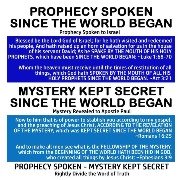 𝗙𝗥𝗢𝗠 𝗣𝗥𝗢𝗣𝗛𝗘𝗖𝗬 𝗧𝗢 𝗠𝗬𝗦𝗧𝗘𝗥𝗬. 𝗧𝗛𝗘 𝗞𝗘𝗬 𝗧𝗢 𝗨𝗡𝗗𝗘𝗥𝗦𝗧𝗔𝗡𝗗𝗜𝗡𝗚 𝗦𝗖𝗥𝗜𝗣𝗧𝗨𝗥𝗘 – 𝗚𝗢𝗗 𝗜𝗦 𝗡𝗢𝗧 𝗧𝗛𝗘 𝗔𝗨𝗧𝗛𝗢𝗥 𝗢𝗙 𝗖𝗢𝗡𝗙𝗨𝗦𝗜𝗢𝗡!
 𝗞𝗜𝗡𝗚 𝗢𝗙 𝗞𝗜𝗡𝗚𝗦
 𝗧𝗛𝗘 𝗣𝗥𝗜𝗢𝗥𝗜𝗧𝗬 𝗢𝗙 𝗧𝗛𝗘 𝗛𝗨𝗦𝗕𝗔𝗡𝗗
 𝗦𝗧𝗢𝗣 𝗧𝗪𝗜𝗦𝗧𝗜𝗡𝗚 𝗚𝗢𝗗’𝗦 𝗪𝗢𝗥𝗗
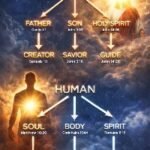 𝗚𝗢𝗗 𝗔𝗡𝗗 𝗠𝗔𝗡: 𝗥𝗜𝗚𝗛𝗧𝗟𝗬 𝗗𝗜𝗩𝗜𝗗𝗘𝗗 𝗗𝗘𝗦𝗜𝗚𝗡
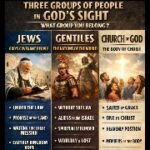 𝗧𝗛𝗥𝗘𝗘 𝗚𝗥𝗢𝗨𝗣𝗦 𝗢𝗙 𝗣𝗘𝗢𝗣𝗟𝗘 𝗜𝗡 𝗚𝗢𝗗’𝘀 𝗦𝗜𝗚𝗛𝗧
 “𝗜 𝗔𝗡𝗗 𝗠𝗬 𝗙𝗔𝗧𝗛𝗘𝗥 𝗔𝗥𝗘 𝗢𝗡𝗘”
 𝗧𝗜𝗧𝗛𝗘𝗦 𝗜𝗦 𝗔 𝗦𝗖𝗔𝗠?
 𝗪𝗛𝗘𝗡 𝗡𝗔𝗧𝗜𝗢𝗡𝗦 𝗥𝗜𝗦𝗘… 𝗧𝗛𝗘 𝗣𝗥𝗢𝗣𝗛𝗘𝗧𝗦 𝗔𝗟𝗥𝗘𝗔𝗗𝗬 𝗦𝗣𝗢𝗞𝗘
 𝗔𝗠𝗘𝗡: 𝗧𝗛𝗘 𝗚𝗥𝗔𝗖𝗘 𝗣𝗔𝗧𝗛 𝗢𝗙 𝗧𝗛𝗘 𝗕𝗢𝗗𝗬 𝗢𝗙 𝗖𝗛𝗥𝗜𝗦𝗧
 𝗙𝗔𝗟𝗦𝗘 𝗙𝗥𝗜𝗘𝗡𝗗𝗦: 𝗧𝗛𝗘 𝗗𝗔𝗡𝗚𝗘𝗥 𝗢𝗙 𝗣𝗥𝗘𝗧𝗘𝗡𝗗𝗘𝗗 𝗙𝗘𝗟𝗟𝗢𝗪𝗦𝗛𝗜𝗣
 𝗗𝗜𝗦𝗣𝗘𝗡𝗦𝗔𝗧𝗜𝗢𝗡𝗔𝗟𝗜𝗦𝗠 𝗩𝗦. 𝗖𝗢𝗩𝗘𝗡𝗔𝗡𝗧 𝗧𝗛𝗘𝗢𝗟𝗢𝗚𝗬