Three Groups of People in God’s Sight:
Why Rightly Dividing Scripture Changes Everything
“Give none offence, neither to the Jews, nor to the Gentiles, nor to the church of God.”
— 1 Corinthians 10:32 (KJV)
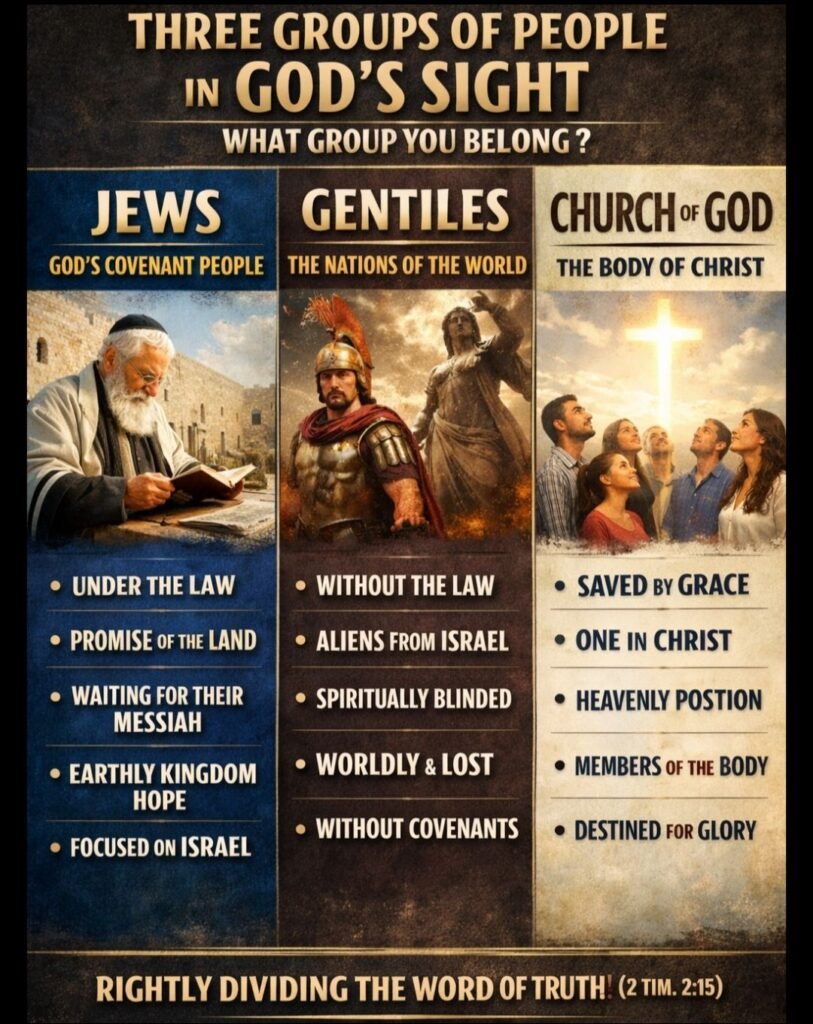
One of the most overlooked statements in the New Testament is also one of the most clarifying. In a single sentence, the apostle Paul dismantles the popular assumption that God views humanity as one religious whole. Instead, Scripture identifies three distinct groups of people—Jews, Gentiles, and the Church of God—and treats each group differently in purpose, promise, and destiny.
This distinction is not theological hair-splitting. It is foundational. When ignored, it produces doctrinal confusion, misplaced expectations, and spiritual frustration. When understood, it brings clarity, assurance, and coherence to the entire Bible.
Modern Christianity often collapses these groups into one category, assuming that all biblical promises apply universally and that the Church has either inherited or replaced Israel’s role. Yet Paul, writing by direct revelation from the risen Christ, insists that God’s dealings with humanity must be understood through proper division. “Rightly dividing the word of truth,” he tells Timothy, is not optional—it is essential.
To read the Bible without recognizing these distinctions is to misapply Scripture, even while quoting it faithfully. To recognize them is to finally understand why certain passages feel out of place, why some commands burden believers unnecessarily, and why hope itself can seem confused or contradictory.
Understanding the three groups God recognizes is not about exclusion; it is about accuracy. It is about allowing Scripture to say what it actually says, rather than what tradition assumes it must mean.
The first of these groups is Israel—the Jewish people—whose story begins not with the Church and not with the Gentile world, but with covenant.
Israel exists because God chose them. Not because they were righteous, numerous, or deserving, but because He sovereignly elected them to carry His promises. Paul is explicit about this in Romans, where he lists Israel’s unique privileges: the adoption, the glory, the covenants, the giving of the law, the service of God, and the promises. These were not spiritual metaphors; they were literal national realities.
Israel’s identity is inseparable from covenant. From Abraham onward, God bound Himself to this nation with promises that were earthly, visible, and future-oriented. Land, kingship, blessing, and national restoration were not symbolic concepts—they were written into Israel’s Scriptures and proclaimed by her prophets.
Central to Israel’s relationship with God was the Mosaic Law. This law was never given to the Gentile nations, nor was it designed as a universal moral system for all humanity. Scripture states plainly that the law speaks to those who are under it, and those people were Israel. Under the law, righteousness was measured by obedience, blessing was conditional, and failure required sacrifice.
The law revealed sin, restrained rebellion, and pointed Israel toward her Messiah. It was holy and just, but it was never designed to give life. That limitation was intentional. The law exposed humanity’s inability to achieve righteousness by performance and prepared the way for something greater.
Israel’s hope, however, was not heaven. It was a kingdom on earth. The prophets consistently spoke of a restored nation, a reigning Messiah, and a future where God’s rule would be visibly established from Jerusalem. Even after the resurrection, the disciples’ question to Christ—whether He would now restore the kingdom to Israel—demonstrates that this expectation was alive and intact. Jesus did not deny the promise. He postponed its timing.
Israel’s story, therefore, remains unfinished. Their covenants have not been revoked, their promises have not been spiritualized away, and their future has not been absorbed by the Church. They await the fulfillment of what God pledged to them long ago.
The Gentile world, by contrast, stood on entirely different ground.
Before the revelation of grace, Gentiles existed outside the covenantal structure that defined Israel’s relationship with God. Paul does not describe this condition gently. He calls it hopeless. Gentiles were without Christ, alienated from the commonwealth of Israel, strangers from the covenants of promise, and without God in the world.
This was not simply ignorance; it was exclusion. Gentiles did not possess the law, the promises, or the prophetic hope that defined Israel’s spiritual life. They lived under conscience, governed by human wisdom, religious invention, and moral instinct. The result was spiritual darkness.
Paul describes the Gentile condition as death—not moral weakness, not spiritual confusion, but death in trespasses and sins. This diagnosis leaves no room for self-rescue. Dead people do not improve themselves. They must be made alive.
The problem was not that Gentiles failed to keep the law. They were never given the law. Their condemnation rested in Adam, not Moses. They were separated from God by nature, not merely by behavior.
This context matters because it magnifies the significance of what God did next.
The Church of God did not emerge as an extension of Israel or an improvement of Gentile religion. It emerged as something entirely new. Paul calls it a mystery—hidden from ages and generations, not spoken by prophets, and not revealed until after Israel’s rejection of her Messiah.
This mystery is the Body of Christ.
The Church exists because of grace. Not partial grace, not assisted grace, but absolute grace. Salvation in the Church is not offered through law, ritual, or covenant obligation. It is given freely, apart from works, apart from national identity, and apart from prophecy.
By grace through faith, believers are saved completely, permanently, and equally. There is no Jew or Gentile distinction in the Body of Christ. There is no spiritual hierarchy. There is no conditional standing. Christ Himself is the Head, and every believer is a member.
This reality would have been unthinkable under the law. Israel’s system thrived on distinction—between Jew and Gentile, clean and unclean, priest and people. Grace abolishes those divisions without denying Israel’s identity. It simply creates a new entity operating under a new administration.
The Church’s hope reflects this new identity. Unlike Israel’s earthly kingdom expectation, the Church’s destiny is heavenly. Believers are blessed with spiritual blessings in heavenly places. Their position is already established. Their future is not national restoration but glorification.
This is why confusion between Israel and the Church is so damaging. When the Church is placed under Israel’s law, grace is diluted. When Israel’s kingdom promises are applied to the Church, hope becomes distorted. When Gentile condemnation is ignored, grace becomes cheap.
Paul’s instruction to rightly divide Scripture is not about fragmentation; it is about fidelity. Each group must be allowed to remain what God declared it to be. Israel is Israel. Gentiles are Gentiles. The Church is neither.
When these distinctions are honored, the Bible opens with remarkable clarity. Difficult passages find their proper place. Contradictions disappear. Assurance replaces anxiety. Grace regains its power.
The danger of ignoring these truths is not merely academic. It affects how believers live, worship, and understand God. Law mixed with grace produces guilt. Kingdom promises misapplied produce disappointment. Identity confusion produces instability.
Paul’s gospel—the death, burial, and resurrection of Christ for sinners—is the message for today. It is the foundation of the Church’s faith and the source of its assurance. Anything added to it weakens it. Anything taken from it distorts it.
The call, then, is not to abandon Scripture but to read it more faithfully. Not to divide God’s Word carelessly, but to divide it rightly. Not to elevate one group over another, but to honor God’s design for all.
There is one Bible. There are three groups. And there is one truth that governs them all: God is faithful to His Word.
Israel will receive her kingdom. Gentiles have been offered grace. The Church will be glorified.
When these truths are rightly divided, God is honored, believers are grounded, and the gospel stands clear.
All glory belongs to God through Jesus Christ.
Related posts:
 𝗙𝗥𝗢𝗠 𝗣𝗥𝗢𝗣𝗛𝗘𝗖𝗬 𝗧𝗢 𝗠𝗬𝗦𝗧𝗘𝗥𝗬. 𝗧𝗛𝗘 𝗞𝗘𝗬 𝗧𝗢 𝗨𝗡𝗗𝗘𝗥𝗦𝗧𝗔𝗡𝗗𝗜𝗡𝗚 𝗦𝗖𝗥𝗜𝗣𝗧𝗨𝗥𝗘 – 𝗚𝗢𝗗 𝗜𝗦 𝗡𝗢𝗧 𝗧𝗛𝗘 𝗔𝗨𝗧𝗛𝗢𝗥 𝗢𝗙 𝗖𝗢𝗡𝗙𝗨𝗦𝗜𝗢𝗡!
 𝗔𝗠𝗘𝗡: 𝗧𝗛𝗘 𝗚𝗥𝗔𝗖𝗘 𝗣𝗔𝗧𝗛 𝗢𝗙 𝗧𝗛𝗘 𝗕𝗢𝗗𝗬 𝗢𝗙 𝗖𝗛𝗥𝗜𝗦𝗧
 𝗧𝗢𝗣 𝗧𝗛𝗥𝗘𝗘 𝗖𝗨𝗟𝗧𝗜𝗖 𝗗𝗢𝗖𝗧𝗥𝗜𝗡𝗘𝗦
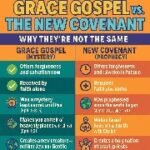 𝗥𝗜𝗚𝗛𝗧𝗟𝗬 𝗗𝗜𝗩𝗜𝗗𝗜𝗡𝗚 𝗧𝗛𝗘 𝗚𝗥𝗔𝗖𝗘 𝗚𝗢𝗦𝗣𝗘𝗟 𝗙𝗥𝗢𝗠 𝗧𝗛𝗘 𝗡𝗘𝗪 𝗖𝗢𝗩𝗘𝗡𝗔𝗡𝗧
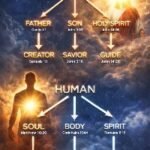 𝗚𝗢𝗗 𝗔𝗡𝗗 𝗠𝗔𝗡: 𝗥𝗜𝗚𝗛𝗧𝗟𝗬 𝗗𝗜𝗩𝗜𝗗𝗘𝗗 𝗗𝗘𝗦𝗜𝗚𝗡
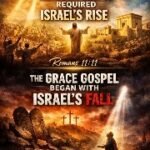 𝗧𝗛𝗘 𝗞𝗜𝗡𝗚𝗗𝗢𝗠 𝗚𝗢𝗦𝗣𝗘𝗟 & 𝗧𝗛𝗘 𝗚𝗥𝗔𝗖𝗘 𝗚𝗢𝗦𝗣𝗘𝗟
 𝗜𝗚𝗡𝗢𝗥𝗜𝗡𝗚 𝗧𝗛𝗘 𝗧𝗥𝗨𝗧𝗛 𝗗𝗢𝗘𝗦𝗡’𝗧 𝗖𝗛𝗔𝗡𝗚𝗘 𝗧𝗛𝗘 𝗧𝗥𝗨𝗧𝗛
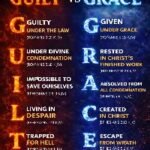 𝗚𝗨𝗜𝗟𝗧 𝘃𝘀 𝗚𝗥𝗔𝗖𝗘 — 𝗙𝗥𝗢𝗠 𝗖𝗢𝗡𝗗𝗘𝗠𝗡𝗔𝗧𝗜𝗢𝗡 𝗧𝗢 𝗖𝗢𝗠𝗣𝗟𝗘𝗧𝗜𝗢𝗡
 𝗧𝗜𝗧𝗛𝗘𝗦 𝗜𝗦 𝗔 𝗦𝗖𝗔𝗠?
 𝗪𝗛𝗘𝗡 𝗡𝗔𝗧𝗜𝗢𝗡𝗦 𝗥𝗜𝗦𝗘… 𝗧𝗛𝗘 𝗣𝗥𝗢𝗣𝗛𝗘𝗧𝗦 𝗔𝗟𝗥𝗘𝗔𝗗𝗬 𝗦𝗣𝗢𝗞𝗘
 𝗧𝗛𝗘 𝗥𝗔𝗣𝗧𝗨𝗥𝗘: 𝗥𝗘𝗩𝗘𝗔𝗟𝗘𝗗, 𝗡𝗢𝗧 𝗜𝗡𝗩𝗘𝗡𝗧𝗘𝗗
 𝗝𝗘𝗦𝗨𝗦 𝗖𝗛𝗥𝗜𝗦𝗧 𝗧𝗛𝗘 𝗠𝗘𝗦𝗦𝗜𝗔𝗛 𝗣𝗥𝗢𝗩𝗘𝗡 𝗪𝗜𝗧𝗛 𝗔𝗕𝗦𝗢𝗟𝗨𝗧𝗘 𝗖𝗘𝗥𝗧𝗔𝗜𝗡𝗧𝗬 𝗕𝗬 𝗗𝗔𝗡𝗜𝗘𝗟 𝟵
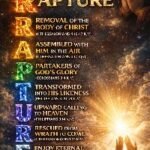 𝗧𝗛𝗘 𝗗𝗢𝗖𝗧𝗥𝗜𝗡𝗘 𝗢𝗙 𝗧𝗛𝗘 𝗥𝗔𝗣𝗧𝗨𝗥𝗘
 𝗪𝗛𝗬 𝗔𝗣𝗢𝗦𝗧𝗟𝗘 𝗣𝗔𝗨𝗟?