In many Christian settings, references to the blood of Christ evoke strong emotion. Hymns celebrate it, sermons invoke it, and personal testimonies often attribute victory or protection to it. Yet in the letters of the apostle Paul, the emphasis falls not on emotional expression but on doctrinal precision. The blood of Christ is presented not as a ritual formula, not as a mystical incantation, and not as a recurring sacrifice, but as the decisive means by which God accomplished specific, legal, and irreversible realities for those who believe.
Paul’s statement in Romans 5:9 sets the tone: “Much more then, being now justified by his blood, we shall be saved from wrath through him” (KJV). The language is judicial. Justification is a courtroom term. Wrath is a response of divine justice to sin. The blood of Christ, in Paul’s theology, addresses both. It does something objective before God. It changes status. It resolves a problem that human effort could not.
The apostle writes within what he calls a revealed “dispensation” of grace (Ephesians 3:2, KJV), a stewardship of truth entrusted to him for the Gentiles. Within that framework, the death of Christ is not merely the tragic end of a righteous teacher. It is a transaction with defined outcomes for what Paul describes as the “body of Christ” (1 Corinthians 12:27, KJV). Understanding the power of the blood requires examining what it accomplished, rather than how it makes one feel.
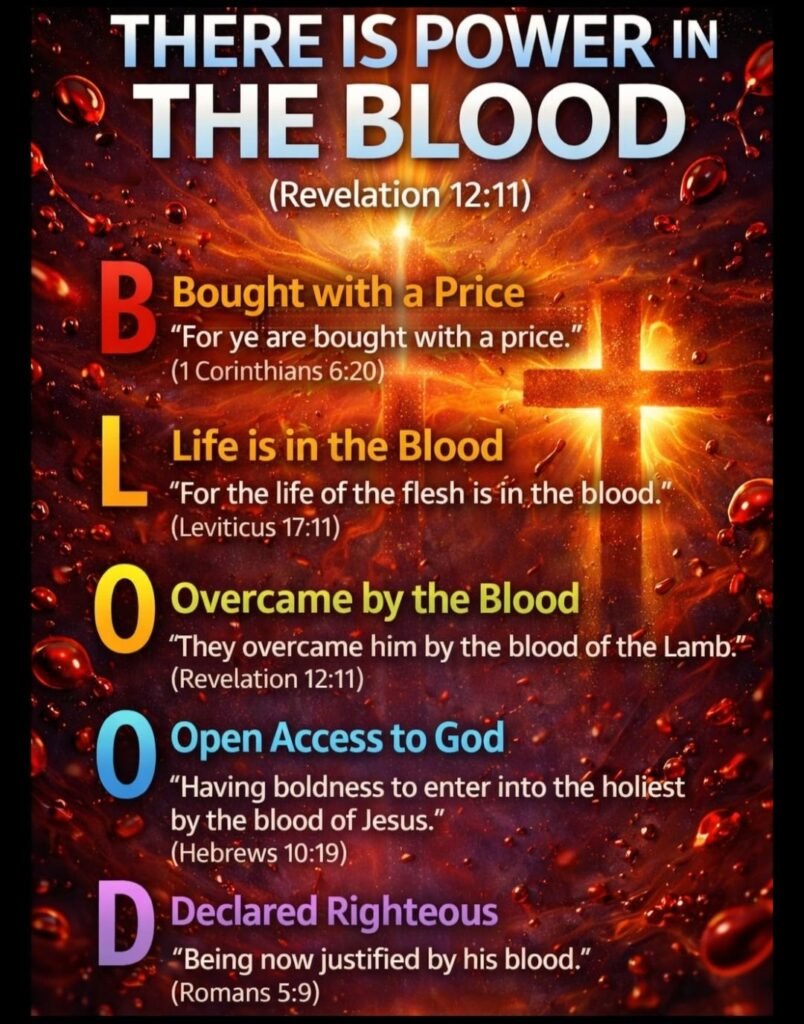
One of Paul’s recurring assertions is that believers have been purchased. “For ye are bought with a price,” he tells the Corinthians; “therefore glorify God in your body, and in your spirit, which are God’s” (1 Corinthians 6:20, KJV). The imagery is commercial and legal. Ownership has changed hands. The price is not specified in that verse, but elsewhere Paul makes clear that it is bound up in the sacrificial death of Christ. When addressing the Ephesian elders in Acts 20:28, he speaks of “the church of God, which he hath purchased with his own blood” (KJV).
In this context, the power of the blood lies in its sufficiency. A partial payment would leave the transaction incomplete; a delayed payment would leave the buyer uncertain. Paul’s argument in Romans is that the payment has been made in full. The believer no longer belongs to himself. “Whether we live therefore, or die, we are the Lord’s” (Romans 14:8, KJV). This shift in possession is not coercive but redemptive. The new ownership establishes purpose: “that they which live should not henceforth live unto themselves, but unto him which died for them, and rose again” (2 Corinthians 5:15, KJV).
Closely related to purchase is the concept of propitiation, a term that appears in Romans 3:25. Paul writes that God has set forth Christ “to be a propitiation through faith in his blood, to declare his righteousness for the remission of sins that are past” (KJV). Propitiation refers to the satisfaction of righteous anger. In Paul’s presentation, God’s wrath against sin is neither arbitrary nor excessive; it is the expression of His holiness. The problem for humanity is not only guilt but exposure to that wrath.
The blood of Christ addresses this exposure. It satisfies the demands of divine justice without compromising God’s character. Paul is careful to explain that God remains “just, and the justifier of him which believeth in Jesus” (Romans 3:26, KJV). The cross does not suspend righteousness; it upholds it. The power of the blood, therefore, is not sentimental but juridical. It resolves the tension between justice and mercy.
This resolution has relational consequences. In Romans 5:10, Paul writes, “For if, when we were enemies, we were reconciled to God by the death of his Son, much more, being reconciled, we shall be saved by his life” (KJV). Reconciliation presupposes hostility. Sin created alienation between humanity and God. The blood of Christ removes the barrier. Peace is not negotiated by human initiative; it is established by divine action.
Forgiveness is another result Paul attributes directly to Christ’s redemptive work. In Ephesians 1:7, he states, “In whom we have redemption through his blood, the forgiveness of sins, according to the riches of his grace” (KJV). Redemption implies release through payment. Forgiveness implies the cancellation of debt. Paul reinforces this in Colossians 2:13, where he says that God has forgiven believers “all trespasses.”
The scope is comprehensive. The phrase “all trespasses” leaves no residual category of unforgiven sin. Paul further emphasizes in Romans 8:1 that “There is therefore now no condemnation to them which are in Christ Jesus” (KJV). The absence of condemnation is not the result of improved behavior but of accomplished atonement. The blood has dealt with the charge sheet. For those in Christ, no accusation can ultimately stand (Romans 8:33–34).
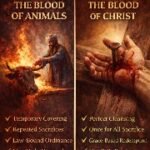
Paul also speaks of cleansing. In 1 Corinthians 6:11, after listing various forms of unrighteous conduct, he tells the Corinthian believers, “And such were some of you: but ye are washed, but ye are sanctified, but ye are justified in the name of the Lord Jesus, and by the Spirit of our God” (KJV). The washing is positional. It describes a change in standing before God. Although the letter to the Hebrews develops the theme of Christ’s once-for-all sacrifice in greater detail, Paul’s epistles align with the conclusion that no repeated offering is necessary. In Romans 6:10, he notes that Christ “died unto sin once” (KJV).
The permanence of this cleansing underscores the finality of the blood’s work. It is not an ongoing application that fluctuates with human performance. It is a completed act with lasting effect. In Colossians 1:22, Paul says that believers are presented “holy and unblameable and unreproveable in his sight” (KJV). Such language leaves little room for uncertainty regarding status.
Peace with God is another dimension Paul ties directly to justification by faith. “Therefore being justified by faith, we have peace with God through our Lord Jesus Christ” (Romans 5:1, KJV). This peace is not primarily an internal feeling, though it may produce one. It is an objective cessation of hostilities. The war between divine justice and human sin has ended for those who believe.
Access accompanies this peace. In Ephesians 2:18, Paul writes, “For through him we both have access by one Spirit unto the Father” (KJV). Access implies privilege. Under prior dispensations, access to the innermost sanctuary of God’s presence was restricted. In the present administration of grace, believers approach boldly, not because of inherent worthiness but because of Christ’s blood. The barrier has been removed.
The blood also undergirds the believer’s position of righteousness. Romans 5:9 links justification explicitly to the blood. Justification is a declaration, not a process. It is God’s verdict that the believer is righteous in His sight. This righteousness is not self-generated. In 2 Corinthians 5:21, Paul writes, “For he hath made him to be sin for us, who knew no sin; that we might be made the righteousness of God in him” (KJV). The exchange is central: Christ bears sin; believers receive righteousness.
This imputed righteousness carries eschatological implications. Paul asks in Romans 8:33, “Who shall lay any thing to the charge of God’s elect? It is God that justifieth” (KJV). The question is rhetorical. If the highest court has rendered its verdict, no subordinate accusation can overturn it. The power of the blood includes security against future condemnation.
Union with Christ further clarifies the believer’s standing. In Romans 6:3, Paul explains that believers are baptized into Christ’s death. The baptism he describes is spiritual, effected by the Holy Spirit, not a ritual immersion. This union means that Christ’s death counts as the believer’s death to sin’s dominion. “I am crucified with Christ,” Paul writes in Galatians 2:20, “nevertheless I live; yet not I, but Christ liveth in me” (KJV). The blood that was shed in history has ongoing implications because believers are identified with the One who shed it.
This identification extends to incorporation into a single body. “For by one Spirit are we all baptized into one body” (1 Corinthians 12:13, KJV). Ethnic and social distinctions do not determine membership; faith does. The blood that purchased individuals also formed a collective entity—the body of Christ. Within that body, inheritance is shared. Romans 8:17 describes believers as “heirs of God, and joint-heirs with Christ” (KJV). The transaction secured not only rescue from wrath but participation in glory.
Preservation is another outcome Paul associates with God’s redemptive plan. In Ephesians 1:13–14, he writes that believers are “sealed with that holy Spirit of promise, which is the earnest of our inheritance until the redemption of the purchased possession” (KJV). The seal signifies ownership and authenticity. It marks believers as belonging to God on the basis of Christ’s accomplished work.
Future deliverance from wrath is assured. In 1 Thessalonians 1:10, Paul commends believers for waiting “for his Son from heaven… which delivered us from the wrath to come” (KJV). The deliverance is grounded in past action but oriented toward future security. Romans 8:38–39 reinforces the point: nothing “shall be able to separate us from the love of God, which is in Christ Jesus our Lord” (KJV). The blood’s efficacy is not temporary.
The implications extend beyond status to spiritual conflict. Although Paul does not elaborate on the imagery of overcoming by the blood in the same way as the book of Revelation, he does describe Christ’s victory over hostile powers. In Colossians 2:15, he writes that Christ “spoiled principalities and powers” and “made a shew of them openly, triumphing over them in it” (KJV). The cross disarmed spiritual adversaries. The believer’s confidence in spiritual warfare rests not on personal strength but on Christ’s completed triumph.
Proclamation is therefore central. In 1 Corinthians 15:1–4, Paul summarizes the gospel he preached: that Christ died for our sins, was buried, and rose again the third day. The death “for our sins” is inseparable from the shedding of blood. The gospel is not advice for moral improvement but news of an accomplished redemption. To stand in grace, as Romans 5:2 describes, is to rely on that finished work rather than on fluctuating performance.
Throughout his letters, Paul resists any suggestion that human works can supplement the blood’s efficacy. In Romans 11:6, he states, “And if by grace, then is it no more of works: otherwise grace is no more grace” (KJV). The logic is uncompromising. If justification required additional human contribution, the sufficiency of the blood would be compromised. For Paul, it is precisely because the blood accomplished everything necessary that believers can rest in assurance.
This assurance does not lead to moral indifference. On the contrary, Paul consistently grounds ethical exhortation in redemptive accomplishment. Because believers are bought, reconciled, forgiven, justified, and sealed, they are to live accordingly. The imperative flows from the indicative. In Romans 12:1, he urges believers to present their bodies as living sacrifices “by the mercies of God” (KJV). Those mercies are defined in the preceding chapters, culminating in the work of Christ’s blood.
The power of the blood, then, is multifaceted. It secures legal standing, satisfies divine justice, cancels debt, cleanses conscience, establishes peace, confers righteousness, unites believers to Christ, guarantees inheritance, and ensures future safety. Each of these dimensions is rooted not in human ritual but in historical event. The crucifixion occurred at a specific time and place. Its effects, according to Paul, extend beyond that moment into eternity.
In contemporary Christian discourse, appeals to the blood sometimes take on a defensive tone, as if believers must repeatedly invoke it to maintain protection. Paul’s letters suggest a different posture. The blood has already accomplished what was necessary. The believer’s task is not to reapply it but to believe it. Faith rests in what has been done.
Romans 5:9, with its emphasis on present justification and future salvation from wrath, captures the comprehensive scope. The justification is already secured; the final rescue is guaranteed. The basis in both cases is the same: “his blood.” The phrase anchors assurance not in subjective experience but in objective accomplishment.
For Paul, the cross stands at the center of his message. In 1 Corinthians 1:23, he writes, “But we preach Christ crucified” (KJV). The crucifixion entails the shedding of blood. It is the means by which God addresses sin without diminishing His holiness. It is the event through which a new corporate identity—the body of Christ—is formed.
In evaluating the power of the blood within Pauline doctrine, one encounters a theology that is structured, legal, and grace-driven. It resists both ritualism and emotionalism as substitutes for understanding. The blood is powerful not because of repeated invocation but because of what it has accomplished once for all.
Believers, in this framework, are called to stand in that accomplishment. Their confidence before God rests on a finished transaction. Their freedom from condemnation flows from a satisfied justice. Their hope for the future is secured by a sealed inheritance. The power of the blood is not an abstract concept but a comprehensive reality shaping identity, security, and destiny.
Nothing in Paul’s letters suggests that additional sacrifice is required. Nothing implies that human merit can enhance what Christ has done. The emphasis remains on grace—undeserved favor grounded in the shed blood of Christ. To understand that power is to recognize the scope of what has been achieved: purchase completed, wrath satisfied, forgiveness granted, cleansing effected, peace established, righteousness declared, union accomplished, inheritance secured, and victory assured.
For the apostle, this is not peripheral doctrine. It is the foundation of Christian life. Everything that follows—ethics, service, endurance, hope—rests on the accomplished work of Christ’s blood. In that sense, the power resides not in human proclamation but in divine action already completed. The believer’s role is to trust, to stand, and to live in light of what has been secured.