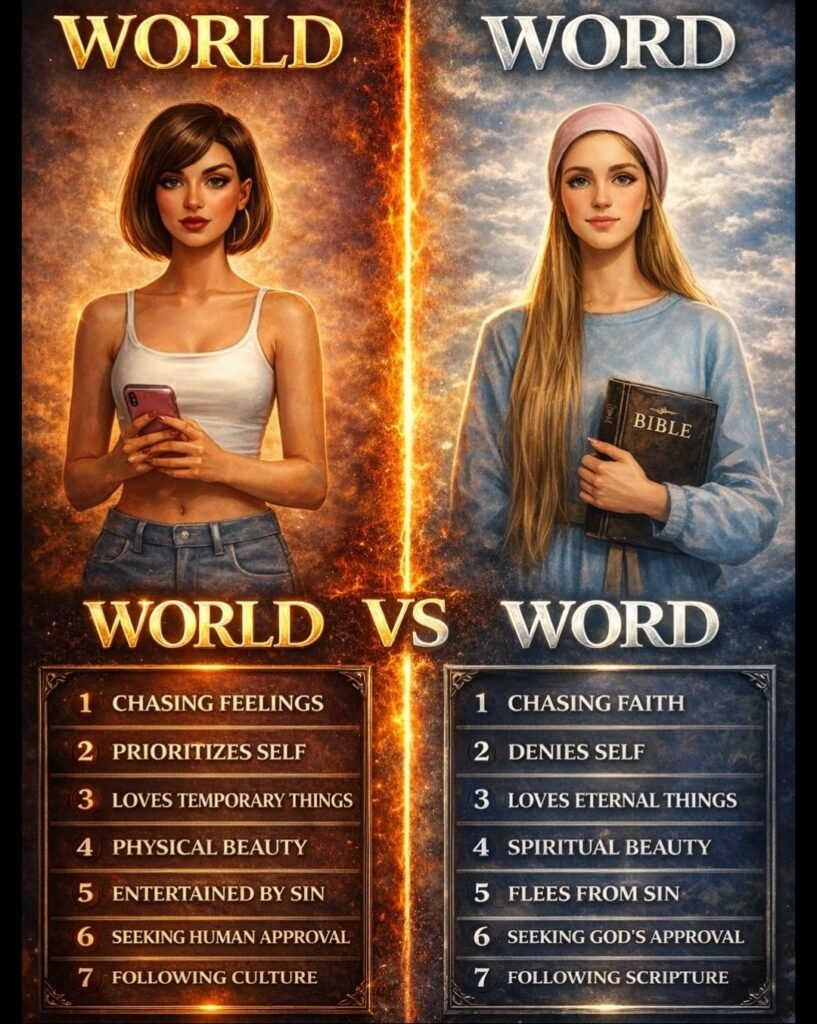
The modern landscape of human consciousness is currently the site of a profound, structural conflict between two comprehensive operating systems: the Kosmos and the Logos. To the investigative eye, this is not merely a philosophical disagreement over lifestyle choices, but a fundamental war of data. The “world,” as defined in the Pauline epistles, functions as an elaborate, high-definition simulation of reality—a system designed to prioritize the visible, the temporary, and the self. Conversely, the “Word” presents a counter-intelligence framework that redefines the very nature of existence, identity, and objective truth.
For the individual navigating the complexities of the twenty-first century, the pressure to synchronize with the prevailing “spirit of the age” is constant and multi-dimensional. This pressure is what the Apostle Paul identifies in his forensic analysis of the Roman culture as “conformity.” The Greek term suschematizo implies an external pressure—a mold into which a soft material is squeezed. The world system acts as a hydraulic press of social media algorithms, corporate marketing, and academic consensus, all designed to force the human mind into a standardized shape. The investigative challenge for the believer is to recognize this pressure and initiate a total cognitive “renewal.”
The Epistemological Gap: Human Wisdom vs. Divine Revelation
Any rigorous investigation into the “World vs. Word” dichotomy must begin with the source of knowledge. The world system is built upon a foundation of human-centric wisdom—a horizontal philosophy that Paul describes as “the wisdom of this world” which God has “made foolish.” This worldly wisdom is characterized by its closed-loop nature; it only accepts data that can be verified through the five senses or validated by human emotion. It is a philosophy that begins and ends with the observer.
In a professional, journalistic sense, we can see this manifest in the rise of “personal truth” over objective reality. When society moves away from the Word as the ultimate arbiter of truth, it enters a state of epistemological anarchy. 1 Corinthians 1:20 poses the investigative question: “Where is the wise? where is the scribe? where is the disputer of this world? hath not God made foolish the wisdom of this world?” The world’s wisdom is often highly sophisticated, utilizing advanced psychology and sociology to manage human behavior, yet it remains fundamentally blind to the “mystery” truths revealed in the Pauline epistles.
The Word of God introduces a “vertical” data set. It provides information that human reason could never discover on its own—specifically, the truth regarding the Dispensation of Grace. While the world uses its wisdom to try and fix the “old man” through education or therapy, the Word reveals that the “old man” was crucified with Christ and that a “new man” has been created. This is a forensic breakthrough. The world is trying to repair a condemned building, while the Word is offering a title deed to a new inheritance.
The Economy of the Ego: Self-Actualization vs. The New Nature
A secondary investigative thread leads to the heart of modern motivation: the obsession with the self. The world system is a “Me-conomy.” From the “selfie” culture to the “self-help” industry, the central aim is the elevation of the individual ego. This is a strategic move by the “prince of the power of the air” to keep humanity focused on a sinking ship. The world encourages people to “find themselves,” “believe in themselves,” and “promote themselves.”
Pauline doctrine systematically deconstructs this ego-centric model. In Galatians 2:20, Paul presents a radical investigative conclusion: “I am crucified with Christ: nevertheless I live; yet not I, but Christ liveth in me.” This is a total displacement of the ego. In the Word’s economy, the “self” is not something to be polished or promoted; it is something that has been legally replaced by the life of Christ.
The world views “self-denial” as a form of psychological repression, but the Word views it as a form of spiritual liberation. When the “self” is no longer the center of the universe, the believer is freed from the exhausting task of maintaining a reputation or defending a brand. The investigative reality is that the most “self-actualized” person in the world is still a slave to their own appetites and the opinions of others. The person who follows the Word, however, finds their identity “hid with Christ in God,” a position that is immune to the fluctuations of worldly approval.
The Temporal Trap: The Mirage of the Immediate
To understand the world system, one must analyze its relationship with time. The world operates on a “short-term” horizon. It values that which can be measured, tasted, and consumed in the immediate present. This is why the pursuit of material wealth, physical beauty, and temporal fame dominates the global conversation. These are the “things which are seen,” and as Paul notes in 2 Corinthians 4:18, they are temporal—subject to decay and obsolescence.
The investigative journalist observes that the world’s rewards are front-loaded. You get the dopamine hit of popularity or the thrill of a new purchase today, but the long-term “wages” are a sense of emptiness and spiritual bankruptcy. The Word of God, however, operates on an eternal timeline. It calls the believer to “set your affection on things above, not on things on the earth.” This is not a call to ignore the physical world, but a call to recognize its secondary status.
Paul’s letter to Timothy warns that those who “will be rich fall into temptation and a snare.” This is an investigative warning about the “lust of the eyes.” When the world becomes the primary investment, the believer loses sight of the “unsearchable riches of Christ.” The choice between World and Word is essentially a choice between a counterfeit currency and a gold standard. The world’s wealth is hyper-inflated and losing value daily; the Word’s rewards are “reserved in heaven” and “fadeth not away.”
The Moral Transmutation: Cultural Fluidity vs. Scriptural Stability
The conflict between the World and the Word is perhaps most visible in the realm of morality. We are currently witnessing a massive moral transmutation where ancient virtues are being relabeled as vices, and vices are being celebrated as “authenticity.” The world system has moved beyond mere tolerance of sin to a mandatory celebration of it. This is a classic indicator of a “reprobate mind” as described in Romans 1.
The investigative response of the Word is not a return to legalism, but an advancement into grace. Paul does not tell the believer to fight the world’s immorality by trying to keep the Ten Commandments—a “ministration of death” for the member of the Body of Christ. Instead, he points to a new power source: “Walk in the Spirit, and ye shall not fulfil the lust of the flesh.”
The world’s morality is “fluid,” meaning it changes with the political and social climate. What was “right” ten years ago is now “wrong.” This creates a state of constant moral vertigo. The Word, however, is “the same yesterday, and to day, and for ever.” It provides a “sound mind” in an era of insanity. The believer who chooses the Word over the World has a fixed point of reference. They are not “tossed to and fro” by every wind of doctrine or every cultural shift. They stand on a “sure foundation.”
The Social Grid: Human Praise vs. Divine Approval
In a world governed by social media metrics and public opinion, the desire for human approval has become a digital addiction. The “World” offers a “peer-to-peer” righteousness, where one’s value is determined by the number of “likes” or “followers” one possesses. This is a form of social slavery. If your identity is built on the approval of a fickle world, you are a prisoner to their expectations.
The investigative power of the Word lies in its ability to narrow the “audience” down to one. Paul writes in Galatians 1:10, “For do I now persuade men, or God? or do I seek to please men? for if I yet pleased men, I should not be the servant of Christ.” This is a declaration of independence from the social grid. When the Word of God becomes the primary source of approval, the believer is freed from the “snare of the fear of man.”
The world seeks to control through “shaming” and “canceling” those who do not conform. The Word, however, provides a status of “no condemnation” and “complete in Him.” An investigative look at the lives of those who have truly chosen the Word reveals a remarkable lack of anxiety. They are not trying to “fit in” because they know they have already been “accepted in the beloved.” This allows them to speak the truth in love, even when that truth is culturally radioactive.
The Investigative Conclusion: A Tale of Two Cities
The evidence is overwhelming: the World and the Word are on two different trajectories. The World system is a sinking ship, a “passing away” reality that is structurally unsound and headed for judgment. Its promises of “peace and safety” are a strategic deception.
The Word of God, however, is the “pillar and ground of the truth.” It provides the believer with a new vocabulary, a new set of priorities, and a new power source. To choose the Word over the World is to align oneself with the only thing in the universe that is permanent. It is the choice to live as a “heavenly citizen” while stationed on earth.
Paul’s final investigative summary is found in 2 Timothy 4, where he describes those who have “loved this present world” and departed from the truth. The world is a seductive mistress, but she has nothing to offer in the “fullness of times.” The Word, however, prepares the believer for a “crown of righteousness.”
The choice is yours. Will you be a product of your culture, or a product of the Christ? Will you follow the “ways of the world” into spiritual bankruptcy, or the “Word of God” into eternal glory? The evidence has been presented. The verdict is a matter of faith. Stand on the Word, for the World is already beneath your feet in Christ.
Comparison of Worldly vs. Wordly Living
| Aspect | The World System (Kosmos) | The Word of God (Logos) |
| Logic | Human Wisdom/Science (1 Cor. 1:20) | Divine Revelation (2 Tim. 3:16) |
| Identity | The “Old Man”/Ego (Eph. 4:22) | The “New Man”/In Christ (Col. 3:10) |
| Goal | Immediate Pleasure/Wealth (1 John 2:16) | Eternal Reward/Glory (Col. 3:2) |
| Standard | Cultural Consensus (Isaiah 5:20) | Objective Truth (John 17:17) |
| Approval | Seeking the Praise of Men (John 12:43) | Seeking the Praise of God (Gal. 1:10) |
| Power | Willpower/Psychology (Col. 2:23) | The Holy Spirit/Grace (Rom. 8:13) |
| End State | Passing Away/Confusion (1 John 2:17) | Abiding Forever/Sound Mind (2 Tim. 1:7) |
Related posts:
 𝗚𝗢𝗗 𝗔𝗡𝗗 𝗠𝗔𝗡: 𝗥𝗜𝗚𝗛𝗧𝗟𝗬 𝗗𝗜𝗩𝗜𝗗𝗘𝗗 𝗗𝗘𝗦𝗜𝗚𝗡
 𝗧𝗛𝗘 𝗕𝗥𝗔𝗜𝗡 𝗠𝗨𝗦𝗧 𝗕𝗘 𝗪𝗔𝗧𝗘𝗥𝗘𝗗 𝗪𝗜𝗧𝗛 𝗧𝗛𝗘 𝗪𝗢𝗥𝗗 𝗢𝗙 𝗚𝗢𝗗 𝗗𝗔𝗜𝗟𝗬
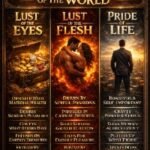 𝗧𝗛𝗘 𝗧𝗛𝗥𝗘𝗘 𝗧𝗘𝗠𝗣𝗧𝗔𝗧𝗜𝗢𝗡𝗦 𝗢𝗙 𝗧𝗛𝗘 𝗪𝗢𝗥𝗟𝗗
 𝗟𝗜𝗚𝗛𝗧 𝗦𝗛𝗜𝗡𝗘𝗦 𝗜𝗡 𝗧𝗛𝗘 𝗗𝗔𝗥𝗞𝗡𝗘𝗦𝗦
 𝗕𝗘𝗪𝗔𝗥𝗘: 𝗦𝗔𝗧𝗔𝗡 𝗕𝗔𝗜𝗧𝗦 𝗛𝗜𝗦 𝗛𝗢𝗢𝗞 𝗪𝗜𝗧𝗛 𝗬𝗢𝗨𝗥 𝗙𝗔𝗩𝗢𝗥𝗜𝗧𝗘 𝗦𝗜𝗡
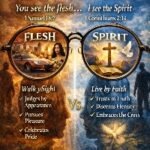 𝗪𝗘 𝗦𝗘𝗘 𝗧𝗛𝗘 𝗪𝗢𝗥𝗟𝗗 𝗧𝗛𝗥𝗢𝗨𝗚𝗛 𝗗𝗜𝗙𝗙𝗘𝗥𝗘𝗡𝗧 𝗟𝗘𝗡𝗦𝗘𝗦
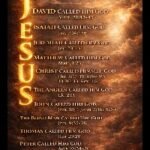 𝗪𝗛𝗢 𝗦𝗔𝗬𝗦 𝗝𝗘𝗦𝗨𝗦 𝗖𝗛𝗥𝗜𝗦𝗧 𝗜𝗦 𝗚𝗢𝗗?
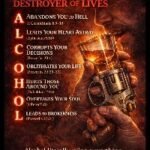 𝗔𝗟𝗖𝗢𝗛𝗢𝗟 — 𝗗𝗘𝗦𝗧𝗥𝗢𝗬𝗘𝗥 𝗢𝗙 𝗠𝗔𝗡𝗬 𝗟𝗜𝗩𝗘𝗦
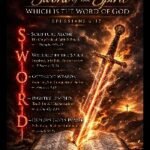 𝗧𝗛𝗘 𝗦𝗪𝗢𝗥𝗗 𝗢𝗙 𝗧𝗛𝗘 𝗦𝗣𝗜𝗥𝗜𝗧 — 𝗧𝗛𝗘 𝗪𝗢𝗥𝗗 𝗢𝗙 𝗚𝗢𝗗
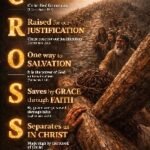 𝗧𝗛𝗘 𝗖𝗥𝗢𝗦𝗦: 𝗚𝗢𝗗’𝗦 𝗣𝗢𝗪𝗘𝗥 𝗙𝗢𝗥 𝗦𝗔𝗟𝗩𝗔𝗧𝗜𝗢𝗡
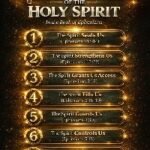 𝗧𝗛𝗘 𝟳 𝗕𝗟𝗘𝗦𝗦𝗜𝗡𝗚𝗦 𝗢𝗙 𝗧𝗛𝗘 𝗛𝗢𝗟𝗬 𝗦𝗣𝗜𝗥𝗜𝗧
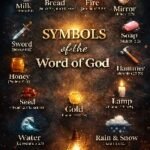 𝗦𝗬𝗠𝗕𝗢𝗟𝗦 𝗢𝗙 𝗧𝗛𝗘 𝗪𝗢𝗥𝗗 𝗢𝗙 𝗚𝗢𝗗