
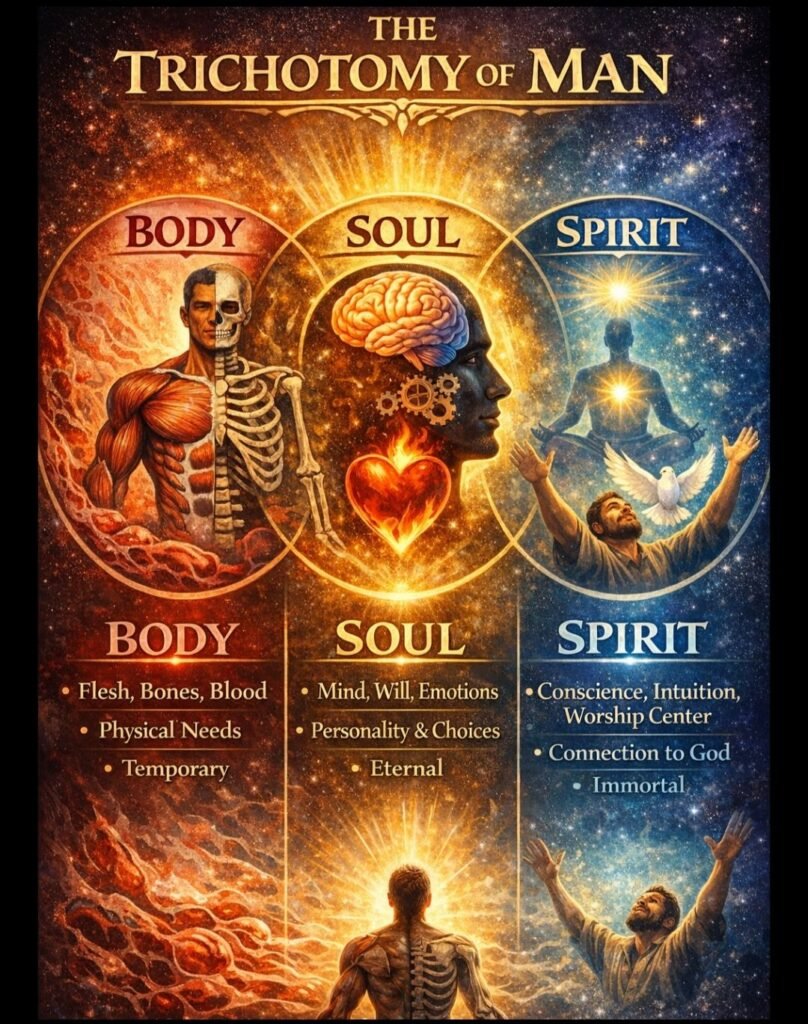
In the specialized field of spiritual forensics, a rigorous examination of the Pauline corpus identifies a structural complexity within the human constitution that is frequently overlooked by the casual observer. The investigator, operating under the current Administration of Grace, must acknowledge that the individual is not a monolithic entity but a tripartite construction. This diagnostic reality is established with clinical precision in 1 Thessalonians 5:23, where the Apostle records: “And the very God of peace sanctify you wholly; and I pray God your whole spirit and soul and body be preserved blameless unto the coming of our Lord Jesus Christ.” Under a dispensational framework, the clarity of this trichotomy is essential for the professional believer; without it, the mechanics of sanctification become a source of profound doctrinal confusion. The record indicates that man is a three-part being, wherein each component—body, soul, and spirit—possesses a distinct ontological function and responds to the redemptive process through a unique judicial timeline.
A foundational pillar of this inquiry begins with the acknowledgment that God deliberately distinguished these parts during the creative act. The investigative data in Genesis 2:7 clarifies that man’s construction was a sequential operation: “And the Lord God formed man of the dust of the ground, and breathed into his nostrils the breath of life; and man became a living soul.” This initial baseline reveals that the Creator did not blend man into a singular substance but built him as a complex interface of physical, psychological, and spiritual realities. Hebrews 4:12 provides the forensic methodology for identifying these boundaries, noting that the Word of God is “sharper than any twoedged sword, piercing even to the dividing asunder of soul and spirit, and of the joints and marrow.” The investigator concludes that while human philosophy often conflates the soul and spirit, the Sharp Sword of the Spirit recognizes a distinct separation.
The body is identified in the record as the physical vessel derived from the dust of the ground. This physiological component serves as the interface between the individual and the material world. Genesis 3:19 confirms the biological origin and eventual return of this vessel: “For dust thou art, and unto dust shalt thou return.” In the current investigative state, the body is recognized as being dependent on physical needs and, more critically, subject to the law of decay. 2 Corinthians 4:16 reports that “our outward man perish” daily. This “outward man” is the anatomical structure that houses the internal residents. It is characterized by sensory perception and physical appetite, yet it is currently in a state of “mortality” due to the historical breach of the Adamic covenant.
Residing within the physical vessel is the soul, described in the investigative report as the seat of personality and volition. While the body connects to the earth, the soul provides the mind that thinks, the mood that feels, and the motivation that chooses. Psalm 139:14 notes that the soul “knoweth right well,” indicating its cognitive capacity. Luke 12:19 provides an audit of the soul’s internal dialogue, where a man speaks to his soul regarding ease and pleasure. The soul is the psychological center where the individual processes their unique identity. It is the “I” of human existence, the bridge between the material body and the immaterial spirit. The investigator finds that the soul is the decision-making hub; it determines whether the directives of the spirit or the impulses of the body will govern the individual’s conduct.
The third and most profound component of this tripartite design is the spirit, which is distinguished as the God-conscious part of man. Proverbs 20:27 identifies this as “the candle of the Lord, searching all the inward parts of the belly.” The spirit is the faculty through which man discerns spiritual truth and communicates with the Divine. 1 Corinthians 2:11 asks, “For what man knoweth the things of a man, save the spirit of man which is in him?” This data suggests that the spirit is the highest part of the human constitution, designed for worship and spiritual discernment. Unlike the soul, which may be preoccupied with psychological comfort, the spirit is designed to be responsive to the Holy Spirit. Romans 8:16 documents this spiritual interface: “The Spirit itself beareth witness with our spirit, that we are the children of God.”
The investigative report shifts to the catastrophic damage inflicted upon all three parts by the entry of sin. Romans 5:12 records the viral spread of this corruption: “Wherefore, as by one man sin entered into the world, and death by sin; and so death passed upon all men.” The forensic audit of the Fall reveals a total system failure. The body became mortal and subject to disease (Romans 8:10). The soul became corrupted in its desires and motives, as the principle in Jeremiah 17:9 describes the heart as “deceitful above all things.” Most devastatingly, the spirit became “dead in trespasses and sins” (Ephesians 2:1). In this context, “death” is not an absence of existence but a total loss of spiritual connection to God. The unregenerate man is a spiritual corpse operating a corrupted soul within a dying body.
Deliverance from this state begins exclusively in the spirit. In the Pauline economy of salvation, regeneration is an instantaneous act of the Holy Spirit upon the human spirit. Ephesians 2:5 declares that God “hath quickened us together with Christ.” This “quickening” is the restoration of life to the dead spirit. At the moment of belief in the Gospel of Grace (1 Corinthians 15:1-4), the spirit of the believer is “created in righteousness and true holiness” (Ephesians 4:24). 1 Corinthians 6:17 provides the mechanical evidence of this new union: “But he that is joined unto the Lord is one spirit.” The investigator concludes that the believer is 100% saved in their spirit from the moment of faith; it is a completed judicial transaction.
While salvation is instantaneous in the spirit, the soul undergoes a separate process of development known as renewal. The investigator notes that the soul does not become “perfect” at the moment of belief; rather, it remains cluttered with old patterns of thinking and feeling. Romans 12:2 issues the administrative order for the soul: “And be not conformed to this world: but be ye transformed by the renewing of your mind.” This transformation is a progressive training of the soul to align its thinking with the truth of the Word. Colossians 3:10 describes this as “the new man, which is renewed in knowledge.” The Christian life is essentially a curriculum of soul-remodeling, where the mind is taught to set its “affection on things above” (Colossians 3:2).
The body, however, remains in a state of “waiting.” The forensic data in Romans 8:23 clarifies that even though the spirit is saved and the soul is being renewed, we ourselves “groan within ourselves, waiting for the adoption, to wit, the redemption of our body.” The body is currently “vile” and subject to the physical laws of a fallen world. The investigator finds that the salvation of the body is a future destiny, not a present reality. It awaits the “change” described in 1 Corinthians 15:52, when “the trumpet shall sound, and the dead shall be raised incorruptible.” At that moment, the Lord “shall change our vile body, that it may be fashioned like unto his glorious body” (Philippians 3:21). The body is the last component of the trichotomy to be fully reclaimed by the redemptive work.
The investigative report identifies that victory in the present age is determined by the discipline of right order among these three parts. Galatians 5:16 provides the tactical instruction: “Walk in the Spirit, and ye shall not fulfil the lust of the flesh.” Disorder within the trichotomy brings defeat; when the body and its appetites lead, the soul follows into carnality. Conversely, when the spirit leads—being governed by the Holy Spirit and the Word—the soul submits its thinking to the truth, and the body serves as an “instrument of righteousness” (Romans 6:13). Romans 12:1 describes the body’s role in this ordered system: “present your bodies a living sacrifice, holy, acceptable unto God, which is your reasonable service.”
The professional auditor concludes that confusion between these three parts is the primary cause of theological error. Legalism occurs when an individual attempts to save the soul or spirit through the performance of the body. Mysticism occurs when one confuses the emotions of the soul with the discernment of the spirit. Right division, however, identifies that the spirit is saved by grace, the soul is being renewed by truth, and the body will be redeemed by power. The believer is encouraged to maintain this distinction, recognizing that while the “outward man” perishes, the “inward man” is renewed day by day (2 Corinthians 4:16).
The summary of these findings indicates that man is a body to house him, a soul to express him, and a spirit to connect him to the Creator. In the current dispensation of grace, the believer possesses a “perfect” spirit, a “learning” soul, and a “dying” body. This forensic understanding allows the workman of God to “rightly divide the word of truth” (2 Timothy 2:15) as it applies to the different parts of his being. The investigation is finished, but the application is daily. Stand fast in the knowledge that your spirit is secured in Christ, while you diligently renew your mind and patiently await the glorification of your flesh.
Furthermore, the clinical audit of human conduct reveals that the “carnal mind” is essentially the soul and body working in a closed-loop system, ignoring the spirit. Romans 8:7 reports that “the carnal mind is enmity against God: for it is not subject to the law of God, neither indeed can be.” The investigator notes that many “psychological” problems in the believer are actually “spiritual” problems where the soul has refused to submit to the spirit’s leadership. The solution is not merely behavioral modification, but “spiritual discernment” (1 Corinthians 2:14), which allows the spirit to re-establish dominance over the soul’s thought patterns.
The investigation into the “conscience” identifies it as a specialized function within the human spirit. Romans 2:15 speaks of the conscience “bearing witness” and “accusing or else excusing” the thoughts. The investigator finds that the conscience is the judicial voice of the spirit. In the unregenerate man, the conscience may be “seared with a hot iron” (1 Timothy 4:2), but in the believer, it is to be a “conscience void of offence” (Acts 24:16). A healthy spirit maintains a clear conscience, which provides the soul with the emotional stability necessary for “the peace of God, which passeth all understanding” (Philippians 4:7).
The forensic report also addresses the “Law of Sin” residing in the physical members. Romans 7:23 provides a clinical description of this internal conflict: “But I see another law in my members, warring against the law of my mind, and bringing me into captivity to the law of sin which is in my members.” The investigator concludes that the “flesh” is not merely the anatomical tissue, but the ingrained tendency of the body and soul to act independently of God. Even with a saved spirit, the “members” of the body retain the memory of sin. Therefore, the body must be “kept under” and “brought into subjection” (1 Corinthians 9:27) through the power of the Spirit.
The audit of “Spiritual Growth” reveals it to be the process of the spirit expanding its influence over the soul. 2 Peter 3:18 encourages the believer to “grow in grace, and in the knowledge of our Lord and Saviour Jesus Christ.” This growth is not an increase in the “amount” of spirit one has—since the spirit is regenerated fully at once—but an increase in the spirit’s “territory” within the soul. As the soul learns the Word, it offers less resistance to the spirit. The investigator calls this the “increase of God” (Colossians 2:19).
The social implications of the tripartite design are also significant. 1 Corinthians 6:19-20 mandates a specific attitude toward the body: “What? know ye not that your body is the temple of the Holy Ghost which is in you… therefore glorify God in your body, and in your spirit, which are God’s.” The investigator finds that the believer’s physical health and habits are a matter of spiritual stewardship. Because the body is the “temple” of the internal Residents, its care is a prerequisite for effective ministry. The soul serves as the “priest” in this temple, offering up spiritual sacrifices through the body’s actions.
The investigation concludes that the “Final Redemption” will be the moment when the tripartite design is perfectly synchronized. In eternity, the gloried body will offer zero resistance to the renewed soul, which will be in total harmony with the spirit. Until then, the believer operates in a theater of war. The forensic advice is to rely on the “God of peace” who “sanctifies you wholly.” Sanctification is the process of setting all three parts—spirit, soul, and body—apart for God’s exclusive use.
The investigation into “Right Division” concludes that failing to distinguish between the soul and spirit often leads to “emotionalism” in worship. Many mistake a “soulful” experience—one centered on music or atmosphere—for a “spiritual” one. The investigator warns that the spirit responds to the Word (John 6:63), while the soul responds to the senses. True worship is done “in spirit and in truth” (John 4:24), which requires the mind to be engaged with doctrine, not just the emotions engaged with melody.
The final summary of the forensic audit is as follows:
- Man is a tripartite being, designed with distinct parts (1 Thess 5:23).
- The Body is a temporary vessel of dust, awaiting redemption (Rom 8:23).
- The Soul is the seat of personality, undergoing daily renewal (Rom 12:2).
- The Spirit is the God-conscious core, regenerated by grace (Eph 2:5).
- Sin corrupted all three, necessitating a total redemptive plan (Rom 5:12).
- Salvation proceeds from the Spirit (inward) to the Body (outward).
- Order brings victory: Spirit leads, Soul submits, Body serves.
The investigative findings are conclusive. The workman of God who understands the Trichotomy of Man is equipped to navigate the complexities of his own internal walk and the challenges of the world. He does not treat his body as an enemy, but as a sacrifice. He does not treat his soul as an authority, but as a student. He does not treat his spirit as a mystery, but as a new creation. “Walk in the Spirit, and ye shall not fulfil the lust of the flesh” (Galatians 5:16).
The forensic report is sealed with the administrative certainty of the Pauline revelation. This is the truth that provides balance in an age of carnal extremes. Whether facing the decay of the physical vessel or the turbulence of the psychological soul, the believer rests in the finished work that has already quickened his spirit. The battle for the soul continues, but the outcome is secured by the One who preserves us blameless unto His coming. Amen.
The investigation observes that the term “whole” in 1 Thessalonians 5:23 implies that a person is not complete if any part is neglected. A spiritual focus that ignores the renewal of the soul leads to “religious legalism,” where the spirit is supposedly right but the mind is still worldly. A focus that ignores the body leads to “asceticism,” which Paul warns has “no value against the indulgence of the flesh” (Colossians 2:23). The investigator finds that the “whole” man is only found in the balance of all three parts under the Lordship of Christ.
Finally, the audit of “Spiritual Warfare” (Ephesians 6:10-18) confirms that the armor of God is designed to protect the whole man. The helmet protects the mind (soul), the breastplate protects the heart (spirit/soul), and the sandals protect the walk (body). The investigator concludes that the believer is a “soldier” who must be fully equipped in every department of his being. To neglect the body is to lose the platform for the battle; to neglect the soul is to lose the strategy for the battle; to neglect the spirit is to lose the power for the battle. Take up the whole armor of God, that ye may be able to stand.
The forensic record is complete. The truth is established. The tripartite man is revealed. Wield this truth with precision and walk in the victory of the New Creation. “The grace of our Lord Jesus Christ be with your spirit. Amen” (Galatians 6:18).
Related posts:
 𝗕𝗘𝗟𝗜𝗘𝗩𝗘𝗥’𝗦 𝗕𝗔𝗧𝗧𝗟𝗘𝗙𝗜𝗘𝗟𝗗 𝗢𝗙 𝗧𝗛𝗘 𝗠𝗜𝗡𝗗
 𝗦𝗬𝗠𝗕𝗢𝗟𝗦 𝗢𝗙 𝗧𝗛𝗘 𝗪𝗢𝗥𝗗 𝗢𝗙 𝗚𝗢𝗗
 𝗧𝗛𝗘 𝗦𝗪𝗢𝗥𝗗 𝗢𝗙 𝗧𝗛𝗘 𝗦𝗣𝗜𝗥𝗜𝗧 — 𝗧𝗛𝗘 𝗪𝗢𝗥𝗗 𝗢𝗙 𝗚𝗢𝗗
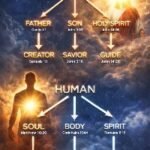 𝗚𝗢𝗗 𝗔𝗡𝗗 𝗠𝗔𝗡: 𝗥𝗜𝗚𝗛𝗧𝗟𝗬 𝗗𝗜𝗩𝗜𝗗𝗘𝗗 𝗗𝗘𝗦𝗜𝗚𝗡
 𝗛𝗢𝗪 𝗚𝗢𝗗 𝗗𝗘𝗖𝗟𝗔𝗥𝗘𝗦 𝗔 𝗦𝗜𝗡𝗡𝗘𝗥 𝗥𝗜𝗚𝗛𝗧𝗘𝗢𝗨𝗦
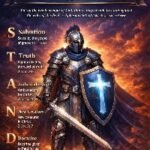 𝗧𝗛𝗘 𝗪𝗛𝗢𝗟𝗘 𝗔𝗥𝗠𝗢𝗥 𝗢𝗙 𝗚𝗢𝗗
 𝗧𝗛𝗘 𝗛𝗢𝗟𝗬 𝗧𝗥𝗜𝗡𝗜𝗧𝗬
 𝗧𝗛𝗘 𝗕𝗥𝗔𝗜𝗡 𝗠𝗨𝗦𝗧 𝗕𝗘 𝗪𝗔𝗧𝗘𝗥𝗘𝗗 𝗪𝗜𝗧𝗛 𝗧𝗛𝗘 𝗪𝗢𝗥𝗗 𝗢𝗙 𝗚𝗢𝗗 𝗗𝗔𝗜𝗟𝗬
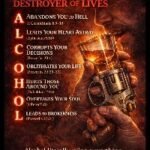 𝗔𝗟𝗖𝗢𝗛𝗢𝗟 — 𝗗𝗘𝗦𝗧𝗥𝗢𝗬𝗘𝗥 𝗢𝗙 𝗠𝗔𝗡𝗬 𝗟𝗜𝗩𝗘𝗦
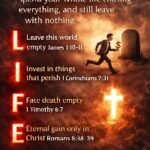 𝗟𝗜𝗙𝗘 — 𝗧𝗛𝗘 𝗚𝗥𝗘𝗔𝗧 𝗘𝗧𝗘𝗥𝗡𝗔𝗟 𝗤𝗨𝗘𝗦𝗧𝗜𝗢𝗡