
INTRODUCTION
Words are never neutral. Across cultures, centuries, and civilizations, speech has shaped empires, ignited revolutions, healed divisions, and inflicted wounds that outlast generations. In Scripture, words are treated not as casual expressions but as moral indicators—evidence of what governs the heart and whom a person ultimately serves. The Bible repeatedly connects speech to spiritual condition, personal maturity, and eternal accountability.
In the present dispensation of grace, this connection becomes even more pronounced. Believers are no longer defined by ceremonial observance or national identity, but by a new position in Christ. The Apostle Paul urges Christians to “walk worthy of the vocation wherewith ye are called” (Ephesians 4:1). That calling does not begin with outward behavior alone; it begins with the mouth.
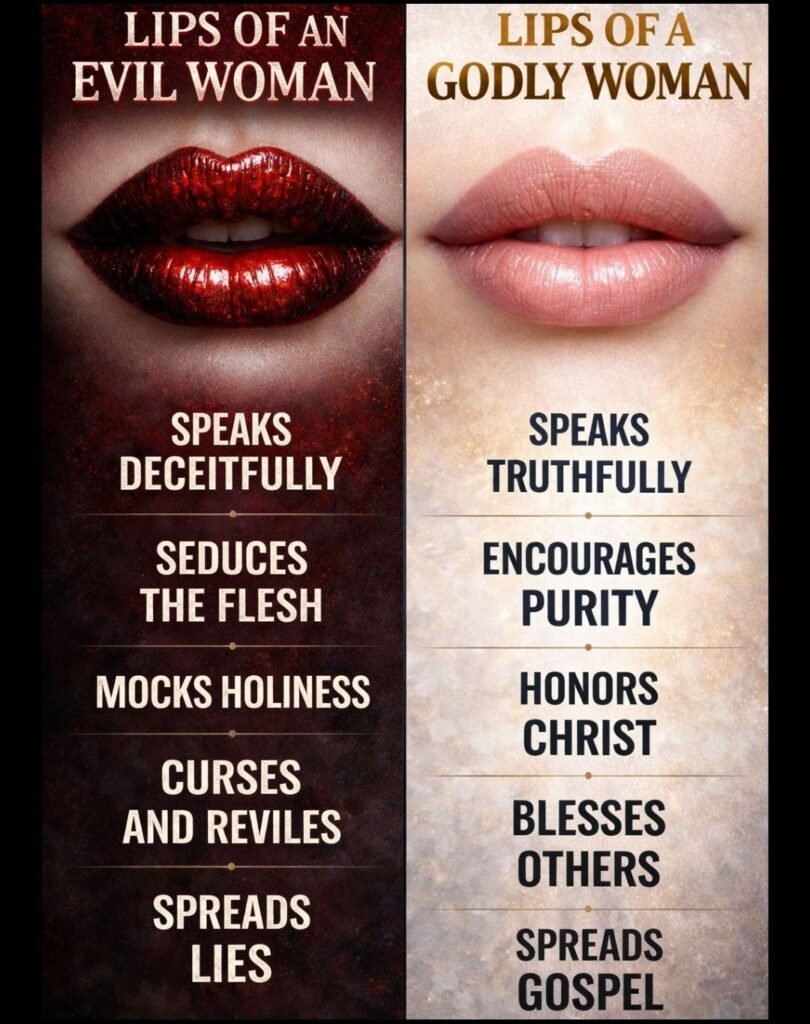
The image before us—two mouths conveying two opposing messages—captures a fundamental spiritual reality. One set of lips leads others astray, fueled by flesh, pride, and deception. The other lifts, strengthens, and directs attention toward Christ. Both speak. Both influence. But only one aligns with God’s will in this age of grace.
This article examines the biblical contrast between destructive and redemptive speech. It explores how language reveals allegiance, how grace transforms communication, and why the tongue remains one of the clearest indicators of spiritual direction. Far from being a secondary issue, speech stands at the intersection of doctrine, discipleship, and daily Christian witness.
1. SINFUL SPEECH AND SANCTIFIED SPEECH
Scripture draws a sharp distinction between speech that wounds and speech that heals. Proverbs states, “There is that speaketh like the piercings of a sword: but the tongue of the wise is health” (Proverbs 12:18). Words can cut deeply, leaving unseen scars, or they can function as instruments of restoration.
Sinful speech is not limited to profanity or overt cruelty. It includes careless criticism, manipulative flattery, gossip disguised as concern, and truth spoken without love or restraint. Such speech originates from self-centered motives and often seeks control, validation, or superiority.
By contrast, sanctified speech reflects submission to God’s grace. Paul instructs believers, “Let your speech be alway with grace, seasoned with salt” (Colossians 4:6). Grace-seasoned words are neither bland nor harsh; they preserve truth while offering life.
Spiritual maturity is frequently measured by how a believer speaks under pressure. When circumstances provoke anger, fear, or pride, the tongue reveals whether the flesh or the Spirit is in control. Evil lips destroy relationships and distort doctrine; godly lips disciple, instruct, and guide others toward Christ.
2. SEDUCTION AND SUBMISSION
The Bible does not shy away from addressing seductive speech. Proverbs warns that “the lips of a strange woman drop as an honeycomb” (Proverbs 5:3), highlighting how smooth words can appeal to fleshly desire while concealing spiritual danger. Seduction is not confined to sexuality; it includes any speech that entices people away from obedience through emotional manipulation or sensual appeal.
Seductive lips focus on pleasure, image, and self-expression without restraint. They flatter human desire and normalize indulgence. In contrast, submitted lips yield to God’s will, offering the body—including speech—as a living sacrifice (Romans 12:1).
Sound doctrine acts as a restraint on sensual language. Grace does not loosen moral boundaries; it teaches believers to deny ungodliness. Words shaped by grace reflect reverence, self-control, and clarity of purpose. Instead of advertising the flesh, they point others toward transformation.
3. SCOFFING HOLINESS AND SERVING CHRIST
Mockery of righteousness has always been a marker of spiritual resistance. Psalm 1 warns against sitting “in the seat of the scornful,” linking scoffing speech with separation from God’s counsel. Derision toward holiness often masks an unwillingness to submit to it.
Godly speech, by contrast, is vocational. Paul describes believers as “ambassadors for Christ” (2 Corinthians 5:20). An ambassador’s words represent another authority. Speech that serves Christ seeks reconciliation, not ridicule.
What a person mocks reveals what they reject. Speech that trivializes holiness or dismisses biblical truth indicates allegiance to self rather than submission to the Savior. Words do not merely express opinions; they disclose loyalties.
4. SWEARING, CURSING, AND SPEAKING BLESSING
James addresses the contradiction of blessing God while cursing those made in His image (James 3:9–10). Such inconsistency exposes a divided heart. The mouth, James argues, cannot consistently produce both fresh and bitter water.
Paul reinforces this principle: “Let no corrupt communication proceed out of your mouth, but that which is good to the use of edifying” (Ephesians 4:29). Grace-based speech seeks to build, not degrade.
Saved lips should not mirror the language of those who have no regard for God. While cultural norms may excuse coarse speech, Scripture calls believers to a higher standard—one shaped by reverence, restraint, and intentional blessing.
5. SPREADING LIES AND SPEAKING SOUND TRUTH
Truthfulness is central to God’s character. Proverbs declares, “Lying lips are abomination to the Lord” (Proverbs 12:22). Yet Scripture also warns that truth mishandled can be as harmful as falsehood.
Paul exhorts Timothy to “rightly divide the word of truth” (2 Timothy 2:15). Accuracy matters. Context matters. Motive matters. Truth spoken recklessly can confuse, wound, and mislead.
Godly lips do not merely repeat facts; they communicate truth with clarity and responsibility. In an era saturated with misinformation and theological distortion, careful speech becomes an act of stewardship.
6. SELF-GLORIFYING AND SAVIOUR-EXALTING SPEECH
Human speech naturally gravitates toward self-promotion. Social platforms amplify this tendency, rewarding visibility and affirmation. Scripture, however, redirects attention upward: “Not unto us, O Lord, not unto us, but unto thy name give glory” (Psalm 115:1).
Paul declared that his only boast was the cross of Christ (Galatians 6:14). Grace dismantles pride by shifting glory from human achievement to divine accomplishment.
Who a person praises reveals who they serve. Lips that constantly magnify appearance, success, or self-expression betray misplaced allegiance. Godly lips consistently return glory to Christ and His finished work.
7. STUMBLING OTHERS AND STRENGTHENING SAINTS
Speech has communal consequences. Paul warns believers not to use words that cause others to stumble (Romans 14:13). Careless language can undermine faith, provoke doubt, or legitimize sin.
Conversely, encouraging words strengthen the body of Christ. “Wherefore comfort yourselves together, and edify one another” (1 Thessalonians 5:11). Growth within the church depends not only on doctrine taught from pulpits but on conversations carried out in daily life.
Grace builds the body, not individual egos. Words that strengthen others reflect a Spirit-led concern for collective maturity.
8. SATANIC INFLUENCE AND SPIRITUAL FRUIT
Jesus identified Satan as “a liar, and the father of it” (John 8:44). Deception originates from rebellion against truth. By contrast, the fruit of the Spirit includes gentleness, self-control, and goodness (Galatians 5:22–23), qualities that shape speech.
The tongue reveals influence. Persistent deceit, hostility, and division suggest submission to destructive forces. Words marked by patience, kindness, and truth indicate the Spirit’s work within.
The tongue often speaks before actions are visible. It becomes the loudest witness of a person’s walk.
9. SILENCE AND THE GOSPEL
Paul declared, “I am not ashamed of the gospel of Christ” (Romans 1:16). Silence about salvation can stem from fear, complacency, or misplaced priorities.
The gospel is a message meant to be proclaimed. Paul reminded the Corinthians of the gospel he had preached—Christ’s death, burial, and resurrection (1 Corinthians 15:1–4). Grace received privately must eventually be spoken publicly.
Saved people are speaking people. Grace, by its nature, seeks expression.
CONCLUSION
Two sets of lips. Two directions. Two outcomes.
One corrupts while the other converts. One seduces while the other saves. One glorifies the flesh; the other honors Christ.
Speech is not a peripheral issue in the Christian life. It is central evidence of transformation. In the age of grace, believers are called not merely to believe rightly, but to speak consistently with their new identity.
CALL TO ACTION
Examine your speech. Submit your tongue to Christ. Speak grace, truth, and the gospel with clarity and conviction.
Let your lips match your position in Christ.
FINAL THOUGHTS
You were saved by faith, not by words. Yet your words now testify to that faith.
In this age of grace, let your lips become instruments of truth, purity, and gospel proclamation.
Related posts:
 𝗟𝗘𝗧 𝗬𝗢𝗨𝗥 𝗪𝗢𝗥𝗗𝗦 𝗥𝗘𝗙𝗟𝗘𝗖𝗧 𝗬𝗢𝗨𝗥 𝗛𝗘𝗔𝗥𝗧
 𝗧𝗛𝗘 𝗧𝗢𝗡𝗚𝗨𝗘: 𝗕𝗟𝗘𝗦𝗦𝗜𝗡𝗚 𝗢𝗥 𝗖𝗨𝗥𝗦𝗘
 𝗢𝗡𝗘 𝗠𝗢𝗨𝗧𝗛… 𝗠𝗔𝗡𝗬 𝗧𝗢𝗡𝗚𝗨𝗘𝗦
 𝗛𝗢𝗪 𝗧𝗢 𝗖𝗢𝗡𝗧𝗥𝗢𝗟 𝗬𝗢𝗨𝗥 𝗧𝗢𝗡𝗚𝗨𝗘?
 𝗧𝗛𝗘 𝗣𝗢𝗪𝗘𝗥 𝗢𝗙 𝗧𝗛𝗘 𝗧𝗢𝗡𝗚𝗨𝗘: 𝗗𝗘𝗔𝗧𝗛 𝗢𝗥 𝗟𝗜𝗙𝗘
 𝗜𝗡𝗙𝗟𝗨𝗘𝗡𝗖𝗜𝗡𝗚 𝗢𝗧𝗛𝗘𝗥𝗦 𝗧𝗢 𝗛𝗔𝗧𝗘: 𝗧𝗛𝗘 𝗦𝗣𝗜𝗥𝗜𝗧𝗨𝗔𝗟 𝗗𝗔𝗡𝗚𝗘𝗥
 𝗟𝗜𝗙𝗘 𝗔𝗡𝗗 𝗗𝗘𝗔𝗧𝗛 𝗔𝗥𝗘 𝗜𝗡 𝗧𝗛𝗘 𝗣𝗢𝗪𝗘𝗥 𝗢𝗙 𝗧𝗛𝗘 𝗧𝗢𝗡𝗚𝗨𝗘
 𝗦𝗣𝗘𝗔𝗞 𝗟𝗜𝗙𝗘!
 𝗧𝗛𝗘 𝗗𝗔𝗡𝗚𝗘𝗥𝗢𝗨𝗦 𝗣𝗢𝗪𝗘𝗥 𝗢𝗙 𝗧𝗛𝗘 𝗠𝗢𝗨𝗧𝗛
 𝗧𝗛𝗘 𝗣𝗢𝗪𝗘𝗥 𝗔𝗡𝗗 𝗣𝗘𝗥𝗜𝗟 𝗢𝗙 𝗧𝗛𝗘 𝗧𝗢𝗡𝗚𝗨𝗘
 𝗧𝗛𝗘 𝗠𝗢𝗨𝗧𝗛 𝗧𝗛𝗔𝗧 𝗠𝗔𝗚𝗡𝗜𝗙𝗜𝗘𝗦 𝗖𝗛𝗥𝗜𝗦𝗧
 𝗬𝗢𝗨𝗥 𝗠𝗢𝗨𝗧𝗛 𝗥𝗘𝗩𝗘𝗔𝗟𝗦 𝗬𝗢𝗨𝗥 𝗛𝗘𝗔𝗥𝗧
 𝗕𝗥𝗜𝗖𝗞 𝗪𝗔𝗟𝗟 𝗘𝗔𝗥𝗦 𝘃𝘀 𝗕𝗥𝗔𝗦𝗦 𝗭𝗜𝗣𝗣𝗘𝗥 𝗟𝗜𝗣𝗦
 𝗧𝗛𝗘 𝗠𝗢𝗨𝗧𝗛 𝗥𝗘𝗩𝗘𝗔𝗟𝗦 𝗧𝗛𝗘 𝗛𝗘𝗔𝗥𝗧