THE MAGNA CARTA OF THE MYSTERY: A FORENSIC ANALYSIS OF THE GOSPEL OF G.R.A.C.E.
In the contemporary landscape of ecclesiastical discourse, where the waters of doctrine are often muddied by the silt of human tradition and the debris of legalistic ritual, there remains a singular, crystalline revelation that defines the present age. This investigative report asserts that the “Gospel of the Grace of God” is not merely one of many religious options, but the solitary, divinely mandated administration for the inhabitant of the twenty-first century. According to the Dispensation of the Grace of God, committed exclusively to the Apostle Paul for us Gentiles, salvation has been stripped of human effort and clothed entirely in Divine merit. The diagnostic baseline for this inquiry is the forensic summary found in 1 Corinthians 15:1–4, which declares the death, burial, and resurrection of Christ as the total and sufficient ground for man’s justification.
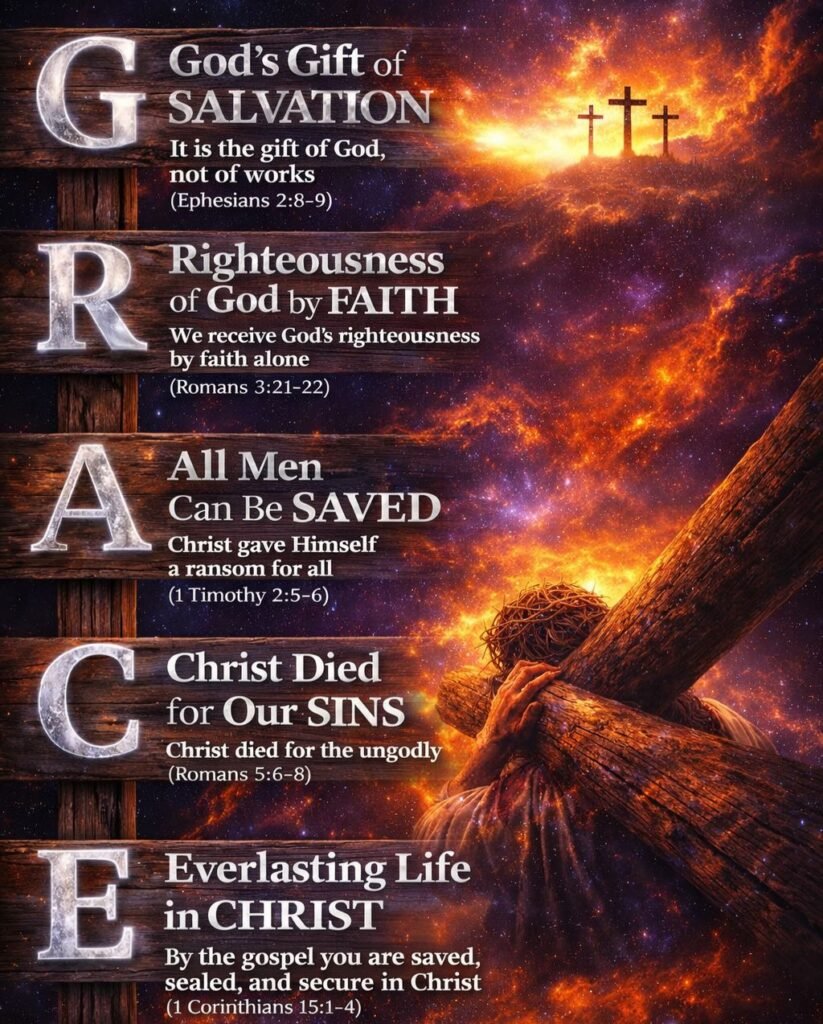
As we “rightly divide the word of truth” (2 Timothy 2:15), we must distinguish between the “Prophetic Program” concerning Israel’s earthly kingdom and the “Mystery Program” concerning the Body of Christ. The investigator finds that when these are conflated, the result is spiritual paralysis. However, when viewed through the lens of Pauline revelation, the Gospel of Grace emerges as a five-fold architecture of redemption, identified by the acronym G.R.A.C.E.
G — THE GIFT OF GOD: THE ANATOMY OF UNMERITED FAVOR
Investigating the Forensic Exclusion of Human Works
The primary finding of this investigation reveals that salvation is an architectural masterpiece of God in which man provided neither the blueprints nor the labor. The forensic record in Ephesians 2:8–9 is absolute: “For by grace are ye saved through faith; and that not of yourselves: it is the gift of God: Not of works, lest any man should boast.”
The investigator identifies Grace as Freely Given. In the current administration, the “wages” of sin is death, but the “gift” of God is eternal life (Romans 6:23). This gift is “being justified freely by his grace through the redemption that is in Christ Jesus” (Romans 3:24). Furthermore, Grace is God’s Initiative. The forensic audit shows that man did not seek God; God reached down in the person of Christ. “Not by works of righteousness which we have done, but according to his mercy he saved us” (Titus 3:5).
This grace is Grounded in Christ, for God “hath saved us… according to his own purpose and grace, which was given us in Christ Jesus before the world began” (2 Timothy 1:9). Because it is a gift, Grace Glorifies God Alone. It ensures that “no flesh should glory in his presence” (1 Corinthians 1:29). Finally, Grace Guarantees Salvation. If it were based on works, it could be lost through failure; but being based on grace, it is immutable. “And if by grace, then is it no more of works: otherwise grace is no more grace” (Romans 11:6). The investigator finds that a “gift” with a price tag is not a gift, but a purchase; salvation remains a pure, unadulterated donation from the Creator to the creature.
R — RIGHTEOUSNESS BY FAITH: THE DOCTRINE OF IMPUTATION
A Forensic Audit of the Believer’s Standing
The investigation moves from the “source” of salvation to the “status” of the saved. The problem facing humanity is not merely a lack of “goodness,” but a total absence of “righteousness.” The forensic record indicates that God’s righteousness is not something man achieves through the Law, but something God imputes through faith.
The investigator find that Righteousness is Revealed Apart from Law. In Romans 3:21, Paul declares that “the righteousness of God without the law is manifested.” It is a Righteousness Received by Faith, for “to him that worketh not, but believeth on him that justifieth the ungodly, his faith is counted for righteousness” (Romans 4:5).
This leads to the forensic miracle of Imputation. David described the blessedness of the man “unto whom God humbleth righteousness without works” (Romans 4:6). This righteousness is Rooted in Christ, involving a “Great Exchange”: “For he hath made him to be sin for us, who knew no sin; that we might be made the righteousness of God in him” (2 Corinthians 5:21). Consequently, this Righteousness Removes Condemnation. The investigator finds that the “Justified” sinner stands before God “holy and unblameable and unreproveable in his sight” (Colossians 1:22). There is “therefore now no condemnation to them which are in Christ Jesus” (Romans 8:1). The investigator finds that the believer is not “working for” a standing, but “standing in” a finished work.
A — ALL MEN MAY BE SAVED: THE UNIVERSAL SCOPE OF THE GOSPEL
Investigating the Reach of the Mystery Revelation
A significant finding of this report is that the Gospel of Grace has shattered the national and religious barriers of the previous dispensations. While God formerly dealt primarily with the nation of Israel, the current “Mystery” program addresses all humanity without distinction.
The investigator find that All are Accountable Sinners. The diagnostic baseline in Romans 3:23 is universal: “For all have sinned, and come short of the glory of God.” However, the provision is equally wide: All are Able to Believe. “For whosoever shall call upon the name of the Lord shall be saved” (Romans 10:13). The forensic mandate is that All are Addressed by the Gospel. Paul notes that the gospel was “preached to every creature which is under heaven” (Colossians 1:23).
In this dispensation, All are Accepted in Christ upon believing. We are “accepted in the beloved” (Ephesians 1:6), regardless of past heritage or pedigree. Finally, All are Assured if They Believe. “Therefore being justified by faith, we have peace with God through our Lord Jesus Christ” (Romans 5:1). The investigator finds that while salvation is not universal (all are not saved), the offer is universal (all may be saved). God is “not willing that any should perish,” and He “will have all men to be saved” (1 Timothy 2:4).
C — CHRIST DIED FOR OUR SINS: THE FINISHED WORK AT CALVARY
The Forensic Analysis of the Substitutionary Sacrifice
The investigation identifies the “engine” of the Gospel as the vicarious death of Jesus Christ. Without the shedding of blood, there is no remission, and without the resurrection, faith is vain. The forensic cornerstone is Romans 5:8: “But God commendeth his love toward us, in that, while we were yet sinners, Christ died for us.”
The investigator find that Christ was Crucified for Sin. He did not die as a martyr to a cause, but as a substitute for a person. “Christ died for our sins according to the scriptures” (1 Corinthians 15:3). Christ was Buried as Proof of the reality of His death (1 Corinthians 15:4), and Christ was Conquering Death in His bodily resurrection on the third day.
Through this act, Christ Completed Redemption. He “offered one sacrifice for sins for ever” (Hebrews 10:12). There is no “ongoing” sacrifice; the work is finished. Therefore, Christ Calls for Faith, Not Works. “Knowing that a man is not justified by the works of the law, but by the faith of Jesus Christ” (Galatians 2:16). The investigator finds that adding human effort to the finished work of Christ is not “helping” God; it is insulting the sufficiency of the Cross.
E — EVERLASTING LIFE IN CHRIST: THE SECURITY OF THE SEALED
Investigating the Eternal Duration of Grace-Based Salvation
The final pillar of this inquiry is the “Security of the Believer.” If salvation is by grace, it is maintained by grace. The forensic record indicates that the believer is not merely “renting” a spot in heaven, but is “sealed” for eternity.
The investigator find that Eternal Life is a Present Possession. It is not something we hope to get when we die; it is something the believer has now. “He that believeth on the Son hath everlasting life” (John 3:36). Furthermore, Eternal Security is Guaranteed. Upon believing, you were “sealed with that holy Spirit of promise” (Ephesians 1:13). Your Eternal Standing is in Christ, and you are “complete in him” (Colossians 2:10).
The investigator find that this Eternal Sealing by the Spirit is effective “unto the day of redemption” (Ephesians 4:30). Even when the believer is unfaithful, God remains faithful to His seal. This leads to an Eternal Hope that is Glorious. We are “looking for that blessed hope, and the glorious appearing of the great God and our Saviour Jesus Christ” (Titus 2:13). The investigator finds that the “Gospel of Grace” provides a peace that the “Gospel of Works” can never offer, for the former rests on the character of God, while the latter rests on the instability of man.
THE INVESTIGATIVE SUMMARY: THE VERDICT OF REDEMPTION
The evidence gathered in this forensic investigation is conclusive: the “Gospel of Grace” is the only divine solution for the human dilemma. It is a message that humbles the sinner, exalts the Savior, and provides an unshakable foundation for the soul.
The forensic summary identifies three critical distinctions:
- It is not about what you DO: Human effort is forensically excluded.
- It is about what CHRIST DID: His finished work is forensically sufficient.
- Right Division is Required: We are “not under the law, but under grace” (Romans 6:14).
The final verdict is rendered: Grace is the only way to God, Faith is the only way to Grace, and Christ is the only object of Faith.
CALL TO ACTION: THE AMBASSADOR’S DIRECTIVE
In light of the findings of this report, the investigator issues the following forensic mandates to every reader:
- Recognize Your Sinfulness: Accept the divine indictment that “all have sinned” (Romans 3:23).
- Realize Christ Paid It All: Acknowledge that the debt of sin was fully liquidated at Calvary (1 Corinthians 15:3–4).
- Rely on Christ Alone: Stop trusting in your baptism, your church membership, or your “good life.” “Believe on the Lord Jesus Christ, and thou shalt be saved” (Acts 16:31).
- Rest in His Finished Work: “But to him that worketh not, but believeth… his faith is counted for righteousness” (Romans 4:5).
- Rejoice in Eternal Security: “Being justified by faith, we have peace with God” (Romans 5:1).
FINAL THOUGHTS: THE ARCHIVE OF THE DISPENSATION
- Grace is not a license to sin—it is liberty to serve: “Shall we continue in sin, that grace may abound? God forbid” (Romans 6:1-2).
- Salvation is not a process—it is a position: You are “placed” in Christ the moment you believe.
- Christianity is not religion—it is relationship: Religion is man reaching up; Grace is God reaching down.
- The cross is not partial—it is perfect: “It is finished” means nothing more can be added.
- The Gospel is not complicated—it is clear: Believe the record God has given of His Son.
G — Gift, not works. R — Righteousness by faith. A — Available to all. C — Christ finished it. E — Eternal security.
The investigator find that the world is searching for a “Ladder” to reach God, but God has provided a “Lift” through the Gospel of Grace. “Thanks be unto God for his unspeakable gift.” (2 Corinthians 9:15)
Related posts:
 𝗦𝗔𝗟𝗩𝗔𝗧𝗜𝗢𝗡 𝗜𝗦 𝗡𝗢𝗧 𝗬𝗢𝗨𝗥 𝗚𝗢𝗢𝗗 𝗪𝗢𝗥𝗞𝗦𝗜𝗧 𝗜𝗦 𝗚𝗢𝗗 𝗙𝗜𝗡𝗜𝗦𝗛𝗘𝗗 𝗪𝗢𝗥𝗞 𝗢𝗡 𝗧𝗛𝗘 𝗖𝗥𝗢𝗦𝗦
 𝗝𝗘𝗦𝗨𝗦 𝗖𝗛𝗥𝗜𝗦𝗧: 𝗧𝗛𝗘 𝗢𝗡𝗟𝗬 𝗦𝗔𝗩𝗜𝗢𝗥
 𝗛𝗔𝗥𝗗 𝗧𝗥𝗨𝗧𝗛: 𝗥𝗘𝗟𝗜𝗚𝗜𝗢𝗡 𝗪𝗜𝗧𝗛𝗢𝗨𝗧 𝗖𝗛𝗥𝗜𝗦𝗧 𝗦𝗧𝗜𝗟𝗟 𝗟𝗘𝗔𝗗𝗦 𝗧𝗢 𝗛𝗘𝗟𝗟
 𝗘𝗔𝗦𝗜𝗘𝗥 𝗙𝗢𝗥 𝗔 𝗖𝗔𝗠𝗘𝗟 𝗧𝗢 𝗚𝗢 𝗧𝗛𝗥𝗢𝗨𝗚𝗛 𝗧𝗛𝗘 𝗘𝗬𝗘 𝗢𝗙 𝗔 𝗡𝗘𝗘𝗗𝗟𝗘
 𝗟𝗜𝗙𝗘 𝗪𝗜𝗧𝗛𝗢𝗨𝗧 𝗝𝗘𝗦𝗨𝗦 𝘃𝘀 𝗟𝗜𝗙𝗘 𝗪𝗜𝗧𝗛 𝗝𝗘𝗦𝗨𝗦
 𝗜𝗚𝗡𝗢𝗥𝗜𝗡𝗚 𝗧𝗛𝗘 𝗧𝗥𝗨𝗧𝗛 𝗗𝗢𝗘𝗦𝗡’𝗧 𝗖𝗛𝗔𝗡𝗚𝗘 𝗧𝗛𝗘 𝗧𝗥𝗨𝗧𝗛
 𝗟𝗢𝗩𝗘: 𝗜 𝗖𝗢𝗨𝗟𝗗𝗡’𝗧 — 𝗛𝗘 𝗗𝗜𝗗
 𝗥𝗜𝗚𝗛𝗧𝗟𝗬 𝗗𝗜𝗩𝗜𝗗𝗜𝗡𝗚 𝗣𝗘𝗧𝗘𝗥 𝗗𝗢𝗖𝗧𝗥𝗜𝗡𝗘 𝘃𝘀 𝗣𝗔𝗨𝗟 𝗗𝗢𝗖𝗧𝗥𝗜𝗡𝗘
 𝗢𝗡𝗘 𝗟𝗔𝗦𝗧 𝗖𝗛𝗔𝗡𝗖𝗘 𝗪𝗔𝗦𝗧𝗘𝗗
 𝗧𝗛𝗘𝗥𝗘 𝗜𝗦 𝗡𝗢 𝗥𝗘𝗦𝗧 𝗜𝗡 𝗣𝗘𝗔𝗖𝗘 𝗪𝗜𝗧𝗛𝗢𝗨𝗧 𝗖𝗛𝗥𝗜𝗦𝗧
 𝗛𝗢𝗪 𝗚𝗢𝗗 𝗗𝗘𝗖𝗟𝗔𝗥𝗘𝗦 𝗔 𝗦𝗜𝗡𝗡𝗘𝗥 𝗥𝗜𝗚𝗛𝗧𝗘𝗢𝗨𝗦
 𝗧𝗛𝗘 𝗘𝗠𝗣𝗧𝗬 𝗧𝗢𝗠𝗕: 𝗧𝗛𝗘 𝗚𝗥𝗘𝗔𝗧𝗘𝗦𝗧 𝗣𝗥𝗢𝗢𝗙 𝗢𝗙 𝗖𝗛𝗥𝗜𝗦𝗧
 𝗔 𝗧𝗛𝗔𝗡𝗞𝗙𝗨𝗟 𝗦𝗜𝗡𝗡𝗘𝗥 𝗦𝗔𝗩𝗘𝗗 𝗕𝗬 𝗚𝗥𝗔𝗖𝗘
 𝗪𝗔𝗥𝗡𝗜𝗡𝗚: 𝗥𝗘𝗝𝗘𝗖𝗧𝗜𝗡𝗚 𝗖𝗛𝗥𝗜𝗦𝗧 𝗜𝗦 𝗥𝗘𝗝𝗘𝗖𝗧𝗜𝗡𝗚 𝗬𝗢𝗨𝗥 𝗢𝗡𝗟𝗬 𝗪𝗔𝗬 𝗧𝗢 𝗛𝗘𝗔𝗩𝗘𝗡