The spiritual climate of the current administration of grace reveals a theater of operation that is fundamentally distinct from the physical conflicts of human history. A forensic investigation into the Pauline epistles, specifically the tactical directives found in Ephesians 6:10–18, establishes that the believer is not a civilian in a time of peace but a conscripted warrior in a cosmic engagement. This investigative report addresses the methodology of spiritual combat, identifying that the battlefield is not comprised of flesh and blood, but is a structural contest against principalities, against powers, and against the rulers of the darkness of this world. In the specialized field of dispensational truth, the Christian warrior is identified as a member of the Body of Christ, equipped not with carnal ordnance but with the “whole armour of God.” The diagnostic baseline for this conflict is found in 2 Corinthians 10:4: “For the weapons of our warfare are not carnal, but mighty through God to the pulling down of strongholds.”
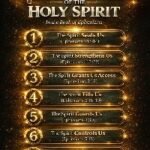
A foundational pillar of the warrior’s efficacy begins with the necessity to walk in the Spirit, a directive that serves as the biological and spiritual pulse of the new creation. Galatians 5:16 provides the administrative mandate: “Walk in the Spirit, and ye shall not fulfil the lust of the flesh.” The investigation concludes that spiritual victory is impossible if the warrior remains tethered to the impulses of the old nature. To walk in the Spirit is to operate under a higher law—the law of the Spirit of life in Christ Jesus, which Romans 8:2 identifies as the agent of liberation from the law of sin and death. This Spirit-led existence is not a matter of mystical feeling but of forensic alignment with the indwelling Holy Spirit. The record indicates that those who are led by the Spirit are strengthened with might in the inner man, as recorded in Ephesians 3:16, providing the internal fortitude required to withstand the pressures of a hostile environment.
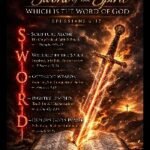
The investigative audit of the warrior’s equipment reveals that one must be systematically armed with God’s truth. Under the Pauline framework, truth is not a subjective preference but a documented reality found in the rightly divided Word. 2 Timothy 2:15 establishes the professional standard for the soldier: “Study to shew thyself approved unto God, a workman that needeth not to be ashamed, rightly dividing the word of truth.” A warrior who fails to distinguish between the various administrations of God’s dealings with man is a warrior who enters the field with a dull blade. Sound doctrine, as mandated in Titus 2:1, acts as the structural anchor that prevents the believer from being tossed to and fro by every wind of doctrine. The investigation finds that the “sword of the Spirit,” which is the word of God, is the only offensive weapon capable of piercing the deceptive stratagems of the adversary.
The moral integrity of the combatant is secured by being righteous in Christ, a state that the investigator identifies as a forensic imputation rather than a human achievement. 2 Corinthians 5:21 records the “great exchange” of the divine court: “For he hath made him to be sin for us, who knew no sin; that we might be made the righteousness of God in him.” This imputed righteousness serves as the “breastplate” that protects the vital organs of the warrior’s spiritual life. The audit confirms that self-righteousness is a porous defense that fails under the scrutiny of the enemy’s accusations. However, the righteousness given by grace, as documented in Romans 3:22, provides an impenetrable barrier. This new identity as a “new creature” (2 Corinthians 5:17) transforms the warrior’s conduct, enabling them to yield their members as instruments of righteousness unto God, as instructed in Romans 6:13.
The investigative report further analyzes the requirement to resist the devil, an action that demands both vigilance and submission to divine authority. 1 Peter 5:8 provides the intelligence report on the adversary: “Be sober, be vigilant; because your adversary the devil, as a roaring lion, walketh about, seeking whom he may devour.” The warrior is not instructed to engage the enemy in their own strength, but to stand firm in the power of the Lord. The directive in Ephesians 6:13 is specific: “Wherefore take unto you the whole armour of God, that ye may be able to withstand in the evil day, and having done all, to stand.” The investigator finds that resistance is not a physical struggle but a positional stance. By relying on the promise that “the God of peace shall bruise Satan under your feet shortly” (Romans 16:20), the warrior maintains a posture of victory even in the heat of temptation.
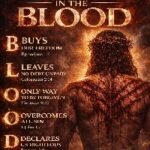
A warrior’s stability is directly proportional to their understanding of their identity in Christ. The forensic data in Ephesians 1:7 identifies the believer as being redeemed through His blood and forgiven of sins. This is not a tentative hope but a sealed reality. The investigation notes that the Holy Spirit acts as the “earnest” or down payment of our inheritance, sealing the believer until the day of redemption (Ephesians 1:13-14). This identity includes being “accepted in the beloved” (Ephesians 1:6), a status that provides the warrior with the confidence to approach the throne of grace. Without a clear grasp of this positional truth, the warrior is susceptible to the psychological warfare of the enemy, who seeks to undermine the believer’s assurance of salvation. Colossians 1:14 reinforces this, stating that in Christ we have “redemption through his blood, even the forgiveness of sins.”
The investigation into the warrior’s resilience identifies them as an overcomer by faith. 1 John 5:4 establishes the principle of victory: “For whatsoever is born of God overcometh the world: and this is the victory that overcometh the world, even our faith.” This faith is not a blind leap but a settled trust in the finished work of Christ. The report finds that grace empowers this perseverance, especially in the midst of infirmities. 2 Corinthians 12:9 records the divine response to human weakness: “My grace is sufficient for thee: for my strength is made perfect in weakness.” The warrior who embraces their insufficiency finds that the power of Christ rests upon them, enabling them to navigate trials with a hope that is anchored in the glory of God (Romans 5:2). The investigator concludes that the “shield of faith” is essential for quenching the fiery darts of the wicked.
The final category of the warrior’s readiness is being ready with the gospel. Romans 1:16 records the warrior’s conviction: “For I am not ashamed of the gospel of Christ: for it is the power of God unto salvation to every one that believeth.” This gospel—the death, burial, and resurrection of Christ (1 Corinthians 15:1–4)—is the message that the warrior is commissioned to proclaim. The investigation notes that the warrior’s “feet” are to be shod with the “preparation of the gospel of peace” (Ephesians 6:15). This implies a constant state of mobility and readiness to communicate the truth of reconciliation. Whether defending the faith as instructed in 1 Peter 3:15 or preaching the word “in season, out of season” (2 Timothy 4:2), the warrior operates as an ambassador for a heavenly kingdom, waiting for the return of the Lord from heaven (Philippians 3:20).
The summary of this forensic audit concludes that the Christian warrior is a specialized individual, called out from the world and placed into a spiritual conflict of eternal significance. The victory of this warrior is not a future possibility but a present reality secured by the head of the Body, Jesus Christ. Romans 8:37 provides the final verdict: “Nay, in all these things we are more than conquerors through him that loved us.” The investigation finds that the “strength” of the warrior is found exclusively in the Lord and in the power of His might. To operate outside of this divine provision is to invite spiritual disaster; to stand within it is to ensure an immovable testimony.
A call to action is directed toward every believer: “Put on the whole armour of God, that ye may be able to stand against the wiles of the devil” (Ephesians 6:11). The investigation into “sober-mindedness” reveals it to be a key attribute of the successful warrior. We must cast off the works of darkness and put on the armor of light (Romans 13:12). The workman is encouraged to remain in the Scriptures daily, for it is through the “comfort of the scriptures” that we might have hope (Romans 15:4). The warrior must also engage in the administrative work of prayer, as Ephesians 6:18 mandates “praying always with all prayer and supplication in the Spirit.”
The audit of “spiritual weapons” finds that the most effective tool in the warrior’s arsenal is the Word of Truth. In the current age of deception, the investigator notes that “evil men and seducers shall wax worse and worse, deceiving, and being deceived” (2 Timothy 3:13). Consequently, the warrior’s ability to “rightly divide” the Word is the difference between being a victim of “philosophy and vain deceit” (Colossians 2:8) and being “complete in him” (Colossians 2:10). The professional conclusion is that the Spirit of God and the Word of God work in perfect harmony to produce a warrior who is “perfect, throughly furnished unto all good works” (2 Timothy 3:17).
Furthermore, the investigation into “corporate warfare” reveals that the Body of Christ is intended to function as a unified army. While each warrior wears their own armor, the “communion of the Holy Ghost” (2 Corinthians 13:14) provides the strategic link between members. The record shows that when one member suffers, all members suffer with it (1 Corinthians 12:26). The warrior is instructed to support the “weaker brother” and to “bear ye one another’s burdens” (Galatians 6:2). The investigator finds that the adversary often seeks to isolate the warrior; therefore, maintaining “the unity of the Spirit in the bond of peace” (Ephesians 4:3) is a defensive necessity of the highest order.
The social forensic report on the “world system” identifies it as a hostile environment under the temporary control of the “god of this world” (2 Corinthians 4:4). The warrior is warned not to be “conformed to this world” (Romans 12:2). The investigation finds that the “lust of the flesh, and the lust of the eyes, and the pride of life” are the primary “traps” set by the enemy. The warrior’s defense against these is a renewed mind that recognizes the temporary nature of the visible world and the eternal nature of the invisible (2 Corinthians 4:18). By “setting your affection on things above” (Colossians 3:2), the warrior becomes immune to the local distractions of the battlefield.
The investigation concludes that the “filling of the Spirit” (Ephesians 5:18) is the fuel that powers the warrior’s perseverance. This is not an emotional high but a structural submission to the Word of God. The professional auditor notes that many warriors fail because they attempt to fight the battle with a “leaking vessel.” The recovery of spiritual strength requires a return to the “wells of salvation” found in the Pauline doctrine. The warrior is encouraged to “be strong in the grace that is in Christ Jesus” (2 Timothy 2:1).
The final assessment of the “Christian Warrior” reveals that the war will not last forever. The investigative report finds that the “night is far spent, the day is at hand” (Romans 13:12). The warrior is looking for “that blessed hope” (Titus 2:13), which is the glorious appearing of our great God and Savior. When the Commander returns, the armor will be laid aside for the crown of righteousness (2 Timothy 4:8). Until that day, the mandate remains: Stand. Fight the good fight of faith. Lay hold on eternal life.
The investigative findings are summarized: The Christian warrior is conscripted by grace, armed with truth, protected by righteousness, and empowered by the Spirit. They resist the enemy by standing firm in their identity in Christ. They overcome the world by faith and remain ready to proclaim the gospel of peace. The Pauline mandate is clear: be not overcome of evil, but overcome evil with good (Romans 12:21). The investigation is finished. The warning is documented. The victory is certain.
Final thoughts: The world is in a state of spiritual rebellion, and the “prince of the power of the air” (Ephesians 2:2) continues to work in the children of disobedience. The warrior, however, is a “child of light” (1 Thessalonians 5:5). We do not belong to the darkness. We belong to the day. Let us therefore “put on the breastplate of faith and love; and for an helmet, the hope of salvation” (1 Thessalonians 5:8). The investigation is complete. The orders are issued. Occupy till He comes.
The report suggests that those feeling overwhelmed by the intensity of the conflict should remember that the Battle belongs to the Lord. “If God be for us, who can be against us?” (Romans 8:31). The power that raised Christ from the dead is the same power that is “to us-ward who believe” (Ephesians 1:19). Turn to the Word, seek the fellowship of fellow warriors, and rest in the finished work of Christ. The enemy has been defeated at the Cross, and his time is short.
The investigative record on spiritual warfare is a record of divine provision. “God is faithful, who will not suffer you to be tempted above that ye are able” (1 Corinthians 10:13). The past is forgiven, the present is empowered, and the future is glorified. The life of the Christian warrior is a life of “more than conquerors.” The investigation is finished. Amen.