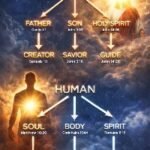
In the anatomical and spiritual architecture of the human experience, a profound disconnect often persists between the initial act of spiritual conversion and the subsequent quality of daily cognitive life. Investigative analysis of the Pauline corpus reveals that while the spirit of the believer undergoes an instantaneous, ontological transformation—sealed by the Holy Spirit as an irrevocable transaction—the biological and psychological organ of the brain remains subject to the residual patterns of a fallen world. This investigative report seeks to examine the mechanics of “the washing of water by the word,” a process identified in Ephesians 5:26 as the primary agent of cognitive irrigation. The data suggests that without a deliberate, daily saturating of the intellect with specifically Pauline doctrine, the mind does not simply remain neutral; it becomes a stagnant pool of atmospheric cultural pollution. To understand the necessity of this spiritual hydration, one must first dismantle the myth that salvation automatically repairs the thinking processes. It does not. The spirit is saved, but the mind must be aggressively and consistently renovated through a metabolic intake of truth.
The investigation begins with the fundamental realization that the human brain is a record-keeping organ. From birth, it assembles a library of survival mechanisms, social cues, and religious traditions that form a “default” neural network. In the Pauline framework, this is often associated with the “old man” or the “fleshly mind.” When a person is saved, as described in Ephesians 1:13, the spirit is “sealed with that holy Spirit of promise,” a high-security legal transaction that is completed in heaven’s courts. However, the pre-existing neural pathways—the habits of thought, the triggers of anxiety, and the gravitational pull toward self-justification—remain physically etched into the gray matter of the brain. The primary cleansing agent in this process of renovation is not emotional euphoria or mystical experience, but the objective truth of Scripture. In the investigative record of the first-century church, the Apostle Paul consistently directed his readers away from the ephemeral nature of feelings and toward the “effectual” power of the Word. Ephesians 5:26 introduces the concept of “washing,” a term that implies the removal of accumulated debris. Throughout the course of a standard twenty-four-hour cycle, the human brain is bombarded with thousands of external data points, many of which are rooted in the “rudiments of the world” or the “traditions of men.” These data points act as a cognitive film, clouding the believer’s ability to perceive their identity in Christ. The Word of God, when applied daily, functions as a solvent, breaking down the lies of insufficiency and guilt. This is not merely a poetic sentiment; 1 Thessalonians 2:13 posits that the Word “effectually worketh” in those who believe. It is an active, energetic force that seeks to reorganize the very synapses of the brain according to the blueprints of grace.
The necessity of regularity in this cognitive watering cannot be overstated. Clinical observation of the human mind shows that habits of thought are deeply entrenched through repetition. Paul’s instruction in Romans 12:2 to “be ye transformed by the renewing of your mind” uses a Greek present imperative, signifying a continuous, ongoing action. Transformation—metamorphoo—is not a singular event but a progressive metabolic process. Investigative findings suggest that the brain operates on a “use it or lose it” spiritual principle; if the truth of the mystery of grace is not frequently revisited, the mind naturally reverts to its default setting of legalism and performance-based worth. This daily routine, modeled by the Bereans in Acts 17:11 who “searched the scriptures daily,” creates a neurological resistance to the “conformity” of the world. It is a reprogramming of the internal dialogue, moving from the static of self-effort to the clear signal of Christ’s finished work. The researcher must note that “renewal” (anakainosis) implies a restoration to a fresh state, much like the regular irrigation of a parched field. Without this constant flow, the soil of the mind hardens, making it resistant to the seeds of spiritual growth.
Furthermore, the mind must be understood as a primary theater of engagement—a literal battlefield. 2 Corinthians 10:3–5 provides a forensic look at the nature of this conflict, noting that while we walk in the flesh, we do not war after the flesh. The weaponry of this warfare is specifically designed for the pulling down of “strongholds.” In this context, a stronghold (ochuroma) is a mental fortification—a deeply ingrained lie or a philosophy that exalts itself against the knowledge of God. These are often built during years of exposure to religious systems that emphasize human merit over divine grace. To dismantle these entrenched fortifications, the brain requires constant irrigation with the “sound doctrine” found in Paul’s epistles. Every thought must be interrogated and brought into “captivity to the obedience of Christ.” This mastery is impossible if the intellect is dehydrated, as a parched mind lacks the discernment to distinguish between Satanic deception and spiritual truth. The investigation into Paul’s second letter to the Corinthians reveals that the “god of this world” seeks to “blind the minds” of people. For the believer, this blindness is cured not by physical surgery but by the persistent application of the light of the gospel. The “watering” process involves the slow, steady dissolution of these mental barriers until the mind is fully aligned with the reality of the spirit.
Sustenance for the inner man is as vital as biological nutrition is for the body. When the brain is neglected, spiritual malnutrition manifests as instability, anxiety, and a susceptibility to “every wind of doctrine.” In Colossians 2:6–7, the investigative evidence points toward the goal of being “rooted and built up in him, and stablished in the faith.” This rooting occurs in the intellect. The believer who fails to feed their mind with the “words of faith and of good doctrine” (1 Timothy 4:6) will inevitably experience a structural collapse when the pressures of life intensify. Scripture is not merely a reference book; it is the spiritual bread that provides the “soundness” of mind mentioned in 2 Timothy 4:3. In an era of rampant misinformation and ideological volatility, a brain watered with the Word becomes an anchor, providing a healthy, stable psychological foundation that remains unmoved by the shifting sands of cultural opinion. Paul’s warning to Timothy regarding “perilous times” centers on the cognitive state of people—men who are “ever learning, and never able to come to the knowledge of the truth.” The antidote to this instability is a mind that is not merely gathering facts but is being nourished by the “wholesome words” of our Lord Jesus Christ.
The relationship between doctrine and daily decision-making is a direct causal link. 2 Timothy 3:16–17 asserts that Scripture is “profitable for doctrine, for reproof, for correction, for instruction in righteousness.” The investigation reveals that right living is the byproduct of right thinking. If the brain is not hydrated with the specific instructions given to the Body of Christ in the dispensation of grace, the believer will attempt to navigate modern life using obsolete maps. Doctrine is the compass; it trains the mind to perceive godly behavior as a response to grace rather than a requirement for acceptance. Titus 2:12 highlights that it is “the grace of God that bringeth salvation” that also teaches us to live soberly and righteously. When the mind is saturated with this reality, decisions are no longer made out of a sense of fear or obligation, but out of a renewed identity. The brain, properly watered, directs the feet toward the “good works” that were ordained for the believer to walk in. A mind that lacks doctrine is like a ship without a rudder; it may have the power of the Spirit, but it lacks the direction necessary to reach its destination.
Central to this investigative report is the role of grace as the governing principle of the renewed mind. Romans 6:14 declares, “For sin shall not have dominion over you: for ye are not under the law, but under grace.” A mind that is not watered daily with the Pauline gospel of the mystery will inevitably fall back under the heavy weight of the law. Law-based thinking creates a neurological loop of guilt, failure, and renewed effort—a cycle that is cognitively exhausting and spiritually deadening. Watering the brain with the Word “rightly divided” keeps the believer grounded in their secure identity in Christ (Colossians 2:10). This grace-grounding is the ultimate protection against the “guilt-culture” that pervades both secular and religious societies. It fosters a cognitive environment of freedom and peace, where growth is seen as a natural maturation process rather than a desperate attempt to stay in God’s good graces. The researcher must distinguish between “conscience” and “doctrine”; while conscience may condemn, doctrine establishes the believer in the truth that “there is therefore now no condemnation to them which are in Christ Jesus” (Romans 8:1). This cognitive shift from condemnation to justification is the most critical irrigation the brain can receive.
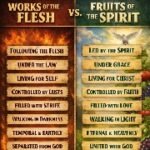
The eventual output of a well-watered mind is the production of spiritual fruit. Galatians 5:22–23 describes this fruit—love, joy, peace, longsuffering, gentleness, goodness, faith, meekness, temperance—as the result of the Spirit’s work, not the flesh’s “works.” However, the Spirit works through the medium of the mind. Colossians 1:10 suggests that being “fruitful in every good work” is tied to “increasing in the knowledge of God.” When the brain is neglected, the “flesh” (the old way of thinking and acting) dominates, producing strife and confusion. But when the cognitive soil is moist with the truth of Paul’s epistles, the life of Christ flows through the believer’s personality naturally. Fruit is not something the branch struggles to produce; it is the inevitable result of being connected to the vine and receiving adequate nourishment. A fed mind produces a steady walk, a Christ-centered fellowship, and the endurance necessary to “finish the course” with joy. This investigative analysis confirms that spiritual fruit is the external evidence of an internal cognitive renovation.
To further deepen the investigative inquiry, we must examine the specific Greek terminology Paul uses for the mind. The word phronema in Romans 8:6 refers to the “mindset” or the “disposition” of the mind. Paul states that “to be carnally minded is death; but to be spiritually minded is life and peace.” This “spiritual mindedness” is not a mystical state of trance, but a mind that has been informed and shaped by the Spirit’s revelation in the Word. The brain that is watered with the Word develops a phronema that is aligned with the things of God. This results in “life and peace”—a psychological state characterized by vitality and tranquility. Conversely, the “carnal mind” is one that remains parched of spiritual truth, focusing instead on the temporary and the visible. The investigation into Pauline psychology reveals that the brain is either being “watered” by the truth of heaven or “polluted” by the anxieties of earth. There is no middle ground of cognitive neutrality.
The forensic evidence also points to the importance of “right division” in the watering process. Just as a plant can be damaged by the wrong kind of fertilizer, the human brain can be stunted by the wrong kind of “word.” If a believer under the dispensation of grace is constantly feeding on the Law of Moses or the earthly kingdom promises made to Israel, their mind will be filled with contradictions and confusion. They will be trying to live a 21st-century grace life using a 1st-century BC legal blueprint. This results in “double-mindedness,” which James describes as unstable in all ways, but which Paul addresses by calling for a “sound mind” (2 Timothy 1:7). A sound mind is a mind that knows what time it is on God’s calendar and understands the specific instructions given to the Body of Christ. This “rightly divided” watering ensures that the cognitive system is receiving exactly what it needs for the current environment.
The investigative report would be incomplete without addressing the role of “repetition” in neural plasticity. The human brain is designed to learn through the reinforcement of pathways. When Paul tells the Philippians to “think on these things” (Philippians 4:8)—things that are true, honest, just, pure, lovely, and of good report—he is giving a command for cognitive repetition. By constantly returning to the truths of our identity in Christ, we are literally “re-wiring” our brains. This is why the daily intake of the Word is not a legalistic requirement but a physiological necessity. We are “washing” away the old grooves of thought and creating new ones. Each time the believer reads that they are “blessed with all spiritual blessings” (Ephesians 1:3), a new neural connection is strengthened. Over time, these pathways become the dominant routes for thought, leading to a life that is naturally and effortlessly characterized by the peace of God.
As we examine the historical context of the Ephesian church, we see that they were surrounded by a culture of occultism, idol worship, and philosophical confusion. The Great Theater of Ephesus was a hub of “world-thinking.” For these believers, the “washing of water by the word” was their only hope of survival. Paul’s letter to them is the most “high-doctrine” epistle in the canon, focusing almost entirely on their heavenly position and the mystery of the Body. This suggests that the deeper the cultural pollution, the more “high-octane” the spiritual watering must be. In our modern context, the digital “theater” of the internet and social media provides a constant stream of cognitive toxins. The need for a daily, saturating intake of Pauline truth has never been more urgent. The investigative conclusion is that the modern believer must treat the Word of God as their primary source of cognitive filtration.
The investigation also highlights the “effectual” nature of the Word in the inner man. In Ephesians 3:16, Paul prays that the believers would be “strengthened with might by his Spirit in the inner man.” This strengthening occurs as the mind is enlightened. The “inner man” is the seat of the spirit, but it is accessed through the mind. As the brain is watered, the truth descends into the heart, producing a “might” that is independent of physical circumstances. This is how Paul could be “content” in a prison cell (Philippians 4:11). His brain was so thoroughly watered with the truth of Christ’s sufficiency that the external lack of water, food, or freedom could not parched his soul. His “inner man” was constantly receiving a fresh supply of grace from the reservoir of his renewed mind. This is the ultimate goal of spiritual irrigation: a mind that is so saturated with truth that it becomes immune to the droughts of life.
The role of “doctrine” (didaskalia) is another vital investigative marker. In his letters to Timothy and Titus, Paul mentions “doctrine” more than in all his other letters combined. He refers to “sound doctrine,” “good doctrine,” and the “doctrine of God our Savior.” Doctrine is the skeletal structure of the mind; it provides the framework that holds the water. Without doctrine, the “washing” is just a temporary emotional spray that quickly evaporates. But when the truth is organized into a coherent system—understanding the Godhead, the makeup of man, the dispensation of grace, and the hope of the Rapture—the mind becomes a vessel that can hold a vast amount of spiritual water. This “soundness” is what prevents the believer from being “tossed to and fro” by the waves of human opinion. The brain that is watered with doctrine is a brain that is “stablished, strengthened, settled” (1 Peter 5:10, as echoed by Paul’s themes).
The investigative process also uncovers the “warding” power of the Word. In Colossians 2:8, Paul warns, “Beware lest any man spoil you through philosophy and vain deceit, after the tradition of men, after the rudiments of the world, and not after Christ.” A brain that is neglected is an easy target for “spoiling” (plundering). Deception often enters through the “cracks” of a parched mind—areas where the believer is unsure of their identity or God’s character. By watering these areas with the specific truth of the Word, the believer seals the cracks. The Word acts as a shield, a “breastplate of faith and love” (1 Thessalonians 5:8). When the lies of the world attempt to penetrate the mind, they are met with a “it is written” response that has been sharpened by daily study. This defensive watering is just as important as the nourishing watering; it keeps the “spoiler” at bay and ensures that the believer’s cognitive inheritance remains intact.
In conclusion, the investigative findings are clear: salvation is a finished work in the spirit, but cognitive transformation is a daily labor in the mind. The brain is the bridge between the heavenly reality of the saved spirit and the earthly reality of the mortal body. To neglect the daily watering of the intellect with the Word of God is to invite confusion, instability, and defeat. Conversely, to intentionally immerse the mind in the truth of the Pauline epistles is to unlock a life of clarity, maturity, and power. The Word washes away the pollutants of the world, renews the cognitive faculties, and stabilizes the soul against the storms of life. It provides the “washing” for the past, the “watering” for the present, and the “soundness” for the future.
The call to action for the investigative reader is a commitment to intentionality. Read the epistles of Paul daily—not as a religious ritual, but as a biological necessity for spiritual health. Rightly divide the Word, ensuring that you are drinking from the reservoir of grace intended for the Body of Christ today. Walk in the freedom of your completed identity, rejecting the parching heat of legalism and guilt. Share this sound doctrine with others, recognizing that a world lost in darkness is also a world dying of thirst. The choice is simple but the consequences are eternal: feed the Word and find clarity, or neglect the Word and succumb to the static of the world. Reject the “empty cisterns” of human philosophy and return to the fountain of living water found in the revelation of the mystery.
As the researcher steps back to view the entirety of the Pauline corpus, one final theme emerges: the “dwell richly” mandate of Colossians 3:16. “Let the word of Christ dwell in you richly in all wisdom.” This “dwelling” is the ultimate state of a watered brain. It is not a guest that visits once a week for an hour; it is a permanent resident that occupies every room of the intellect. When the Word dwells richly, it flows out in “psalms and hymns and spiritual songs,” producing a life of constant worship and thanksgiving. This is the “Rightly Divided Design” in its full expression: a triune God, a threefold man, and a brain that is consistently watered by the truth of grace. To the praise of the glory of His grace, we submit our minds to this daily washing, knowing that He who began this work of renewal will continue to flood our understanding with the light of His glory.
The investigation is complete. The evidence is overwhelming. The brain must be watered. The Word is the water. The time is now. Every day is an opportunity to rinse away the old and receive the new. As the Apostle Paul might conclude, “Finally, brethren, whatsoever things are true… think on these things.” For in the thinking is the living, and in the watering is the growing. Let the irrigation begin.
In the forensic study of Pauline anthropology, the Apostle defines three distinct states of human existence. These categories—the Natural, the Carnal, and the Spiritual—are not determined by the presence of a “soul,” but by the condition and “watering” of the mind. Understanding these distinctions is critical for a believer to diagnose their own spiritual health and cognitive orientation.
1. The Natural Man (Psuchikos)
The Natural Man is the individual in their default state of birth, unregenerate and operating purely on the resources of the human soul and biological brain. In 1 Corinthians 2:14, Paul notes that this individual “receiveth not the things of the Spirit of God: for they are foolishness unto him.”
Cognitive Boundary: The brain is “dry” of spiritual truth. It lacks the internal mechanism (the sealed spirit) to decode the “mystery” truth of the Pauline epistles.
2. The Carnal Man (Sarkikos)
The Carnal Man is a paradox: a saved believer who is living like a Natural Man. This individual has a saved spirit but a “dehydrated” or “polluted” mind. In 1 Corinthians 3:1–3, Paul rebukes the Corinthians because, although they were in Christ, he had to speak to them as “babes” and “carnal.
Cognitive Condition: The brain is dominated by the “flesh” (old neural pathways). Because the mind is not being watered by the Word daily, the “old man” habits of strife, envy, and division prevail.
3. The Spiritual Man (Pneumatikos)
The Spiritual Man is the believer whose mind is consistently irrigated by the Word of God, allowing the Holy Spirit to govern their cognitive processes. In 1 Corinthians 2:15, Paul states that “he that is spiritual judgeth all things.”
Cognitive Condition: This is the “watered brain” in action. The mind has been “renewed” (Romans 12:2) to the point where it possesses the “mind of Christ” (1 Corinthians 2:16).
The Transition: From Carnal to Spiritual
The bridge between carnality and spirituality is exclusively The Word. You cannot “pray” yourself into being a Spiritual Man; you must think yourself into it by the intake of sound doctrine. If the brain is not watered, the flesh will naturally “take over” the cognitive space. To be “spiritual” is simply to have a mind so saturated with the Pauline Word of Christ that your reactions, decisions, and identity are dictated by truth rather than by the world’s “default” settings.