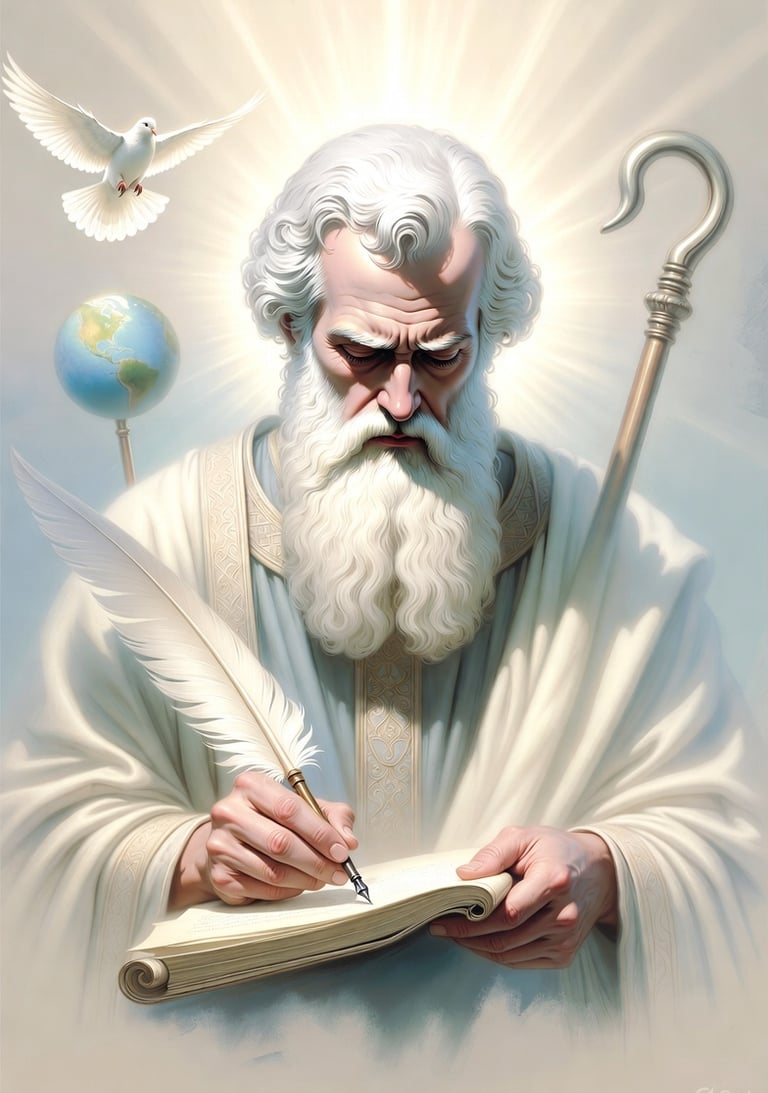
𝗧𝗛𝗘 𝗔𝗣𝗢𝗦𝗧𝗟𝗘 𝗣𝗔𝗨𝗟 𝗔𝗡𝗗 𝗧𝗛𝗘 𝗗𝗜𝗦𝗣𝗘𝗡𝗦𝗔𝗧𝗜𝗢𝗡 𝗢𝗙 𝗚𝗥𝗔𝗖𝗘
𝗧𝗛𝗘 𝗔𝗣𝗢𝗦𝗧𝗟𝗘 𝗣𝗔𝗨𝗟 𝗔𝗡𝗗 𝗧𝗛𝗘 𝗗𝗜𝗦𝗣𝗘𝗡𝗦𝗔𝗧𝗜𝗢𝗡 𝗢𝗙 𝗚𝗥𝗔𝗖𝗘
GOSPEL AND SPIRITUALITY
MrTruth.Tv
11/21/20255 min read
The Apostle Paul and the Dispensation of Grace:
The Apostle Paul occupies a unique and pivotal place in Christian theology, not merely as a missionary or church planter, but as the divinely appointed steward of a new and distinct “dispensation” — an administration or stewardship of God’s unfolding plan for humanity. While the term “dispensation” is sometimes associated exclusively with 19th–20th century dispensational theology, the concept itself is thoroughly Pauline. Paul repeatedly describes his ministry in dispensational language, claiming that a special body of revelation—“the mystery” (τὸ μυστήριον)—was committed to him by the ascended Christ. Understanding Paul’s distinctive apostleship and the dispensation entrusted to him is essential for grasping the New Testament’s teaching on the Church, the nature of salvation today, and God’s ultimate purpose in history.
Paul’s Radical Conversion and Divine Commission
Saul of Tarsus, a zealous Pharisee and persecutor of the church, encountered the risen Lord Jesus on the road to Damascus (Acts 9). This was no generic conversion experience; it was a sovereign, apostolic appointment. Jesus personally commissioned Paul as “a chosen vessel” to bear His name “before the Gentiles, and kings, and the children of Israel” (Acts 9:15). Later, in Acts 22:17–21 and 26:15–18, Paul recounts how the Lord appeared to him again in the temple and explicitly sent him “far hence unto the Gentiles.” These post-ascension revelations distinguish Paul from the Twelve, who were chosen during Christ’s earthly ministry and sent primarily to Israel with the gospel of the kingdom (Matt 10:5–6; 28:19–20, initially fulfilled in Acts 1–8).
Paul himself insists that his apostleship did not come through human ordination or through the Jerusalem apostles, but “by the will of God” through direct revelation from the risen Christ (Gal 1:1, 11–12). He declares, “The gospel which was preached of me is not after man. For I neither received it of man, neither was I taught it, but by the revelation of Jesus Christ” (Gal 1:11–12). This claim is extraordinary: Paul asserts that the message he proclaims—the gospel of the grace of God (Acts 20:24)—was revealed to him independently of the kingdom program preached by the Twelve during Christ’s earthly ministry and in the early chapters of Acts.
The Dispensation of the Grace of God
The word “dispensation” translates the Greek οἰκονομία (oikonomia), meaning a stewardship, administration, or economy. Paul uses the term four times to describe his own ministry:
1 Corinthians 9:17 – “For if I do this thing willingly, I have a reward: for if against my will, a dispensation is committed unto me.”
Ephesians 3:2 – “If ye have heard of the dispensation of the grace of God which is given me to you-ward.”
Colossians 1:25 – “Whereof I am made a minister, according to the dispensation of God which is given to me for you, to fulfil the word of God.”
Ephesians 1:10 – Refers to the ultimate “dispensation of the fulness of times” when all things will be headed up in Christ.
In Ephesians 3:1–9, Paul explains the content of this dispensation. He declares that by revelation God made known to him “the mystery” (τὸ μυστήριον), which “in other ages was not made known unto the sons of men, as it is now revealed unto his holy apostles and prophets by the Spirit” (Eph 3:5). This mystery is defined in verse 6: “That the Gentiles should be fellowheirs, and of the same body, and partakers of his promise in Christ by the gospel.” The radical new truth is that, in this present age, Gentiles are saved and brought into one spiritual body with believing Jews on absolutely equal footing—without the mediation of Israel’s covenants, without circumcision, without the law, and without the kingdom signs and promises that characterized Israel’s program.
This was hidden in God from the foundation of the world (Eph 3:9; Rom 16:25–26; Col 1:26). It was not the subject of Old Testament prophecy, which foretold Gentile blessing through Israel’s rise (Isa 2:2–4; 60:1–3; Zech 8:20–23). Instead, Paul’s dispensation involves Israel’s temporary fall and setting aside (Rom 11:11–25), the creation of a new entity—the Church, the Body of Christ—where there is neither Jew nor Gentile (Gal 3:28; Col 3:11), and salvation by grace through faith alone, apart from works or ordinances (Eph 2:8–9; Titus 3:5).
Key Distinctives of Paul’s Dispensation Several doctrinal distinctives mark Paul’s message as unique:
One Body, jointly composed of Jew and Gentile on equal terms (Eph 2:11–22; 3:6).
The Church is not Israel, nor an extension of Israel, but a “new man” (καινὸς ἄνθρωπος, Eph 2:15).Salvation by grace through faith alone, without works (Rom 4:5; Eph 2:8–9).
While the Twelve preached repentance, baptism, and forgiveness in the name of Christ in connection with the kingdom (Acts 2:38; 3:19–21), Paul’s gospel emphasizes faith alone in the finished work of the cross (1 Cor 15:1–4; Rom 3:21–28).The temporary blinding of Israel (Rom 11:25).
Israel’s kingdom hope is postponed until “the fulness of the Gentiles be come in,” after which “all Israel shall be saved” (Rom 11:25–26).The rapture of the Church before the Tribulation (1 Thess 4:13–18; 1 Cor 15:51–53).
Paul alone reveals the doctrine of the pre-tribulational catching away of the Body of Christ.Spiritual baptism by the Holy Spirit into Christ (1 Cor 12:13; Gal 3:27).
This is distinct from the water baptism associated with the kingdom gospel in early Acts.The believer’s complete identification with Christ in death, burial, and resurrection (Rom 6:3–4; Col 2:10–12).
Positional truth and the believer’s heavenly citizenship (Phil 3:20; Eph 2:6) are uniquely Pauline emphases.
Rightly Dividing the Word of Truth
Paul commands Timothy, “Study to shew thyself approved unto God, a workman that needeth not to be ashamed, rightly dividing the word of truth” (2 Tim 2:15). The Greek word for “rightly dividing” (ὀρθοτομοῦντα) literally means to cut straight, implying clear distinctions. Failure to distinguish between Israel’s prophetic kingdom program and the present dispensation of grace leads to confusion—mixing law and grace, signs and faith, earthly hope and heavenly hope.
For example, the Great Commission of Matthew 28 (“teach all nations… teaching them to observe all things whatsoever I have commanded you”) was directed to Israel under the law and included kingdom ordinances. Paul, however, declares that Christ sent him “not to baptize, but to preach the gospel” (1 Cor 1:17), and his gospel contained no water baptism ritual for Gentiles (though he did baptize early in his ministry during a transitional period; cf. Acts 18–19).
Conclusion: Paul’s Unique Apostleship
The Apostle Paul was not merely one among twelve; he was the apostle of the Gentiles (Rom 11:13), the prisoner of Jesus Christ for the Gentiles (Eph 3:1), and the divinely chosen administrator of a new dispensation—the dispensation of the grace of God. To him was committed the full revelation of the Church as the Body of Christ, the mystery hidden from ages and generations, now made manifest.
Understanding Paul’s distinctive message is not a matter of denominational preference; it is a matter of obeying Scripture’s own command to rightly divide the word of truth. When believers today recognize that God’s instructions for this present age come preeminently through the Apostle Paul, they discover the riches of God’s grace unencumbered by legalism, ritual, or Israel’s covenant promises. They find their identity, hope, and marching orders not in the kingdom offered to Israel, but in the heavenly calling of the Church, seated with Christ in the heavenlies (Eph 2:6), awaiting the blessed hope of His appearing (Titus 2:13).
Paul’s dispensation is the administration of pure, unadulterated grace—and in it, God receives all the glory.