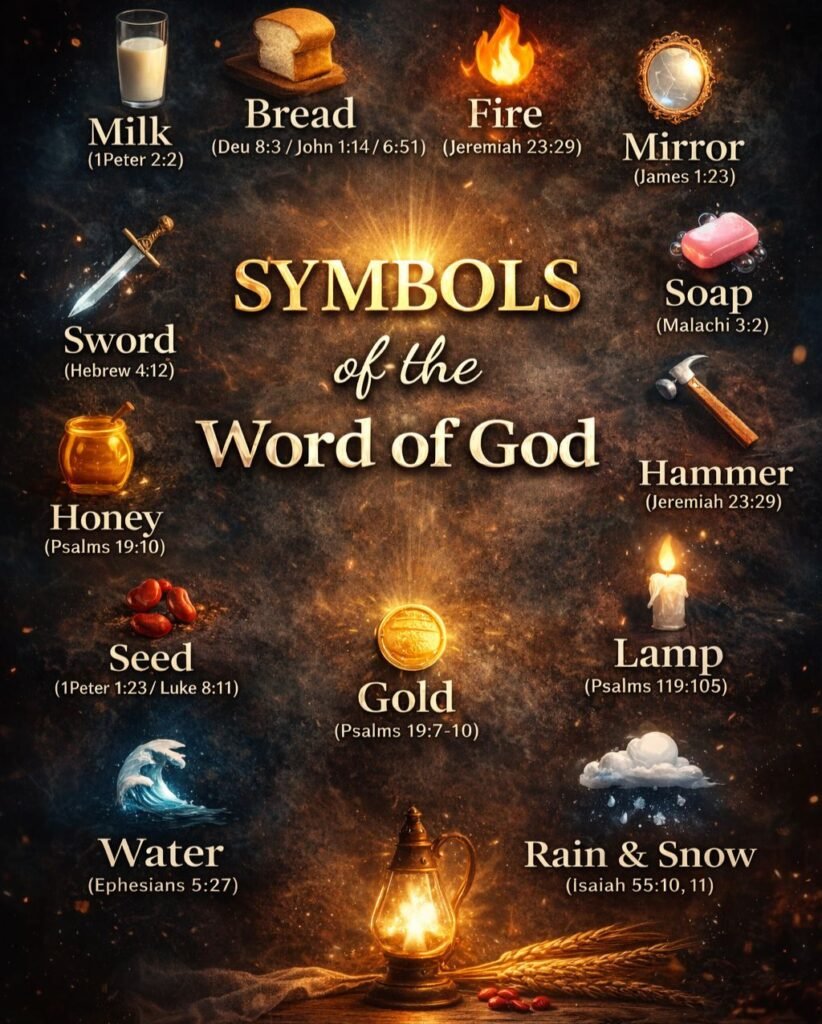
In the specialized field of spiritual forensics, a rigorous audit of the Pauline corpus establishes that the current Administration of Grace is maintained not by physical relics or religious icons, but by the systematic operation of the Word of God within the inner man. This investigation, grounded in the specialized administrative revelation given to the Apostle Paul, confirms that the Creator utilizes specific symbols to illustrate the multi-faceted functionality of His truth. To the workman of God, these symbols are not merely poetic devices, but diagnostic tools that reveal how the Scripture interacts with the human constitution. 2 Timothy 3:16 provides the foundational oversight: “All scripture is given by inspiration of God, and is profitable for doctrine, for reproof, for correction, for instruction in righteousness.” Under the light of the Mystery, the investigator identifies thirteen distinct symbolic profiles that characterize the work of God’s Word in the believer.
The primary forensic category identified in this report is Milk, which serves as the essential nourishment for the developmental phase of the believer. 1 Peter 2:2 establishes the biological necessity: “As newborn babes, desire the sincere milk of the word, that ye may grow thereby.” The investigator notes that a “Babe in Christ” lacks the structural integrity to process complex doctrinal meat; therefore, the Word provides basic, non-condemning truths that establish the new identity of the saint. 1 Corinthians 3:2 records the Apostle’s tactical adjustment for those in this stage: “I have fed you with milk, and not with meat: for hitherto ye were not able to bear it.” This nutrient-rich environment allows for natural growth without the burden of legalistic performance, as the milk of the word emphasizes the positional security found in Romans 8:1.
A secondary finding involves the symbol of Bread, representing the sustaining force required for daily spiritual survival. Just as the physical body requires metabolic fuel, the spiritual man is sustained by a divine provision. John 6:51 identifies Christ as the “living bread,” and the investigator finds that this bread is accessed through the intake of sound doctrine. Matthew 4:4 provides the governing principle: “Man shall not live by bread alone, but by every word that proceedeth out of the mouth of God.” This daily dependence ensures that the believer is not merely alive, but vitalized for the service of the Lord. The audit confirms that all spiritual sustenance is found in the unsearchable riches of Christ, in whom are hid all the treasures of wisdom and knowledge, as noted in Colossians 2:3.
The investigative report further identifies the Word as Fire, a purifying agent designed to consume the dross of false teaching and human tradition. Jeremiah 23:29 asks, “Is not my word like as a fire? saith the Lord.” In the Pauline economy, this fire serves to test the quality of a man’s work. 1 Corinthians 3:13 documents that “the fire shall try every man’s work of what sort it is.” The investigator find that the fire of the Word brings a sharp conviction, enabling the believer to “hold fast the faithful word as he hath been taught, that he may be able by sound doctrine both to exhort and to convince the gainsayers,” according to Titus 1:9. This purifying heat ensures that only that which is doctrinally sound remains, building a holy fear and reverence for the character of God (Hebrews 12:29).
A critical diagnostic symbol revealed in the data is the Mirror. James 1:23 compares the Word to “a man beholding his natural face in a glass.” This revealing function allows the individual to see their true condition apart from Christ and their perfected condition in Christ. Romans 3:20 utilizes this mirror to expose the total insolvency of the flesh, for “by the law is the knowledge of sin.” However, for the believer, the mirror reflects the “New Creation” identity found in 2 Corinthians 5:17. The investigator notes that this reflection requires a response; a man who sees his spiritual standing in the glass of the Word must then “present his body a living sacrifice,” as commanded in Romans 12:1.
The investigation also identifies the Word as Soap, a specialized cleansing agent for the believer’s conduct. Malachi 3:2 speaks of the Lord’s word being like “fullers’ soap.” This symbolic profile is applied by Paul in Ephesians 5:26, noting that Christ sanctifies and cleanses the Church with the “washing of water by the word.” The investigator find that this spiritual washing separates the believer from the defilement of the world (2 Corinthians 7:1) and prepares the individual to walk “holy and unblameable and unreproveable” in the sight of God (Colossians 1:22). This soap does not save the soul—which is already secured—but it maintains the cleanliness of the “vessel” for the Master’s use.
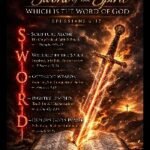
The forensic audit of spiritual weaponry identifies the Word as a Sword. Hebrews 4:12 provides the tactical specifications: “For the word of God is quick, and powerful, and sharper than any twoedged sword, piercing even to the dividing asunder of soul and spirit.” This piercing quality allows for the clinical separation of truth from error, a necessity for the workman who must “rightly divide” the word of truth (2 Timothy 2:15). In the theater of spiritual warfare, this sword is the primary offensive weapon (Ephesians 6:17). The investigator concludes that the authority of this sword is absolute, as the gospel of grace is established according to the commandment of the everlasting God (Romans 16:25).
The investigative findings further highlight the symbol of Honey, representing the delight and satisfaction found in the truth. Psalm 19:10 declares the judgments of the Lord to be “sweeter also than honey and the honeycomb.” This sweetness is experienced by the believer when the Word of God is tasted and digested (Psalm 119:103). The investigator notes that the joy produced by this spiritual honey strengthens the inner man, as Romans 15:13 speaks of being filled with “all joy and peace in believing.” This spiritual satisfaction removes the appetite for the bitter fruit of the world and produces a peace that passeth all understanding, as documented in Philippians 4:4–7.
A foundational generative symbol found in the record is the Seed. 1 Peter 1:23 identifies the believer as being “born again, not of corruptible seed, but of incorruptible, by the word of God, which liveth and abideth for ever.” The investigator find that this living seed is the mechanism of the new birth, germinating in the heart through the hearing of the word (Romans 10:17). Once planted, the seed performs God’s will with 100% efficiency, as Isaiah 55:11 confirms it shall not return void. 1 Thessalonians 2:13 records that this word “effectually worketh also in you that believe,” indicating that the seed possesses an inherent, autonomous power to produce spiritual fruit and permanent life.
The audit of spiritual assets identifies the Word as Gold, symbolizing its priceless value and inherent purity. Psalm 19:7–10 notes that the statutes of the Lord are “more to be desired than gold, yea, than much fine gold.” The investigator find that the wisdom gained from the Pauline epistles is of greater value than any temporal riches (Proverbs 8:10). This gold provides the believer with the “riches of the full assurance of understanding” (Colossians 2:2). Furthermore, the investigation into the Judgment Seat of Christ reveals that works built upon the gold of sound doctrine result in an eternal reward (1 Corinthians 3:14), while works built on carnal wood will be consumed.
The investigation into “Guidance” reveals the Word as a Lamp. Psalm 119:105 declares, “Thy word is a lamp unto my feet, and a light unto my path.” In an age characterized by spiritual darkness, the Word provides the illumination necessary to navigate the walk of grace. Ephesians 5:8 instructs the believer to “walk as children of light.” The investigator find that this light limits the influence of darkness by exposing the “unfruitful works of darkness” (Ephesians 5:11). This guidance is not mystical but is the result of being “led by the Spirit” (Romans 8:14) through the clear directives of the Scripture, ensuring the believer is delivered from the power of darkness and translated into the kingdom of the Son (Colossians 1:13).
The investigative report further analyzes the symbol of Water, focusing on its refreshing and renewing properties. This is distinct from the “Soap” profile, as it emphasizes the restoration of the mind. Ephesians 5:26 speaks of the “washing of water by the word.” The investigator find that this water refreshes the parched spirit and facilitates the renewing of the mind mentioned in Romans 12:2. This process works a daily sanctification (1 Corinthians 6:11) and weakens the influence of fleshly desires by saturating the soul with heavenly truth. Just as physical water is essential for biological life, the water of the Word is essential for the vitality of the New Creation (Galatians 5:16).
The forensic audit also addresses the symbol of Rain and Snow, illustrating the fruitfulness and sovereignty of the Word. Isaiah 55:10–11 describes the word coming down from heaven to water the earth and make it bring forth and bud. The investigator find that the Word always accomplishes the specific purpose for which it was sent. Romans 9:17 provides a clinical example of how God’s word achieves His sovereign ends. This rain results in the “fruit of the gospel” being brought forth in all the world (Colossians 1:6). It reveals the “mystery of his will” (Ephesians 1:9), ensuring that the believer’s life is not a spiritual desert but a fruitful garden of grace.
The final symbolic profile identified in this investigation is the Hammer. Jeremiah 23:29 asks, “is not my word… like a hammer that breaketh the rock in pieces?” The investigator find that the Word possess the impact force necessary to break the resistance of hard hearts and to dismantle spiritual strongholds. Acts 20:32 notes that the word of grace is “able to build you up,” but before building can occur, the hammer must often break down the old foundations of pride and error. 2 Corinthians 10:4 confirms that our weapons are “mighty through God to the pulling down of strongholds.” This hammer-like force builds a sound faith by shattering the “imaginations” that exalt themselves against the knowledge of God (Romans 16:26).
The summary of these findings indicates that the Word of God is a comprehensive and multi-functional system of spiritual power. It is not a static text, but a living and active force that saves the sinner, sanctifies the saint, strengthens the weak, and stabilizes the confused. The investigation identifies that faith cometh exclusively by hearing the Word (Romans 10:17), and therefore, the believer’s progress is entirely dependent on their interaction with these thirteen symbols. Under the current Dispensation of Grace, the Word works internally to transform the character and the conduct of the New Man.
A call to action is issued for all who seek the power of God. First, believe the gospel of grace found in 1 Corinthians 15:1–4. Second, dedicate yourself to the systematic study of Paul’s epistles, from Romans to Philemon, where the “Mystery” is fully disclosed. Third, apply the methodology of 2 Timothy 2:15 to every study session, ensuring that you “rightly divide” the truth. Fourth, stand fast in the liberty of grace (Galatians 5:1), refusing to be entangled again with the yoke of bondage. The investigator concludes that those who stand on the Word find a foundation that never fails.
Final thoughts on this investigative audit reveal that the Word gives life, light, liberty, and growth. It provides guidance in the darkness and strength in the struggle. The thirteen symbols documented here—Milk, Bread, Fire, Mirror, Soap, Sword, Honey, Seed, Gold, Lamp, Water, Rain, and Hammer—provide a complete picture of the Word’s profit. The investigator find that the Word of God is the only asset that maintains its value into eternity. If you want the power of God in your home, your mind, and your walk, you must position yourself under the authority of His Word. The investigation is finished. The record is clear. Let the believer walk in the light of these truths.
The investigative data regarding “Spiritual Profit” (2 Timothy 3:16) confirms that the Word is not merely for information, but for transformation. The symbols reveal that God has provided a tool for every need—milk for the young, bread for the hungry, fire for the impure, and a hammer for the stubborn. The investigator notes that a “balanced spiritual diet” requires the application of all these symbols. To focus only on the “Honey” while ignoring the “Sword” leads to a shallow and unstable walk. Conversely, to focus only on the “Hammer” without the “Water” leads to a harsh and ungracious testimony.
Furthermore, the investigation into “Internal Operation” (1 Thessalonians 2:13) shows that the Word of God performs its work “effectually” in those who believe. This means that the symbols are not just metaphors; they represent the actual, metaphysical impact of truth upon the human spirit. The investigator find that the Word of God is the only force capable of “renewing the mind” and “sanctifying the soul.” It is the divine software that recalibrates the believer’s internal hardware to align with the character of Christ.
The forensic audit of “Eternal Security” within these symbols confirms that the “Seed” of the Word is incorruptible and abides forever. The investigator find that once the Word has produced the New Birth, the resulting life is as permanent as the Word itself. This provides the believer with a “full assurance of hope unto the end” (Hebrews 6:11). The gold of the Word is a currency that does not devalue, and the bread of the Word is a food that never spoils. The investigation concludes that the believer is as secure as the Book they stand upon.
The final word of this investigative report is a reminder that the Word of God is the “Sword of the Spirit.” It is the only weapon that can cut through the deception of “this present evil world” (Galatians 1:4). The investigator encourages every believer to become a “workman that needeth not to be ashamed.” Pick up the hammer, look in the mirror, taste the honey, and walk by the lamp. The power of God is found in the pages of His Word, and the victory of the believer is found in their submission to its truth. The investigation is complete. Amen.