Satan vs. Jesus — Two Opposing Powers, Two Destinies
Deception and Redemption in the Dispensation of Grace
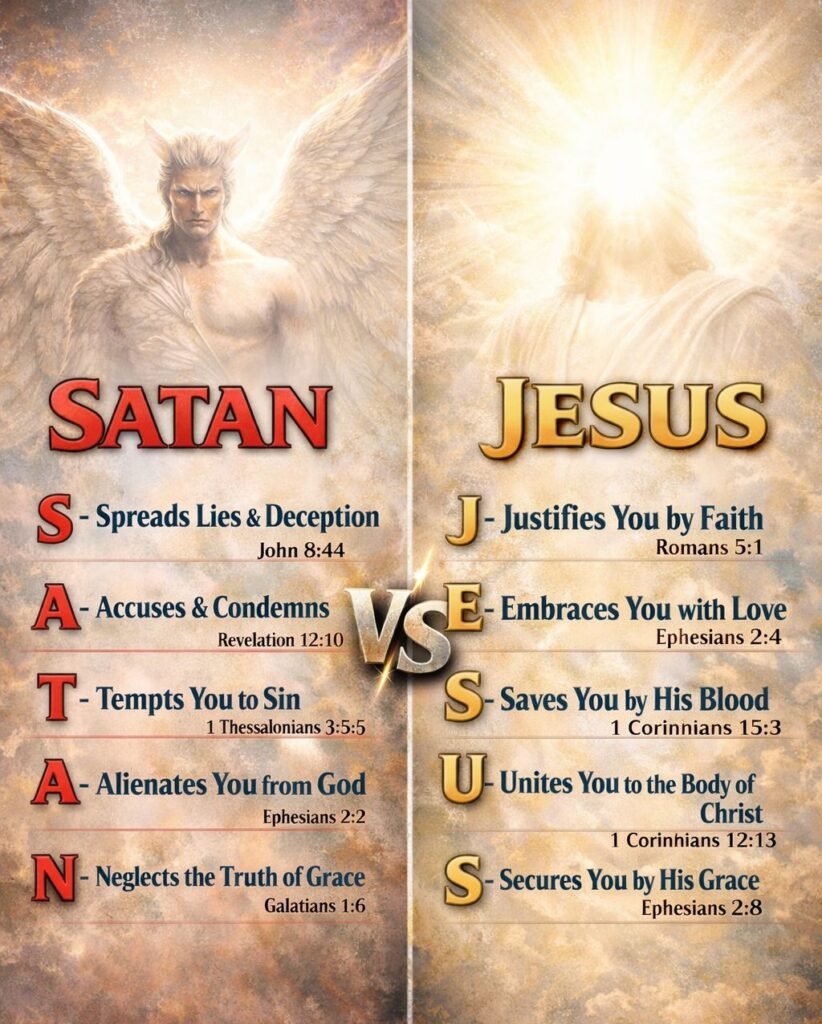
The Bible does not present Satan and Jesus Christ as equal forces locked in an uncertain struggle. That misconception belongs more to popular culture than to Scripture. From Genesis to Revelation, the biblical narrative is clear: Satan operates as a defeated adversary whose influence depends on deception, while Jesus Christ reigns as the victorious Redeemer whose authority rests on a finished work. The contrast between the two is not merely dramatic—it is doctrinal, eternal, and decisive.
In the present Dispensation of Grace, the conflict is not primarily visible, political, or physical. The apostle Paul makes this unmistakably clear when he writes that believers wrestle not against flesh and blood, but against spiritual wickedness in high places. Satan’s battlefield today is the mind. His weapon is not open persecution but subtle corruption of truth—especially corruption of the gospel itself. Christ’s victory, by contrast, is proclaimed through the message of grace, received by faith, and secured forever in Him.
Understanding the opposition between Satan and Jesus is not a matter of curiosity or speculation. It is essential for spiritual clarity. One leads humanity deeper into bondage through lies and counterfeit religion. The Other liberates sinners through truth, grace, and reconciliation with God. The destinies they offer could not be more different.
Lies Versus Light: Two Sources, Two Messages
Jesus identified Satan plainly when He said that there is no truth in him. Lying is not merely something Satan does—it is who he is. From the garden of Eden onward, Satan has operated by distorting God’s words, questioning God’s intent, and presenting false alternatives that appear reasonable, spiritual, or beneficial. His strategy has always been to introduce doubt where God has spoken clearly.
In contrast, Jesus Christ does not speculate, manipulate, or obscure. He reveals. Paul describes the gospel as “the word of truth,” a phrase that carries enormous weight. Truth is not an abstract principle; it is a message—Christ died for our sins, was buried, and rose again. Where Satan traffics in confusion, Christ brings clarity. Where lies enslave, truth liberates.
This contrast matters deeply in an age saturated with religious voices. Not every message that mentions God comes from God. Not every spiritual experience is rooted in truth. Satan’s most effective deceptions are not openly atheistic; they are religious distortions that sound biblical while denying grace.
Condemnation Versus Justification: Two Legal Realities
One of Satan’s most persistent roles in Scripture is that of the accuser. He magnifies guilt, revisits past sins, and relentlessly questions the believer’s standing before God. His accusations may sound convincing because they often reference real failures. But they are strategically incomplete. Satan never points to the cross.
Paul’s doctrine of justification stands as a direct rebuttal to every accusation. To be justified is to be declared righteous by God Himself, not based on performance, but based on faith in Christ. This justification produces peace with God—peace that cannot coexist with condemnation.
Where Satan accuses, Christ acquits. Where Satan reminds believers of who they were, Christ declares who they are now. Grace does not deny sin; it declares that sin has been dealt with fully and finally at Calvary.
Temptation Versus Triumph: Two Relationships to Sin
Satan’s relationship to sin is exploitative. He tempts, entices, and accuses. He promotes indulgence and then weaponizes guilt. His goal is not merely moral failure, but spiritual paralysis—believers rendered ineffective by shame, fear, and confusion.
Jesus Christ, however, does not merely forgive sin; He breaks its dominion. Paul’s declaration that believers are not under law but under grace is not theoretical. It is practical. Under law, sin reigns because the law strengthens it. Under grace, sin loses its authority because the believer’s identity has changed.
This is a crucial distinction. Satan thrives in environments where believers are constantly striving, measuring, and fearing failure. Christ produces growth where believers rest in grace and walk by faith.
Alienation Versus Acceptance: Two Spiritual Positions
Before salvation, Paul describes humanity as dead in trespasses and sins, walking according to the course of this world and under the influence of Satan himself. Alienation from God is not merely emotional—it is spiritual death.
But salvation in Christ reverses everything. Believers are not merely forgiven; they are accepted. Adoption replaces alienation. Access replaces distance. Relationship replaces fear. Satan keeps people spiritually isolated, convincing them they are either too sinful or too self-sufficient to need grace. Christ draws sinners near and unites them to Himself.
Acceptance in Christ is not fragile. It is anchored in God’s will, Christ’s work, and the Spirit’s seal.
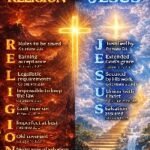
Religion Versus Grace: Two Competing Systems
Perhaps nowhere is the contrast between Satan and Christ more visible than in the substance of their messages. Satan is deeply religious. He promotes works, rituals, self-effort, and moral ladders to God. He does not object to spirituality—he exploits it.
Paul’s warning to the Galatians reveals how dangerous this is. A gospel that adds works to grace is not a better gospel; it is another gospel altogether. Grace alone through faith alone is the dividing line between truth and error, heaven and hell.
Jesus Christ saves completely, freely, and eternally. Any message that shifts the focus from His finished work to human effort—no matter how sincere—is aligned with Satan’s system, not God’s.
Death Versus Life: Two Outcomes of Bloodshed
Satan has been a murderer from the beginning. His power over humanity is tied to death and fear. Hebrews explains that Christ took on flesh to destroy the one who had the power of death and to deliver those enslaved by fear.
Religion often minimizes the blood of Christ, treating it as symbolic or secondary. Scripture does not. Salvation flows from Calvary. Life flows from the cross. Satan’s system always leads to loss, fear, and destruction. Christ’s sacrifice leads to deliverance, freedom, and eternal life.
Isolation Versus Incorporation: Two Spiritual Communities
Satan divides. He isolates individuals through pride, fear, and deception. He fragments churches through false doctrine and legalism. Christ, by contrast, unites believers into one Body through the baptism of the Holy Spirit.
The Church, the Body of Christ, is not an organization but a living organism. Every believer is placed into it by God Himself. Unity is not manufactured—it is created by grace.
Doubt Versus Assurance: Two Approaches to Security
Satan questions salvation just as he questioned Job’s motives and Eve’s understanding. He thrives on uncertainty. Fear keeps people striving; doubt keeps them silent.
Paul presents assurance as a gift. Believers are sealed with the Holy Spirit, not temporarily, but until the day of redemption. What God seals, Satan cannot steal. Assurance does not lead to careless living—it leads to grateful obedience.
Defeat Versus Dominion: Two Final Destinies
Satan’s end is not in doubt. Revelation declares his final judgment clearly. Jesus Christ, by contrast, has already triumphed, disarming principalities and powers openly at the cross.
The war is decided. The victory is complete. What remains is the proclamation of truth in a world still deceived.
Conclusion: The Choice Is Clear
Satan’s power lies entirely in deception. Christ’s power rests in truth and grace. In this age, believers do not overcome by confrontation or spectacle, but by standing firm in the gospel revealed through Paul.
The choice is not between two equal forces. It is between bondage and freedom, deception and truth, condemnation and justification.
Satan accuses—but Christ acquits.
Satan enslaves—but Christ secures.
Satan deceives—but Christ delivers.
“Thanks be to God, which giveth us the victory through our Lord Jesus Christ.” (1 Corinthians 15:57)
Related posts:
 𝗧𝗛𝗘 𝗨𝗡𝗛𝗢𝗟𝗬 𝗧𝗥𝗜𝗡𝗜𝗧𝗬
 𝗧𝗛𝗘 𝗦𝗘𝗖𝗥𝗘𝗧 𝗧𝗛𝗔𝗧 𝗗𝗘𝗦𝗧𝗥𝗢𝗬𝗘𝗗 𝗦𝗔𝗧𝗔𝗡
 𝗙𝗔𝗟𝗦𝗘 𝗙𝗥𝗜𝗘𝗡𝗗𝗦: 𝗧𝗛𝗘 𝗗𝗔𝗡𝗚𝗘𝗥 𝗢𝗙 𝗣𝗥𝗘𝗧𝗘𝗡𝗗𝗘𝗗 𝗙𝗘𝗟𝗟𝗢𝗪𝗦𝗛𝗜𝗣
 𝗪𝗢𝗥𝗞𝗦 𝗢𝗙 𝗧𝗛𝗘 𝗙𝗟𝗘𝗦𝗛 𝘃𝘀 𝗙𝗥𝗨𝗜𝗧𝗦 𝗢𝗙 𝗧𝗛𝗘 𝗦𝗣𝗜𝗥𝗜𝗧
 𝗠𝗨𝗛𝗔𝗠𝗠𝗔𝗗 𝗩𝗦. 𝗝𝗘𝗦𝗨𝗦 𝗖𝗛𝗥𝗜𝗦𝗧 — 𝗔 𝗠𝗔𝗧𝗧𝗘𝗥 𝗢𝗙 𝗧𝗥𝗨𝗧𝗛, 𝗡𝗢𝗧 𝗧𝗥𝗔𝗗𝗜𝗧𝗜𝗢𝗡
 𝗚𝗨𝗜𝗟𝗧 𝘃𝘀 𝗚𝗥𝗔𝗖𝗘 — 𝗙𝗥𝗢𝗠 𝗖𝗢𝗡𝗗𝗘𝗠𝗡𝗔𝗧𝗜𝗢𝗡 𝗧𝗢 𝗖𝗢𝗠𝗣𝗟𝗘𝗧𝗜𝗢𝗡
 𝗧𝗜𝗧𝗛𝗘𝗦 𝗜𝗦 𝗔 𝗦𝗖𝗔𝗠?
 𝗜𝗡𝗙𝗟𝗨𝗘𝗡𝗖𝗜𝗡𝗚 𝗢𝗧𝗛𝗘𝗥𝗦 𝗧𝗢 𝗛𝗔𝗧𝗘: 𝗧𝗛𝗘 𝗦𝗣𝗜𝗥𝗜𝗧𝗨𝗔𝗟 𝗗𝗔𝗡𝗚𝗘𝗥
 𝗟𝗨𝗦𝗧 𝘃𝘀 𝗟𝗢𝗩𝗘
 𝗝𝗘𝗦𝗨𝗦: 𝗢𝗨𝗥 𝗖𝗢𝗠𝗣𝗟𝗘𝗧𝗘 𝗦𝗧𝗔𝗡𝗗𝗜𝗡𝗚 𝗜𝗡 𝗚𝗥𝗔𝗖𝗘
 𝗥𝗘𝗟𝗜𝗚𝗜𝗢𝗡 𝘃𝘀. 𝗝𝗘𝗦𝗨𝗦: 𝗧𝗛𝗘 𝗚𝗥𝗘𝗔𝗧 𝗗𝗜𝗩𝗜𝗗𝗘
 𝗪𝗛𝗢 𝗜𝗦 𝗝𝗘𝗦𝗨𝗦?
 𝗚𝗢𝗗 𝗔𝗡𝗗 𝗠𝗔𝗡: 𝗥𝗜𝗚𝗛𝗧𝗟𝗬 𝗗𝗜𝗩𝗜𝗗𝗘𝗗 𝗗𝗘𝗦𝗜𝗚𝗡
 𝗞𝗜𝗡𝗚 𝗢𝗙 𝗞𝗜𝗡𝗚𝗦