THE BANKRUPTCY OF MERIT: A FORENSIC INVESTIGATION INTO THE FINISHED WORK OF THE CROSS
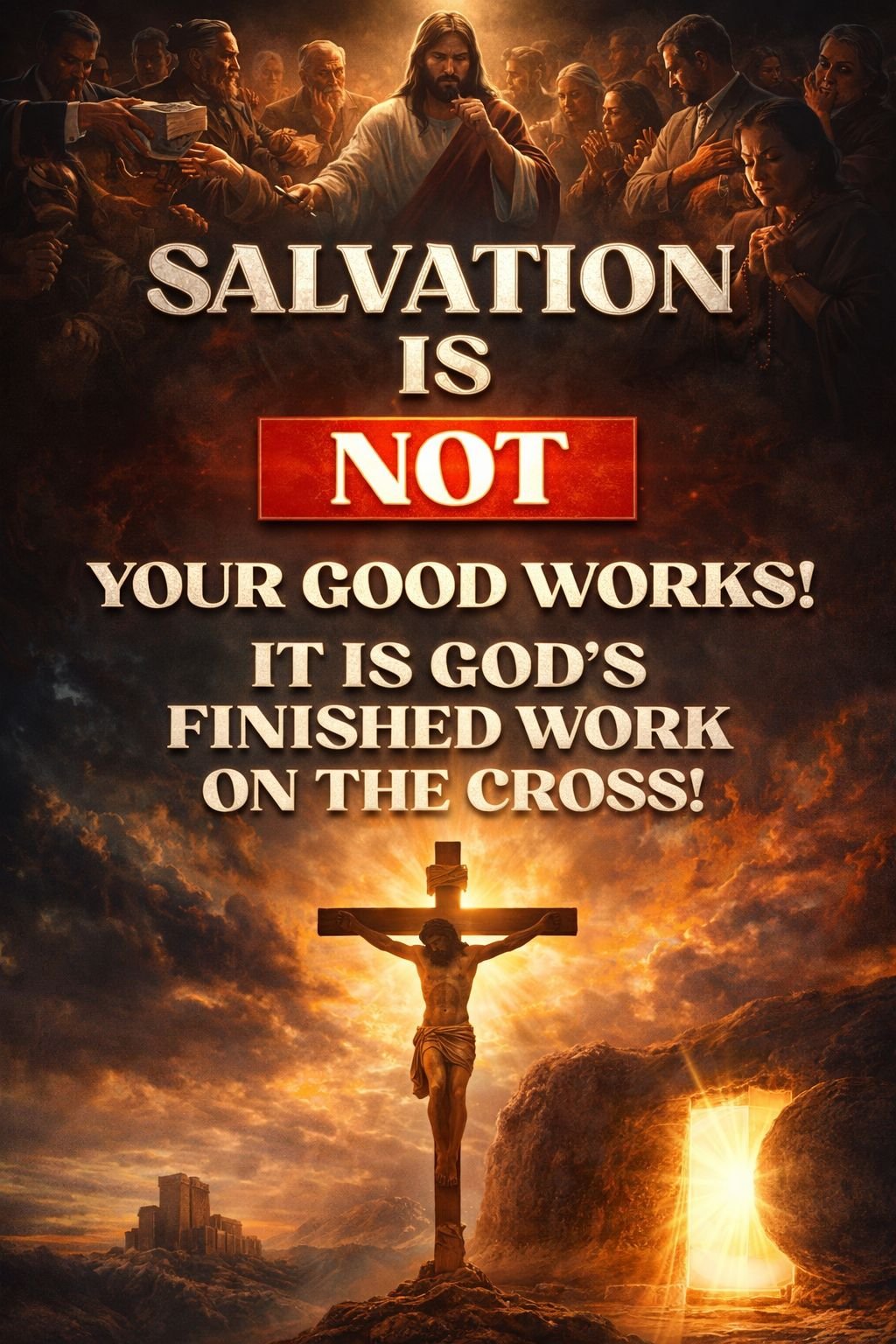
In the grand court of human conscience, there exists a persistent and legalistic delusion—the belief that man, through the sweat of his own brow and the refinement of his own character, can ascend the hill of the Lord. From the ancient high places of pagan ritual to the polished steeples of modern religious tradition, the cry has always been “Do.” But as we conduct this forensic audit of the Sacred Oracles under the light of Pauline doctrine, we find a stark, inescapable reality: the ledger of human effort is marked by a terminal deficit. This investigative report asserts that the most profound truth in the universe is contained not in what man has achieved for God, but in the radical, dispensational disclosure of what God has achieved for man. The diagnostic baseline for this inquiry is found in the foundational decree of Ephesians 2:8–9: “For by grace are ye saved through faith; and that not of yourselves: it is the gift of God: Not of works, lest any man should boast.”
As we “rightly divide the word of truth” (2 Timothy 2:15), we must first dismantle the scaffold of human religion. Religion is the sophisticated attempt of the “dead in trespasses and sins” (Ephesians 2:1) to self-resuscitate through the administration of works. It demands that we try harder, be better, and accumulate a treasury of good deeds to appease a Holy Judge. Yet, the Gospel of the Grace of God (Acts 20:24) declares a forensic “No” to human merit. It is a message built upon a dual realization: man is utterly bankrupt, and Christ is infinitely sufficient. In this present Dispensation of Grace, the Cross stands not as a suggestion for self-improvement, but as the final, finished work of a Love that operates in the absence of human worthiness.
S — SIN SEPARATES ALL PEOPLE: THE ANATOMY OF HUMAN INABILITY
The Investigation of the Universal Deficit
The primary finding of this investigation reveals that the human problem is not a lack of effort, but a lack of life. Sin is not merely a series of mistakes; it is a nature that renders the individual “without strength” (Romans 5:6). This investigation identifies a three-fold corruption that prevents man from saving himself.
First, we must examine our Sinful Nature. According to the forensic record of Romans 5:12, “Wherefore, as by one man sin entered into the world, and death by sin; and so death passed upon all men, for that all have sinned.” We are born in Adam, carrying a spiritual DNA that is predisposed to rebellion and marked for death. Second, our Sinful Actions confirm this nature. As the Preacher noted in Ecclesiastes 7:20, “For there is not a just man upon earth, that doeth good, and sinneth not.” Even the “good works” of the natural man are contaminated by the motive of pride or the stain of self-preservation.
Thirdly, this results in a Sinful Standing. The Prophet Isaiah recorded the jurisdictional reality in Isaiah 59:2: “But your iniquities have separated between you and your God, and your sins have hid his face from you, that he will not hear.” Humanity is not merely “drifting” from God; we are legally and spiritually alienated. The investigator finds that a man drowning in a sea of his own depravity cannot save himself by practicing his swimming stroke; he needs a rescue from outside the water.
W — WORKS CANNOT SAVE: THE FAILURE OF RELIGIOUS CURRENCY
The Forensic Audit of Human Effort
The investigation now turns to the common fallacy that religious activity can bridge the chasm of sin. Many trust in “the works of the law,” but the Pauline audit is ruthless. In Titus 3:5, the verdict is rendered: “Not by works of righteousness which we have done, but according to his mercy he saved us.”
The investigator finds that Works Cannot Justify. In the courtroom of heaven, “a man is justified by faith without the deeds of the law” (Romans 3:28). Furthermore, Works Cannot Cleanse Sin. The blood of animals or the performance of rituals “can never take away sins” (Hebrews 10:11). If the blood of bulls and goats was insufficient, how much more is the “filthy rag” of human morality (Isaiah 64:6)?
Lastly, Works Cannot Earn Grace. The Apostle Paul provides a logical proof in Romans 11:6: “And if by grace, then is it no more of works: otherwise grace is no more grace.” Grace and works are mutually exclusive currencies. If you pay one cent toward your salvation, it is no longer a gift, but a debt. The investigator finds that to offer God our works as payment for sin is to insult the value of the blood of His Son.
G — GRACE IS GOD’S GIFT: THE JURISDICTIONAL SHIFT TO UNDESERVED FAVOR
The Investigation of Divine Munificence
Since works are disqualified, salvation must come through Grace. Grace is not a “reward” for the humble; it is “undeserved favor” for the guilty. In the current administration, we are “justified freely by his grace through the redemption that is in Christ Jesus” (Romans 3:24).
The investigator finds that this Grace is Freely Given. It is “the gift of God” (Ephesians 2:8). It is not a loan, not a trade, but a unilateral bestowal of life. This Grace is Fully Provided. As Titus 2:11 declares, “For the grace of God that bringeth salvation hath appeared to all men.” There is no shortage of this divine resource. Finally, this Grace is Forever Secure. In the economy of God, “where sin abounded, grace did much more abound” (Romans 5:20). Grace provides what the flesh could never achieve: a permanent standing of acceptance before a Holy God.
C — CHRIST COMPLETED REDEMPTION: THE VERDICT OF THE FINISHED WORK
The Forensic Analysis of the Cross
The heart of this investigation lies in the cry from the Cross: “It is finished” (John 19:30). This was not the sigh of a victim, but the shout of a Victor. Christ did not make salvation “possible”; He made it “done.”
The investigator identifies a Completed Sacrifice. Unlike the priests of old who stood daily offering the same sacrifices, Christ, “after he had offered one sacrifice for sins for ever, sat down on the right hand of God” (Hebrews 10:12). The sitting signifies the cessation of labor. Redemption is found in His Conquering Blood. “In whom we have redemption through his blood, the forgiveness of sins, according to the riches of his grace” (Ephesians 1:7).
This is a Confirmed Redemption. We are “now justified by his blood” and “saved from wrath through him” (Romans 5:9). The investigator finds that any attempt to add works to the Cross is an attempt to “finish” what God has already declared perfect. It is the ultimate forensic arrogance to believe that our “goodness” can add luster to the blood of the Lamb.
F — FAITH RECEIVES SALVATION: THE MECHANISM OF APPROPRIATION
The Investigation into the Hand of the Beggar
If salvation is a gift, how is it received? The investigator finds that the only biblical mechanism for receiving grace is Faith. Faith is not a work; it is the cessation of work. It is the trust that Christ is who He said He is and did what He said He did.
“Therefore being justified by faith, we have peace with God through our Lord Jesus Christ” (Romans 5:1). The call is simple: Faith in Christ Alone. When the Philippian jailer asked, “What must I do to be saved?”, the forensic answer was not a list of deeds, but a directive of trust: “Believe on the Lord Jesus Christ, and thou shalt be saved” (Acts 16:31).
The investigator finds that this is Faith for Justification, not for “becoming better.” It is the faith of the one who “worketh not, but believeth on him that justifieth the ungodly” (Romans 4:5). It is Faith Without Works. As Galatians 2:16 reinforces, “Knowing that a man is not justified by the works of the law, but by the faith of Jesus Christ.” Faith is simply the hand of the beggar reaching for the gold of the King.
R — RIGHTEOUSNESS IS IMPUTED: THE DOCTRINE OF THE GREAT EXCHANGE
The Forensic Accounting of Justification
A critical finding in this investigation is the concept of Imputation. In the courtroom of God, righteousness is not something we develop; it is something that is “credited” to our account.
The investigator notes that believers receive a Righteousness by Faith. This is the “righteousness of God which is by faith of Jesus Christ unto all and upon all them that believe” (Romans 3:22). It is a Righteousness Credited to the ungodly. Just as Abraham’s faith was “counted unto him for righteousness” (Romans 4:3), so the believer’s trust is treated as if it were perfect obedience.
This is a Righteousness from Christ. The “Great Exchange” is found in 2 Corinthians 5:21: “For he hath made him to be sin for us, who knew no sin; that we might be made the righteousness of God in him.” Christ took our sin-record to the Cross; we take His righteousness-record to the Throne. The investigator finds that God does not look at the believer and see a “reformed sinner”; He sees the perfection of His own Son.
S — SPIRIT SEALS THE BELIEVER: THE GUARANTEE OF ETERNAL SECURITY
The Investigation of the Divine Signature
Salvation by grace is not a temporary state, but an eternal position. The investigator find that the security of the believer is not maintained by their “keeping the faith,” but by the Spirit Sealing the Believer.
According to Ephesians 1:13, after you heard the word of truth and believed the gospel of your salvation, you were “sealed with that holy Spirit of promise.” This Spirit Sealing is the mark of God’s ownership. It is a seal that no man, no demon, and no failure can break. We are “sealed unto the day of redemption” (Ephesians 4:30).
This creates a Security in Christ. “There is therefore now no condemnation to them which are in Christ Jesus” (Romans 8:1). The investigator find that the believer’s safety is as secure as the Spirit of God Himself. It is a Sure Promise of Salvation, the “earnest of our inheritance” (Ephesians 1:14). If the seal could be broken, God would be a liar. Since God cannot lie (Titus 1:2), the believer is eternally safe.
G — GOSPEL IS THE SAVING MESSAGE: THE DISPENSATIONAL MANDATE
The Forensic Audit of the One True Gospel
The final finding of this investigation is the identification of the saving message for today. In the Dispensation of Grace, there is one specific “Gospel of the circumcision” and “Gospel of the uncircumcision” distinction that Paul clarifies, but the universal message for the Body of Christ is found in 1 Corinthians 15:1–4.
The investigator identifies the three-fold pillar of the Gospel:
- How Christ Died for Our Sins: This was the substitutionary payment required by the Law.
- Christ Was Buried: This confirms the reality of His death and the completion of the “old man’s” history.
- Christ Rose Again: This is the victory over death and the provision of new life.
This is the “power of God unto salvation to every one that believeth” (Romans 1:16). The investigator finds that any message that adds “water baptism,” “tithing,” “church membership,” or “repentance from sins” as a requirement for salvation is a “perversion” of the Gospel of Christ (Galatians 1:7).
THE INVESTIGATIVE SUMMARY: THE VERDICT OF GRACE
The evidence gathered in this investigation is conclusive: the human race is in a state of total inability regarding its own salvation. The ledgers are empty, the nature is corrupt, and the works are bankrupt. Any attempt to present “good deeds” as payment for eternal life is a forensic impossibility.
However, the “Finished Work” of Christ has settled the debt. Redemption is complete, righteousness is available, and the seal is permanent. The investigator find that religion and the Gospel are in direct opposition. Religion says “Do”; the Gospel says “Done.” Religion says “Work”; the Gospel says “Trust.” Religion says “Boast”; the Gospel says “Grace.”
The investigator find that “Christ is the end of the law for righteousness to every one that believeth” (Romans 10:4). The Law has nothing more to say to the believer, and the believer has nothing more to pay to the Law. The transaction is finished.
THE CASE STUDY OF ABRAHAM: THE PATTERN OF FAITH
A Forensic Look at the Father of the Faithful
To understand the mechanics of “faith without works,” we must examine the case study of Abraham as presented in Romans 4. Abraham was not a “Christian” in the modern sense, yet he is the forensic pattern for all who believe today.
The investigator notes that if Abraham were justified by works, he would have “whereof to glory; but not before God” (Romans 4:2). Instead, “Abraham believed God, and it was counted unto him for righteousness” (Romans 4:3). Abraham was an ungodly man in a pagan land when God called him. He had no “works” to offer. He simply believed the promise.
The investigator find that the “counting” or “imputing” of righteousness happened before Abraham performed any religious rituals (like circumcision). This proves that rituals and works are “seals” or “signs” of a righteousness already possessed, not the means of obtaining it. In the same way, the believer today is justified the moment they trust the Gospel, independent of any subsequent “good life” they may live.
THE DOCTRINE OF ADOPTION VS. THE DOCTRINE OF REFORMATION
The Investigation into the New Creation
Many religions teach “reformation”—taking the old man and trying to make him better. The investigator find that Pauline doctrine teaches “transformation” and “adoption.”
We are not “fixed” sinners; we are “new creatures” (2 Corinthians 5:17). The old man was crucified with Christ; he is not to be reformed, but to be “put off” (Ephesians 4:22). We have received “the Spirit of adoption, whereby we cry, Abba, Father” (Romans 8:15).
The investigator find that adoption is a legal act. A child does not “work” to become part of the family; they are placed there by the will of the father. Once adopted, their status as a son is not dependent on their performance in the nursery, but on the legal document signed by the parent. So it is with the believer. We are sons by the “good pleasure of his will” (Ephesians 1:5), not by the excellence of our behavior.
THE ROLE OF WORKS IN THE BELIEVER’S LIFE
The Investigation into the Purpose of Service
If works do not save, what is their purpose? The investigator finds that while works are rejected for justification, they are expected for sanctification and service.
“For we are his workmanship, created in Christ Jesus unto good works” (Ephesians 2:10). We do not work for life; we work from life. We serve not because we are afraid of a Judge, but because we are in love with a Father.
The investigator find that the believer’s works will be evaluated at the “Judgment Seat of Christ” (2 Corinthians 5:10). This is not a judgment for salvation, but a “service audit” for rewards. Wood, hay, and stubble will be burned; gold, silver, and precious stones will remain (1 Corinthians 3:12–15). A believer may lose his “reward,” but he will “himself be saved; yet so as by fire.” The investigator find that grace is the only proper motivation for a holy life. Fear produces slaves; grace produces sons.
THE FINAL SUMMATION: THE MAGNITUDE OF THE FINISHED WORK
The investigation concludes that the most dangerous lie in the world is the belief that man can help God save him. To add a single human work to the Gospel is to declare that Christ’s death was insufficient. It is to step back under the “yoke of bondage” (Galatians 5:1) and to make “Christ of no effect unto you.”
The record is clear. The debt is paid. The righteousness is imputed. The Spirit is sealed.
I couldn’t. He did. It is finished.
The investigator find that the only thing a man can bring to his salvation is the sin that made it necessary. All the glory, all the merit, and all the power belong to the Lord Jesus Christ.
CALL TO ACTION: THE AMBASSADOR’S MANDATE
In light of these findings, the investigator issues the following directives to every reader:
- Stop Trusting in Works: Abandon the “filthy rags” of your own morality. Recognize that your best day is not good enough to earn heaven, and your worst day is not bad enough to exceed the grace of God.
- Believe the Gospel of Grace: Place your total confidence in the fact that Christ died for your sins, was buried, and rose again. Trust Him as your personal Substitute.
- Trust Christ Alone: Refuse to add “church,” “baptism,” or “prayer” as a requirement for your standing before God. Stand in the “liberty wherewith Christ hath made us free.”
- Share the Message of the Cross: You are an ambassador. Your job is to tell a perishing world that the “war is over” and the “amnesty is signed” in the blood of the Lamb.
FINAL THOUGHTS: THE ARCHIVE OF GRACE
- Sin separates humanity from God: The diagnosis is terminal.
- Works cannot save: The currency is bankrupt.
- Grace is God’s gift: The favor is undeserved.
- Christ completed redemption: The work is finished.
- Faith receives salvation: The hand is empty.
- Righteousness is imputed: The account is settled.
- The Spirit seals believers: The security is permanent.
- The Gospel is the power of salvation: The message is final.
The investigation is closed. The verdict is rendered. “Believe on the Lord Jesus Christ, and thou shalt be saved.”
Related posts:
 𝗝𝗘𝗦𝗨𝗦 𝗖𝗛𝗥𝗜𝗦𝗧: 𝗧𝗛𝗘 𝗢𝗡𝗟𝗬 𝗦𝗔𝗩𝗜𝗢𝗥
 𝗥𝗜𝗚𝗛𝗧𝗟𝗬 𝗗𝗜𝗩𝗜𝗗𝗜𝗡𝗚 𝗣𝗘𝗧𝗘𝗥 𝗗𝗢𝗖𝗧𝗥𝗜𝗡𝗘 𝘃𝘀 𝗣𝗔𝗨𝗟 𝗗𝗢𝗖𝗧𝗥𝗜𝗡𝗘
 𝗜𝗚𝗡𝗢𝗥𝗜𝗡𝗚 𝗧𝗛𝗘 𝗧𝗥𝗨𝗧𝗛 𝗗𝗢𝗘𝗦𝗡’𝗧 𝗖𝗛𝗔𝗡𝗚𝗘 𝗧𝗛𝗘 𝗧𝗥𝗨𝗧𝗛
 𝗧𝗛𝗘𝗥𝗘 𝗜𝗦 𝗡𝗢 𝗥𝗘𝗦𝗧 𝗜𝗡 𝗣𝗘𝗔𝗖𝗘 𝗪𝗜𝗧𝗛𝗢𝗨𝗧 𝗖𝗛𝗥𝗜𝗦𝗧
 𝗘𝗔𝗦𝗜𝗘𝗥 𝗙𝗢𝗥 𝗔 𝗖𝗔𝗠𝗘𝗟 𝗧𝗢 𝗚𝗢 𝗧𝗛𝗥𝗢𝗨𝗚𝗛 𝗧𝗛𝗘 𝗘𝗬𝗘 𝗢𝗙 𝗔 𝗡𝗘𝗘𝗗𝗟𝗘
 𝗟𝗜𝗙𝗘 𝗪𝗜𝗧𝗛𝗢𝗨𝗧 𝗝𝗘𝗦𝗨𝗦 𝘃𝘀 𝗟𝗜𝗙𝗘 𝗪𝗜𝗧𝗛 𝗝𝗘𝗦𝗨𝗦
 𝗟𝗢𝗩𝗘: 𝗜 𝗖𝗢𝗨𝗟𝗗𝗡’𝗧 — 𝗛𝗘 𝗗𝗜𝗗
 𝗟𝗜𝗚𝗛𝗧 𝗦𝗛𝗜𝗡𝗘𝗦 𝗜𝗡 𝗧𝗛𝗘 𝗗𝗔𝗥𝗞𝗡𝗘𝗦𝗦
 𝗧𝗛𝗘 𝗘𝗠𝗣𝗧𝗬 𝗧𝗢𝗠𝗕: 𝗧𝗛𝗘 𝗚𝗥𝗘𝗔𝗧𝗘𝗦𝗧 𝗣𝗥𝗢𝗢𝗙 𝗢𝗙 𝗖𝗛𝗥𝗜𝗦𝗧
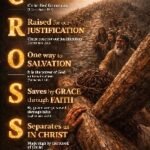 𝗧𝗛𝗘 𝗖𝗥𝗢𝗦𝗦: 𝗚𝗢𝗗’𝗦 𝗣𝗢𝗪𝗘𝗥 𝗙𝗢𝗥 𝗦𝗔𝗟𝗩𝗔𝗧𝗜𝗢𝗡
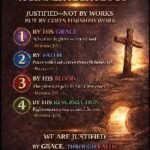 𝗛𝗢𝗪 𝗚𝗢𝗗 𝗗𝗘𝗖𝗟𝗔𝗥𝗘𝗦 𝗔 𝗦𝗜𝗡𝗡𝗘𝗥 𝗥𝗜𝗚𝗛𝗧𝗘𝗢𝗨𝗦
 𝟴 𝗧𝗢𝗫𝗜𝗖 𝗛𝗔𝗕𝗜𝗧𝗦 𝗖𝗛𝗥𝗜𝗦𝗧𝗜𝗔𝗡𝗦 𝗠𝗨𝗦𝗧 𝗟𝗘𝗧 𝗚𝗢 𝗧𝗢𝗗𝗔𝗬
 𝗧𝗪𝗢 𝗠𝗜𝗡𝗗𝗦𝗘𝗧𝗦: 𝗙𝗟𝗘𝗦𝗛 𝗢𝗥 𝗖𝗛𝗥𝗜𝗦𝗧
 𝗧𝗛𝗥𝗘𝗘 𝗦𝗧𝗔𝗚𝗘𝗦 𝗢𝗙 𝗦𝗣𝗜𝗥𝗜𝗧𝗨𝗔𝗟 𝗚𝗥𝗢𝗪𝗧𝗛