THE ARITHMETIC OF ATONEMENT: A FORENSIC INVESTIGATION INTO DIVINE LOVE VS. HUMAN INABILITY
In the grand court of human conscience, there exists a persistent and legalistic delusion—the belief that man, through the sweat of his own brow and the refinement of his own character, can ascend the hill of the Lord. From the ancient high places of pagan ritual to the polished steeples of modern religious tradition, the cry has always been “Do.” But as we conduct this forensic audit of the Sacred Oracles under the light of Pauline doctrine, we find a stark, inescapable reality: the ledger of human effort is marked by a terminal deficit. This investigative report asserts that the most profound truth in the universe is contained not in what man has achieved for God, but in the radical, dispensational disclosure of what God has achieved for man. The diagnostic baseline for this inquiry is found in the foundational decree of Romans 5:8: “But God commendeth his love toward us, in that, while we were yet sinners, Christ died for us.”
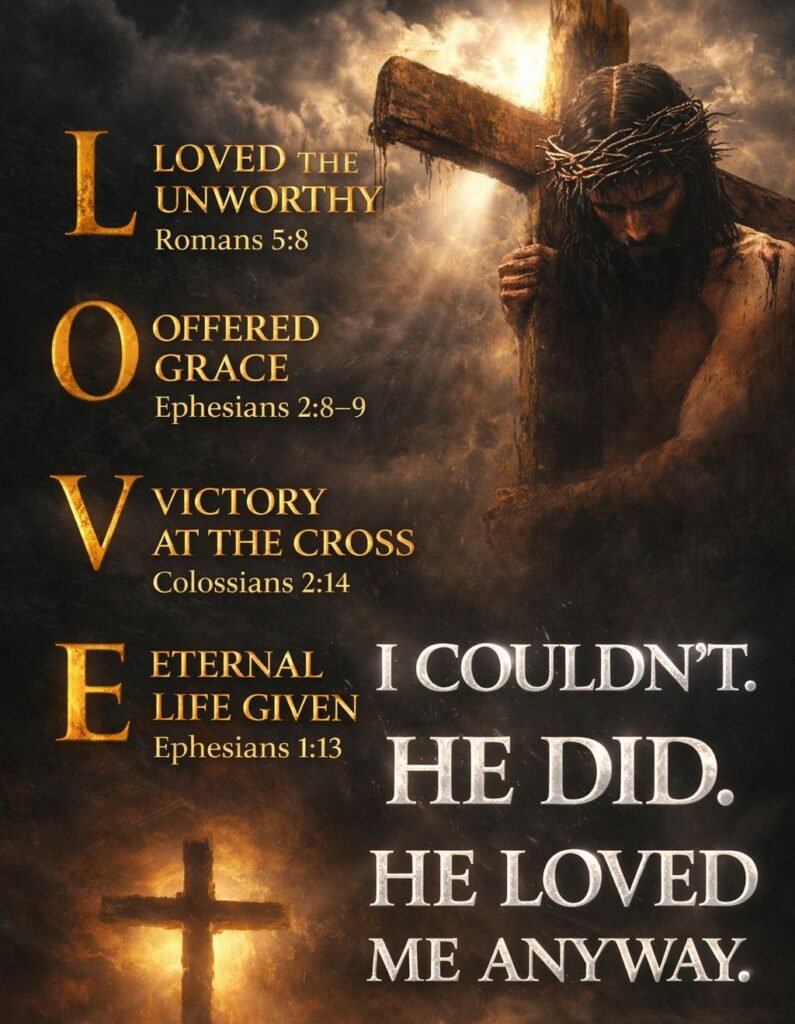
As we “rightly divide the word of truth” (2 Timothy 2:15), we must first dismantle the scaffold of human religion. Religion is the sophisticated attempt of the “dead in trespasses and sins” (Ephesians 2:1) to self-resuscitate through the administration of works. It demands that we try harder, be better, and accumulate a treasury of good deeds to appease a Holy Judge. Yet, the Gospel of the Grace of God (Acts 20:24) declares a forensic “No” to human merit. It is a message built upon a dual realization: I couldn’t, but He did. In this present Dispensation of Grace, the Cross stands not as a suggestion for self-improvement, but as the final, finished work of a Love that operates in the absence of human worthiness.
L — LOVE FOR THE LOST: THE VOLUNTARY SACRIFICE FOR THE UNDESERVING
The Investigation of Divine Affection toward the Unprofitable
The primary finding of this investigation reveals that Divine Love does not seek an object that is attractive; it creates beauty out of that which is discarded. While human affection is often a response to perceived value, the Love of God is a sovereign act of the will directed toward those who are “without strength.” In the forensic timeline of Romans 5:6, we find the first sub-point: Love for the Ungodly. “For when we were yet without strength, in due time Christ died for the ungodly.” Christ did not die for the righteous; He did not wait for the “good man” to emerge. He died for the rebel while the rebellion was still in full force.
Furthermore, this was a Love for the Unworthy. Romans 5:8 serves as the legal proof that God’s love was “commended” or demonstrated at our absolute lowest point. We were not “works in progress”; we were “sinners” by nature and by practice. The investigator notes that this love extends even to the Unclean. In the administrative letter to Titus 3:3-4, the Apostle Paul provides an autopsy of the human condition: “For we ourselves also were sometimes foolish, disobedient, deceived, serving divers lusts and pleasures, living in malice and envy, hateful, and hating one another.” It was into this toxic environment of human depravity that “the kindness and love of God our Saviour toward man appeared.”
This love is uniquely Unrepayable. Unlike human transactions where a favor expects a return, God’s love is a “gift” (Romans 6:23). As documented in the principles of Luke 6:35, God is “kind unto the unthankful and to the evil.” Finally, it is a Love for the Unreachable. In the high-altitude doctrine of Ephesians 2:4-5, we find that “God, who is rich in mercy, for his great love wherewith he loved us, even when we were dead in sins, hath quickened us together with Christ.” A dead man cannot reach for a savior. A dead man cannot cooperate with a physician. Therefore, the love of God had to be a unilateral reach into the grave of human inability. Christ did not wait for us to become worthy; He loved us into a state of worthiness through His own blood.
O — THE OFFER OF GRACE: THE JURISDICTIONAL SHIFT FROM LAW TO LIBERTY
The Forensic Audit of the Gift without a Price Tag
The investigation now turns to the mechanism of this love: the Offer of Grace. In the current administration, salvation is not a reward for the diligent, but a “free gift” (Romans 5:15) for the destitute. The investigative baseline is Ephesians 2:8-9: “For by grace are ye saved through faith; and that not of yourselves: it is the gift of God: Not of works, lest any man should boast.” Grace, by definition, is “unmerited favor.” If it is earned, it is no longer grace, but “debt” (Romans 4:4).
The investigator finds that this offer is Without Works. As stated in Titus 3:5, “Not by works of righteousness which we have done, but according to his mercy he saved us.” This is a radical departure from the “Prophetic Program” of Israel which involved legalistic adherence to ordinances. Today, the offer is Through Faith. In the courtroom of God, we are “justified by faith” and consequently have “peace with God through our Lord Jesus Christ” (Romans 5:1). Faith is not a work; it is the “hand” of the beggar reaching for the “bread” of the King.
This offer is Universal in Scope. God “will have all men to be saved, and to come unto the knowledge of the truth” (1 Timothy 2:4). There is no “restricted list” in the Dispensation of Grace. It is Offered Through the Gospel, specifically the Pauline Gospel of 1 Corinthians 15:1-4: how that Christ died for our sins, was buried, and rose again. Finally, we must recognize that we live in the Dispensation of the Grace of God (Ephesians 3:2). This is a unique “parenthesis” in time where God is not counting men’s trespasses against them but is beseeching them to be “reconciled to God” (2 Corinthians 5:20). The offer is open, the price is paid, and the invitation is “Whosoever will.”
V — VICTORY AT THE CROSS: THE TRIUMPH OVER THE TRIAD OF DESTRUCTION
The Strategic Deconstruction of Sin, Law, and Satan
The investigator finds that the Cross of Christ was not a tragic ending, but a forensic victory of cosmic proportions. To the natural eye, it appeared to be a defeat; to the spiritual eye, it was the place where “the handwriting of ordinances that was against us” was “blotted out” (Colossians 2:14). Christ took the “bill of indictment” that the Law held against us and “nailed it to his cross.”
The first sub-point of this triumph is Victory Over Sin. “For in that he died, he died unto sin once” (Romans 6:10). Christ dealt with the “sin principle” and the “sins” of the individual in one sovereign act. Because He died, the “body of sin might be destroyed, that henceforth we should not serve sin” (Romans 6:6). This leads to Victory Over the Law’s Condemnation. The Law was a “ministration of death” (2 Corinthians 3:7), but Christ became a “curse for us” to redeem us from the curse of the law (Galatians 3:13).
The investigative record also documents a Victory Over Satan. In the spiritual theater of Colossians 2:15, we see that Christ, “having spoiled principalities and powers, he made a shew of them openly, triumphing over them in it.” The “god of this world” (2 Corinthians 4:4) was stripped of his legal authority over those who are “in Christ.” This victory was validated Through the Resurrection. Christ was “delivered for our offences, and was raised again for our justification” (Romans 4:25). The empty tomb is the “receipt” that the payment for sin was accepted by the Father. Therefore, the believer can shout with the Apostle: “Thanks be to God, which giveth us the victory through our Lord Jesus Christ” (1 Corinthians 15:57).
E — ETERNAL LIFE GIVEN: THE PERMANENCE OF THE DIVINE SEAL
The Investigation into the Security of the Believer’s Inheritance
The final finding of this report concerns the result of believing the Gospel: the immediate possession of Eternal Life. This is not a “probationary” life or a “conditional” life; it is “Eternal.” The investigator find that when a sinner “trusts” the Word of Truth, the Gospel of Salvation, they are “sealed with that holy Spirit of promise” (Ephesians 1:13).
The Promised Gift of Eternal Life is the focal point of Romans 6:23: “the gift of God is eternal life through Jesus Christ our Lord.” This gift is backed by Eternal Security. The “sealing” of the Holy Spirit is a divine guarantee of the “earnest of our inheritance” (Ephesians 1:14). It is a seal that no man, no demon, and no failure can break. The believer’s Position in Christ is also eternal. “For ye are dead, and your life is hid with Christ in God” (Colossians 3:3).
Furthermore, an Eternal Inheritance has been prepared. We have “obtained an inheritance, being predestinated according to the purpose of him who worketh all things after the counsel of his own will” (Ephesians 1:11). This concludes with the prospect of Eternal Glory. The “sufferings of this present time are not worthy to be compared with the glory which shall be revealed in us” (Romans 8:18).
CASE STUDY: THE FORENSIC TRANSITION FROM LAW TO GRACE
Understanding the Dispensational Shift
To fully comprehend why “I couldn’t,” we must analyze the forensic history of the Mosaic Law. The investigator notes that the Law was never intended to save. As Paul records in Romans 3:20, “Therefore by the deeds of the law there shall no flesh be justified in his sight: for by the law is the knowledge of sin.” The Law was a “schoolmaster” (Galatians 3:24)—a legal tutor designed to lead us to Christ by demonstrating our total inability to meet God’s standard.
The Law was an external code written on stone; it demanded perfection from the flesh but provided no power to the flesh to perform. It was a mirror that showed the dirt on the face but possessed no water to wash it. In contrast, the Dispensation of Grace introduces the internal work of the Holy Spirit. Under the Law, the command was “Do and Live.” Under Grace, the declaration is “It is Done, therefore Live.”
The investigator finds that many modern believers are stuck in a “Galatian” heresy, attempting to finish in the flesh what began in the Spirit (Galatians 3:3). This forensic error assumes that Christ’s love is maintained by our performance. However, the Pauline doctrine insists that our standing is based entirely on the Imputed Righteousness of Christ (Romans 4:6). We do not work for a position; we work from a position of being “accepted in the beloved” (Ephesians 1:6).
THE ARCHITECTURE OF THE GREAT EXCHANGE
A Forensic Audit of Substitution
At the heart of “He Did” is the doctrine of Substitution. In the high-court of heaven, a legal exchange took place. 2 Corinthians 5:21 is the definitive text: “For he hath made him to be sin for us, who knew no sin; that we might be made the righteousness of God in him.”
Consider the forensic implications:
- Our Sin Accounted to Christ: Every violation of the Law, every “unclean” thought, and every act of “ungodly” rebellion was legally transferred to the person of Jesus Christ on the Cross. He became the “Sin Offering.” He was treated as if He had committed every sin ever done by man.
- God’s Wrath Satisfied: Because God is a “just judge” (Psalm 7:11), He could not simply ignore sin. The penalty had to be paid. Christ bore the “propitiation” (Romans 3:25) or the “satisfaction” of God’s holy justice.
- His Righteousness Accounted to Us: Upon believing the Gospel, Christ’s perfect record—His sinless life and perfect obedience—is legally transferred to the believer’s account. God now sees the believer through the “filter” of His Son.
The investigator finds that this exchange is the only reason a sinner can stand before a Holy God. It is not that we have become “better” people in our nature; it is that we have been “justified” in our legal standing. To be “justified” means to be “declared righteous” by the Highest Court. This is the ultimate proof that “I couldn’t” provide the righteousness required, but “He did” provide it as a gift.
THE PRACTICAL REALITY OF LIVING UNDER GRACE
The Transformation of the Grateful Soul
If the message is purely “He Did,” does that lead to a life of spiritual sloth? The investigation proves the opposite. Grace is the greatest motivator for holiness known to man. When a soul truly grasps that they were “loved anyway” while they were “yet sinners,” it produces a “reasonable service” of worship (Romans 12:1).
We are “his workmanship, created in Christ Jesus unto good works” (Ephesians 2:10). The investigator notes that these works are the result of salvation, not the requirement for it. We serve not out of the fear of a Judge, but out of the love for a Father. This is the “life of faith” where we “yield our members as instruments of righteousness” (Romans 6:13).
The investigate record shows that the power to live for God comes from the “indwelling Christ” (Colossians 1:27). I couldn’t live the Christian life. Only Christ could live the Christian life, and He does so through me as I “walk in the Spirit” (Galatians 5:16). This is the continuation of the theme: I can’t, but He can.
THE ESCHATOLOGICAL CERTAINTY OF HIS LOVE
The Final Resolution of the Body of Christ
The investigation concludes by looking forward. The love that “commended” itself at the Cross is the same love that will “perfect” us at the appearing of Christ. Our “vile body” will be “fashioned like unto his glorious body” (Philippians 3:21). This final step of salvation—Glorification—is as certain as our Justification, because both depend on the “He Did” factor.
“Being confident of this very thing, that he which hath begun a good work in you will perform it until the day of Jesus Christ” (Philippians 1:6). The investigator find that our eternal security is anchored in the character of God, not the consistency of the believer. God’s “gifts and calling are without repentance” (Romans 11:29). He will not change His mind about the love He poured out at Calvary.
In the ages to come, God will “shew the exceeding riches of his grace in his kindness toward us through Christ Jesus” (Ephesians 2:7). We will be the “exhibit A” of His mercy throughout eternity. We will never boast of our “try harder” or our “be better.” We will forever cast our crowns before the throne and proclaim that “Worthy is the Lamb that was slain” (Revelation 5:12).
THE INVESTIGATIVE SUMMARY: THE VERDICT OF THE FINISHED WORK
The evidence gathered in this exhaustive investigation is conclusive: the human race is in a state of total inability regarding its own salvation. We could not pay the debt of sin; we could not satisfy the demands of the Law; we could not conquer the power of death. The “Tower of Babel” of human religion has collapsed under the weight of its own insufficiency.
But where man failed, Christ succeeded. The message of the Cross is the message of “He did.” He paid the debt; He satisfied the Law; He conquered death. As stated in the forensic summary of 2 Corinthians 5:21: “For he hath made him to be sin for us, who knew no sin; that we might be made the righteousness of God in him.” The “Great Exchange” has occurred. Christ took our sin and gave us His righteousness.
The Love of God is not a “negotiation” where He meets us halfway. It is a “rescue mission” where He comes all the way to the bottom to pull us to the top. I couldn’t. He did. And He loved me anyway.
CALL TO ACTION: THE WORKMAN’S RESPONSE
The investigator leaves the reader with a vital mandate. The audit of your soul is pending.
- Stop Trusting Yourself: Abandon the “bricks and slime” of your own efforts. Recognize that “all our righteousnesses are as filthy rags” (Isaiah 64:6).
- Trust the Finished Work of Christ: Place your total confidence in the fact that Christ “finished” the work of your salvation 2,000 years ago.
- Believe the Gospel Today: Acknowledge that you are a sinner in need of a Savior. Trust that Christ died for your sins, was buried, and rose again.
The Gospel is not a “to-do” list; it is a “done” list. Receive the Grace of God today while the “door of faith” (Acts 14:27) remains open.
FINAL THOUGHTS: THE ARCHIVE OF GRACE
- Christ loved the unworthy: He sought the lost when they were not seeking Him.
- Grace is freely offered: It is a gift that can only be received, never purchased.
- The Cross secured victory: The “strong man” has been bound and his house spoiled.
- Eternal life is a gift: It is as permanent as the God who gives it.
I couldn’t. He did. He loved me anyway.
The forensic investigation is complete. The record is clear. The Grace of God is sufficient. The Word of God is true. The Work of Christ is finished. Stand in that Grace, and live in that Love, for it is the only standing that will survive the test of eternity.
Related posts:
 𝗘𝗔𝗦𝗜𝗘𝗥 𝗙𝗢𝗥 𝗔 𝗖𝗔𝗠𝗘𝗟 𝗧𝗢 𝗚𝗢 𝗧𝗛𝗥𝗢𝗨𝗚𝗛 𝗧𝗛𝗘 𝗘𝗬𝗘 𝗢𝗙 𝗔 𝗡𝗘𝗘𝗗𝗟𝗘
 𝗟𝗜𝗙𝗘 𝗪𝗜𝗧𝗛𝗢𝗨𝗧 𝗝𝗘𝗦𝗨𝗦 𝘃𝘀 𝗟𝗜𝗙𝗘 𝗪𝗜𝗧𝗛 𝗝𝗘𝗦𝗨𝗦
 𝗥𝗜𝗚𝗛𝗧𝗟𝗬 𝗗𝗜𝗩𝗜𝗗𝗜𝗡𝗚 𝗣𝗘𝗧𝗘𝗥 𝗗𝗢𝗖𝗧𝗥𝗜𝗡𝗘 𝘃𝘀 𝗣𝗔𝗨𝗟 𝗗𝗢𝗖𝗧𝗥𝗜𝗡𝗘
 𝗜𝗚𝗡𝗢𝗥𝗜𝗡𝗚 𝗧𝗛𝗘 𝗧𝗥𝗨𝗧𝗛 𝗗𝗢𝗘𝗦𝗡’𝗧 𝗖𝗛𝗔𝗡𝗚𝗘 𝗧𝗛𝗘 𝗧𝗥𝗨𝗧𝗛
 𝗟𝗜𝗚𝗛𝗧 𝗦𝗛𝗜𝗡𝗘𝗦 𝗜𝗡 𝗧𝗛𝗘 𝗗𝗔𝗥𝗞𝗡𝗘𝗦𝗦
 𝟴 𝗧𝗢𝗫𝗜𝗖 𝗛𝗔𝗕𝗜𝗧𝗦 𝗖𝗛𝗥𝗜𝗦𝗧𝗜𝗔𝗡𝗦 𝗠𝗨𝗦𝗧 𝗟𝗘𝗧 𝗚𝗢 𝗧𝗢𝗗𝗔𝗬
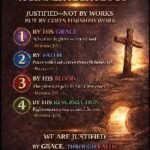 𝗛𝗢𝗪 𝗚𝗢𝗗 𝗗𝗘𝗖𝗟𝗔𝗥𝗘𝗦 𝗔 𝗦𝗜𝗡𝗡𝗘𝗥 𝗥𝗜𝗚𝗛𝗧𝗘𝗢𝗨𝗦
 𝗙𝗔𝗟𝗦𝗘 𝗙𝗥𝗜𝗘𝗡𝗗𝗦: 𝗧𝗛𝗘 𝗗𝗔𝗡𝗚𝗘𝗥𝗦 𝗢𝗙 𝗣𝗥𝗘𝗧𝗘𝗡𝗗𝗘𝗗 𝗙𝗘𝗟𝗟𝗢𝗪𝗦𝗛𝗜𝗣
 𝗧𝗛𝗘 𝗖𝗥𝗢𝗦𝗦: 𝗚𝗢𝗗’𝗦 𝗣𝗢𝗪𝗘𝗥 𝗙𝗢𝗥 𝗦𝗔𝗟𝗩𝗔𝗧𝗜𝗢𝗡
 𝗧𝗛𝗜𝗦 𝗜𝗦 𝗡𝗢𝗧 𝗔 𝗠𝗢𝗩𝗜𝗘 — 𝗧𝗛𝗜𝗦 𝗜𝗦 𝗣𝗥𝗢𝗣𝗛𝗘𝗖𝗬
 𝗦.𝗪.𝗢.𝗥.𝗗. — 𝗧𝗛𝗘 𝗪𝗢𝗥𝗗 𝗢𝗙 𝗚𝗢𝗗
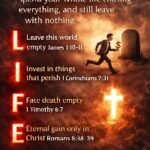 𝗟𝗜𝗙𝗘 — 𝗧𝗛𝗘 𝗚𝗥𝗘𝗔𝗧 𝗘𝗧𝗘𝗥𝗡𝗔𝗟 𝗤𝗨𝗘𝗦𝗧𝗜𝗢𝗡
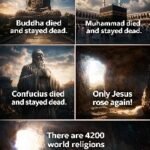 𝗢𝗡𝗟𝗬 𝗢𝗡𝗘 𝗘𝗠𝗣𝗧𝗬 𝗧𝗢𝗠𝗕
 𝗪𝗛𝗔𝗧 𝗖𝗔𝗡 𝗪𝗘 𝗟𝗘𝗔𝗥𝗡 𝗙𝗥𝗢𝗠 𝗧𝗛𝗘 𝗧𝗢𝗪𝗘𝗥 𝗢𝗙 𝗕𝗔𝗕𝗘𝗟?