JESUS: OUR COMPLETE STANDING IN GRACE
Why the Christian Life Begins with Finished Work, Not Future Effort
“By grace are ye saved through faith; and that not of yourselves: it is the gift of God.” — Ephesians 2:8 (KJV)
Introduction: The Struggle That Shouldn’t Exist
Across pulpits, podcasts, and personal conversations, a quiet struggle persists among sincere Christians. It is not a struggle against open unbelief or blatant rebellion, but something more subtle and more exhausting: uncertainty. Many believers live with an unspoken anxiety about whether they are truly accepted by God, whether they are doing enough, growing enough, repenting enough, or surrendering enough to remain in His favor.
This struggle does not arise because Jesus Christ failed to finish His work. It arises because many believers have never been taught to understand their position in Christ. Instead of living from a completed standing, they are taught—sometimes directly, often indirectly—to live toward one.
The apostle Paul confronts this confusion head-on with a statement that is as decisive as it is liberating: “Ye are complete in him” (Colossians 2:10). Not progressing toward completion. Not hoping for completion. Complete—now.
In the Dispensation of Grace, Christian living does not begin with self-improvement. It begins with identity. Grace does not place believers on probation; it places them in Christ. Everything that follows—growth, service, obedience, endurance—flows from what is already settled.
To understand this is to step out of spiritual anxiety and into spiritual rest. To miss it is to spend a lifetime trying to earn what was freely given.
Justified by His Faithfulness, Not Ours
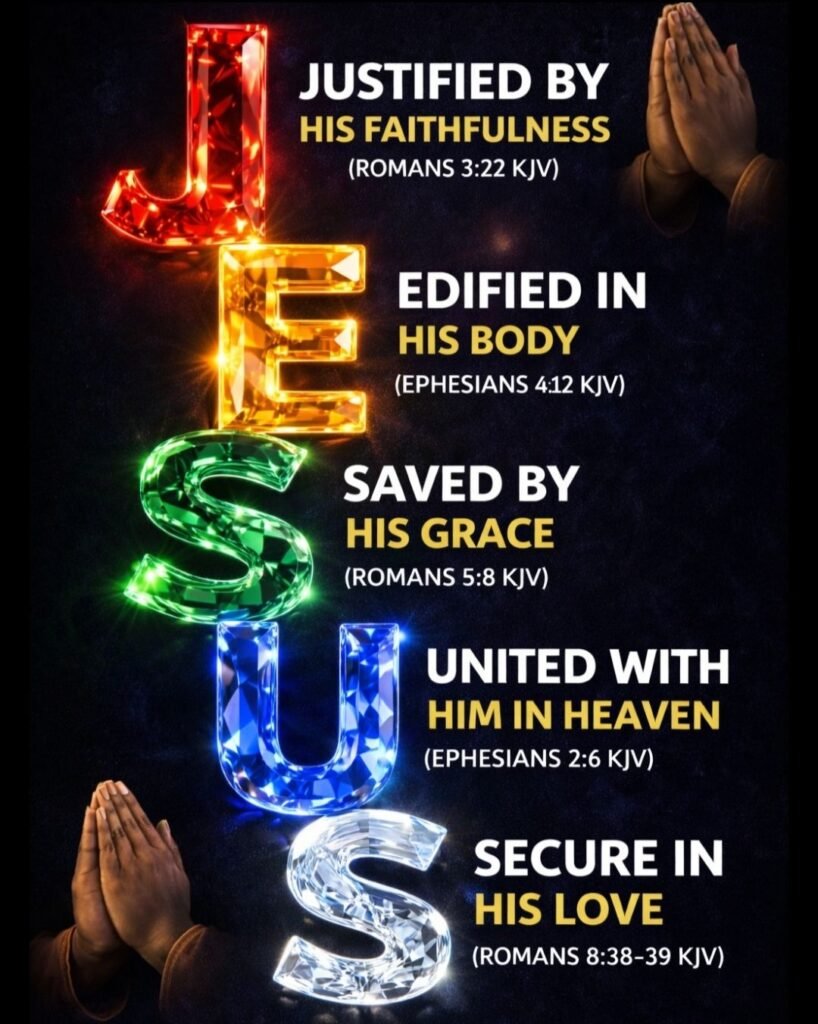
One of the most radical—and most misunderstood—truths in Paul’s gospel is the basis of justification. Romans 3:22 speaks of “the righteousness of God which is by faith of Jesus Christ unto all and upon all them that believe.” While often read quickly, the wording is precise. Justification rests not on the consistency of human faith, but on the faithfulness of Jesus Christ.
This distinction matters. If justification were grounded in the believer’s ability to maintain faith, assurance would rise and fall with emotional stability, circumstances, and performance. But Scripture anchors righteousness in Christ’s obedience, not ours. His faithfulness under the law, His submission unto death, and His resurrection power form the legal and spiritual basis of the believer’s righteous standing before God.
Justification, then, is not a process but a verdict. It is God declaring the believing sinner righteous, not because the sinner has become righteous in behavior, but because Christ’s righteousness has been credited to them. This declaration happens once, fully, and permanently.
There is no such thing in Pauline theology as repeated justification. There is no re-courtroom for the believer who fails. Grace does not re-litigate sin; it has already judged it at the cross.
This truth dismantles the idea that law-keeping, moral improvement, or religious discipline can maintain one’s standing before God. Faith in Christ alone—not faith plus works, not faith demonstrated by endurance, not faith proven by suffering—is the means by which justification is received.
The believer stands righteous not because they are faithful enough, but because Christ was faithful unto death.
Edified in His Body, Not Isolated in Individualism
Grace does not produce spiritual isolation. While salvation is personal, it is never private. Ephesians 4:12 explains that Christ has given leadership gifts to the Church “for the perfecting of the saints, for the work of the ministry, for the edifying of the body of Christ.”
The grace message is sometimes accused of encouraging independent Christianity, as though believers who rest in grace no longer need instruction, accountability, or fellowship. Paul teaches the opposite. Grace places believers into a living organism—the Body of Christ—where growth occurs through mutual edification.
This edification is doctrinal before it is emotional. The Body matures through truth, not through ritual, hype, or religious performance. Paul’s epistles are not optional supplements to Christian growth; they are the primary means by which grace-age believers are equipped.
Edification involves being built together, not merely attending together. It means learning how individual members function differently while serving the same purpose. It means recognizing that maturity is not measured by intensity, but by stability.
A grace-edified believer is not someone who feels inspired every day, but someone who understands who they are even on difficult days. This maturity cannot be produced by ceremonies or traditions imported from other dispensations. It comes from sustained exposure to Pauline doctrine rightly divided.
Saved by Grace, Not Rewarded by Merit
Romans 5:8 states plainly, “God commendeth his love toward us, in that, while we were yet sinners, Christ died for us.” Salvation begins with divine initiative, not human readiness. Grace did not respond to repentance; it preceded it. Grace did not wait for reform; it acted while rebellion was still present.
This reality exposes the flawed idea that salvation is a reward for sincerity, humility, or moral effort. Scripture presents salvation as a gift—fully paid for, freely given, and entirely unearned.
Grace secures salvation in a way that human effort never could. If salvation depended on continued obedience, it would be as fragile as human willpower. But because salvation rests on Christ’s finished work, it is as secure as His resurrection.
Grace not only initiates salvation; it sustains it. The believer does not remain saved by maintaining a certain spiritual temperature. Salvation is not revoked by failure, doubt, or struggle. If it could be, then grace would not reign—it would merely assist.
Paul’s gospel leaves no room for the fear that one mistake could undo eternal redemption. The cross was not a down payment. It was full payment.
United with Him in Heaven, Not Bound to Earthly Identity
Ephesians 2:6 introduces one of the most astonishing truths of the Christian position: “[God] hath raised us up together, and made us sit together in heavenly places in Christ Jesus.” This is not poetic exaggeration. It is a present spiritual reality.
Believers are not merely waiting to go to heaven; they are already united with Christ there. Their true position is not earth-centered but heaven-seated. While their physical lives unfold in time, their spiritual identity is anchored above.
This union reshapes how life is understood. Circumstances do not define identity. Suffering does not negate position. Failure does not relocate the believer out of Christ. What is spiritually true now will one day be visibly manifested, but it is no less real in the present.
Understanding this heavenly position frees believers from the pressure to find ultimate meaning in earthly success, recognition, or comfort. It redirects hope away from temporary outcomes and toward eternal reality.
The Christian life is not an attempt to reach heaven by performance; it is the earthly expression of a heavenly union already secured.
Secure in His Love, Not Sustained by Fear
Romans 8:38–39 offers one of Scripture’s strongest assurances: nothing—neither death nor life, angels nor principalities, present nor future—can separate the believer from the love of God in Christ Jesus.
Security is not based on the believer’s consistency, but on God’s commitment. If separation were possible, it would require a power greater than the cross, the resurrection, and the indwelling Spirit combined. Paul lists every conceivable threat and dismisses them all.
Fear-driven Christianity thrives where security is unclear. But grace-based Christianity flourishes where assurance is settled. The believer who knows they are secure does not become careless; they become confident. They serve from gratitude, not anxiety.
Eternal security does not produce indifference to sin; it produces freedom from condemnation. It allows correction without terror and growth without despair.
God’s love is not fragile. It does not fluctuate with performance. It does not withdraw during failure. It holds fast because it originates in Him, not in us.
Separated from Law by Grace, Not Improved by It
Romans 6:14 declares, “Ye are not under the law, but under grace.” This statement does not suggest a balance or mixture. Law and grace are mutually exclusive systems. One condemns; the other delivers. One demands; the other supplies.
Law was never designed to produce righteousness. It exposes sin and pronounces guilt. Grace, by contrast, reigns through righteousness unto eternal life.
When believers attempt to live under a law-based mindset—measuring spirituality by rule-keeping or self-discipline—they inevitably return to condemnation. Grace does not deny moral living, but it changes its source. Obedience becomes fruit, not a prerequisite.
Works cannot save, maintain salvation, or improve standing before God. Faith alone justifies, and grace alone reigns.
To mix law and grace is not spiritual maturity; it is doctrinal confusion.
Renewed in Mind by Truth, Not Emotion
Romans 12:2 emphasizes transformation through the renewing of the mind. Victory in the Christian life does not come from emotional intensity or spiritual experiences, but from sustained exposure to truth.
Pauline doctrine reshapes thinking. It replaces tradition with clarity and fear with assurance. A renewed mind understands grace, identity, and purpose in their proper order.
This renewal produces stability. The believer is no longer tossed by every spiritual trend or emotional high. They understand what is true regardless of how they feel.
Grace-driven renewal does not ignore struggle; it reframes it. Growth becomes a process of alignment, not self-condemnation.
Released from Condemnation, Not Placed Under Suspicion
Romans 8:1 announces freedom in unmistakable terms: “There is therefore now no condemnation to them which are in Christ Jesus.” Condemnation belongs to law. Grace corrects without condemning.
Failure does not remove position. Sin does not undo justification. Correction occurs within security, not threat.
This truth liberates believers from spiritual paralysis. They can confront weakness honestly because their standing is not at risk.
Grace does not excuse sin; it ends condemnation.
Guaranteed a Glorious End, Not an Uncertain Hope
Finally, grace has a destination. 1 Thessalonians 4:16–17 describes the catching away of the Body of Christ. This is not wishful thinking; it is a promised conclusion.
The believer’s future is not vague. They will be caught up, united forever with the Lord, and glorified. Hope is not emotional optimism—it is doctrinal certainty.
Grace begins with justification and ends in glory. Nothing in between can derail that outcome.
Conclusion: Believe What Is Already True
The Christian life is not about trying harder. It is about believing rightly. When believers understand who they are in Christ, peace replaces fear and assurance replaces doubt.
“Christ in you, the hope of glory.” — Colossians 1:27
Grace is not unfinished. Christ did not leave work undone. The call today is not to strive for acceptance, but to stand in it.
Final Thoughts
Justification rests on His faithfulness.
Edification happens in His Body.
Salvation is secured by His grace.
Union is heavenly and present.
Security is unbreakable.
Law has no authority here.
The mind is renewed by truth.
Condemnation has been removed.
Glory is guaranteed.
“By grace ye stand.” — Romans 5:2