Influencing Others to Hate: The Spiritual Danger Behind Manipulated Hostility
In an age dominated by social media outrage, fractured communities, and weaponized narratives, one of the most overlooked dangers is not violence, extremism, or open immorality—but influence. Specifically, the quiet, calculated act of persuading others to hate.
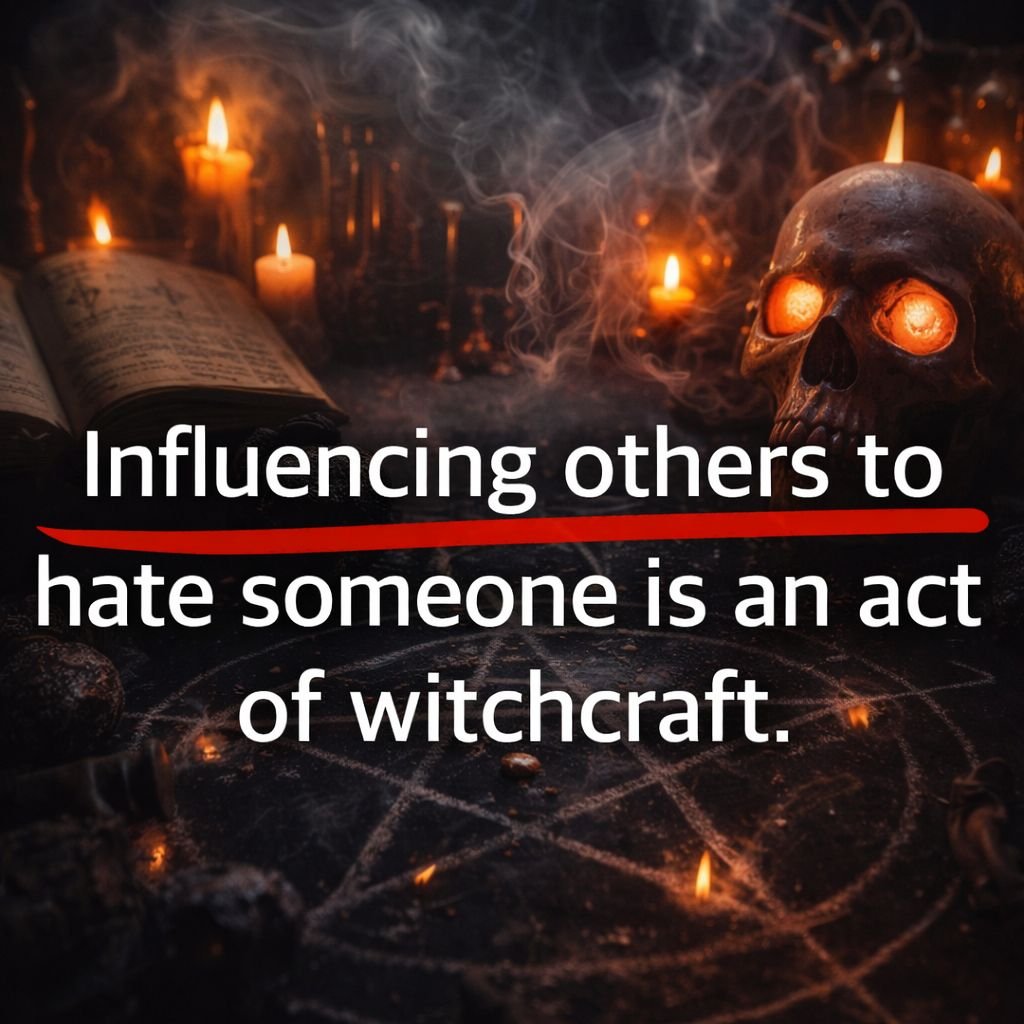
The phrase has become popular in recent years: “Influencing others to hate someone is an act of witchcraft.” It appears on graphics, captions, and sermon slides, often intended to shock audiences into recognizing the seriousness of manipulation. But while the statement captures an emotional truth, it collapses important biblical distinctions. Scripture is precise with language, and precision matters when addressing spiritual danger.
Hatred is not ceremonial witchcraft. Manipulation is not occult sorcery. Yet the Bible is unequivocal that both are destructive works of the flesh—sins capable of spiritual damage that extends far beyond the individual committing them. In the dispensation of grace, where believers are called to live under the transforming power of Christ rather than the coercion of law, influencing hatred represents a profound failure to understand both Christian liberty and Christian responsibility.
The danger is not merely personal animosity. It is the ripple effect of directed hostility—the way one voice can poison many hearts, distort truth, and fracture the body of Christ from the inside.
The Confusion Between Witchcraft and Influence
Witchcraft, as defined by Scripture, is not a metaphor. It is a specific category of sin associated with occult practices, forbidden spiritual power, and deliberate rebellion against God’s authority. The Old Testament consistently condemns sorcery, divination, and enchantments as attempts to access supernatural control apart from God. Deuteronomy 18 lists such practices alongside idolatry, making clear that witchcraft is not emotional manipulation but spiritual counterfeiting.
The New Testament reinforces this distinction. In Acts 8, Simon the sorcerer is described as “bewitching” the people of Samaria through supernatural deception, falsely presenting himself as possessing divine power. His sin was not persuasion or rhetoric—it was a counterfeit spiritual authority designed to control belief.
Paul later includes witchcraft in his catalog of the works of the flesh in Galatians 5, placing it among sins that exclude individuals from inheriting the kingdom of God. Yet in that same list, Paul names hatred, variance, wrath, strife, and seditions. These are not occult acts, but they flow from the same fallen nature.
The mistake modern discourse often makes is collapsing all forms of manipulation into “witchcraft,” thereby obscuring what Scripture actually teaches. When everything becomes witchcraft, nothing is clearly understood. The Bible does not rely on exaggeration to convey seriousness; it relies on truth.
Hatred does not need to be relabeled as witchcraft to be dangerous. Scripture already condemns it without qualification.
Hatred as a Spiritual Force, Not a Harmless Emotion
Western culture often treats hatred as an understandable reaction—an emotion justified by offense, betrayal, or disagreement. Scripture does not. In biblical terms, hatred is not merely a feeling; it is a posture of the heart that carries moral weight.
Paul identifies hatred explicitly as a work of the flesh. It is grouped with behaviors that fracture communities and distort doctrine. Hatred does not exist in isolation; it produces variance, rivalry, and division. Its fruit is relational collapse.
John’s epistle goes further, equating hatred with murder of the heart. The statement is not hyperbole. Hatred dehumanizes its target, stripping them of dignity and worth. Once a person is reduced to an object of contempt, cruelty becomes easier, truth becomes optional, and justification becomes self-serving.
James adds another layer by identifying the origin of bitter zeal and envy as “earthly, sensual, devilish.” This does not mean that hatred is demonic possession, but it does mean that it aligns with the values and impulses of a fallen world rather than the wisdom of God.
Hatred is spiritually dangerous not because it looks dramatic, but because it feels natural. It thrives in self-righteousness, grows under the guise of concern, and often disguises itself as discernment.
When Hatred Becomes Contagious
The spiritual danger intensifies when hatred is no longer contained within one heart but intentionally spread to others. Scripture repeatedly warns against sowing discord—not merely holding a grudge, but actively shaping perceptions.
The book of Proverbs lists sowing discord among brethren as one of the things God hates. Not dislikes. Hates. The severity of the language underscores the damage caused when relationships are deliberately fractured. Discord is not accidental; it is planted.
Paul echoes this concern in his letters to the churches. In Romans 16, he warns believers to mark and avoid those who cause divisions contrary to sound doctrine. The emphasis is not on disagreement, but on influence—those who steer others away from truth through persuasive speech.
Speech is never neutral in Scripture. Words either edify or corrupt. Paul’s instruction to the Ephesians is clear: corrupt communication spreads decay, while gracious speech builds up. Influence, therefore, is a stewardship.
When individuals use their credibility, charisma, or proximity to shape others’ opinions against someone—especially through half-truths, insinuations, or emotional appeals—they are not merely expressing feelings. They are exercising power.
This is where the comparison to witchcraft gains rhetorical traction—not because the act is occult, but because the objective is control.
Control Without Occultism: The Flesh’s Counterfeit Power
Witchcraft seeks to dominate through supernatural means. Manipulation seeks to dominate through psychological and relational means. The tools differ; the desire does not.
James compares the tongue to a rudder steering a massive ship. Small words can redirect entire communities. A single narrative, repeated often enough, becomes accepted truth regardless of accuracy.
Fear is one of the most effective instruments of influence. Paul reminds Timothy that fear does not originate from God. Yet fear-driven rhetoric is common in religious spaces—fear of association, fear of contamination, fear of disagreement. Once fear takes hold, discernment collapses.
Lies rarely succeed on their own. They succeed when woven with partial truths, emotional language, and moral posturing. Jesus identifies Satan as the father of lies not because lies are dramatic, but because they distort reality while pretending to clarify it.
When believers participate in this kind of influence—whether knowingly or impulsively—they align themselves with fleshly power rather than spiritual fruit. The result is damage that grace was never meant to excuse.
The Grace-Age Misunderstanding
One of the great ironies of modern Christianity is that grace is often preached but poorly understood. Grace is not permissiveness. It is transformation.
Paul makes it clear that believers are not under the Mosaic law. There are no legal penalties for hatred as there once were under Israel’s theocratic system. But freedom from law does not mean freedom from consequence.
Grace teaches. It trains believers to deny ungodliness and worldly desires. It reshapes behavior from the inside out rather than enforcing compliance from the outside in.
This distinction matters. In previous dispensations, spiritual violations were addressed through external judgment. In the dispensation of grace, they are addressed through internal renewal. That does not make them less serious—it makes them more personal.
The call of Romans 12 is not to manage behavior, but to renew the mind. Influence rooted in hatred is a sign of conformity to the world, not transformation by Christ.
Deliverance From Flesh-Driven Influence
Scripture presents deliverance not as spectacle, but as transfer of authority. Believers are described as having been delivered from the power of darkness and translated into the kingdom of Christ. This is not merely positional language—it is practical reality.
The “old man” has been crucified. The flesh no longer holds rightful dominion. Yet believers can still choose to operate according to fleshly instincts rather than spiritual leading.
Walking in the Spirit is not mystical. It is relational. It involves conscious dependence on God’s truth rather than emotional impulse. Where the Spirit leads, manipulation cannot survive.
This is why Paul contrasts the works of the flesh with the fruit of the Spirit. One is effort-driven and destructive; the other is life-produced and restorative.
Speech as a Measure of Spiritual Maturity
Few areas reveal spiritual condition more clearly than speech. Jesus stated plainly that words flow from the abundance of the heart. James warned that no man can tame the tongue apart from God’s work within.
In the grace age, speech is not regulated by law but by love. Believers are called to be slow to speak, quick to hear, and intentional with words. Not every truth needs to be spoken. Not every grievance needs an audience.
Paul’s instruction to speak “that which ministers grace” sets a high standard. Words should heal, clarify, and build—not inflame, distort, or isolate.
When speech consistently produces suspicion, hostility, or alienation, it is not spiritual discernment at work. It is flesh.
Love as the Final Measure
Paul’s definition of love in 1 Corinthians 13 dismantles every justification for hatred. Knowledge without love profits nothing. Conviction without love becomes cruelty. Truth without love becomes a weapon.
Love does not rejoice in iniquity, but it also does not delight in tearing others down. It bears, believes, hopes, and endures—not because it ignores sin, but because it trusts God to work beyond human control.
Romans 12 commands believers to overcome evil with good, not influence others to retaliate. Christ did not defeat hostility by spreading it. He absorbed it.
The cross stands as the ultimate rebuke to manipulative hatred. While humanity was hostile toward God, Christ responded with grace.
Choosing Influence or Edification
Every believer influences others, whether intentionally or not. The question is not whether influence exists, but how it is used.
Paul instructed the Corinthians that everything done in the assembly should be for edification. The same principle applies beyond church walls. Words either build or destroy.
Romans 14 urges believers to pursue peace and mutual upbuilding rather than judgment. Colossians 3 calls for forgiveness modeled after Christ’s forgiveness.
These are not abstract ideals. They are daily choices.
Conclusion: The Real Spiritual Danger
Influencing others to hate is not ceremonial witchcraft. Scripture does not say it is. But it is spiritually dangerous precisely because it feels justified, persuasive, and subtle.
Witchcraft seeks control through power.
Hatred seeks control through influence.
Grace seeks transformation through love.
The Spirit of God never promotes hatred, never thrives on manipulation, and never advances truth through distortion. Where grace reigns, coercion dies.
In an age saturated with voices competing for allegiance, the call of the believer remains unchanged: speak truth in love, walk in the Spirit, and let grace—not hostility—be the loudest influence you carry.
“For the fruit of the Spirit is in all goodness and righteousness and truth.”
— Ephesians 5:9 (KJV)
The image says, “Influencing others to hate someone is an act of witchcraft.”
Biblically, hatred and manipulation are works of the flesh, not ceremonial witchcraft—but their spiritual effect is real.
“For we wrestle not against flesh and blood…” — Ephesians 6:12 (KJV)
In the dispensation of grace, Paul exposes spiritual manipulation, slander, and division as fleshly sins that oppose the work of Christ
DEFINITION OF WITCHCRAFT (BIBLICAL CLARITY) – Scripture defines witchcraft precisely—not emotionally.
Sorcery Defined — Occult practices condemned Deuteronomy 18:10–12
Spiritual Counterfeit — Satanic power imitation Acts 8:9–11
Serious Sin — Excluded from God’s kingdom Galatians 5:20
Right Division Note: Witchcraft is not feelings—it is occult control.
DESCRIPTION OF HATRED (WORK OF THE FLESH) – Hatred is not witchcraft—but it belongs to the same fleshly source.
Defined by Paul — Hatred listed as fleshly sin Galatians 5:19–21
Destructive Nature — Hatred murders the heart 1 John 3:15
Devilish Origin — Comes from below James 3:14–15
DANGERS OF DIRECTING HATRED – Influencing others to hate is spiritual manipulation.
Divisive Speech — Sowing discord Proverbs 6:16–19
Defiling Words — Corrupt communication spreads poison Ephesians 4:29
Deceptive Influence — Leading others astray Romans 16:17
DEMONSTRATION OF CONTROL (FLESHLY POWER) – Manipulation imitates witchcraft’s goal: control.
Control Through Words — Tongue steers hearts James 3:5–6
Control Through Fear — Fear used as leverage 2 Timothy 1:7
Control Through Lies — False narratives dominate minds John 8:44
DISPENSATIONAL DISTINCTION (GRACE AGE RESPONSE) – We are not under law—but under grace.
Grace Governs Conduct — Not Mosaic penalties Romans 6:14
Grace Trains Behavior — Teaches self-control Titus 2:11–12
Grace Transforms Hearts — Not coercion Romans 12:2
DELIVERANCE FROM DESTRUCTIVE INFLUENCE – Christ frees believers from flesh-driven control.
Delivered by Christ — From darkness to light Colossians 1:13
Dead to Sin — Flesh no longer master Romans 6:6
Directed by the Spirit — Walk, don’t manipulate Galatians 5:16
DISCIPLINE OF THE TONGUE – Grace demands control over speech.
Speech Tested — Words reveal the heart Matthew 12:34
Speech Restrained — Slow to speak James 1:19
Speech Redemptive — Ministering grace Ephesians 4:29
DOCTRINE OF LOVE (PAULINE STANDARD) – Love—not hatred—is the evidence of grace.
Love Above Knowledge — Without love, nothing profits 1 Corinthians 13:2
Love Overcomes Evil — Responds righteously Romans 12:21
Love Reflects Christ — Christ loved enemies Romans 5:8
DECISION TO WALK IN LIGHT – Every believer chooses influence or edification.
Choose Edification — Build, not destroy 1 Corinthians 14:26
Choose Peace — Follow things that make peace Romans 14:19
Choose Christlikeness — Forgiving as Christ forgave Colossians 3:13
CALL TO ACTION
Stop spreading hate – Start spreading grace – Speak truth in love
“Let all bitterness, and wrath, and anger… be put away from you.”
— Ephesians 4:31 (KJV)
CONCLUSION
Influencing others to hate is not ceremonial witchcraft, but it operates from the same fleshly desire to control.
Grace doesn’t manipulate— Grace liberates.
FINAL THOUGHTS
Witchcraft controls through power
Hatred controls through influence
Words carry spiritual weight
Grace changes hearts—not forces minds
Love proves maturity
Right division brings balance
Edification beats accusation
The Spirit never promotes hate
Walk as children of light
“For the fruit of the Spirit is in all goodness and righteousness and truth.”
— Ephesians 5:9 (KJV)
Related posts:
 𝗧𝗛𝗘 𝗟𝗜𝗣𝗦 𝗧𝗛𝗔𝗧 𝗟𝗘𝗔𝗗 𝗢𝗥 𝗟𝗜𝗣𝗦 𝗧𝗛𝗔𝗧 𝗟𝗜𝗙𝗧
 𝗟𝗘𝗧 𝗬𝗢𝗨𝗥 𝗪𝗢𝗥𝗗𝗦 𝗥𝗘𝗙𝗟𝗘𝗖𝗧 𝗬𝗢𝗨𝗥 𝗛𝗘𝗔𝗥𝗧
 𝗩𝗔𝗟𝗘𝗡𝗧𝗜𝗡𝗘’𝗦 𝗗𝗔𝗬: 𝗟𝗢𝗩𝗘 𝗨𝗡𝗗𝗘𝗥 𝗚𝗥𝗔𝗖𝗘 𝗢𝗥 𝗟𝗨𝗦𝗧 𝗨𝗡𝗗𝗘𝗥 𝗧𝗛𝗘 𝗙𝗟𝗘𝗦𝗛?
 𝗟𝗜𝗙𝗘 𝗔𝗡𝗗 𝗗𝗘𝗔𝗧𝗛 𝗔𝗥𝗘 𝗜𝗡 𝗧𝗛𝗘 𝗣𝗢𝗪𝗘𝗥 𝗢𝗙 𝗧𝗛𝗘 𝗧𝗢𝗡𝗚𝗨𝗘
 𝗦𝗣𝗘𝗔𝗞 𝗟𝗜𝗙𝗘!
 𝗧𝗛𝗘 𝗧𝗢𝗡𝗚𝗨𝗘: 𝗕𝗟𝗘𝗦𝗦𝗜𝗡𝗚 𝗢𝗥 𝗖𝗨𝗥𝗦𝗘
 𝗟𝗨𝗦𝗧 𝘃𝘀 𝗟𝗢𝗩𝗘
 𝗧𝗛𝗘 𝗠𝗢𝗨𝗧𝗛 𝗧𝗛𝗔𝗧 𝗠𝗔𝗚𝗡𝗜𝗙𝗜𝗘𝗦 𝗖𝗛𝗥𝗜𝗦𝗧
 𝗧𝗛𝗘 𝗣𝗢𝗪𝗘𝗥 𝗢𝗙 𝗧𝗛𝗘 𝗧𝗢𝗡𝗚𝗨𝗘: 𝗗𝗘𝗔𝗧𝗛 𝗢𝗥 𝗟𝗜𝗙𝗘
 𝗚𝗢𝗗’𝗦 𝗟𝗢𝗩𝗘 𝘃𝘀. 𝗩𝗔𝗟𝗘𝗡𝗧𝗜𝗡𝗘’𝗦 𝗟𝗢𝗩𝗘𝗟𝗢𝗢𝗞𝗦 𝗖𝗔𝗡 𝗕𝗘 𝗗𝗘𝗖𝗘𝗜𝗩𝗜𝗡𝗚
 𝗙𝗔𝗟𝗦𝗘 𝗙𝗥𝗜𝗘𝗡𝗗𝗦: 𝗧𝗛𝗘 𝗗𝗔𝗡𝗚𝗘𝗥 𝗢𝗙 𝗣𝗥𝗘𝗧𝗘𝗡𝗗𝗘𝗗 𝗙𝗘𝗟𝗟𝗢𝗪𝗦𝗛𝗜𝗣
 𝗬𝗢𝗨𝗥 𝗠𝗢𝗨𝗧𝗛 𝗥𝗘𝗩𝗘𝗔𝗟𝗦 𝗬𝗢𝗨𝗥 𝗛𝗘𝗔𝗥𝗧
 𝗧𝗛𝗘 𝗗𝗔𝗡𝗚𝗘𝗥𝗢𝗨𝗦 𝗣𝗢𝗪𝗘𝗥 𝗢𝗙 𝗧𝗛𝗘 𝗠𝗢𝗨𝗧𝗛
 𝗢𝗡𝗘 𝗠𝗢𝗨𝗧𝗛… 𝗠𝗔𝗡𝗬 𝗧𝗢𝗡𝗚𝗨𝗘𝗦