
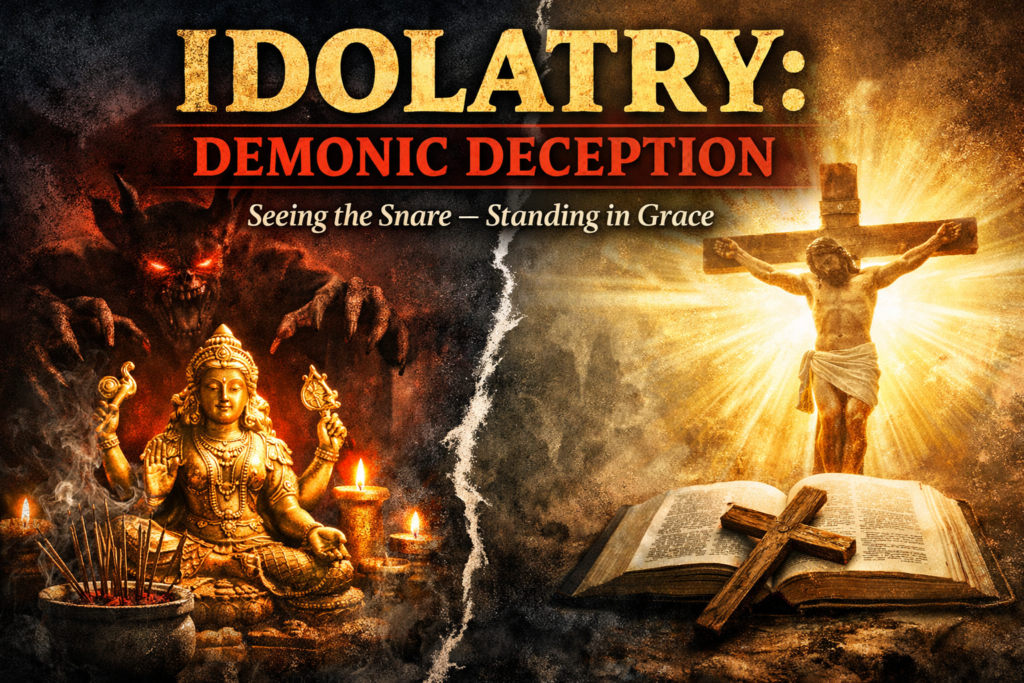
IDOLATRY: DEMONIC DECEPTION
Seeing the Snare — Standing in Grace
“Wherefore, my dearly beloved, flee from idolatry.” — 1 Corinthians 10:14 (KJV)
Introduction: When Idolatry No Longer Looks Like Idolatry
Idolatry is often dismissed as an ancient problem—wooden statues, carved images, and pagan temples scattered across biblical history. Modern believers, particularly those in Western cultures, tend to assume idolatry is something humanity has outgrown. After all, few people bow to golden calves or pray to stone figures in public squares.
Yet the Apostle Paul issued one of his strongest warnings about idolatry not to pagans, but to the Body of Christ.
“Wherefore, my dearly beloved, flee from idolatry.”
Paul’s language is urgent. He does not advise caution. He commands flight. His concern is not primitive superstition, but spiritual deception. Idolatry, as Paul presents it, is not primarily about statues—it is about substitution. It is about replacing the living Christ with something visible, controllable, and familiar. And behind that substitution, Scripture reveals, is a darker reality: demonic influence disguised as devotion.
Paul makes a startling statement in 1 Corinthians 10:20: sacrifices offered to idols are not neutral religious expressions—they are offered “to devils.” This does not mean every idol worshiper is consciously serving demons. It means the system itself is energized by spiritual forces opposed to God, even when clothed in sincerity, tradition, or beauty.
For believers living in the dispensation of grace, this warning is especially relevant. Grace does not eliminate the danger of deception; it heightens the responsibility of discernment. The Church is not called to ritual separation through law, but to spiritual separation through truth. Christ alone is our access to God. Anything that competes with that access—even under religious labels—becomes spiritually dangerous.
The Source of Idolatry: How Worship Becomes Corrupted
Idolatry does not begin with evil intent. It begins with misplaced worship. Scripture consistently traces idolatry back to a fundamental spiritual exchange—the replacement of the Creator with something created.
The Perversion of Worship
Paul explains the root of idolatry in Romans 1. Humanity, he writes, “changed the glory of the uncorruptible God into an image made like to corruptible man.” Worship is redirected away from the invisible, sovereign Creator toward something tangible, manageable, and less demanding.
This is the essence of idolatry: worship redirected.
Instead of submitting to God as He reveals Himself, fallen humanity reshapes God into something more comfortable. Images, symbols, and objects become focal points of devotion—not because people want to rebel openly, but because they want nearness without submission, spirituality without surrender.
Even in religious contexts, idolatry often masquerades as reverence. Beautiful architecture, sacred objects, and time-honored rituals can feel deeply spiritual. Yet Scripture is clear: devotion misapplied is still disobedience. God does not accept worship on human terms.
Partnership With Powers
Paul goes further than most believers are comfortable acknowledging. In 1 Corinthians 10:20, he states plainly that idol worship involves fellowship with demons. This does not mean idols have inherent power; Scripture repeatedly affirms that idols are lifeless. But the systems surrounding them are not.
Spiritual power does not disappear when truth is abandoned—it is redirected. Satan does not oppose religion; he counterfeits it. Demonic deception thrives in environments where Christ’s sufficiency is replaced by intermediaries, rituals, and objects.
This is why Paul warns believers not to treat idolatry lightly. Participation—even symbolic participation—opens doors to influence that contradicts grace, liberty, and truth.
The Power of Blindness
Idolatry blinds before it binds. Paul describes Satan as the “god of this world” who blinds the minds of those who believe not (2 Cor. 4:4). Idolatry thrives where truth is suppressed and discernment is dulled.
Once spiritual blindness sets in, devotion feels sincere even when it is misplaced. Tradition becomes unquestionable. Practices inherited from previous generations feel sacred simply because they are familiar. Truth is no longer evaluated by Scripture but by emotion, experience, or history.
This is why idolatry is so persistent. It rarely feels rebellious. It feels reverent.
The Snare of Idolatry: Religion Without Relationship
Idolatry is not merely false worship—it is ineffective worship. It promises connection with God while delivering spiritual distance. Scripture consistently exposes idolatry as a snare that replaces relationship with ritual.
Practices Without Presence
Isaiah records God’s indictment of outward religion: “This people draw near me with their mouth… but have removed their heart far from me” (Isa. 29:13). Idolatry thrives on ceremony divorced from communion.
Rituals can be performed perfectly while hearts remain untouched. Words can be recited, objects venerated, and traditions preserved—yet God remains distant. There is activity without access, motion without meaning.
Under grace, believers have bold access to God through Christ alone. Anything that reintroduces distance—layers of ceremony, symbolic substitutes, or physical intermediaries—undermines the finished work of the cross.
Priestcraft Without Pardon
One of the most damaging aspects of idolatry is the elevation of human mediators. When individuals, offices, or institutions are positioned as necessary channels between God and man, Christ’s sufficiency is diminished.
Paul is unequivocal: “There is one God, and one mediator between God and men, the man Christ Jesus” (1 Tim. 2:5). Any system that requires additional mediators—whether saints, clergy, or spiritual authorities—obscures grace and reintroduces bondage.
Idolatry often cloaks itself in hierarchy. Access to God becomes regulated, permission-based, and controlled. Grace, however, levels the ground. Every believer stands complete in Christ, needing no human intermediary to approach God.
Protection Without Power
Throughout Scripture, idols are mocked for their impotence. They have eyes but cannot see, mouths but cannot speak, hands but cannot save (Ps. 115:4–8). Yet people continue to trust them for protection, blessing, and security.
This false security is one of idolatry’s greatest dangers. Objects, symbols, and rituals provide psychological comfort while offering no spiritual deliverance. Fear is maintained rather than removed. Guilt remains unresolved. Sin goes unjudged.
Grace offers something radically different: full forgiveness, permanent acceptance, and victory over darkness through the cross of Christ. Anything that claims to protect while leaving sin untouched is a counterfeit refuge.
The Pauline Deliverance: Freedom Through Christ Alone
Paul does not merely warn against idolatry; he presents a complete alternative grounded in grace. Deliverance from idolatry is not achieved through stricter rules or deeper rituals, but through a clearer understanding of the believer’s position in Christ.
Position in Christ
Believers are not spiritually needy wanderers searching for access. They are seated with Christ, complete in Him (Col. 2:10). This positional truth dismantles idolatry at its root.
Idolatry thrives on perceived lack—lack of closeness, lack of favor, lack of security. Grace declares fullness. Nothing is missing. No symbol can add what Christ has already supplied.
When believers understand their position, the allure of idols fades. Why cling to shadows when the substance is present?
The Power of the Cross
At Calvary, Christ did more than forgive sin. He disarmed principalities and powers, triumphing over them openly (Col. 2:15). The cross was not only a payment—it was a victory.
Idolatry loses its grip when believers recognize that demonic authority has already been defeated. Fear-based religion collapses under the weight of Christ’s triumph. The believer’s battle is not for victory, but from victory.
Grace does not coexist with fear. It produces confidence rooted in Christ’s finished work.
Purity Through Separation
Paul’s command is direct: flee idolatry. Not analyze it endlessly. Not flirt with it cautiously. Flee.
Separation under grace is not isolation from the world, but devotion to Christ. Believers are called to reject any system—religious or cultural—that competes with Christ’s sufficiency. This separation guards liberty and preserves clarity.
Grace is not permissive toward deception. It is protective of truth.
Conclusion: Idolatry Exposed, Grace Restored
Idolatry is not a harmless relic of ancient religion. It is an active, adaptive deception that thrives wherever Christ’s sufficiency is replaced with substitutes.
Idols are not neutral.
Rituals are not harmless.
Demonic deception is real.
But grace is greater.
Christ is sufficient.
Truth is liberating.
Freedom is complete.
John’s closing warning echoes across generations: “Little children, keep yourselves from idols” (1 John 5:21). It is not a call to fear, but to clarity. Not to suspicion, but to steadfast devotion.
Call to Action
The remedy for idolatry is not outrage—it is allegiance.
Renounce every rival to Christ.
Reject religious substitutes.
Rest fully in grace.
Flee idolatry.
Stand in grace.
Walk in light.
“As ye have therefore received Christ Jesus the Lord, so walk ye in him.”
— Colossians 2:6 (KJV)
Final Thoughts
Idols blind.
Idols bind.
Idols open doors.
Christ frees.
Grace liberates.
Truth restores.
One Mediator.
One Gospel.
One true worship.
Cling to Christ—flee idolatry.
— 1 Corinthians 10:14
Related posts:
 𝗧𝗛𝗘 𝗠𝗢𝗗𝗘𝗥𝗡 𝗜𝗗𝗢𝗟𝗔𝗧𝗥𝗬
 𝗜𝗗𝗢𝗟𝗦 𝗢𝗙 𝗙𝗔𝗟𝗦𝗘 𝗥𝗘𝗟𝗜𝗚𝗜𝗢𝗡
 𝗚𝗛𝗢𝗦𝗧𝗦 𝗔𝗥𝗘𝗡’𝗧 𝗗𝗘𝗔𝗗 𝗣𝗘𝗢𝗣𝗟𝗘 — 𝗧𝗛𝗘𝗬’𝗥𝗘 𝗗𝗘𝗠𝗢𝗡𝗦
 𝗩𝗔𝗜𝗡 𝗪𝗢𝗥𝗦𝗛𝗜𝗣 𝘃𝘀. 𝗧𝗥𝗨𝗘 𝗪𝗢𝗥𝗦𝗛𝗜𝗣 — 𝗥𝗜𝗚𝗛𝗧𝗟𝗬 𝗗𝗜𝗩𝗜𝗗𝗘𝗗
 𝗖𝗛𝗥𝗜𝗦𝗧𝗠𝗔𝗦 𝗔𝗡𝗗 𝗧𝗛𝗘 𝗖𝗔𝗟𝗟 𝗧𝗢 𝗖𝗢𝗠𝗘 𝗢𝗨𝗧
 𝗧𝗛𝗘 𝗨𝗡𝗛𝗢𝗟𝗬 𝗧𝗥𝗜𝗡𝗜𝗧𝗬
 𝗥𝗘𝗟𝗜𝗚𝗜𝗢𝗡 𝘃𝘀. 𝗝𝗘𝗦𝗨𝗦: 𝗧𝗛𝗘 𝗚𝗥𝗘𝗔𝗧 𝗗𝗜𝗩𝗜𝗗𝗘
 𝗪𝗛𝗢 𝗦𝗔𝗬𝗦 𝗝𝗘𝗦𝗨𝗦 𝗖𝗛𝗥𝗜𝗦𝗧 𝗜𝗦 𝗚𝗢𝗗?
 𝗜𝗡𝗙𝗟𝗨𝗘𝗡𝗖𝗜𝗡𝗚 𝗢𝗧𝗛𝗘𝗥𝗦 𝗧𝗢 𝗛𝗔𝗧𝗘: 𝗧𝗛𝗘 𝗦𝗣𝗜𝗥𝗜𝗧𝗨𝗔𝗟 𝗗𝗔𝗡𝗚𝗘𝗥
 𝗧𝗛𝗘 𝟳 𝗕𝗟𝗘𝗦𝗦𝗜𝗡𝗚𝗦 𝗢𝗙 𝗧𝗛𝗘 𝗛𝗢𝗟𝗬 𝗦𝗣𝗜𝗥𝗜𝗧
 𝗧𝗛𝗘 𝗗𝗜𝗩𝗜𝗡𝗘 𝗣𝗔𝗧𝗧𝗘𝗥𝗡 𝗛𝗜𝗗𝗗𝗘𝗡 𝗜𝗡 𝗜𝗦𝗔𝗜𝗔𝗛 𝗪𝗛𝗜𝗖𝗛 𝗔𝗨𝗧𝗛𝗘𝗡𝗧𝗜𝗖𝗔𝗧𝗘𝗦 𝗧𝗛𝗘 𝗪𝗛𝗢𝗟𝗘 𝗕𝗜𝗕𝗟𝗘
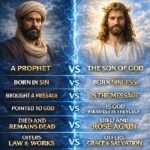 𝗠𝗨𝗛𝗔𝗠𝗠𝗔𝗗 𝗩𝗦. 𝗝𝗘𝗦𝗨𝗦 𝗖𝗛𝗥𝗜𝗦𝗧 — 𝗔 𝗠𝗔𝗧𝗧𝗘𝗥 𝗢𝗙 𝗧𝗥𝗨𝗧𝗛, 𝗡𝗢𝗧 𝗧𝗥𝗔𝗗𝗜𝗧𝗜𝗢𝗡
 𝗣𝗥𝗔𝗬: 𝗔 𝗣𝗔𝗨𝗟𝗜𝗡𝗘 𝗣𝗔𝗧𝗧𝗘𝗥𝗡 𝗙𝗢𝗥 𝗧𝗛𝗘 𝗕𝗢𝗗𝗬 𝗢𝗙 𝗖𝗛𝗥𝗜𝗦𝗧
 𝗧𝗛𝗘𝗥𝗘 𝗜𝗦 𝗣𝗢𝗪𝗘𝗥 𝗜𝗡 𝗧𝗛𝗘 𝗕𝗟𝗢𝗢𝗗