A forensic examination of the Pauline corpus reveals a central judicial crisis that defines the human experience: the absolute inability of a corrupted creature to achieve standing before an uncompromisingly holy Creator. In the specialized field of biblical investigation, the question is not one of human merit or comparative morality, but rather a legal inquiry into the mechanism by which a guilty party is declared righteous by the Supreme Judge of the universe. Within the current Administration of Grace, God has introduced a procedural breakthrough that bypasses the Mosaic Law entirely. This phenomenon is documented in Romans 3:21, which states with clinical precision: “But now the righteousness of God without the law is manifested, being witnessed by the law and the prophets.” The investigator notes that this righteousness is not an internal change of character or a gradual improvement of behavior; it is a forensic declaration issued from the throne of God. Justification is the judicial act where the Almighty credits the perfection of Christ to the account of the ungodly, based solely on the finished work of the Cross.
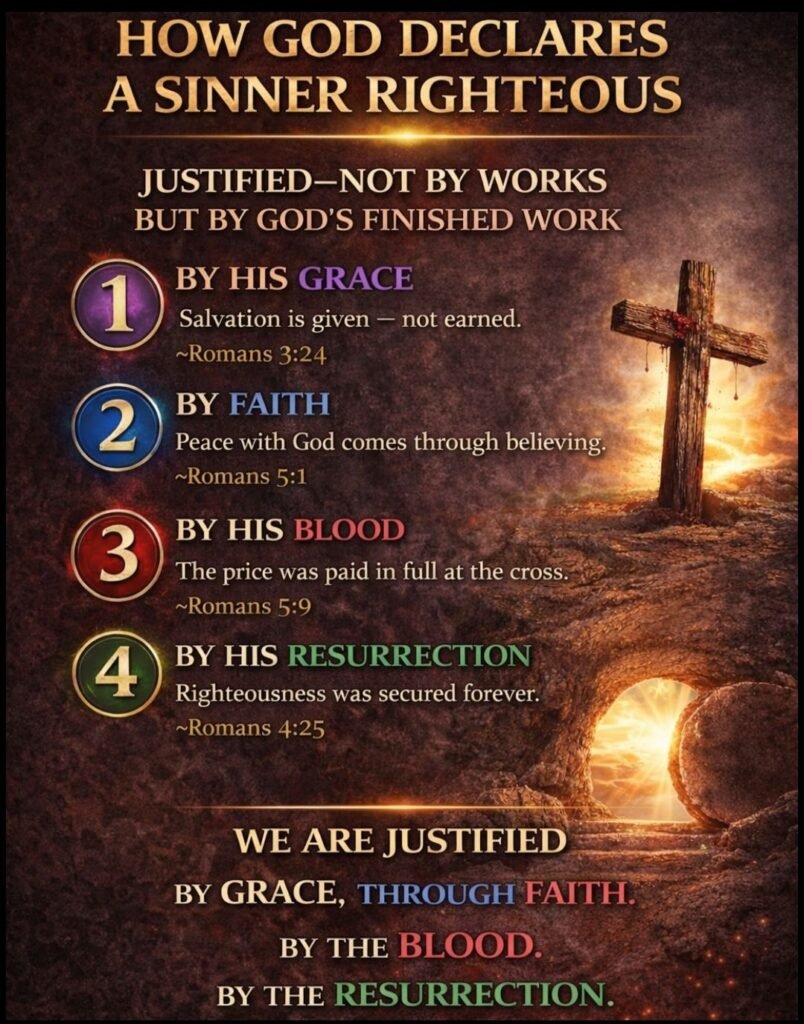
The primary foundational pillar of this investigation is the concept of Grace, which the record identifies as the source of the declaration. Romans 3:24 describes the believer as “being justified freely by his grace through the redemption that is in Christ Jesus.” The term “freely” indicates a transaction occurring dorean, or without a cause in the recipient. Grace is not a reward for the diligent; it is the Sovereign acting toward those who deserve the opposite of his favor. In the Pauline economy, grace is a gratis gift that excludes all human effort. Romans 11:6 establishes the mathematical impossibility of mixing systems: “And if by grace, then is it no more of works: otherwise grace is no more grace. But if it be of works, then is it no more grace: otherwise work is no more work.” The investigator concludes that any attempt to supplement grace with religious performance effectively nullifies the entire process. Salvation is God-initiated, as Romans 5:8 confirms that “while we were yet sinners, Christ died for us,” proving that the impetus for the rescue came from the Bench, not the dock.
The investigative data suggests that this grace is grounded firmly in the person of Jesus Christ. Ephesians 1:7 links the operation of grace directly to “redemption through his blood, the forgiveness of sins, according to the riches of his grace.” This is a guaranteed standing that provides a permanent legal status. Unlike a probationary release, the justification provided under the current dispensation is a settled matter that results in the “praise of the glory of his grace” (Ephesians 1:6). The forensic auditor finds no evidence of a “partial justification” or a “progressive righteousness” in the Pauline epistles; the declaration is instantaneous and total upon the exercise of faith.
The second foundational pillar uncovered in this audit is the role of Faith. In the judicial proceedings of Romans 5:1, the investigator finds the following verdict: “Therefore being justified by faith, we have peace with God through our Lord Jesus Christ.” Faith is not categorized as a “work” or a “contribution” to the transaction; rather, it is the hand that receives the gift. Faith is believing, not behaving. It is the cessation of human striving and the total reliance upon a foreign righteousness. Romans 4:5 clarifies the target of this faith: “But to him that worketh not, but believeth on him that justifieth the ungodly, his faith is counted for righteousness.” The investigator notes the specific phrasing—God justifies the ungodly, not the reformed. This confirms that the legal standing is granted while the individual is still in a state of unrighteousness, based on the merits of the Substitute.
The content of this faith is the finished work of Christ’s death and resurrection, as defined in the professional summary of 1 Corinthians 15:3–4. By trusting this data, the sinner enters into a restored fellowship. Romans 5:2 describes this as an “access by faith into this grace wherein we stand.” This standing is characterized by firm assurance rather than the anxiety of religious performance. The investigator observes that faith rests; it does not strive. Romans 8:38–39 provides the security audit for this standing, asserting that no external force or internal failure can separate the justified believer from the love of God. The forensic conclusion is that faith is the authorized channel through which the righteousness of God is imputed to the account of the individual.
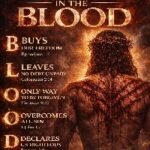
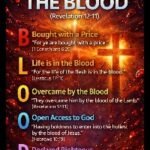
The third pillar identified in this forensic inquiry is the Blood of Christ, which represents the payment required to satisfy the demands of justice. Justification was not achieved by a divine “waiving” of the law, but by a divine “fulfillment” of its penalty. Romans 5:9 states: “Much more then, being now justified by his blood, we shall be saved from wrath through him.” The investigator notes that in the divine court, “without shedding of blood is no remission” (Hebrews 9:22). The blood was paid, not merely promised. It was a literal, physical price that resolved the legal debt of the human race. Hebrews 10:10 confirms the efficacy of this payment, noting that we are sanctified through the “offering of the body of Jesus Christ once for all.”
The audit of the blood’s effects reveals that the burden of sin has been entirely removed. Colossians 1:14 reports that “in whom we have redemption through his blood, even the forgiveness of sins.” This is a complete erasure of the criminal record. Furthermore, the blood acts as the agent that breaks the barrier between a holy God and a defiled creature. Ephesians 2:13 notes that those who were “far off are made nigh by the blood of Christ.” Most importantly, the blood is the basis of peace. It acts as a propitiation—a satisfaction of divine wrath. Romans 3:25 describes Christ as a “propitiation through faith in his blood, to declare his righteousness for the remission of sins that are past.” The investigator finds that the justice of God is satisfied at the Cross, allowing the Judge to be “just, and the justifier of him which believeth in Jesus” (Romans 3:26).
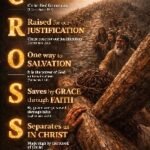
The fourth and final pillar of justification is the Resurrection. If the death of Christ was the payment, the resurrection is God’s receipt, proving that the payment was accepted in full. Romans 4:25 establishes this chronological and legal link: “Who was delivered for our offences, and was raised again for our justification.” The investigator notes that a dead Savior could not provide a living righteousness. The resurrection confirms the validity of the work done on the Cross. It provides a new standing for the believer, who is now identified with the risen Lord. Romans 6:4 speaks of this identity, stating that “like as Christ was raised up from the dead by the glory of the Father, even so we also should walk in newness of life.”
The power of the resurrection introduces a new reign in the believer’s life. Romans 5:17 describes a shift in government: “For if by one man’s offence death reigned by one; much more they which receive abundance of grace and of the gift of righteousness shall reign in life by one, Jesus Christ.” Under the old administration of Law, sin ruled through condemnation; under the new administration of Grace, righteousness rules through life. The forensic result of this resurrection power is a total release from condemnation. Romans 8:1 issues the definitive ruling: “There is therefore now no condemnation to them which are in Christ Jesus.” The investigator concludes that the resurrection is the seal of eternal life, guaranteeing that the justified sinner will participate in the future glory of the Savior (1 Corinthians 15:20–22).
The summary of these findings confirms that God does not make a sinner righteous through a process of moral reform or religious ritual. He declares a sinner righteous by faith in the finished work of His Son. “Therefore being justified by faith, we have peace with God” (Romans 5:1). There is no ritual requirement, no religious hierarchy, and no personal righteousness involved in the transaction. It is a matter of Grace alone, through Faith alone, in Christ alone. The investigator observes that “it is God that justifieth” (Romans 8:33), and if the Judge has issued a favorable ruling, no other entity in heaven or earth can bring a successful charge against the believer.
A call to action is issued based on the weight of this evidence. The investigator recommends that every individual stop trusting in their own works, as these are “filthy rags” in the sight of a holy God (Isaiah 64:6). One must believe the Gospel—the specific data of Christ’s death, burial, and resurrection for our sins. One must rest in the sufficiency of the blood and rejoice in the victory of the resurrection. To stand fast in grace is the only rational response to such a monumental legal victory. The forensic auditor warns that if you add works to this system, you subtract grace. If you trust Christ entirely, you have peace.
The audit of the term “Justification” reveals its roots in the ancient law courts, where a judge would decide between two parties. In the case of the sinner versus the Law, the Law has a perfect claim of “Guilty.” However, the investigator finds that the “Justifier” intervenes by substituting the record of His Son for the record of the sinner. This is not a “legal fiction” but a “legal reality” based on the identification of the believer with Christ. When God looks at the justified sinner, He sees the perfect fulfillment of the Law in Christ. This is the “mystery” of the Gospel that Paul was commissioned to declare to the Gentiles.
The investigative report also notes the permanence of this declaration. Unlike a human pardon that can be revoked for future offenses, the justification of God covers “all things” (Acts 13:39). It is an eternal standing because the life of the one who provided it—Jesus Christ—is eternal. The investigator finds that the “gift of righteousness” mentioned in Romans 5:17 is a completed transaction. It is not a loan that must be repaid; it is an inheritance that is possessed. This provides the believer with a “boldness” to enter into the presence of God (Hebrews 10:19), a boldness that would be impossible under any other system of merit.
The psychological impact of this forensic reality is also significant. A mind that is constantly striving for “approval” is a mind in turmoil. But a mind that understands it is “already approved” in Christ is a mind at peace. The investigator notes that “peace with God” (Romans 5:1) is the foundation for the “peace of God” (Philippians 4:7). One is an objective legal status; the other is a subjective emotional experience. The order is essential: the legal status must be established before the emotional experience can be sustained. Justification is the root; peace is the fruit.
The audit further reveals that the “works of the law” are specifically excluded from the process of justification. Romans 3:20 states, “Therefore by the deeds of the law there shall no flesh be justified in his sight: for by the law is the knowledge of sin.” The investigator finds that the Law was never intended to be a ladder to heaven, but a mirror to show the dirt on the face. To use the Law as a means of justification is a professional malpractice of the highest order. It is an attempt to use a diagnostic tool as a surgical cure. Only the Grace of God, applied through the work of Christ, can perform the necessary surgery on the human condition.
The investigation into the “Imputed Righteousness” of Romans 4 reveals a concept of divine accounting. The word “impute” or “reckon” (logizomai) is a bookkeeping term. It means to put something to one’s account. Abraham “believed God, and it was counted unto him for righteousness” (Romans 4:3). The investigator notes that Abraham had nothing in his “merit column,” but because he believed the promise, God moved the “righteousness column” from the heavenly ledger to Abraham’s personal account. This same accounting principle is available to all who believe the Gospel today. It is a “transferred asset” that makes the bankrupt sinner spiritually wealthy in an instant.
The final phase of this inquiry analyzes the relationship between Justification and Sanctification. While they are distinct, they are inseparable. Justification is the “root” where we are declared righteous; Sanctification is the “growth” where we live righteously. However, the investigator warns against confusing the two. Justification is a one-time judicial event; Sanctification is a lifelong process. To make justification dependent on sanctification is to reverse the engine and the car. We do not live right in order to be declared righteous; we are declared righteous, and therefore we have the power and motivation to live right.
The investigation concludes that the “Righteousness of God” is the only currency that is valid in the economy of heaven. Human efforts, rituals, and sincere intentions are “counterfeit” in this courtroom. The only way to receive the “valid currency” is through the exchange at the Cross. “For he hath made him to be sin for us, who knew no sin; that we might be made the righteousness of God in him” (2 Corinthians 5:21). This is the “Great Exchange”—the heart of the Pauline revelation.
The summary of the investigative findings is as follows:
Grace is the Given Source (Romans 3:24)
Faith is the Receiving Channel (Romans 5:1)
Blood is the Paying Price (Romans 5:9)
Resurrection is the Securing Receipt (Romans 4:25)
The investigative record is final. The evidence is conclusive. God does not reform the sinner to make him righteous; He justifies the ungodly by grace through faith in the blood and resurrection of Jesus Christ. This is the “Gospel of Christ,” which is “the power of God unto salvation to every one that believeth” (Romans 1:16). The legal status of the believer is “Accepted in the Beloved” (Ephesians 1:6). The case is won. The peace is established. The standing is secure.
The forensic auditor recommends a final review of the “Standing in Grace” (Romans 5:2). This standing is a position of total favor. It is not a “probationary” state. It is a “perfect” state. The believer is encouraged to “walk worthy” of this vocation (Ephesians 4:1), but the walking does not create the standing; the standing enables the walking. To lose sight of this is to fall back into the “yoke of bondage” (Galatians 5:1). Stay in the grace. Rest in the finished work. Believe the Judge.
Final thought: If the Bench has declared you “Not Guilty” because of the Advocate’s payment, any other voice that accuses you is a liar and a slanderer. Romans 8:31 asks the definitive question: “If God be for us, who can be against us?” The justification of the sinner is the greatest display of God’s wisdom, justice, and love in the history of the universe. It is a work that will be praised for all eternity. The investigation is complete. Amen.