
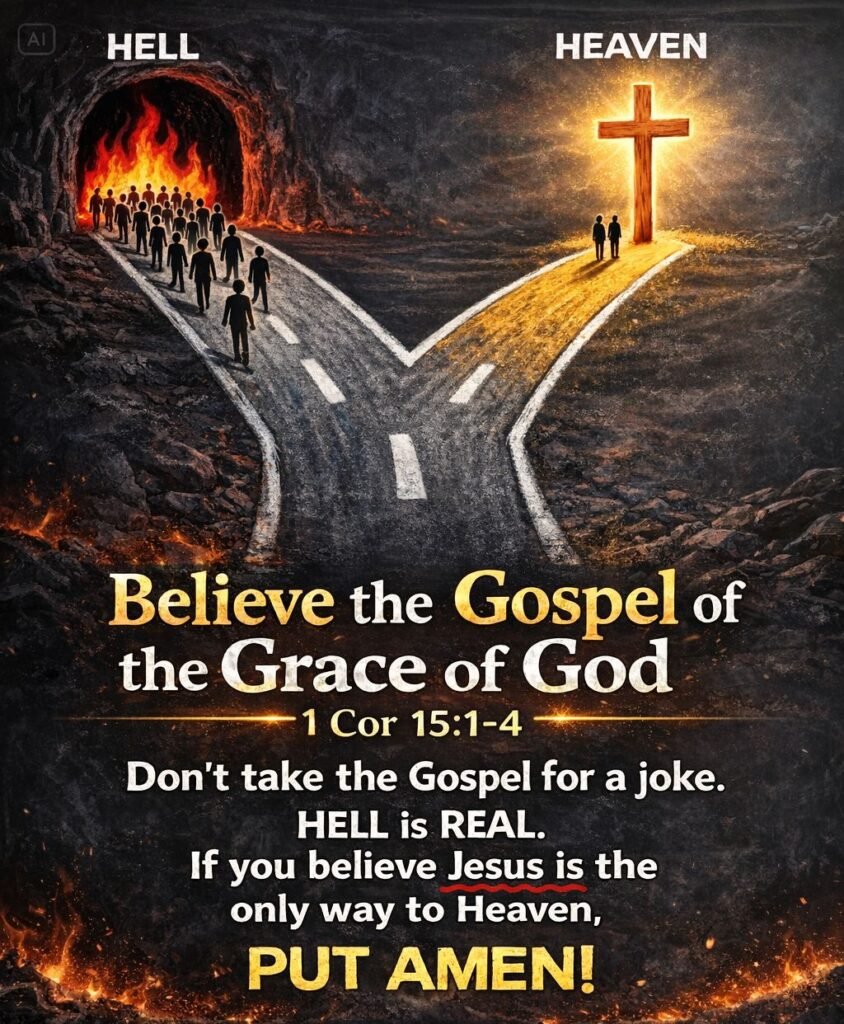
Hell or Heaven — Two Roads, One Choice
Modern society prides itself on offering endless options. From lifestyle choices to belief systems, the prevailing assumption is that more paths mean more freedom. Yet when Scripture is allowed to speak for itself, it presents a far more sobering reality. Spiritually speaking, humanity is not traveling on many roads. There are only two destinations. One leads to eternal life. The other leads to eternal judgment. One is heaven. The other is hell.
This binary truth runs counter to contemporary thought, which resists absolutes and recoils at the idea of final accountability. Hell is often dismissed as medieval imagery, while heaven is reduced to a vague hope that “everything will work out.” But the Bible refuses such simplifications. According to Scripture, eternity is not shaped by sentiment, morality, or religious effort. It is determined by one response: belief or unbelief in the gospel of Jesus Christ.
In the present Dispensation of Grace, God is not negotiating with humanity. He is declaring terms. The apostle Paul wrote, “Moreover, brethren, I declare unto you the gospel.” That declaration was not an invitation to debate philosophy; it was a proclamation of historical fact with eternal consequences. Christ died for our sins. He was buried. He rose again the third day. Those events form the dividing line between heaven and hell.
Hell and heaven are not symbolic concepts or theological abstractions. Scripture presents them as real, conscious, eternal destinations. Jesus Himself described hell as a place of awareness, memory, suffering, and regret. In Luke 16, the rich man is not annihilated, asleep, or unaware. He speaks, reasons, remembers his life, and recognizes the permanence of his condition. Hell is not the absence of consciousness; it is the presence of judgment.
Heaven, likewise, is not an ethereal dreamscape. Paul described it as a real dwelling, prepared by God, eternal in nature. It is a place believers will inhabit in resurrected bodies, fully conscious and fully alive. Eternity is not imaginary. It is inevitable.
The existence of hell raises uncomfortable questions, but Scripture provides a clear answer. Hell exists because sin exists. God is holy, and holiness demands justice. “All have sinned,” Paul wrote, without qualification or exception. Sin is not merely moral failure; it is rebellion against God’s authority. And rebellion carries consequence. “The wages of sin is death.” Justice cannot be suspended without undermining righteousness.
To deny hell is not to magnify God’s love; it is to diminish His justice. To minimize sin is to render the cross unnecessary. The reality of hell explains why Christ had to die. If sin could be overlooked, Calvary would have been pointless.
Yet Scripture goes further and clarifies something even more sobering: people are not condemned because they lack religion, morality, or sincerity. They are condemned because they reject truth. Jesus stated plainly, “He that believeth not is condemned already.” Condemnation is not merely future; it is present for the unbeliever. Hell is not imposed arbitrarily—it is the natural outcome of rejecting God’s provision.
Paul echoed this when he wrote that those who perish do so because they “received not the love of the truth.” This exposes a critical misconception. Hell is not filled with people desperately seeking salvation but denied opportunity. It is filled with people who resisted grace. Darkness is preferred over light, not because light is unavailable, but because light exposes.
This brings the discussion to the heart of the matter: the gospel itself. Scripture recognizes only one saving gospel in this present age—the gospel revealed to the Apostle Paul by direct revelation from Jesus Christ. Paul was explicit that he did not receive it from men, nor was he taught it by tradition. It was revealed to him by Christ Himself.
That gospel is simple, but not simplistic. Christ died for our sins according to the Scriptures. He was buried. He rose again the third day. Salvation is not earned through moral reform, religious observance, or sacramental participation. It is received by believing what Christ has already accomplished.
This truth offends religious pride. Humanity prefers systems that allow contribution, effort, and merit. But grace leaves no room for boasting. Paul made this unmistakably clear: salvation is “by grace… through faith… not of works.” Any message that adds human performance to Christ’s finished work is not a fuller gospel—it is a false one.
Heaven is not entered through personal righteousness. Scripture declares that none are righteous by nature. Instead, believers are justified freely by grace. Justification is not a process; it is a legal declaration. The moment a person believes the gospel, God declares them righteous based on the righteousness of Christ credited to their account.
This is the doctrine of imputed righteousness, and it stands at the center of the gospel. God does not improve the sinner; He declares the sinner righteous in Christ. Salvation is not rehabilitation; it is substitution. Christ took the sinner’s place. He bore sin. He endured judgment. He satisfied divine justice fully and finally.
“Christ was made sin for us,” Paul wrote, “that we might be made the righteousness of God in him.” The exchange is total. Nothing is left unpaid. Nothing remains unfinished. When Jesus declared, “It is finished,” He meant that redemption was complete.
Because salvation rests on Christ’s work and not human effort, its security is equally firm. Believers are sealed by the Holy Spirit the moment they believe. Sealing is not probationary; it is permanent. Paul assured believers that there is “no condemnation” for those in Christ Jesus. Eternal life is not temporary life. Salvation is not fragile or dependent on human consistency.
This assurance does not encourage sin; it establishes peace. Fear-based religion produces anxiety and instability. Grace produces gratitude and growth. Holiness is the fruit of salvation, not the cause of it. Confusing these categories has led many sincere people onto a road paved with religious effort but ending in despair.
Scripture presses urgency into this message. “Now is the accepted time.” Salvation is always now. Faith must be personal. No one enters heaven by association, inheritance, or proximity. Church membership does not save. Family faith does not transfer. Each soul must respond individually.
Delay is not harmless. To postpone belief is to remain condemned. Neutrality is an illusion. The gospel demands a response. Tomorrow is uncertain, but eternity is guaranteed.
The cultural impulse to soften these truths does not make them less real. Hell does not disappear because it is uncomfortable to discuss. Heaven does not become universal because people wish it so. The cross stands between two destinies, and every person must decide what to do with it.
The idea that there are many roads to God contradicts both Scripture and logic. If righteousness could be achieved by any means, Christ died in vain. If sincerity were sufficient, Calvary was unnecessary. The exclusivity of Christ is not arrogance; it is coherence. One Savior because one sacrifice was required. One gospel because one problem needed solving.
The Bible offers no second chance after death. There is no purgatorial correction, no post-mortem opportunity to reconsider. “It is appointed unto men once to die, but after this the judgment.” Eternity is settled at death based on belief in life.
This reality lends weight to the present moment. The gospel is not merely information; it is an appeal. God is offering reconciliation. He is not counting sins against the world, but He is counting belief. Grace extended today will become judgment tomorrow if rejected.
Hell and heaven are not equal outcomes of divine preference. Heaven is God’s desire. Hell is humanity’s refusal. Christ endured the cross so sinners would not endure judgment. To reject that sacrifice is to stand alone before God.
The conclusion Scripture forces is unmistakable. There are two roads. There is no middle ground. One Savior. No substitute. One gospel. No alternative. The choice is not philosophical; it is personal. And it is urgent.
Hell is real. Heaven is real. The cross stands between them. And the gospel is God’s final word of mercy before accountability.
In this Dispensation of Grace, salvation is freely offered, fully accomplished, and eternally secure for all who believe. But grace must be received. Truth must be believed. Christ must be trusted.
The question that defines eternity is not how religious you were, how moral you tried to be, or how sincere you felt. The question is singular and final: What did you do with Jesus Christ?
Two roads stretch before every soul. One leads to life. The other leads to loss. And the choice is being made now.
“For our conversation is in heaven.” That statement is not poetic optimism; it is settled reality for those in Christ. The gospel does not promise ease, but it guarantees destiny.
Choose wisely. Eternity depends on it.
Related posts:
 𝗧𝗛𝗘𝗥𝗘 𝗜𝗦 𝗡𝗢 𝗥𝗘𝗦𝗧 𝗜𝗡 𝗣𝗘𝗔𝗖𝗘 𝗪𝗜𝗧𝗛𝗢𝗨𝗧 𝗖𝗛𝗥𝗜𝗦𝗧
 𝗢𝗡𝗘 𝗟𝗔𝗦𝗧 𝗖𝗛𝗔𝗡𝗖𝗘 𝗪𝗔𝗦𝗧𝗘𝗗
 𝗛𝗘𝗟𝗟 𝘃𝘀. 𝗟𝗔𝗞𝗘 𝗢𝗙 𝗙𝗜𝗥𝗘
 𝗟𝗜𝗙𝗘 𝗪𝗜𝗧𝗛𝗢𝗨𝗧 𝗝𝗘𝗦𝗨𝗦 𝘃𝘀 𝗟𝗜𝗙𝗘 𝗪𝗜𝗧𝗛 𝗝𝗘𝗦𝗨𝗦
 𝗦𝗔𝗟𝗩𝗔𝗧𝗜𝗢𝗡 𝗜𝗦 𝗡𝗢𝗧 𝗬𝗢𝗨𝗥 𝗚𝗢𝗢𝗗 𝗪𝗢𝗥𝗞𝗦𝗜𝗧 𝗜𝗦 𝗚𝗢𝗗 𝗙𝗜𝗡𝗜𝗦𝗛𝗘𝗗 𝗪𝗢𝗥𝗞 𝗢𝗡 𝗧𝗛𝗘 𝗖𝗥𝗢𝗦𝗦
 𝗔𝗙𝗧𝗘𝗥 𝗬𝗢𝗨 𝗗𝗜𝗘
 𝗟𝗢𝗩𝗘: 𝗜 𝗖𝗢𝗨𝗟𝗗𝗡’𝗧 — 𝗛𝗘 𝗗𝗜𝗗
 𝗝𝗘𝗦𝗨𝗦 𝗖𝗛𝗥𝗜𝗦𝗧: 𝗧𝗛𝗘 𝗢𝗡𝗟𝗬 𝗦𝗔𝗩𝗜𝗢𝗥
 𝗜𝗡 𝗛𝗘𝗟𝗟 𝗧𝗛𝗘𝗥𝗘 𝗜𝗦 𝗡𝗢 𝗥𝗘𝗦𝗧 𝗜𝗡 𝗣𝗘𝗔𝗖𝗘
 𝗪𝗔𝗥𝗡𝗜𝗡𝗚: 𝗥𝗘𝗝𝗘𝗖𝗧𝗜𝗡𝗚 𝗖𝗛𝗥𝗜𝗦𝗧 𝗜𝗦 𝗥𝗘𝗝𝗘𝗖𝗧𝗜𝗡𝗚 𝗬𝗢𝗨𝗥 𝗢𝗡𝗟𝗬 𝗪𝗔𝗬 𝗧𝗢 𝗛𝗘𝗔𝗩𝗘𝗡
 𝗧𝗥𝗨𝗘 𝗦𝗨𝗖𝗖𝗘𝗦𝗦: 𝗪𝗛𝗘𝗡 𝗬𝗢𝗨𝗥 𝗡𝗔𝗠𝗘 𝗜𝗦 𝗪𝗥𝗜𝗧𝗧𝗘𝗡 𝗜𝗡 𝗛𝗘𝗔𝗩𝗘𝗡
 𝗪𝗛𝗬 𝗗𝗢 𝗜 𝗣𝗢𝗦𝗧 𝗦𝗢 𝗠𝗨𝗖𝗛 𝗔𝗕𝗢𝗨𝗧 𝗝𝗘𝗦𝗨𝗦?
 𝗚𝗢𝗗 𝗔𝗡𝗗 𝗠𝗔𝗡: 𝗥𝗜𝗚𝗛𝗧𝗟𝗬 𝗗𝗜𝗩𝗜𝗗𝗘𝗗 𝗗𝗘𝗦𝗜𝗚𝗡
 𝗜 𝗖𝗔𝗡𝗡𝗢𝗧 𝗕𝗘 𝗤𝗨𝗜𝗘𝗧 𝗪𝗛𝗘𝗡 𝗦𝗢𝗨𝗟𝗦 𝗔𝗥𝗘 𝗣𝗘𝗥𝗜𝗦𝗛𝗜𝗡𝗚