
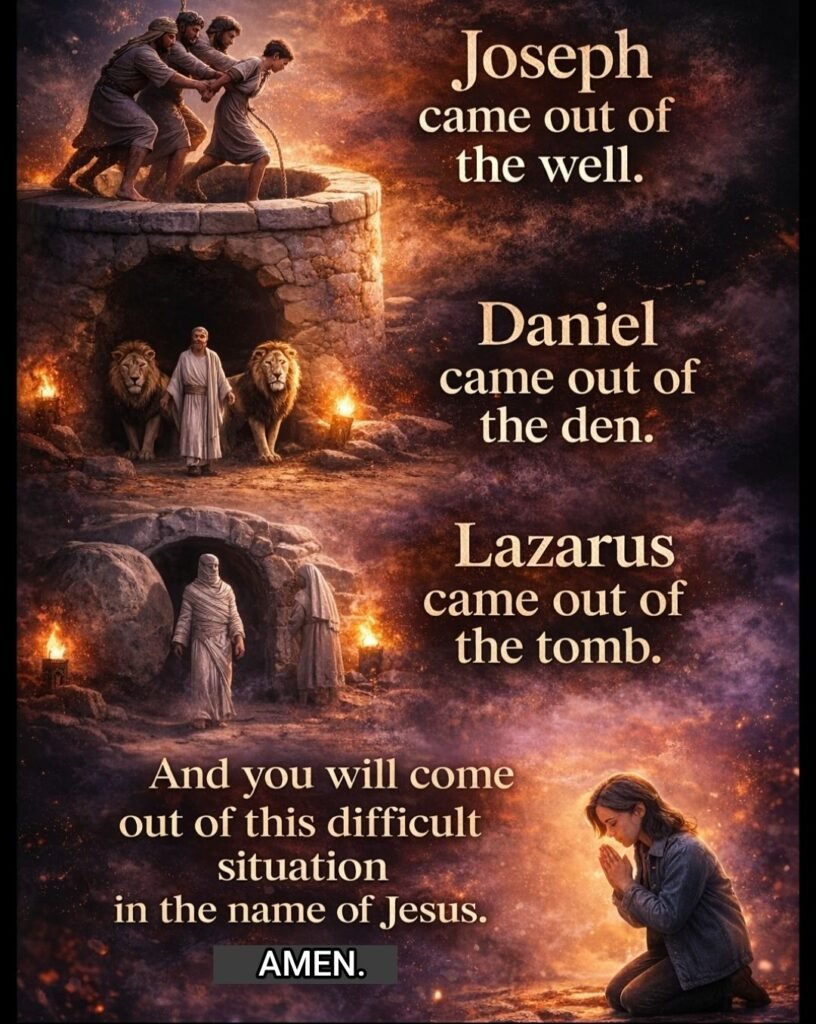
In the arena of modern spiritual thought, few concepts are as marketable or as misunderstood as “deliverance.” It is a term that evokes images of chains snapping, prison doors swinging wide, and the sudden, dramatic reversal of personal misfortune. From best-selling memoirs to high-octane sermons, the narrative of the “great escape” is the cornerstone of contemporary religious aspiration. However, when we apply a professional, investigative lens to the biblical record—specifically through the grid of Pauline doctrine—a much more complex and intellectually rigorous reality emerges. The truth is that while the Bible is replete with “come-out” stories, the mechanics of these exits vary wildly depending on the divine administration in effect. To conflate the physical rescue of a prophet in the Old Testament with the spiritual standing of a believer in the current Dispensation of Grace is not merely a theological oversight; it is a forensic error that leads to widespread disillusionment and a fragile, experience-based faith.
The investigation into “Coming Out by God’s Purpose” requires us to move beyond the superficial “success story” and delve into the structural differences between God’s Prophetic program for the nation of Israel and His Mystery program for the Body of Christ. In the former, God often manifested His power through the suspension of natural laws—closing the mouths of lions or parting seas. In the latter, the age in which we currently reside, God manifests His power through the transformation of the inner man, providing a “sufficient grace” that allows the believer to remain in the “pit” while being positionally seated in the “palace.”
The Forensic Archetype: Joseph and the Sovereignty of the Pit
Any investigation into the concept of “coming out” must begin with Joseph. His life is the ultimate case study in the intersection of human malice and divine orchestration. When Joseph was cast into the pit by his brothers, there was no immediate angelic intervention. There was no earthquake to rattle the cistern walls. From a journalistic perspective, it was a cold-blooded attempted murder followed by human trafficking.
However, the Pauline perspective, articulated centuries later in Romans 8:28, provides the “black box” recording of this event. We learn that Joseph did not come out of the pit because he “visualized” his exit or because he maintained a positive confession. He came out because his presence in Egypt was a non-negotiable requirement for the survival of the Abrahamic lineage. The pit was not a detour; it was the highway.
In the Dispensation of Grace, the “Joseph Principle” reminds us that our circumstances are often the laboratory of our purpose. The modern obsession with “coming out” of every difficulty ignores the reality that God is frequently the one who allowed the “in” to happen. Joseph’s deliverance was not an end in itself; it was a means to a much larger, national end. When we demand an exit from our trials without understanding the purpose of the stay, we are essentially asking God to abort the very process that is producing the “far more exceeding and eternal weight of glory” Paul describes in 2 Corinthians.
The Den of Lions: Distinguishing Sign from Norm
The story of Daniel in the lions’ den is perhaps the most misused narrative in the “deliverance” genre. The image of a man sitting calmly among predators is used to promise believers that God will always protect them from the “lions” of life—be they predatory bosses, legal battles, or health crises. But a rigorous investigative analysis of the book of Daniel reveals that this event was a “sign.”
In the Prophetic program, signs were the primary currency of divine communication. They were intended to prove to a skeptical, idolatrous world that the God of Israel was the one true Sovereign. When the lions’ mouths were shut, it wasn’t just for Daniel’s comfort; it was a judicial decree against the counselors of Darius and a public advertisement of Jehovah’s power.
Contrast this with the Apostle Paul’s experience. Paul, the architect of the doctrine for the current age, was also “delivered out of the mouth of the lion,” but he also spoke of being “troubled on every side.” He was eventually martyred in Rome—the literal den of the lion. If the Daniel model were the prescriptive norm for all time, Paul would have been a failure. But through the lens of Right Division (2 Timothy 2:15), we see that the program had shifted. We are no longer in an era of “kingdom signs” intended to impress the nations; we are in an era of “ambassadorship” where the strength of God is made perfect in human weakness. To wait for a “Daniel exit” in an “Apostle Paul era” is to misread the divine calendar.
The Lazarus Phenomenon: The Limitations of Resuscitation
The raising of Lazarus from the dead is the gold standard for “coming out.” It is a narrative of total, physical restoration. Yet, from a forensic theological standpoint, Lazarus was not “resurrected” in the sense of receiving an eternal body; he was “resuscitated” back into a mortal one. He eventually died again.
This event was a specific kingdom credential. Jesus Himself stated the purpose: “This sickness is not unto death, but for the glory of God, that the Son of God might be glorified thereby.” It was a demonstration of Messiah’s authority over the grave, specifically directed at the nation of Israel.
For the believer today, our “coming out” of the tomb is not a return to this life, but an entrance into the next. Pauline doctrine directs our gaze not to the resuscitation of our current circumstances, but to the “Rapture”—the catching away of the Body of Christ. When we use the story of Lazarus to “claim” the resurrection of a failed business or a dead relationship, we are engaging in a form of spiritual allegory that the text does not support. Our hope is not in the restoration of the “old,” but in the “newness of life” that we already possess positionally in Christ.
The Mystery of Sustaining Grace: 2 Corinthians 12
If God is not always pulling us out of the fire, what is He doing? This is the central question of the Pauline investigative report. The answer is found in the “Thorn in the Flesh.” Paul, a man who had seen the third heaven, pleaded with God three times for a specific “come-out” moment regarding a physical or circumstantial affliction.
The response he received is the cornerstone of the Dispensation of Grace: “My grace is sufficient for thee: for my strength is made perfect in weakness.”
This is a revolutionary concept in the history of deliverance. It suggests that the highest form of divine intervention is not the removal of the pressure, but the infusion of a supernatural capacity to endure it. This is “Coming Out” in a spiritual sense—coming out from under the dominion of the trial while still being within the trial. In this administrative period, God is not showcasing His power by changing the weather; He is showcasing His power by keeping the pilot calm in the middle of the hurricane.
The Positional Shift: Ephesians and the Heavenly Places
The most profound “coming out” story in the entire Bible is one that requires no physical movement at all. It is the doctrine of “Identification.” In the Ephesian epistle, Paul pulls back the curtain on the believer’s true location. He asserts that we have been “delivered… from the power of darkness” (Colossians 1:13) and “seated… in heavenly places” (Ephesians 2:6).
From a journalistic standpoint, this is a radical claim. It suggests that a person can be sitting in a prison cell in Rome (as Paul was) while simultaneously being seated at the right hand of God in Christ. This is not a metaphor; it is a positional reality. Our “Coming Out” is already a completed legal transaction.
When a believer understands their position, their “purpose” for staying in a difficult situation changes. They are no longer a victim trying to escape; they are a seated victor who is temporarily stationed in a conflict zone. This shift in perspective is the only thing that can provide lasting peace in a world of persistent “pits” and “dens.”
The Error of Misapplied Promises: Rightly Dividing Deliverance
The investigative journalist must ask: Why is there so much confusion on this topic? Why do so many people feel “let down” by God when they don’t “come out” like Joseph or Daniel? The answer is a failure in Right Division.
The Bible is a unified book, but it is not a flat book. It contains different instructions for different people at different times. If you take a promise made to Israel—a nation promised earthly land, physical health, and material wealth—and try to claim it as a member of the Body of Christ, you are using the wrong manual.
Paul tells Timothy to “rightly divide the word of truth.” This implies that the Word can be “wrongly divided.” When we wrongly divide deliverance, we create a “works-based” spiritual environment where the speed of our exit is seen as a measure of our faith. But in Pauline doctrine, faith is not a tool to change God’s mind; it is the hand that clings to God’s grace.
The Certainty of the Finished Work: Our Completed Exit
The ultimate conclusion of this investigation is that the believer’s most important “coming out” has already occurred. We have come out of Adam.
In Romans 5, Paul details the two federal heads of humanity: Adam and Christ. To be “in Adam” is to be in a state of perpetual condemnation, death, and sin. It is a “pit” from which no human can climb out. The Gospel of Grace is the news that through the death, burial, and resurrection of Jesus Christ, we have been “come out” of that lineage and placed into a new one.
This deliverance is:
- Secure: It does not depend on our performance.
- Spiritual: It affects the core of our being.
- Eternal: It cannot be reversed by any earthly lion or pit.
We are “complete in Him” (Colossians 2:10). There is no “more” delivered we can be. The struggle we face on earth is not a struggle to get delivered, but a struggle to believe we already are.
Conclusion: Standing in the Purpose
In the final analysis, “Coming Out by God’s Purpose” is about trusting the Designer of the map more than our own sense of direction. Joseph came out to save a nation. Daniel came out to testify to kings. Lazarus came out to herald the Messiah. You may not come out of your current trial today, but if you are “in Christ,” you have already come out of the only thing that could truly destroy you: sin and condemnation.
The investigative evidence suggests that God’s silence is not His absence, and a lack of a miracle is not a lack of His power. The miracle of this age is the believer who can stand in the middle of a “pit” and say with the Apostle Paul, “I can do all things through Christ which strengtheneth me.”
We walk by faith, not by sight. We live by purpose, not by our exit strategy. We rest in the finished work of the Cross, knowing that our ultimate “Coming Out” is a guaranteed appointment in the heavens, where the trials of this present time will not be worthy to be compared with the glory that shall be revealed in us.
The Architecture of Deliverance: A Comparative Study
To provide a clear, scannable summary of our investigative findings, the following table contrasts the two primary modes of divine deliverance recorded in Scripture:
| Feature | The Prophetic/Kingdom Model (Israel) | The Mystery/Grace Model (Body of Christ) |
| Primary Goal | Visible Sign to the Nations | Manifestation of Christ’s Life in Weakness |
| Mechanics | Miraculous Intervention/Physical Rescue | Sustaining Grace/Inner Transformation |
| Temporal Focus | The “Here and Now” (Earthly) | The “Already/Not Yet” (Heavenly) |
| Key Example | Daniel in the Lions’ Den | Paul’s “Thorn in the Flesh” |
| Believer’s Role | Obedience to Covenant Law | Faith in the Finished Work (Identity) |
| Outcome | Circumstances are Changed | The Believer is Changed |
Related posts:
 𝗝𝗘𝗦𝗨𝗦 𝗖𝗛𝗥𝗜𝗦𝗧 𝗧𝗛𝗘 𝗠𝗘𝗦𝗦𝗜𝗔𝗛 𝗣𝗥𝗢𝗩𝗘𝗡 𝗪𝗜𝗧𝗛 𝗔𝗕𝗦𝗢𝗟𝗨𝗧𝗘 𝗖𝗘𝗥𝗧𝗔𝗜𝗡𝗧𝗬 𝗕𝗬 𝗗𝗔𝗡𝗜𝗘𝗟 𝟵
 𝗚𝗢𝗗 𝗔𝗡𝗗 𝗠𝗔𝗡: 𝗥𝗜𝗚𝗛𝗧𝗟𝗬 𝗗𝗜𝗩𝗜𝗗𝗘𝗗 𝗗𝗘𝗦𝗜𝗚𝗡
 𝗪𝗛𝗢 𝗦𝗔𝗬𝗦 𝗝𝗘𝗦𝗨𝗦 𝗖𝗛𝗥𝗜𝗦𝗧 𝗜𝗦 𝗚𝗢𝗗?
 𝗧𝗛𝗘 𝗕𝗥𝗔𝗜𝗡 𝗠𝗨𝗦𝗧 𝗕𝗘 𝗪𝗔𝗧𝗘𝗥𝗘𝗗 𝗪𝗜𝗧𝗛 𝗧𝗛𝗘 𝗪𝗢𝗥𝗗 𝗢𝗙 𝗚𝗢𝗗 𝗗𝗔𝗜𝗟𝗬
 𝗢𝗡𝗟𝗬 𝗢𝗡𝗘 𝗘𝗠𝗣𝗧𝗬 𝗧𝗢𝗠𝗕
 𝗪𝗛𝗘𝗡 𝗡𝗔𝗧𝗜𝗢𝗡𝗦 𝗥𝗜𝗦𝗘… 𝗧𝗛𝗘 𝗣𝗥𝗢𝗣𝗛𝗘𝗧𝗦 𝗔𝗟𝗥𝗘𝗔𝗗𝗬 𝗦𝗣𝗢𝗞𝗘
 𝗪𝗛𝗢 𝗜𝗦 𝗧𝗛𝗘 𝗔𝗡𝗧𝗜𝗖𝗛𝗥𝗜𝗦𝗧?
 𝗧𝗛𝗘 𝟳 𝗕𝗟𝗘𝗦𝗦𝗜𝗡𝗚𝗦 𝗢𝗙 𝗧𝗛𝗘 𝗛𝗢𝗟𝗬 𝗦𝗣𝗜𝗥𝗜𝗧
 𝗧𝗛𝗘 𝗥𝗔𝗣𝗧𝗨𝗥𝗘: 𝗥𝗘𝗩𝗘𝗔𝗟𝗘𝗗, 𝗡𝗢𝗧 𝗜𝗡𝗩𝗘𝗡𝗧𝗘𝗗
 𝗕𝗘𝗪𝗔𝗥𝗘: 𝗦𝗔𝗧𝗔𝗡 𝗕𝗔𝗜𝗧𝗦 𝗛𝗜𝗦 𝗛𝗢𝗢𝗞 𝗪𝗜𝗧𝗛 𝗬𝗢𝗨𝗥 𝗙𝗔𝗩𝗢𝗥𝗜𝗧𝗘 𝗦𝗜𝗡
 𝗔𝗟𝗖𝗢𝗛𝗢𝗟 — 𝗗𝗘𝗦𝗧𝗥𝗢𝗬𝗘𝗥 𝗢𝗙 𝗠𝗔𝗡𝗬 𝗟𝗜𝗩𝗘𝗦
 𝗗𝗔𝗡𝗜𝗘𝗟’𝗦 𝟳𝟬𝗧𝗛 𝗪𝗘𝗘𝗞 — 𝗥𝗜𝗚𝗛𝗧𝗟𝗬 𝗗𝗜𝗩𝗜𝗗𝗘𝗗