

THE ANATOMY OF A RANSOMED SOUL: A FORENSIC ANALYSIS OF THE THANKFUL SINNER
In the contemporary landscape of religious humanism, where the “dignity of man” is often elevated above the “holiness of God,” there remains a singular, transformative reality that defies modern psychological categorization. This investigative report asserts that the most profound metamorphosis known to the human experience is not the self-actualization of the virtuous, but the forensic justification of the vile. According to the Dispensation of the Grace of God, as articulated by the Apostle Paul, the standing of the believer is not predicated upon moral superiority, but upon a blood-bought substitution. The diagnostic baseline of this inquiry is the apostolic confession: “But by the grace of God I am what I am: and his grace which was bestowed upon me was not in vain” (1 Corinthians 15:10).
As we “rightly divide the word of truth” (2 Timothy 2:15), we find that the Gospel does not find good men and make them better; it finds dead men and makes them alive (Ephesians 2:1). This inquiry will dismantle the facade of self-righteousness and analyze the nine-fold progression of a soul that has moved from the condemnation of the Law to the celebration of Grace.
I. PRIDE REJECTED: THE DISMANTLING OF THE SELF-ALTAR
Investigating the Forensic Necessity of Humility
The primary finding of this investigation reveals that salvation cannot take root in the soil of self-sufficiency. Pride is the original “mystery of iniquity” that seeks to share the glory that belongs solely to the Creator. The forensic record is clear: “Pride goeth before destruction, and an haughty spirit before a fall” (Proverbs 16:18).
In the Dispensation of Grace, boasting is excluded by the “law of faith” (Romans 3:27). The investigator finds that a man must first “think soberly” of himself (Romans 12:3). To “think himself to be something, when he is nothing” (Galatians 6:3) is a form of spiritual psychosis that prevents the reception of mercy. The investigator finds that the threshold of heaven is so low that only those on their knees may enter. Grace leaves no room for the “self-made man,” for in the economy of God, man is a bankrupt debtor.
II. PERSONAL SIN RECOGNIZED: THE ACCURATE DIAGNOSIS
A Forensic Audit of the Human Condition
The investigation moves from the attitude to the actual state of the subject. A “thankful sinner” is one who has stopped arguing with the Divine indictment. The forensic evidence presented in the Pauline epistles is exhaustive: “As it is written, There is none righteous, no, not one” (Romans 3:10).
The investigator find that the “Universal Sin Verdict” is absolute: “For all have sinned, and come short of the glory of God” (Romans 3:23). To deny this state is not a sign of purity, but of delusion: “If we say that we have no sin, we deceive ourselves, and the truth is not in us” (1 John 1:8). The investigator finds that honest conviction is the prerequisite for heavenly pardon. One cannot be “saved” from a condition they refuse to acknowledge. The thankfulness of the believer is directly proportional to their understanding of the depth of the “pit” from which they were digged.
III. PENALTY REALIZED: THE LEGAL WEIGHT OF TRESPASS
Investigating the Wages of the Soul
This report must address the sobering reality of the “Law of Retribution.” Sin is not a mere “mistake” or a “social lapse”; it is high treason against the Sovereign of the Universe. The forensic consequence is clearly stated: “For the wages of sin is death” (Romans 6:23).
The investigator find that this “death” is not merely physical cessation, but a spiritual and eternal separation. As recorded in the prophets, “The soul that sinneth, it shall die” (Ezekiel 18:4). For those who reject the Gospel of Grace, the forensic outlook is “everlasting destruction from the presence of the Lord” (2 Thessalonians 1:9). The investigator finds that the “thankful sinner” is one who has stared into the abyss of the Lake of Fire and realized that, apart from Christ, that was his deserved and certain destination. The reality of judgment makes the reality of mercy sweet.
IV. PAYMENT REVEALED: THE TRANSACTION OF THE AGES
The Forensic Analysis of Substitutionary Atonement
The investigation identifies the turning point of human history at the hill called Calvary. This was not a “martyrdom,” but a “payment.” The apostolic record in 1 Corinthians 15:3 declares the forensic fact: “Christ died for our sins according to the scriptures.”
The investigator find that this payment was an act of Divine initiative: “But God commendeth his love toward us, in that, while we were yet sinners, Christ died for us” (Romans 5:8). This was a literal “bearing” of the penalty. As Isaiah foretold, “But he was wounded for our transgressions, he was bruised for our iniquities” (Isaiah 53:5). The investigator find that the Cross was not a “partial payment” that man must supplement with his own works. It was a “finished work” (John 19:30). The “debt” was not settled by a compromise; it was settled by a Sacrifice.
V. PARDON RECEIVED: THE ISSUANCE OF THE DIVINE RELEASE
Investigating the Freedom of the Forgiven
Upon the basis of the Payment, a Pardon is issued. In the Dispensation of Grace, this pardon is not earned through penance, but received through faith. The forensic decree in Ephesians 1:7 is the believer’s Bill of Rights: “In whom we have redemption through his blood, the forgiveness of sins, according to the riches of his grace.”
The investigator find that this pardon is comprehensive. God has “forgiven you all trespasses” (Colossians 2:13). This is a “Justification from all things,” a legal standing that the Law of Moses could never provide (Acts 13:38–39). The investigator finds that the “thankful sinner” is one who lives in the light of a “Clean Record.” The ghosts of past iniquities are silenced by the forensic reality of the Blood of Christ.
VI. POSITION CHANGED: THE MIRACLE OF IMPUTATION
The Forensic Audit of the New Standing
The investigation find that the saved sinner is not merely “forgiven,” but “repositioned.” This is the Pauline doctrine of Imputation—the Great Exchange. “For he hath made him to be sin for us, who knew no sin; that we might be made the righteousness of God in him” (2 Corinthians 5:21).
The investigator find that the believer is “Justified by faith” and therefore possesses “peace with God” (Romans 5:1). This is not an “attainment” of the flesh, but a “placement” in Christ. The forensic status is one of “Completeness.” As Colossians 2:10 declares, “And ye are complete in him.” The investigator finds that the “thankful sinner” no longer walks in the “shadow of condemnation,” but in the “sunlight of acceptance.” He is “accepted in the beloved” (Ephesians 1:6).
VII. PRAISE RESPONDED: THE VIBRATION OF GRATITUDE
Investigating the Heartbeat of the Redeemed
The forensic evidence shows that a true understanding of Grace inevitably produces a lifestyle of gratitude. The believer does not say “I am better,” but “I am bought.” This produces a constant state of “Giving thanks always for all things unto God and the Father in the name of our Lord Jesus Christ” (Ephesians 5:20).
The investigator find that for the saved sinner, every action becomes an act of worship: “And whatsoever ye do in word or deed, do all in the name of the Lord Jesus, giving thanks to God and the Father by him” (Colossians 3:17). The investigator finds that the silence of the redeemed is a forensic impossibility. “Let the redeemed of the LORD say so, whom he hath redeemed from the hand of the enemy” (Psalm 107:2). Praise is the “echo” of the pardon.
VIII. POWER RECEIVED: THE INDWELLING DYNAMIC
The Forensic Analysis of the Spirit’s Sealing
The investigation reveals that the saved sinner is not left to struggle in his own strength. In the Dispensation of Grace, every believer is “sealed with that holy Spirit of promise” (Ephesians 1:13). This is the “Earrest” of our inheritance.
The investigator find that the Spirit “quicks” or gives life to the believer (Romans 8:11). The mandate for the new life is to “Walk in the Spirit, and ye shall not fulfil the lust of the flesh” (Galatians 5:16). The investigator finds that the “thankful sinner” is empowered by an “internal battery”—the very Life of Christ manifest in his mortal flesh. The Christian life is not a “straining” to reach God, but a “surrendering” to the God who dwells within.
IX. PURPOSE REDEFINED: THE NEW ARCHITECTURE OF LIFE
Investigating the Goal of the Ransomed
The final pillar of this investigation is the “Shift of Ownership.” The saved sinner recognizes that he is “not his own,” for he was “bought with a price” (1 Corinthians 6:19-20). The forensic goal of life is completely reoriented: “And that he died for all, that they which live should not henceforth live unto themselves, but unto him which died for them, and rose again” (2 Corinthians 5:15).
The investigator find that the believer’s “North Star” is now Christ: “For to me to live is Christ, and to die is gain” (Philippians 1:21). This involves a “Setting of the affection” on things above, not on things on the earth (Colossians 3:2). The investigator finds that we are saved “from” the wrath of God and “for” the glory of God. The “thankful sinner” is one whose life has been hijacked by a Heavenly Purpose.
THE INVESTIGATIVE SUMMARY: THE VERDICT OF HUMILITY
The evidence gathered in this forensic investigation is conclusive: the “Thankful Sinner” is the only true representative of the Christian faith in the Dispensation of Grace. Any “Christianity” that allows for human boasting, moral superiority, or self-righteousness is a counterfeit of the flesh.
The forensic summary identifies the three-fold posture of the redeemed:
- Not Better: We share the same “fallen nature” as the world.
- But Bought: We possess a “new standing” because of a Divine purchase.
- By the Blood: We rely on a “singular substance” for our eternal security.
The final verdict is rendered: Not self—but Savior.
CALL TO ACTION: THE AMBASSADOR’S DIRECTIVE
In light of the findings of this report, the investigator issues the following mandates:
If you are NOT saved:
- Admit the Indictment: Acknowledge that you are a sinner in need of a Savior (Romans 3:23).
- Believe the Forensic Facts: Trust that “Christ died for our sins… was buried, and rose again” (1 Corinthians 15:1–4).
- Trust the Person: Cast your soul’s weight upon Christ alone (Acts 16:31).
If you ARE saved:
- Walk in Humility: “Let nothing be done through strife or vainglory; but in lowliness of mind let each esteem other better than themselves” (Philippians 2:3).
- Live in Gratitude: “And let the peace of God rule in your hearts… and be ye thankful” (Colossians 3:15).
- Share the Evidence: “Preach the word; be instant in season, out of season” (2 Timothy 4:2).
FINAL THOUGHTS: THE ARCHIVE OF GRACE
- Pride blinds—but grace humbles: The light reveals the dust.
- Sin condemns—but Christ saves: The Law speaks death; the Spirit speaks life.
- Judgment is real—but mercy is greater: The abyss is deep; the love is deeper.
- The cross paid it all: No “balance due” remains.
- Forgiveness is complete: God’s “eraser” leaves no marks.
- Righteousness is imputed: We wear a “robe” we did not weave.
- Gratitude is the response: The heart’s natural reaction to rescue.
- The Spirit empowers: The “engine” is Divine.
- Christ is everything: The beginning, the middle, and the end.
The investigator find that the “Thankful Sinner” is the greatest miracle on earth—a walking testimony of what God can do with “nothing.” “But by the grace of God I am what I am.” (1 Corinthians 15:10)
Related posts:
 𝗦𝗔𝗟𝗩𝗔𝗧𝗜𝗢𝗡 𝗜𝗦 𝗡𝗢𝗧 𝗬𝗢𝗨𝗥 𝗚𝗢𝗢𝗗 𝗪𝗢𝗥𝗞𝗦𝗜𝗧 𝗜𝗦 𝗚𝗢𝗗 𝗙𝗜𝗡𝗜𝗦𝗛𝗘𝗗 𝗪𝗢𝗥𝗞 𝗢𝗡 𝗧𝗛𝗘 𝗖𝗥𝗢𝗦𝗦
 𝗟𝗜𝗙𝗘 𝗪𝗜𝗧𝗛𝗢𝗨𝗧 𝗝𝗘𝗦𝗨𝗦 𝘃𝘀 𝗟𝗜𝗙𝗘 𝗪𝗜𝗧𝗛 𝗝𝗘𝗦𝗨𝗦
 𝗝𝗘𝗦𝗨𝗦 𝗖𝗛𝗥𝗜𝗦𝗧: 𝗧𝗛𝗘 𝗢𝗡𝗟𝗬 𝗦𝗔𝗩𝗜𝗢𝗥
 𝗧𝗛𝗘𝗥𝗘 𝗜𝗦 𝗡𝗢 𝗥𝗘𝗦𝗧 𝗜𝗡 𝗣𝗘𝗔𝗖𝗘 𝗪𝗜𝗧𝗛𝗢𝗨𝗧 𝗖𝗛𝗥𝗜𝗦𝗧
 𝗟𝗜𝗚𝗛𝗧 𝗦𝗛𝗜𝗡𝗘𝗦 𝗜𝗡 𝗧𝗛𝗘 𝗗𝗔𝗥𝗞𝗡𝗘𝗦𝗦
 𝗘𝗔𝗦𝗜𝗘𝗥 𝗙𝗢𝗥 𝗔 𝗖𝗔𝗠𝗘𝗟 𝗧𝗢 𝗚𝗢 𝗧𝗛𝗥𝗢𝗨𝗚𝗛 𝗧𝗛𝗘 𝗘𝗬𝗘 𝗢𝗙 𝗔 𝗡𝗘𝗘𝗗𝗟𝗘
 𝗧𝗪𝗢 𝗠𝗜𝗡𝗗𝗦𝗘𝗧𝗦: 𝗙𝗟𝗘𝗦𝗛 𝗢𝗥 𝗖𝗛𝗥𝗜𝗦𝗧
 𝗧𝗛𝗘 𝗘𝗠𝗣𝗧𝗬 𝗧𝗢𝗠𝗕: 𝗧𝗛𝗘 𝗚𝗥𝗘𝗔𝗧𝗘𝗦𝗧 𝗣𝗥𝗢𝗢𝗙 𝗢𝗙 𝗖𝗛𝗥𝗜𝗦𝗧
 𝗥𝗜𝗚𝗛𝗧𝗟𝗬 𝗗𝗜𝗩𝗜𝗗𝗜𝗡𝗚 𝗣𝗘𝗧𝗘𝗥 𝗗𝗢𝗖𝗧𝗥𝗜𝗡𝗘 𝘃𝘀 𝗣𝗔𝗨𝗟 𝗗𝗢𝗖𝗧𝗥𝗜𝗡𝗘
 𝗛𝗔𝗥𝗗 𝗧𝗥𝗨𝗧𝗛: 𝗥𝗘𝗟𝗜𝗚𝗜𝗢𝗡 𝗪𝗜𝗧𝗛𝗢𝗨𝗧 𝗖𝗛𝗥𝗜𝗦𝗧 𝗦𝗧𝗜𝗟𝗟 𝗟𝗘𝗔𝗗𝗦 𝗧𝗢 𝗛𝗘𝗟𝗟
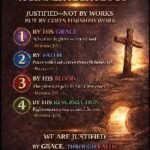 𝗛𝗢𝗪 𝗚𝗢𝗗 𝗗𝗘𝗖𝗟𝗔𝗥𝗘𝗦 𝗔 𝗦𝗜𝗡𝗡𝗘𝗥 𝗥𝗜𝗚𝗛𝗧𝗘𝗢𝗨𝗦
 𝗟𝗢𝗩𝗘: 𝗜 𝗖𝗢𝗨𝗟𝗗𝗡’𝗧 — 𝗛𝗘 𝗗𝗜𝗗
 𝗢𝗡𝗘 𝗟𝗔𝗦𝗧 𝗖𝗛𝗔𝗡𝗖𝗘 𝗪𝗔𝗦𝗧𝗘𝗗
 𝟴 𝗧𝗢𝗫𝗜𝗖 𝗛𝗔𝗕𝗜𝗧𝗦 𝗖𝗛𝗥𝗜𝗦𝗧𝗜𝗔𝗡𝗦 𝗠𝗨𝗦𝗧 𝗟𝗘𝗧 𝗚𝗢 𝗧𝗢𝗗𝗔𝗬