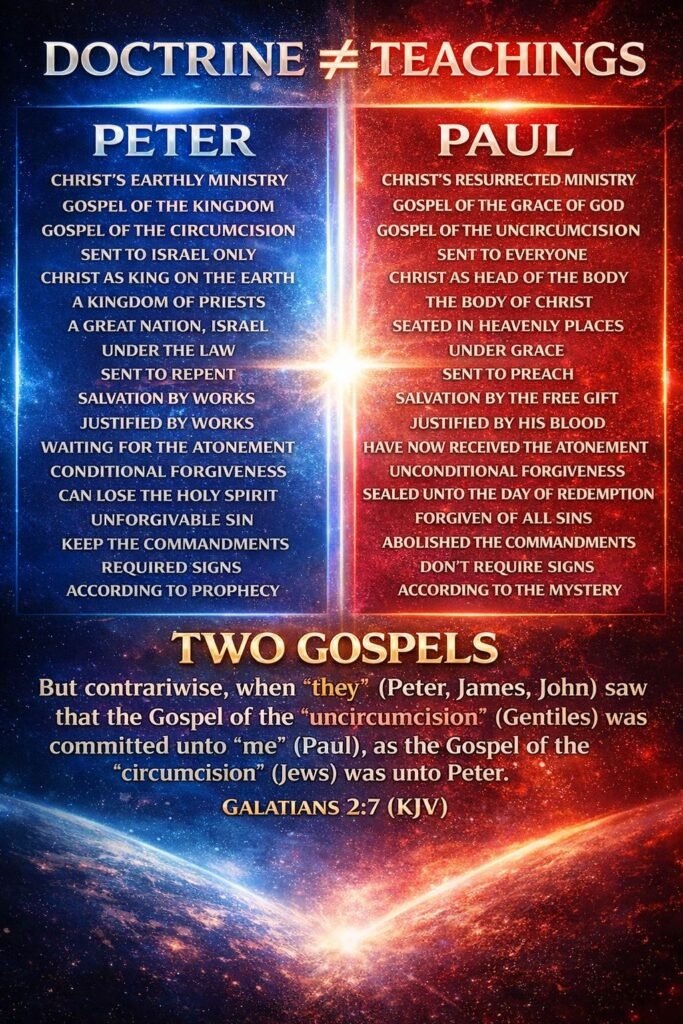
The forensic examination of the divine archives establishes that the primary cause of theological instability in the modern era is not a lack of devotion, but a catastrophic failure in administrative discernment. Within the specialized framework of the Pauline revelation, the investigator identifies a structural boundary that separates God’s prophetic dealings with the nation of Israel from His mystery dealings with the Body of Christ. 2 Timothy 2:15 provides the diagnostic baseline for this investigative report: “Study to shew thyself approved unto God, a workman that needeth not to be ashamed, rightly dividing the word of truth.” This report asserts that while all Scripture is for our learning, not all Scripture is to us as our current standing or instructions. The audit reveals that the failure to distinguish between the ministry of Peter and the ministry of Paul results in a “mixed gospel” that robs the believer of assurance and produces perpetual confusion.
The Origin of Information: Prophets vs. Paul
The primary forensic category of this study involves the source and timing of revelation. Romans 16:25 establishes the Pauline baseline: “Now to him that is of power to stablish you according to my gospel, and the preaching of Jesus Christ, according to the revelation of the mystery, which was kept secret since the world began.” The investigator finds that the prophetic program, as recorded in Acts 3:21, was “spoken by the mouth of all his holy prophets since the world began.” This report identifies a fundamental distinction: prophecy concerns that which was spoken, while the mystery concerns that which was secret. Hebrews 1:1 confirms that God spoke in “sundry times and in divers manners” unto the fathers by the prophets, but the investigator notes that the specific “Dispensation of the Grace of God” (Ephesians 3:2) was not committed to the prophets, but was a progressive revelation reserved for the Apostle of the Gentiles.
The Nature of the Content: Promise vs. Mystery
A secondary finding in this investigative audit focuses on the distinction between the promises made to Israel and the mystery made known to the Body. Romans 9:4 documents that to Israel pertained the “adoption, and the glory, and the covenants, and the giving of the law, and the service of God, and the promises.” The investigator finds that these promises were terrestrial and national. Conversely, Ephesians 3:9 speaks of the “fellowship of the mystery, which from the beginning of the world hath been hid in God.” This mystery, according to Colossians 1:26–27, involves “Christ in you, the hope of glory”—a truth previously unspoken. The audit reveals that mixing these programs is a forensic error; one cannot claim the terrestrial promises of Israel while simultaneously standing in the celestial mystery of the Body.
The Scope of Revelation: Prophecy vs. Pauline Revelation
The investigator identifies that Prophecy and Pauline Revelation occupy different jurisdictional spheres. Luke 1:70 confirms that prophecy was “spoken by the mouth of his holy prophets,” whereas Ephesians 3:5 notes that the mystery was “not made known unto the sons of men” in other ages. This report asserts that these are separated ministries. Galatians 2:7 records the formal administrative division: “The gospel of the uncircumcision was committed unto me [Paul], as the gospel of the circumcision was unto Peter.” The investigator find that Peter preached that which was known from the scriptures of the prophets, while Paul preached that which was revealed by the risen Christ from heaven.
The Identity of the People: Israel vs. Body of Christ
A diagnostic review of the “people of God” reveals two distinct entities. Deuteronomy 7:6 identifies Israel as a “holy people… chosen… to be a special people unto himself.” The investigator find that this national identity is based on lineage and covenant. However, 1 Corinthians 12:13 introduces a new creation: “For by one Spirit are we all baptized into one body.” This “Body of Christ” is described in 2 Corinthians 5:17 as a “new creature.” The investigator notes that while there was a “middle wall of partition” (Ephesians 2:14) during the prophetic program, in the current administration of grace, there is “neither Jew nor Greek” (Galatians 3:28). Failure to distinguish the nation (Israel) from the organism (the Body) results in a “replacement theology” that violates the forensic integrity of the Word.
The Geographic Placement: Earth vs. Heaven
The investigative report identifies different destinations for these two groups. Matthew 5:5 promises that “the meek shall inherit the earth,” a terrestrial destiny consistent with Israel’s prophetic program. In contrast, Ephesians 1:3 declares that the Body of Christ is blessed with “all spiritual blessings in heavenly places.” The investigator find that our “conversation is in heaven” (Philippians 3:20). This report asserts that Israel is an earthly people with an earthly kingdom, while the Body is a heavenly people with a heavenly seated position (Ephesians 2:6). Confusing these placements leads to “kingdom building” on earth, which is a misapplication of the current Pauline administration.
The Authority Position: King vs. Head
The investigator finds a categorical difference in how Christ relates to these two groups. Matthew 27:37 identifies Him as “The King of the Jews,” a title consistent with the Davidic throne. However, Colossians 1:18 describes His relationship to the Church: “And he is the head of the body.” The investigator notes that while a king rules over subjects, a head directs members of its own body. Ephesians 5:23 further establishes this organic union. The investigator find that the Body of Christ does not have a “King” in the terrestrial sense; we have a “Head” to whom we are spiritually joined.
The Message Preached: Kingdom vs. Grace
A forensic audit of the gospels preached in the New Testament reveals two distinct messages. Matthew 10:5–7 records the “Gospel of the Kingdom” which was restricted to Israel and proclaimed the King was at hand. Acts 20:24 records Paul’s unique commission: “the gospel of the grace of God.” The investigator find that the Kingdom Gospel required national repentance and water baptism for the remission of sins (Mark 1:4), while the Grace Gospel emphasizes the finished work of Christ’s death, burial, and resurrection as the sole basis of justification (1 Corinthians 15:1–4). The investigator find that these are different audiences with different requirements.
The Envoys: Peter to Jews vs. Paul to Gentiles
Galatians 2:7–9 provides the clinical data regarding the division of labor. Peter was assigned to the “circumcision” (the Jews), while Paul was assigned to the “uncircumcision” (the Gentiles). The investigator find that Peter’s commission in Matthew 28:19 involved “all nations” through Israel’s rise, but Paul’s commission in Romans 11:13 was as the “apostle of the Gentiles” through Israel’s fall. This report asserts that to follow Peter’s “General Commission” while ignoring Paul’s “Gentile Commission” is to walk in administrative disobedience to the risen Christ.
The Rule of Life: Law vs. Liberty
The investigator identifies a shift in the governing principle of the believer’s walk. Matthew 5:17–19 shows Christ upholding the Law during His earthly ministry. However, Romans 6:14 declares the new administrative reality: “For sin shall not have dominion over you: for ye are not under the law, but under grace.” The investigator find that the “handwriting of ordinances” was blotted out and nailed to the cross (Colossians 2:14). Therefore, the believer today is called to a “law of liberty” (Galatians 5:13) where the indwelling Spirit, not the external tablet, provides the power for a godly life.
The Basis of Standing: Performance vs. Payment
A diagnostic review of the “requirements” for righteousness reveals two different accounting methods. In the prophetic program, works were the evidence of faith; James 2:24 asserts, “Ye see then how that by works a man is justified, and not by faith only.” However, the investigator finds that in the Grace program, Romans 4:5 is the operative law: “But to him that worketh not, but believeth on him that justifieth the ungodly, his faith is counted for righteousness.” This report asserts that salvation today is “not of works, lest any man should boast” (Ephesians 2:8–9). The audit shows that righteousness is imputed based on Christ’s payment, not earned by human performance.
The Method of Forgiveness: Penance vs. Pardon
The investigator finds a distinction in the “conditionality” of forgiveness. Matthew 6:14–15 presents a conditional model: “If ye forgive men their trespasses, your heavenly Father will also forgive you.” This is “penance” under the Law. In contrast, Colossians 2:13 describes the Pauline pardon: “having forgiven you all trespasses.” This report asserts that we forgive others because we are forgiven (Ephesians 4:32), not in order to be forgiven. This shift from conditional to complete forgiveness is the forensic foundation of the believer’s “peace with God” (Romans 5:1).
Security: Perseverance vs. Preservation
The investigative audit identifies a difference in the “maintenance” of salvation. Matthew 24:13 warns those under the Kingdom program, “But he that shall endure unto the end, the same shall be saved.” This is the doctrine of perseverance. The investigator find that the Body of Christ is under the doctrine of preservation; Ephesians 1:13 declares that we are “sealed with that holy Spirit of promise.” This seal, according to Ephesians 4:30, is until “the day of redemption.” The investigator find that our security is not based on our “enduring,” but on Christ’s “preserving” (Romans 8:38–39).
The Evidentiary Standard: Power Signs vs. Plain Preaching
1 Corinthians 1:22 establishes the ancient forensic marker: “For the Jews require a sign.” The investigator find that signs and wonders were the “credentials” of the Kingdom Gospel. However, for the current administration, the investigator find that “faith cometh by hearing, and hearing by the word of God” (Romans 10:17). 2 Corinthians 5:7 mandates, “For we walk by faith, not by sight.” While the transitional period of the Acts saw the use of signs, the investigator find that as the Pauline revelation was completed, the signs “ceased” (1 Corinthians 13:8), leaving “plain preaching” as the primary vehicle of truth.
The Believer’s Role: Priesthood vs. Position
Exodus 19:6 promised Israel they would be a “kingdom of priests.” This is a mediatorial role where Israel stands between God and the nations. The investigator find that the Body of Christ has a different “position.” We are “members of his body, of his flesh, and of his bones” (Ephesians 5:30). Our citizenship is heavenly (Philippians 3:20). The investigator find that we do not wait for an earthly priesthood; we are already “accepted in the beloved” (Ephesians 1:6) and “made to sit together in heavenly places” (Ephesians 2:6).
The Status of the Program: Prophecies Fulfilled vs. Program Paused
The investigator identifies the current “Grace Period” as a divine parenthetical. Romans 11:7–25 explains that “blindness in part is happened to Israel” until the “fulness of the Gentiles be come in.” This report asserts that the prophetic clock has been “paused.” While the prophets looked for the “day of the Lord,” we are currently in the “day of salvation.” The investigator find that once the Body is complete, God will resume His dealings with Israel to fulfill the “restoration” promised in Romans 11:26. Mixing the “paused” program with the “active” one is the source of modern eschatological confusion.
The Practical Result: Proper Division vs. Perpetual Confusion
The final forensic category involves the fruit of one’s doctrine. 1 Corinthians 14:33 declares that “God is not the author of confusion.” The investigator find that proper right division brings clarity, peace, and a “sound mind.” Conversely, wrong division—mixing Peter and Paul—breeds error and “another gospel” (Galatians 1:6). The investigator find that Paul is our “pattern” (1 Timothy 1:16) for this age. To ignore the pattern is to build a structure that will not withstand the forensic fire of the Judgment Seat of Christ.
The investigative summary concludes that Doctrine is not synonymous with general “Teachings.” All Scripture is “profitable for doctrine,” but only when it is “rightly divided.” The investigator find that there are not two ways of salvation (it is always by blood), but there are two distinct programs. Failing to distinguish Israel and the Body results in false doctrine, lost assurance, and mixed messages that hinder the “ministry of reconciliation.”
A call to action is issued for the student of the Word. First, you must “Rightly Divide the Word,” recognizing the administrative boundaries God has set. Second, you must “Study Paul’s Epistles” as your primary source of instructions for the current age. Third, you must “Unlearn Religious Tradition” that seeks to put the Body back under the Law. Fourth, you must “Rest in Grace Alone,” recognizing that your standing is perfect in Christ. Finally, you must “Preach the Gospel Clearly,” ensuring that 1 Corinthians 15:1–4 remains the singular message of salvation.
The forensic data regarding “Right Division” (2 Timothy 2:15) reveals that the “unsearchable riches of Christ” (Ephesians 3:8) are only accessible through the Pauline lens. In a life where Peter and Paul are “mashed” together, the believer becomes a spiritual “hybrid” that belongs to no kingdom and enjoys no peace. The investigator finds that true maturity—the “perfect man” described in Ephesians 4:13—is only achieved when the believer’s “doctrine” is pure and unmixed. The audit shows that the most stable saints are those who have a “dispensational mind,” focused on the current operations of God.
Furthermore, the investigation into “The Law of the Spirit of Life” (Romans 8:2) confirms that the believer is under a different set of “spiritual physics” than those under the Law. The investigator find that mixing Law and Grace is like mixing oil and water; it produces a “lukewarm” substance that God rejects. The audit indicates that the “clarity” of the Gospel is the primary target of the adversary. By blurring the lines between Peter and Paul, the enemy keeps the Body of Christ in a state of “perpetual infancy.”
The audit of “Ministerial Fidelity” shows that every preacher will be judged on how he “divided” the Word. This investigation emphasizes that we are “stewards of the mysteries of God” (1 Corinthians 4:1). To be a “faithful steward” is to give the “meat in due season” (Matthew 24:45). The investigator find that the “meat” for today is the Pauline Mystery. To feed the Body on “Israel’s leftovers” is to malnourish the saints. The investigator conclude that “Right Division” is the primary duty of the pulpit.
In the realm of “Assurance of Salvation,” the investigator find that those who follow Peter’s “Endure to the End” (Matthew 24:13) are plagued by doubt. However, those who follow Paul’s “Sealed by the Spirit” (Ephesians 1:13) are established in “full assurance of faith.” The investigator find that the “confusion” of the two results in a “yo-yo” spirituality where the believer is saved one day and lost the next. The investigator find that the only cure for this instability is a “rightly divided” understanding of eternal security.
The final word of this investigative report is a reminder that God reveals truth progressively. From the “Prophetic” past to the “Mystery” present, God’s plan remains perfect. “Confusion comes from bad division; clarity comes from Scripture.” Trust the “Gospel of the Uncircumcision” committed to Paul. Rest in the “Grace” that liberates. Stand in the “Truth” that divides before it unites. The investigation is finished. The distinctions are clear. Follow the pattern.
The investigative findings are summarized for final review:
- Prophets vs. Paul: Prophecy was spoken since the world began; the Mystery was kept secret (Romans 16:25).
- Israel vs. Body: Israel is a national entity; the Body is a new creation in Christ (1 Corinthians 12:13).
- Earth vs. Heaven: Israel’s home is the earth; the Body’s home is the heavenly places (Ephesians 1:3).
- Law vs. Grace: Israel was under the Law; the Body is under Grace (Romans 6:14).
- Peter vs. Paul: Peter was the apostle to the circumcision; Paul is the apostle to the uncircumcision (Galatians 2:7).
- Performance vs. Payment: Righteousness was evidenced by works; today it is imputed by faith (Romans 4:5).
- Conditional vs. Complete: Forgiveness was conditional on our forgiving; today it is complete in Christ (Colossians 2:13).
The case for “DOCTRINE ≠ TEACHINGS: RIGHTLY DIVIDING PETER AND PAUL” is closed. The investigator closes the record with the final observation: Truth is not a “buffet” where one chooses what they like; truth is a “stewardship” where one honors what God has said to them. Follow the Apostle of the Gentiles into the fullness of Grace. Amen.
Related posts:
 𝗜𝗚𝗡𝗢𝗥𝗜𝗡𝗚 𝗧𝗛𝗘 𝗧𝗥𝗨𝗧𝗛 𝗗𝗢𝗘𝗦𝗡’𝗧 𝗖𝗛𝗔𝗡𝗚𝗘 𝗧𝗛𝗘 𝗧𝗥𝗨𝗧𝗛
 𝗟𝗜𝗚𝗛𝗧 𝗦𝗛𝗜𝗡𝗘𝗦 𝗜𝗡 𝗧𝗛𝗘 𝗗𝗔𝗥𝗞𝗡𝗘𝗦𝗦
 𝗙𝗔𝗟𝗦𝗘 𝗙𝗥𝗜𝗘𝗡𝗗𝗦: 𝗧𝗛𝗘 𝗗𝗔𝗡𝗚𝗘𝗥𝗦 𝗢𝗙 𝗣𝗥𝗘𝗧𝗘𝗡𝗗𝗘𝗗 𝗙𝗘𝗟𝗟𝗢𝗪𝗦𝗛𝗜𝗣
 𝗪𝗛𝗔𝗧 𝗜𝗦 𝗖𝗢𝗠𝗜𝗡𝗚?
 𝗦.𝗪.𝗢.𝗥.𝗗. — 𝗧𝗛𝗘 𝗪𝗢𝗥𝗗 𝗢𝗙 𝗚𝗢𝗗
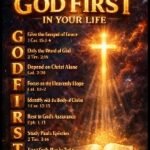 𝟴 𝗪𝗔𝗬𝗦 𝗧𝗢 𝗣𝗨𝗧 𝗚𝗢𝗗 𝗙𝗜𝗥𝗦𝗧 𝗜𝗡 𝗬𝗢𝗨𝗥 𝗟𝗜𝗙𝗘
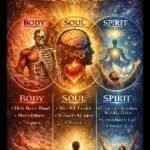 𝗧𝗛𝗘 𝗧𝗥𝗜𝗖𝗛𝗢𝗧𝗢𝗠𝗬 𝗢𝗙 𝗠𝗔𝗡
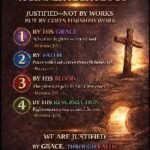 𝗛𝗢𝗪 𝗚𝗢𝗗 𝗗𝗘𝗖𝗟𝗔𝗥𝗘𝗦 𝗔 𝗦𝗜𝗡𝗡𝗘𝗥 𝗥𝗜𝗚𝗛𝗧𝗘𝗢𝗨𝗦
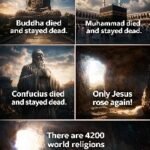 𝗢𝗡𝗟𝗬 𝗢𝗡𝗘 𝗘𝗠𝗣𝗧𝗬 𝗧𝗢𝗠𝗕
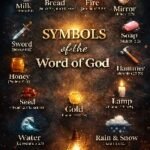 𝗦𝗬𝗠𝗕𝗢𝗟𝗦 𝗢𝗙 𝗧𝗛𝗘 𝗪𝗢𝗥𝗗 𝗢𝗙 𝗚𝗢𝗗
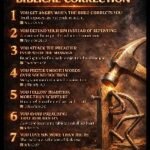 𝟳 𝗦𝗜𝗚𝗡𝗦 𝗬𝗢𝗨 𝗛𝗔𝗧𝗘 𝗕𝗜𝗕𝗟𝗜𝗖𝗔𝗟 𝗖𝗢𝗥𝗥𝗘𝗖𝗧𝗜𝗢𝗡
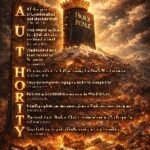 𝗧𝗛𝗘 𝗙𝗜𝗡𝗔𝗟 𝗔𝗨𝗧𝗛𝗢𝗥𝗜𝗧𝗬 — 𝗧𝗛𝗘 𝗪𝗢𝗥𝗗 𝗢𝗙 𝗚𝗢𝗗
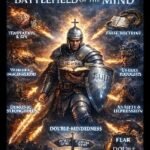 𝗕𝗘𝗟𝗜𝗘𝗩𝗘𝗥’𝗦 𝗕𝗔𝗧𝗧𝗟𝗘𝗙𝗜𝗘𝗟𝗗 𝗢𝗙 𝗧𝗛𝗘 𝗠𝗜𝗡𝗗
 𝗧𝗛𝗘 𝗦𝗪𝗢𝗥𝗗 𝗢𝗙 𝗧𝗛𝗘 𝗦𝗣𝗜𝗥𝗜𝗧 — 𝗧𝗛𝗘 𝗪𝗢𝗥𝗗 𝗢𝗙 𝗚𝗢𝗗