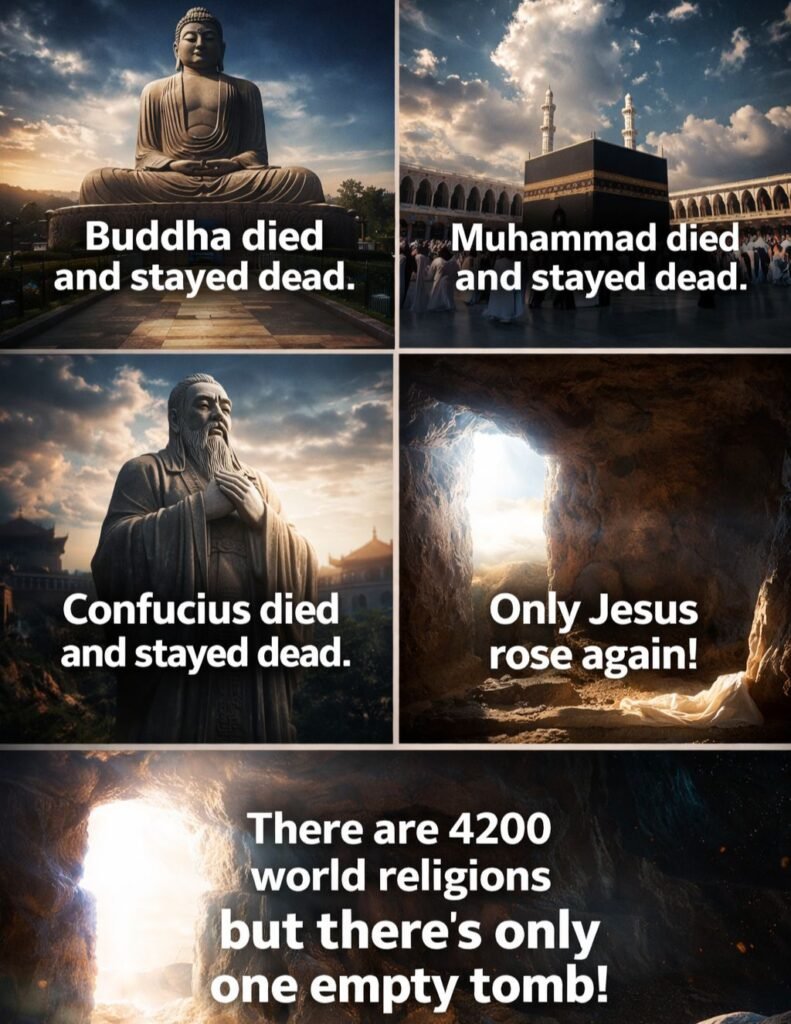
In the specialized field of spiritual forensics, a rigorous audit of human history establishes a singular, categorical anomaly that disrupts the otherwise universal law of biological finality. While the archives of antiquity are replete with the remains of philosophers, the bones of religious founders, and the dust of terrestrial kings, there exists one specific archaeological site in the Near East that serves as the silent witness to a judicial and physical breakthrough of cosmic proportions. This investigation, grounded in the administrative revelation committed to the Apostle Paul, identifies that the validity of the current Dispensation of Grace rests entirely upon the historical and bodily exit of Jesus Christ from the state of death. The diagnostic baseline for this inquiry is established in 1 Corinthians 15:3–4, which records the forensic data of the gospel: “How that Christ died for our sins according to the scriptures; And that he was buried, and that he rose again the third day according to the scriptures.” According to the Pauline record, if this event were to be proven fraudulent, the entire structural integrity of the believer’s faith would suffer a total collapse, rendering the Body of Christ a company of “all men most miserable.”
The primary finding in this forensic report is that Christ alone achieved a decisive victory over the mechanisms of the grave. Every other claimant to spiritual authority in the history of the world eventually succumbed to the judicial sentence of death passed upon the seed of Adam. Romans 5:8 notes that “God commendeth his love toward us, in that, while we were yet sinners, Christ died for us,” a death that served as the legal satisfaction for divine justice. The subsequent burial, documented in the tomb of Joseph of Arimathaea, served as the physical verification of His cessation of life. Yet, the investigator finds that the grave possessed no legal or physical means to retain Him; Acts 2:24 declares that God raised Him up, “having loosed the pains of death: because it was not possible that he should be holden of it.” This victory is not merely a historical footnote but an eternal status, as the risen Lord proclaims in Revelation 1:18: “I am he that liveth, and was dead; and, behold, I am alive for evermore.”
The investigation proceeds to the validation of the gospel through the lens of historical eyewitness testimony. The resurrection is not presented in the Pauline epistles as a mystical or allegorical concept, but as a verifiable event involving a physical, glorified body. Acts 10:40 records the clinical observation of the apostles, and 1 Corinthians 15:6 provides a massive data set of “above five hundred brethren at once” who witnessed the risen Savior. The investigator notes that such a large number of contemporary witnesses would have made the fabrication of the event a forensic impossibility. Romans 10:9 establishes the necessity of this historical fact for the believer’s justification: “if thou shalt confess with thy mouth the Lord Jesus, and shalt shalt believe in thine heart that God hath raised him from the dead, thou shalt be saved.” Without the empty tomb, there is no living hope, but because of it, the believer possesses an inheritance that is “incorruptible, and undefiled, and that fadeth not away.”
A diagnostic review of human religion reveals its total inability to bridge the chasm created by death. The investigator finds that while religion offers a complex system of rituals and moral improvements, it remains fundamentally mortal. Hebrews 9:27 records the terminal baseline for all human efforts: “it is appointed unto men once to die, but after this the judgment.” No amount of religious works can alter this judicial reality, as Romans 3:20 asserts that “by the deeds of the law there shall no flesh be justified in his sight.” The forensic data suggests that every religious teacher who remains in the grave is a teacher whose system failed to solve the primary problem of humanity: sin and its consequence, death. In contrast, Ephesians 1:7 identifies that redemption is found only in the one who shed His blood and rose again, providing the “forgiveness of sins, according to the riches of his grace.”
The audit of the believer’s standing identifies the provision of immortal life as the unique byproduct of the resurrection. 2 Timothy 1:10 explains that Christ “hath abolished death, and hath brought life and immortality to light through the gospel.” This is not a mere continuation of biological existence, but an “indestructible life” (Hebrews 7:16) rooted in the very nature of the Godhead. The investigator finds that the resurrection provides the legal basis for the indwelling life of Christ within the believer, a mystery described in Colossians 1:27 as “Christ in you, the hope of glory.” This life is the seal of the believer’s security; because the Head of the Body is alive and seated in the heavenly places, the members of the Body are viewed judicially as being seated there also. The empty tomb is thus the birthplace of the New Creation.
The forensic examination of salvation confirms that it is an operation performed by a living Savior, not a dead martyr. 2 Corinthians 5:21 notes the substitutionary nature of the cross, but the application of that work requires a living High Priest. The investigator find that upon the moment of faith in the finished work of Christ, the believer is “sealed with that holy Spirit of promise” (Ephesians 1:13). This seal is unbreakable because it is backed by the authority of the risen Lord. Romans 8:38–39 provides the ultimate assurance for the justified soul, declaring that neither death, nor life, nor any other creature shall be able to separate us from the love of God, which is in Christ Jesus our Lord. The security of the saint is as certain as the life of the Savior; if Christ cannot die again, the believer cannot be lost.
The evidence provided by the empty tomb serves as the greatest testimony in the history of human jurisprudence. The rolling away of the stone (Matthew 28:2) was not performed to let the Lord out, but to let the witnesses in. The investigator notes that the empty grave clothes, left in their original folds, provided silent but irrefutable evidence of a bodily exit that transcended physical barriers. Luke 24:3 records the initial discovery of the empty site, and the angelic announcement in Matthew 28:6 remains the most profound summary of the evidence: “He is not here: for he is risen, as he said.” This empty space became the pulpit from which the apostles turned the world upside down, preaching the “power of his resurrection” (Philippians 3:10) as the only solution for a dying race.
The investigative report concludes with a mandate for the believer to stand firm in the truth of the resurrection. 1 Corinthians 15:58 issues the administrative order: “Therefore, my beloved brethren, be ye stedfast, unmoveable, always abounding in the work of the Lord, forasmuch as ye know that your labour is not in vain in the Lord.” Because the Savior is alive, the service of the saint possesses eternal value. The investigator finds that the Body of Christ is commissioned to act as “ambassadors for Christ” (2 Corinthians 5:20), proclaiming the message of reconciliation to a world that remains in the shadow of the grave. To stand in resurrection truth is to recognize that death is no longer a period at the end of a sentence, but a comma leading into the eternal weight of glory.
The summary of this investigative audit is definitive: every religion has a grave, but Christianity has an empty tomb. Every other religious founder remains a subject of the kingdom of death, but Jesus Christ is the Sovereign of Life. The empty tomb proves that Christ is Lord, that His sacrifice was accepted by the Father, and that He alone possesses the keys of hell and of death. The investigator find that the resurrection is the cornerstone of the Pauline revelation; without it, the gospel is a myth, but with it, the gospel is the absolute power of God unto salvation.
A call to action is issued for all who examine this record. First, you must believe the gospel—that Christ died for your sins and rose again (1 Corinthians 15:3–4). Second, you must trust the risen Savior for your personal justification, acknowledging that your works cannot save (Romans 10:9). Third, study the Word of God through the lens of right division (2 Timothy 2:15) to understand the unique position of the Body of Christ. Fourth, proclaim the resurrection boldly in your sphere of influence, for the evidence is overwhelming (Acts 4:33). Finally, live your life in light of the coming return of the living Christ, setting your affection on things above (Colossians 3:1).
The investigative data regarding “Christ’s Bodily Presence” shows that He was not a spirit or a ghost, but possessed a body of “flesh and bones” (Luke 24:39). This is critical for the Pauline doctrine of the glorified body. The investigator find that our future hope is a physical reality; we shall be “fashioned like unto his glorious body” (Philippians 3:21). The empty tomb is the prototype of our own coming exit from this corruptible state. Just as the earth could not hold the Head, it shall not be able to hold the Body when the trump of God sounds.
The forensic audit of “Satan’s Defeat” reveals that the resurrection was the final blow to the power of the adversary. Hebrews 2:14–15 explains that through death, Christ destroyed “him that had the power of death, that is, the devil; And deliver him who through fear of death were all their lifetime subject to bondage.” The investigator notes that the empty tomb signifies the legal liberation of the human race from the tyranny of the grave. The believer no longer walks in fear, but in the liberty of the sons of God. The resurrection is the signal that the god of this world has been judged and his sentence is certain.
Furthermore, the investigation into “The Third Day” identifies the prophetic precision of the event. Christ rose “according to the scriptures,” fulfilling the types and shadows found in the Old Testament, such as Jonah’s experience (Matthew 12:40). The investigator find that the timing of the resurrection was not coincidental but was a scheduled appointment in the divine calendar. This precision adds an additional layer of forensic credibility to the claim, proving that the event was part of a pre-determined counsel of God (Acts 2:23).
The investigation into the “Firstborn from the Dead” (Colossians 1:18) confirms that Christ’s resurrection was the beginning of a new order of existence. He is the “beginning” and the “firstborn,” implying that others will follow in His wake. The investigator find that the Body of Christ is the first group to participate in this new order, characterized by heavenly citizenship and spiritual life. The empty tomb is the door through which the believer enters into the new administration of God, where the law of sin and death has been replaced by the law of the Spirit of life in Christ Jesus (Romans 8:2).
The forensic report concludes that the “Only One Empty Tomb” is the most significant data point in the history of the universe. It is the hinge upon which eternity turns. The investigator find that the evidence for the resurrection is not only historical and textual but is also experiential, as the Word of God “effectually worketh” in those who believe (1 Thessalonians 2:13). The change in the lives of the apostles, who fled in fear at the cross but stood in boldness at the resurrection, provides the final piece of psychological evidence for the reality of the event.
The summary of the findings is absolute:
- Christ Alone: The only individual to permanently reverse the state of death (Acts 2:24).
- Validation: The resurrection confirms the truth of every Pauline claim (1 Cor. 15:14).
- Insufficiency of Religion: No religious system can produce life from death (Romans 3:20).
- Immortality: Eternal life is a gift made possible by the risen Lord (2 Tim. 1:10).
- Salvation: The living Savior is the only one capable of sealing the believer (Eph. 1:13).
- Evidence: The empty tomb is the supreme testimony of divine power (Matthew 28:6).
- Proclamation: The Body of Christ is defined by its witness of the risen Christ (2 Cor. 5:20).
The case for the Resurrection is closed. The evidence remains undisturbed after two millennia. The tomb is still empty. The Savior is still alive. The Gospel is still the power of God unto salvation. The investigator recommends an immediate and total reliance on the Risen Christ. For if He be risen, then everything He said is true, and every promise He made will be kept.
The investigation into “Rightly Dividing” the resurrection (2 Timothy 2:15) shows that while the fact of the resurrection is common to all dispensations, the meaning of it for the Body of Christ is unique. We do not look to the resurrection as a sign for a kingdom on earth, but as the guarantee of our placement in the heavenly places. The investigator find that our “blessed hope” is tied to the one who is currently “at the right hand of God” (Romans 8:34), making intercession for us. Our growth as believers is measured by how much we operate in the power of that resurrection in our daily walk.
Finally, the investigative record on “The Sting of Death” (1 Corinthians 15:55–57) provides the closing victory cry: “O death, where is thy sting? O grave, where is thy victory? The sting of death is sin; and the strength of sin is the law. But thanks be to God, which giveth us the victory through our Lord Jesus Christ.” The investigator find that the law’s ability to condemn was broken because Christ fulfilled it and rose above it. The believer is now free to serve in “newness of spirit” (Romans 7:6), empowered by the same life that emptied the tomb.
The investigation is finished. The data is clear. One tomb is empty. One Savior is alive. One Way is provided. The investigator closes the record with the final observation: Many men have tried to be God, but only one God became man and proved it by leaving His grave behind. Let the world search every cemetery; they will not find Him there. He is risen indeed.
Related posts:
 𝗟𝗜𝗚𝗛𝗧 𝗦𝗛𝗜𝗡𝗘𝗦 𝗜𝗡 𝗧𝗛𝗘 𝗗𝗔𝗥𝗞𝗡𝗘𝗦𝗦
 𝗛𝗢𝗪 𝗚𝗢𝗗 𝗗𝗘𝗖𝗟𝗔𝗥𝗘𝗦 𝗔 𝗦𝗜𝗡𝗡𝗘𝗥 𝗥𝗜𝗚𝗛𝗧𝗘𝗢𝗨𝗦
 𝗧𝗛𝗘 𝗖𝗥𝗢𝗦𝗦: 𝗚𝗢𝗗’𝗦 𝗣𝗢𝗪𝗘𝗥 𝗙𝗢𝗥 𝗦𝗔𝗟𝗩𝗔𝗧𝗜𝗢𝗡
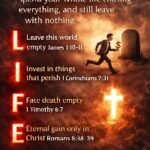 𝗟𝗜𝗙𝗘 — 𝗧𝗛𝗘 𝗚𝗥𝗘𝗔𝗧 𝗘𝗧𝗘𝗥𝗡𝗔𝗟 𝗤𝗨𝗘𝗦𝗧𝗜𝗢𝗡
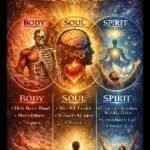 𝗧𝗛𝗘 𝗧𝗥𝗜𝗖𝗛𝗢𝗧𝗢𝗠𝗬 𝗢𝗙 𝗠𝗔𝗡
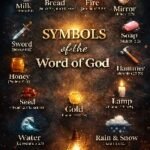 𝗦𝗬𝗠𝗕𝗢𝗟𝗦 𝗢𝗙 𝗧𝗛𝗘 𝗪𝗢𝗥𝗗 𝗢𝗙 𝗚𝗢𝗗
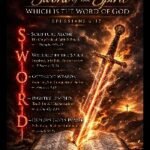 𝗧𝗛𝗘 𝗦𝗪𝗢𝗥𝗗 𝗢𝗙 𝗧𝗛𝗘 𝗦𝗣𝗜𝗥𝗜𝗧 — 𝗧𝗛𝗘 𝗪𝗢𝗥𝗗 𝗢𝗙 𝗚𝗢𝗗
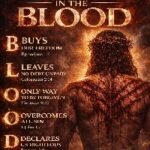 𝗧𝗛𝗘𝗥𝗘 𝗜𝗦 𝗣𝗢𝗪𝗘𝗥 𝗜𝗡 𝗧𝗛𝗘 𝗕𝗟𝗢𝗢𝗗 𝗢𝗙 𝗝𝗘𝗦𝗨𝗦 𝗖𝗛𝗥𝗜𝗦𝗧
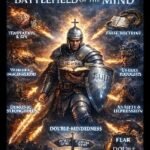 𝗕𝗘𝗟𝗜𝗘𝗩𝗘𝗥’𝗦 𝗕𝗔𝗧𝗧𝗟𝗘𝗙𝗜𝗘𝗟𝗗 𝗢𝗙 𝗧𝗛𝗘 𝗠𝗜𝗡𝗗
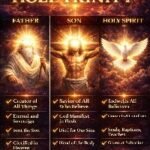 𝗧𝗛𝗘 𝗛𝗢𝗟𝗬 𝗧𝗥𝗜𝗡𝗜𝗧𝗬
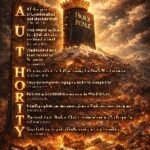 𝗧𝗛𝗘 𝗙𝗜𝗡𝗔𝗟 𝗔𝗨𝗧𝗛𝗢𝗥𝗜𝗧𝗬 — 𝗧𝗛𝗘 𝗪𝗢𝗥𝗗 𝗢𝗙 𝗚𝗢𝗗
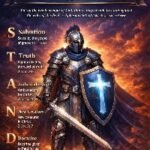 𝗧𝗛𝗘 𝗪𝗛𝗢𝗟𝗘 𝗔𝗥𝗠𝗢𝗥 𝗢𝗙 𝗚𝗢𝗗
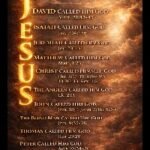 𝗪𝗛𝗢 𝗦𝗔𝗬𝗦 𝗝𝗘𝗦𝗨𝗦 𝗖𝗛𝗥𝗜𝗦𝗧 𝗜𝗦 𝗚𝗢𝗗?
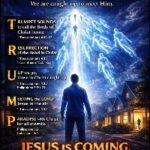 𝗪𝗛𝗘𝗡 𝗧𝗛𝗘 𝗧𝗥𝗨𝗠𝗣 𝗢𝗙 𝗚𝗢𝗗 𝗦𝗢𝗨𝗡𝗗𝗦