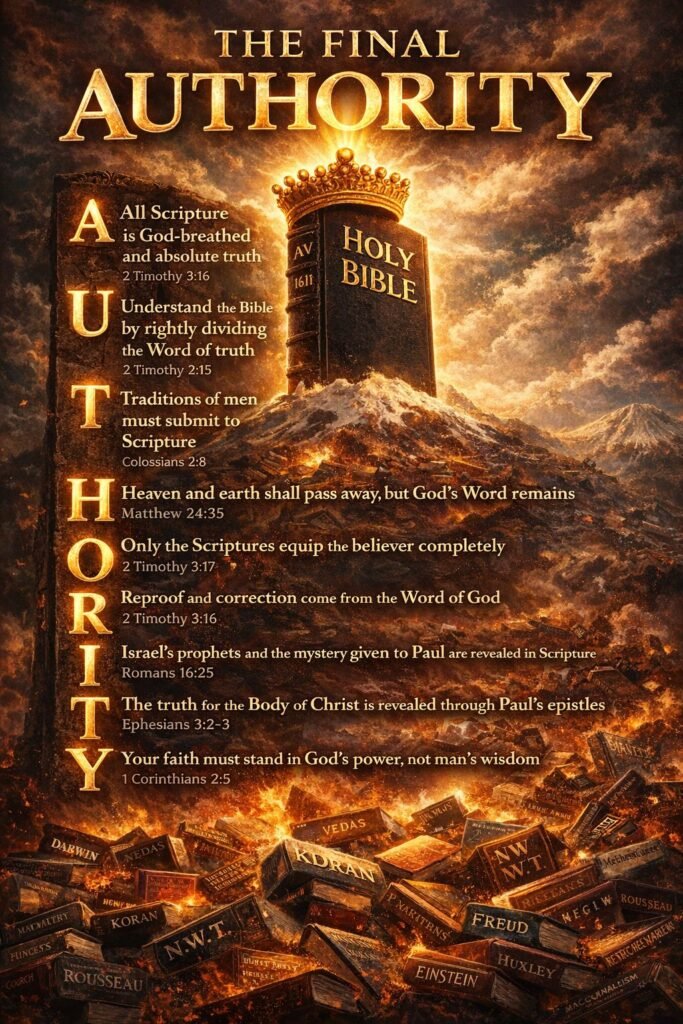
In the specialized field of spiritual forensics, a rigorous audit of the current administration of grace reveals a structural necessity for a definitive baseline of truth. In an era characterized by the proliferation of human philosophies, the shifting sands of religious tradition, and the volatile impulses of personal emotion, the investigator must ask: what constitutes the ultimate court of appeal? The diagnostic record of the Pauline epistles identifies that the believer is not left to navigate the darkness of this world by the dim light of human opinion. 2 Timothy 3:16–17 establishes the forensic standard: “All scripture is given by inspiration of God, and is profitable for doctrine, for reproof, for correction, for instruction in righteousness: That the man of God may be perfect, throughly furnished unto all good works.” This investigative report asserts that the Word of God, when handled with the precision of right division, serves as the final and absolute authority for the Body of Christ.
The primary finding in the audit of divine communication is the absolute authority of Scripture. This authority is not derived from the consensus of men or the decrees of ecclesiastical councils but is intrinsic to its origin. The investigator notes that “inspiration” is not merely a high degree of human creativity but is the very breath of the Almighty. John 17:17 provides the judicial confirmation: “Sanctify them through thy truth: thy word is truth.” Unlike human research, which is subject to revision and error, the Word of God functions as the immutable standard against which all other claims must be measured. Isaiah 8:20 mandates this procedural check: “To the law and to the testimony: if they speak not according to this word, it is because there is no light in them.” The forensic data indicates that any teaching failing this textual comparison must be discarded as a liability to the soul.
A secondary and critical discovery in the quest for understanding is the methodology of right division. The investigator find that much of the doctrinal confusion in the modern era stems from a failure to distinguish between God’s varied programs. 2 Timothy 2:15 provides the professional workman’s directive: “Study to shew thyself approved unto God, a workman that needeth not to be ashamed, rightly dividing the word of truth.” This division is not a suggestion but a requirement for tactical accuracy. The record shows that Israel and the Church represent distinct dispensational operations. Romans 11:25 reveals a specific “mystery” regarding Israel’s temporary blindness, while Ephesians 3:2–4 documents the “dispensation of the grace of God” committed specifically to the Apostle Paul. Right division acts as the navigational tool that prevents the believer from attempting to apply the law of a past administration to the grace of the present one.
The investigative record also examines the conflict between divine truth and human tradition. Throughout history, religious systems have attempted to elevate custom to the level of command. Colossians 2:8 issues a sharp administrative warning: “Beware lest any man spoil you through philosophy and vain deceit, after the tradition of men, after the rudiments of the world, and not after Christ.” The investigator notes that tradition often acts as a corrosive agent, eating away at the purity of the gospel of grace. The Berean believers in Acts 17:11 are cited as the model for forensic investigation, for they “searched the scriptures daily, whether those things were so.” Mark 7:13 confirms the danger of religious customs, noting that men make “the word of God of none effect through your tradition.” The audit concludes that the Bible must occupy the seat of judgment over every religious institution.
Furthermore, the data analyzes the heavenly permanence of God’s Word. While the physical universe is subject to the second law of thermodynamics, the Word of God remains unaffected by entropy. Matthew 24:35 records the cosmic reality: “Heaven and earth shall pass away, but my words shall not pass away.” 1 Peter 1:25 further corroborates this by stating, “But the word of the Lord endureth for ever.” The investigator find that the reliability of God’s promises is anchored in His immutable character. Numbers 23:19 asserts, “God is not a man, that he should lie; neither the son of man, that he should repent: hath he said, and shall he not do it? or hath he spoken, and shall he not make it good?” In a world of broken contracts and failed institutions, the Word of God provides the only secure investment for the warrior’s faith.
The report identifies that only Scripture possesses the capacity to fully equip the believer for the current spiritual climate. 2 Timothy 3:17 notes that the Word is designed so that the man of God may be “perfect, throughly furnished unto all good works.” The Greek terminology suggests an outfitting similar to a ship being prepared for a transatlantic voyage. No human philosophy can provide the internal fortitude or the tactical wisdom required for the battle. 2 Timothy 3:15 highlights that these holy scriptures are “able to make thee wise unto salvation through faith which is in Christ Jesus.” Colossians 1:9–10 describes the outcome of this equipping: being “filled with the knowledge of his will in all wisdom and spiritual understanding; That ye might walk worthy of the Lord unto all pleasing.”
The investigation into the transformative power of the Word reveals its function as an agent of reproof and correction. Hebrews 4:12 describes the Word as “quick, and powerful, and sharper than any twoedged sword, piercing even to the dividing asunder of soul and spirit.” It acts as a “discerner of the thoughts and intents of the heart,” exposing sin that human morality would otherwise ignore. The investigator notes that Scripture does not merely provide information; it facilitates reformation. 2 Timothy 3:16 identifies that it is profitable for “correction,” which implies the setting right of that which is crooked. Psalm 119:9 asks, “Wherewithal shall a young man cleanse his way? by taking heed thereto according to thy word.” The Word of God is the laboratory where the old nature is identified and the new man is trained in holiness.
A diagnostic review of the “Mystery” reveals the core of the Pauline revelation. For centuries, the prophets spoke of a coming kingdom for Israel, a theme Acts 3:21 calls the “restitution of all things.” However, Romans 16:25 introduces a different data set: “the revelation of the mystery, which was kept secret since the world began.” This mystery identifies the inclusion of the Gentiles in one body without the requirement of the Mosaic Law. Ephesians 2:14–16 documents the dismantling of the “middle wall of partition.” The investigator find that understanding the difference between prophecy and mystery is the only way to resolve the apparent contradictions in the biblical text. The Church, the Body of Christ, is a unique creation with a unique destination, revealed only through the epistles of Paul.
The audit continues with an analysis of truth specifically for the Body of Christ. While all Scripture is for us, not all Scripture is to us or about us. The investigator identifies that the specific doctrine for the current age is found in the thirteen epistles of Paul. Ephesians 3:2–3 refers to the “dispensation of the grace of God which is given me to you-ward.” This transition from Law to Grace is the defining feature of our walk. Romans 6:14 declares the new administrative policy: “for ye are not under the law, but under grace.” Acts 20:24 records Paul’s commitment to “testify the gospel of the grace of God.” This gospel is the power of God unto salvation and the foundation upon which the believer must stand to remain doctrinally stable in a deceptive age.
The final phase of the investigation addresses the source of the believer’s strength. 1 Corinthians 2:5 warns that “your faith should not stand in the wisdom of men, but in the power of God.” The investigator notes that faith which is built on human eloquence or intellectual trends is fragile and subject to collapse. James 1:22 commands us to be “doers of the word, and not hearers only, deceiving your own selves.” Building a life on the Word is compared to the wise man in Matthew 7:24 who “built his house upon a rock.” When the storms of trial and the winds of false doctrine descend, the structure remains because its foundation is the eternal Word. Yielding to this truth is not a matter of intellectual ascent but of total submission to the authority of the Creator.
The summary of the investigative findings is absolute: the Word of God is the singular, final authority for every matter of faith and practice. It transcends the limitations of time, the errors of human reason, and the bias of religious tradition. The investigator finds that the “wiles of the devil” are most effectively countered by a workman who knows how to wield the sword of the Spirit. When everything else collapses—when governments fail, when churches apostatize, and when cultures disintegrate—the Word of God still stands.
A call to action is issued to every member of the Body of Christ. First, commit to the daily study of the Scriptures, applying the principle of 2 Timothy 2:15 to ensure doctrinal purity. Second, believe the gospel of grace as defined in 1 Corinthians 15:1–4, resting entirely in the finished work of Christ. Third, ruthlessly reject any tradition or philosophy that contradicts the Pauline revelation (Colossians 2:8). Fourth, live as an ambassador of the truth, applying the Word to every decision and relationship (James 1:22). Fifth, proclaim the message of grace boldly, for the time is short and the need is great (2 Timothy 4:2).
The investigation into the “Mind of Christ” (1 Corinthians 2:16) reveals that the only way to apprehend it is through the written Word. The Spirit of God does not speak independently of the Book He inspired. The investigator find that those who claim “new revelations” outside of the completed canon are in danger of spiritual shipwreck. The “perfect” thing has come (1 Corinthians 13:10), and it is the finished revelation given to the Church. We are not looking for more signs; we are looking into the perfect law of liberty.
The audit of “Spiritual Stability” (Ephesians 4:14) shows that it is the direct result of doctrinal maturity. A believer who does not know the final authority of the Word is like a ship without a rudder, “carried about with every wind of doctrine.” The investigator concludes that the only way to “stand” is to be anchored in the “sound words” of the Apostle Paul. 2 Timothy 1:13 mandates: “Hold fast the form of sound words, which thou hast heard of me, in faith and love which is in Christ Jesus.” This “form” is the architectural framework of our faith.
Furthermore, the investigation into “Divine Preservation” (Psalm 12:6-7) confirms that God has not only inspired His Word but has also preserved it. “The words of the LORD are pure words: as silver tried in a furnace of earth, purified seven times. Thou shalt keep them, O LORD, thou shalt preserve them from this generation for ever.” The investigator find that we can have absolute confidence in the text of our Bible. It is a reliable, forensic document that has survived the fires of persecution and the scrutiny of critics. We do not have a “lost” Word; we have a preserved Word.
The forensic report concludes that the “Word of Truth” is the believer’s greatest asset. It provides the “riches of the full assurance of understanding” (Colossians 2:2). It is the source of “peace that passeth all understanding” (Philippians 4:7). It is the “power of God unto salvation” (Romans 1:16). The investigator find that the degree to which a believer submits to the authority of the Word is the degree to which they will experience the power of the Christian life. To ignore the Word is to invite chaos; to obey the Word is to ensure victory.
The investigation is finished. The data is clear. The Final Authority is the Word of God. The investigator closes the record with the observation that the Word is not just a book to be read, but a Person to be known—for the Word was made flesh and dwelt among us, and through the written Word, we behold His glory. Stand on the Word. Walk in the Word. Fight with the Word. For “the grass withereth, the flower fadeth: but the word of our God shall stand for ever” (Isaiah 40:8).
The investigative findings are summarized for final review:
- Authority: Scripture is God-breathed and absolute (2 Timothy 3:16).
- Right Division: Handling the Word accurately reveals God’s distinct programs (2 Timothy 2:15).
- Tradition: Human customs must be tested and rejected if they oppose truth (Colossians 2:8).
- Permanence: The Word outlasts the heavens and the earth (Matthew 24:35).
- Equipping: Only the Bible provides the tools for spiritual perfection (2 Timothy 3:17).
- Reformation: The Word corrects the mind and the walk (Hebrews 4:12).
- Dispensation: Understanding the Mystery clarifies the Church’s role (Romans 16:25).
- Doctrine: Pauline truth is the specific message for the Body of Christ (Ephesians 3:2).
- Faith: Our foundation must be God’s power, not man’s wisdom (1 Corinthians 2:5).
The case for the Bible as Final Authority is closed. The investigator recommends an immediate application of these findings to all areas of spiritual life. May the God of all grace establish you in the truth of His Word. Amen.
Related posts:
 𝗟𝗜𝗚𝗛𝗧 𝗦𝗛𝗜𝗡𝗘𝗦 𝗜𝗡 𝗧𝗛𝗘 𝗗𝗔𝗥𝗞𝗡𝗘𝗦𝗦
 𝗦𝗬𝗠𝗕𝗢𝗟𝗦 𝗢𝗙 𝗧𝗛𝗘 𝗪𝗢𝗥𝗗 𝗢𝗙 𝗚𝗢𝗗
 𝗧𝗛𝗘 𝗦𝗪𝗢𝗥𝗗 𝗢𝗙 𝗧𝗛𝗘 𝗦𝗣𝗜𝗥𝗜𝗧 — 𝗧𝗛𝗘 𝗪𝗢𝗥𝗗 𝗢𝗙 𝗚𝗢𝗗
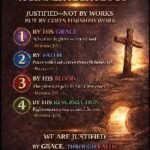 𝗛𝗢𝗪 𝗚𝗢𝗗 𝗗𝗘𝗖𝗟𝗔𝗥𝗘𝗦 𝗔 𝗦𝗜𝗡𝗡𝗘𝗥 𝗥𝗜𝗚𝗛𝗧𝗘𝗢𝗨𝗦
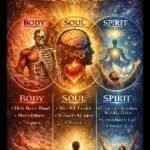 𝗧𝗛𝗘 𝗧𝗥𝗜𝗖𝗛𝗢𝗧𝗢𝗠𝗬 𝗢𝗙 𝗠𝗔𝗡
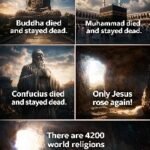 𝗢𝗡𝗟𝗬 𝗢𝗡𝗘 𝗘𝗠𝗣𝗧𝗬 𝗧𝗢𝗠𝗕
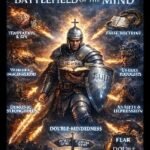 𝗕𝗘𝗟𝗜𝗘𝗩𝗘𝗥’𝗦 𝗕𝗔𝗧𝗧𝗟𝗘𝗙𝗜𝗘𝗟𝗗 𝗢𝗙 𝗧𝗛𝗘 𝗠𝗜𝗡𝗗
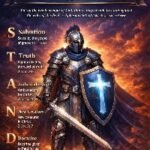 𝗧𝗛𝗘 𝗪𝗛𝗢𝗟𝗘 𝗔𝗥𝗠𝗢𝗥 𝗢𝗙 𝗚𝗢𝗗
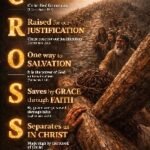 𝗧𝗛𝗘 𝗖𝗥𝗢𝗦𝗦: 𝗚𝗢𝗗’𝗦 𝗣𝗢𝗪𝗘𝗥 𝗙𝗢𝗥 𝗦𝗔𝗟𝗩𝗔𝗧𝗜𝗢𝗡
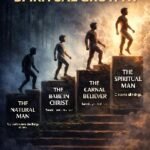 𝗙𝗢𝗨𝗥 𝗦𝗧𝗔𝗚𝗘𝗦 𝗢𝗙 𝗦𝗣𝗜𝗥𝗜𝗧𝗨𝗔𝗟 𝗚𝗥𝗢𝗪𝗧𝗛
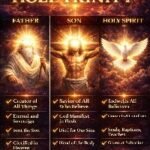 𝗧𝗛𝗘 𝗛𝗢𝗟𝗬 𝗧𝗥𝗜𝗡𝗜𝗧𝗬
 𝗧𝗛𝗘 𝗗𝗜𝗩𝗜𝗡𝗘 𝗢𝗥𝗗𝗘𝗥 𝗢𝗙 𝗧𝗛𝗘 𝗙𝗔𝗠𝗜𝗟𝗬
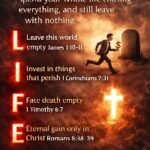 𝗟𝗜𝗙𝗘 — 𝗧𝗛𝗘 𝗚𝗥𝗘𝗔𝗧 𝗘𝗧𝗘𝗥𝗡𝗔𝗟 𝗤𝗨𝗘𝗦𝗧𝗜𝗢𝗡
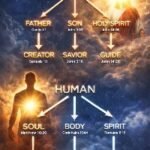 𝗚𝗢𝗗 𝗔𝗡𝗗 𝗠𝗔𝗡: 𝗥𝗜𝗚𝗛𝗧𝗟𝗬 𝗗𝗜𝗩𝗜𝗗𝗘𝗗 𝗗𝗘𝗦𝗜𝗚𝗡