

In the specialized field of spiritual forensics, a rigorous examination of the human condition reveals a profound necessity for a specific type of relational architecture—one that transcends the superficial bonds of worldly association to achieve an eternal objective. While the modern era often defines companionship through the lens of emotional convenience or shared temporal interests, a forensic audit of the Pauline epistles and the historical precedents within the Gospels identifies a higher calling for the believer. This investigative report analyzes the mechanics of a faith-based collaborative effort designed to bridge the gap between a soul in distress and the singular Source of reconciliation. A primary evidentiary exhibit is found in Luke 5:20, which records a judicial observation of the highest order: “And when he saw their faith, he said unto him, Man, thy sins are forgiven thee.” This statement establishes a diagnostic baseline: the collective, active faith of a specialized group can serve as the conduit through which an individual is positioned to receive the forensic declaration of righteousness. Under the current Administration of Grace, as defined by the Apostle Paul, this principle of spiritual partnership operates as a strategic deployment of the Body of Christ to facilitate the delivery of the gospel of peace.
The investigation begins with the identification of a faith that acts, a dynamic force that operates beyond the boundaries of mere intellectual assent. Hebrews 11:6 establishes the ontological requirement for this type of engagement, noting that “without faith it is impossible to please him: for he that cometh to God must believe that he is, and that he is a rewarder of them that diligently seek him.” The forensic data indicates that true spiritual friendship is not a passive state but a mobile mission. This faith trusts in the absolute power of Christ to resolve the sin-debt of the human race. It is a faith that moves toward the Savior with a calculated determination. James 2:17 provides the corrective to a static belief system, asserting that “faith, if it hath not works, is dead, being alone.” In the case study of the four men in Luke 5, their faith was visible to the Master precisely because it was expressed through physical exertion and architectural disruption. Their conviction moved their friend from a state of paralysis to a position of proximity. Furthermore, this faith compels the believer to declare the finished work of the Cross, recognizing that “faith cometh by hearing, and hearing by the word of God” (Romans 10:17). The investigator concludes that real faith is never a private possession; it is a public vehicle for the transport of souls to the presence of God.
A secondary finding in this report involves the refusal to acknowledge or yield to obstacles that hinder the mission of reconciliation. The investigative record shows that the crowd surrounding the house in Capernaum presented a significant barrier to entry, yet Luke 5:19 documents that the friends “could not find by what way they might bring him in because of the multitude.” Rather than accepting this resistance as a finality, they adjusted their tactical approach. This mirrors the Pauline experience where the adversary, Satan, frequently attempted to obstruct the path of the soul-winner. 1 Thessalonians 2:18 records the Apostle’s frustration: “Wherefore we would have come unto you, even I Paul, once and again; but Satan hindered us.” A professional spiritual warrior understands that opposition is a standard variable in the field. Acts 4:29 provides the appropriate response to such resistance, where the believers prayed for “all boldness” to speak the word in the face of threats. The investigator identifies spiritual laziness and the fear of social opposition as primary liabilities in the quest to win souls. Galatians 6:9 issues the administrative order to persevere: “And let us not be weary in well doing: for in due season we shall reap, if we faint not.”
The third pillar of this spiritual friendship is the commitment to intercede for others through the medium of prayer and compassionate advocacy. The forensic auditor notes that the effectiveness of a soul-winner is often proportional to the depth of their private intercessory labor. James 5:16 declares that “the effectual fervent prayer of a righteous man availeth much.” This intercessory work is driven by a profound burden for the lost, a sentiment expressed with clinical honesty by Paul in Romans 9:2–3: “That I have great heaviness and continual sorrow in my heart. For I could wish that myself were accursed from Christ for my brethren.” This urgency is dictated by the chronological reality of the current dispensation. 2 Corinthians 6:2 reminds the investigator that “now is the accepted time; behold, now is the day of salvation.” There is no guarantee of a tomorrow for the unregenerate soul; therefore, the spiritual friend stands in the gap with a sense of travailing. Galatians 4:19 illustrates this spiritual birth-labor: “My little children, of whom I travail in birth again until Christ be formed in you.” True friendship, therefore, is not merely a social contract but a priestly responsibility to petition the Throne of Grace on behalf of those who cannot yet speak for themselves.
In the process of leading a soul to the Savior, the investigation identifies the necessity to encourage the broken. The human condition under the law of sin is characterized by discouragement and a lack of spiritual vitality. 1 Thessalonians 5:11 commands believers to “comfort yourselves together, and edify one another.” This edification is achieved through the systematic application of the Word of God, which Romans 15:4 identifies as the source of patience and comfort. The investigative data shows that spiritual friendship thrives within the context of fellowship—a gathering of the Body of Christ designed to “provoke unto love and to good works” (Hebrews 10:24–25). This encouragement is not designed to bolster the ego but to point the individual toward the sufficiency of Christ. Colossians 2:2 speaks of hearts being “comforted, being knit together in love, and unto all riches of the full assurance of understanding.” The godly friend acts as a psychological and spiritual support system, lifting the heavy-hearted to a vantage point where they can behold the glory of the Lord.
A forensic analysis of the methodology of Christ and His followers reveals a requirement to stay near to those in need. Compassion is not a distant sentiment but a proximal action. Matthew 9:36 records the Savior’s visceral reaction to the masses: “But when he saw the multitudes, he was moved with compassion on them, because they fainted, and were scattered abroad, as sheep having no shepherd.” The investigator notes that to be an effective witness, one must be willing to share the weight of another’s burden. Galatians 6:2 provides the instruction: “Bear ye one another’s burdens, and so fulfil the law of Christ.” This proximity allows for the delivery of practical help and spiritual support in tandem. Romans 1:12 highlights the reciprocal nature of this nearness: “That I may be comforted together with you by the mutual faith both of you and me.” The ultimate expression of this nearness is the role of the ambassador. 2 Corinthians 5:20 defines our professional standing: “Now then we are ambassadors for Christ, as though God did beseech you by us: we pray you in Christ’s stead, be ye reconciled to God.” To lead someone to Christ, one must be close enough to deliver the message.
The investigative report further identifies the critical directive to direct people to Christ rather than to a system, a ritual, or a personality. Under the Pauline revelation, the object of faith is exclusively the finished work of the Lord Jesus Christ. Romans 1:16 establishes the power source: “For I am not ashamed of the gospel of Christ: for it is the power of God unto salvation to every one that believeth.” The spiritual friend directs the broken soul to the Cross, where 1 Corinthians 15:3 clarifies that “Christ died for our sins according to the scriptures.” There is no other judicial basis for the removal of the sin-nature. The investigator finds that any guidance that points away from faith in Him is a deviation from sound doctrine. Acts 16:31 provides the simplified forensic instruction for the seeker: “Believe on the Lord Jesus Christ, and thou shalt be saved.” This salvation is a matter of grace alone, as Ephesians 2:8–9 confirms: “For by grace are ye saved through faith; and that not of yourselves: it is the gift of God: Not of works, lest any man should boast.” The greatest service a friend can perform is to act as a signpost, directing the gaze of the sinner away from their own failures and toward the perfection of the Savior.
The final phase of this spiritual collaboration is to see lives transformed. The investigation observes that when a soul meets the Master, the result is not a temporary emotional lift but a permanent ontological shift. In the Gospel account, Christ did not merely address the physical paralysis of the man; He addressed the primary cause of spiritual death. “Thy sins are forgiven thee,” was the definitive ruling that preceded the physical healing. Under the current Administration of Grace, 2 Corinthians 5:17 describes the magnitude of this change: “Therefore if any man be in Christ, he is a new creature: old things are passed away; behold, all things are become new.” This transformation includes the restoration of spiritual strength, as Psalm 23:3 poetically notes, “He restoreth my soul.” The saved individual then becomes a part of the relay system of grace. 2 Timothy 2:2 records the administrative protocol for the spread of this transformation: “And the things that thou hast heard of me among many witnesses, the same commit thou to faithful men, who shall be able to teach others also.” The ripple effect of one act of faithful friendship can theoretically span across generations and dispensations.
In conclusion, the investigation into the nature of spiritual friendship identifies a specialized behavioral pattern that prioritizes the eternal welfare of others over personal comfort. The four friends in Capernaum serve as a timeless model of this reality. They were willing to climb, to break, to carry, and to believe. Because of their collective action, a man was positioned to hear the words of life. Under the Pauline gospel of grace, the highest expression of love is to share the message of 1 Corinthians 15:1–4: that Christ died for our sins, was buried, and rose again on the third day.
The forensic auditor recommends a decisive call to action for every believer. First, verify your own standing by believing the gospel today. Second, trust Christ alone as your judicial substitute. Third, embrace the role of the ambassador by sharing the message of grace with those in your immediate sphere of influence. Fourth, cultivate a circle of friends who are committed to the objective of leading others to the Savior. Fifth, look for the evidence of new life in those around you, for it is the only asset that survives the liquidation of the physical world.
The investigative findings are summarized for quick reference:
- Faith That Acts (Hebrews 11:6; Romans 10:17)
- Refuse Obstacles (1 Thessalonians 2:18; Acts 4:29)
- Intercede for Others (James 5:16; Romans 9:2–3)
- Encourage the Broken (1 Thessalonians 5:11; Romans 15:4)
- Near to Those in Need (Matthew 9:36; Galatians 6:2)
- Direct People to Christ (Romans 1:16; Ephesians 2:8–9)
- See Lives Transformed (2 Corinthians 5:17; 2 Timothy 2:2)
The forensic record is final. The best friend is not the individual who facilitates your entertainment or validates your old nature; it is the person who facilitates your encounter with the Lord Jesus Christ. In the economy of heaven, there is no greater investment than the rescue of a soul. The four men left the house with a friend who could walk; they also left with a friend who was justified. Let us pursue the same outcome in our current timeline, operating under the grace of our Lord Jesus Christ.
Furthermore, the investigation into “Right Division” reveals that while the mechanics of physical miracles served as signs during the early transition periods, the core spiritual miracle of forgiveness remains the central focus of the Church, the Body of Christ. Today, we do not tear through physical roofs, but we tear through the spiritual darkness of “philosophy and vain deceit” (Colossians 2:8) to bring the light of the gospel to the blinded mind. The “friends” of the current age are those who use their minds, their resources, and their time to dismantle the intellectual and spiritual strongholds that keep men from Christ.
The audit of “Compassion” shows that it is the fuel for this entire operation. Without the “love of Christ constraining us” (2 Corinthians 5:14), the work of the soul-winner becomes a mechanical duty rather than a living ministry. The investigator finds that the most effective spiritual friendships are built on a foundation of genuine, self-sacrificing love. This is the “more excellent way” described by Paul in 1 Corinthians 13. It is a love that suffers long, is kind, and seeketh not her own. When this love is coupled with sound doctrine, the result is a formidable force for the expansion of the kingdom.
The forensic report concludes that the “Roof” in the Gospel story represents any barrier that prevents a direct connection with the Savior. For some, it is the roof of religion; for others, the roof of pride or addiction. The spiritual friend is the one who helps “unroof” the sinner’s defenses. This requires a precise application of both the Law (to show the need) and the Gospel of Grace (to show the provision). When the roof is removed, the sinner stands naked before the Judge, only to find that the Judge is also the Justifier.
The final word of this investigation is a reminder of the “Reward of the Soul-Winner.” While the four friends were likely physically exhausted after their labor, they participated in a joy that transcends the temporal. 1 Thessalonians 2:19 asks the rhetorical question: “For what is our hope, or joy, or crown of rejoicing? Are not even ye in the presence of our Lord Jesus Christ at his coming?” The investigator finds that the ultimate compensation for spiritual friendship is seeing those we have carried stand blameless before the Throne. The case is closed. Let us go and do likewise.
Related posts:
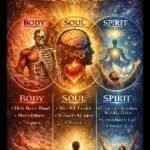 𝗧𝗛𝗘 𝗧𝗥𝗜𝗖𝗛𝗢𝗧𝗢𝗠𝗬 𝗢𝗙 𝗠𝗔𝗡
 𝗟𝗜𝗚𝗛𝗧 𝗦𝗛𝗜𝗡𝗘𝗦 𝗜𝗡 𝗧𝗛𝗘 𝗗𝗔𝗥𝗞𝗡𝗘𝗦𝗦
 𝗦𝗬𝗠𝗕𝗢𝗟𝗦 𝗢𝗙 𝗧𝗛𝗘 𝗪𝗢𝗥𝗗 𝗢𝗙 𝗚𝗢𝗗
 𝗧𝗛𝗘 𝗖𝗥𝗢𝗦𝗦: 𝗚𝗢𝗗’𝗦 𝗣𝗢𝗪𝗘𝗥 𝗙𝗢𝗥 𝗦𝗔𝗟𝗩𝗔𝗧𝗜𝗢𝗡
 𝗢𝗡𝗟𝗬 𝗢𝗡𝗘 𝗘𝗠𝗣𝗧𝗬 𝗧𝗢𝗠𝗕
 𝗧𝗛𝗘𝗥𝗘 𝗜𝗦 𝗣𝗢𝗪𝗘𝗥 𝗜𝗡 𝗧𝗛𝗘 𝗕𝗟𝗢𝗢𝗗 𝗢𝗙 𝗝𝗘𝗦𝗨𝗦 𝗖𝗛𝗥𝗜𝗦𝗧
 𝗛𝗢𝗪 𝗚𝗢𝗗 𝗗𝗘𝗖𝗟𝗔𝗥𝗘𝗦 𝗔 𝗦𝗜𝗡𝗡𝗘𝗥 𝗥𝗜𝗚𝗛𝗧𝗘𝗢𝗨𝗦
 𝗧𝗛𝗘 𝗦𝗪𝗢𝗥𝗗 𝗢𝗙 𝗧𝗛𝗘 𝗦𝗣𝗜𝗥𝗜𝗧 — 𝗧𝗛𝗘 𝗪𝗢𝗥𝗗 𝗢𝗙 𝗚𝗢𝗗
 𝗟𝗜𝗙𝗘 — 𝗧𝗛𝗘 𝗚𝗥𝗘𝗔𝗧 𝗘𝗧𝗘𝗥𝗡𝗔𝗟 𝗤𝗨𝗘𝗦𝗧𝗜𝗢𝗡
 𝗧𝗛𝗘 𝗙𝗜𝗡𝗔𝗟 𝗔𝗨𝗧𝗛𝗢𝗥𝗜𝗧𝗬 — 𝗧𝗛𝗘 𝗪𝗢𝗥𝗗 𝗢𝗙 𝗚𝗢𝗗
 𝗕𝗘𝗟𝗜𝗘𝗩𝗘𝗥’𝗦 𝗕𝗔𝗧𝗧𝗟𝗘𝗙𝗜𝗘𝗟𝗗 𝗢𝗙 𝗧𝗛𝗘 𝗠𝗜𝗡𝗗
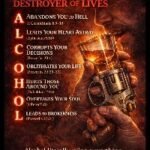 𝗔𝗟𝗖𝗢𝗛𝗢𝗟 — 𝗗𝗘𝗦𝗧𝗥𝗢𝗬𝗘𝗥 𝗢𝗙 𝗠𝗔𝗡𝗬 𝗟𝗜𝗩𝗘𝗦
 𝗧𝗛𝗘 𝗛𝗢𝗟𝗬 𝗧𝗥𝗜𝗡𝗜𝗧𝗬
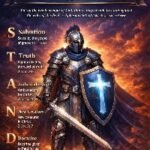 𝗧𝗛𝗘 𝗪𝗛𝗢𝗟𝗘 𝗔𝗥𝗠𝗢𝗥 𝗢𝗙 𝗚𝗢𝗗