In the rigorous field of forensic theology, the most common source of clinical anxiety among subjects is the conflation of judicial categories. To the untrained eye, the mention of a divine tribunal evokes a singular, terrifying image of universal reckoning. However, an investigative audit of the Pauline epistles, contrasted with the apocalyptic record of the Revelation, reveals a structural divergence so profound that to treat them as a single event is to commit a catastrophic error in “right division.” The forensic data suggests that the God of the Bible operates not through a monolithic day of wrath, but through distinct, calibrated evaluations that serve entirely different jurisdictional purposes. One proceedings is an internal family audit of service; the other is a final, external sentencing of rebellion. By isolating the variables of these two events—the Judgment Seat of Christ and the Great White Throne—the researcher can effectively dismantle the “fear of judgment” that plagues those who are legally exempt from condemnation. This necessitates a deep dive into the administrative epochs of God’s program, ensuring that the “promises of reward” for the saint are never confused with the “threats of retribution” for the lost.
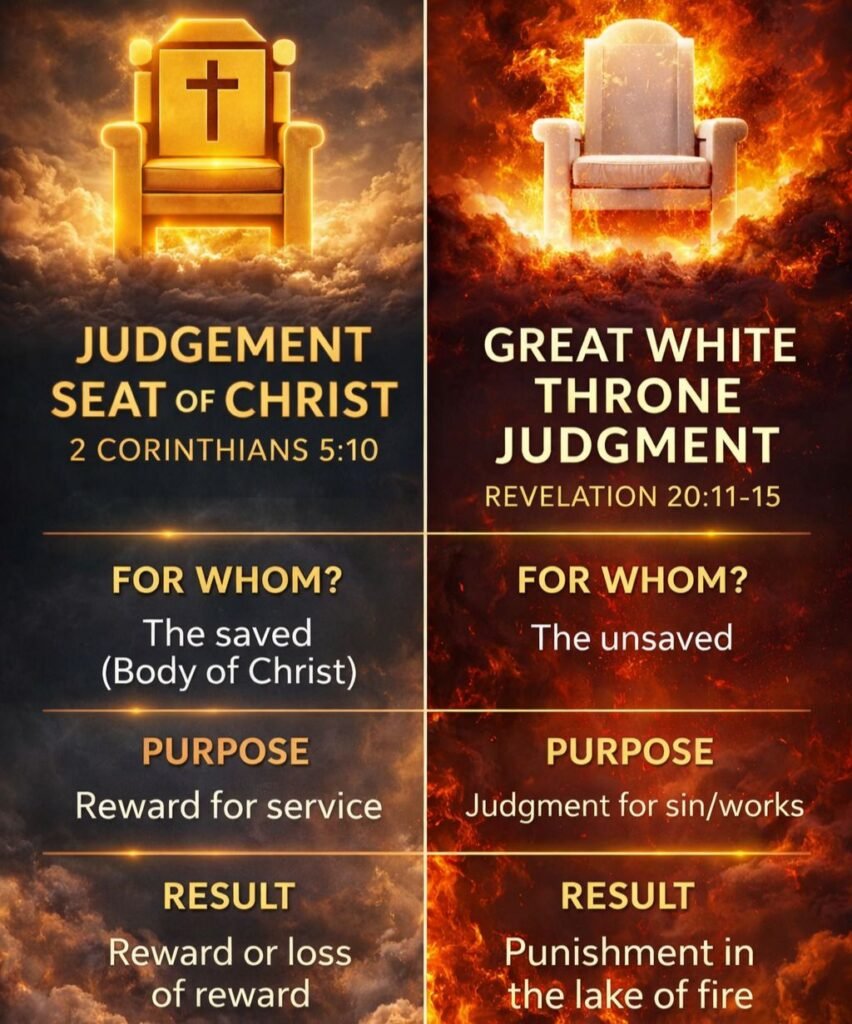
The first point of divergence in this investigation concerns the physical and administrative nature of the seats of power. In 2 Corinthians 5:10, the Apostle Paul identifies a specific location: the Bema seat, or the Judgment Seat of Christ. Historically, the Bema was not a place of criminal sentencing, but a raised platform in Greek cities where rewards were distributed to athletes and public servants. This is the Mercy Seat in its glorified, evaluative form. Conversely, Revelation 20:11 describes a “great white throne,” characterized by its stark, unapproachable majesty. The investigative record notes that from the presence of this second throne, “the earth and the heaven fled away.” The tone of the Bema seat is governed by Romans 8:1, which declares “no condemnation to them which are in Christ Jesus,” focusing on the distribution of “crowns” and “well done” commendations. The tone of the Great White Throne, however, is governed by the absolute standard of divine righteousness, where the absence of a legal mediator results in the conclusive sentence of the “second death.” One throne evaluates sons within a household; the other throne sentences fugitives outside of it. The investigative conclusion is that the Bema is an awards ceremony, while the White Throne is a courtroom of final appeal where the appeal has already been denied.
The second variable for forensic analysis is the target population of each proceedings. The investigation into Romans 8:1 and Ephesians 1:13 confirms that the population standing before the Judgment Seat of Christ consists exclusively of the “sealed” Body of Christ. These are individuals who have already been legally declared righteous through the imputation of Christ’s merit. They are saved saints appearing for a performance review. In stark contrast, the Great White Throne summons the “separated.” Revelation 20:12 records that “the dead, small and great” stand before God. According to the investigative framework of John 5:29, when rightly divided, this refers to the “resurrection of damnation.” No member of the Body of Christ is found in this second queue. The forensic evidence indicates that believers never stand where sinners are judged because their “sin debt” was legally liquidated at Calvary. The two populations are separated not by their behavior, but by their standing: the “In-Christed” versus the “In-Adam.” This distinction is the bedrock of dispensational security; if the saint could be found at the White Throne, the promise of the “sealed” spirit (Ephesians 4:30) would be a forensic nullity.
The timing of these events further separates them into distinct dispensational categories. The Judgment Seat of Christ is a post-Rapture phenomenon. 1 Thessalonians 4:17 suggests that after the Body of Christ is “caught up,” they enter a heavenly review period that precedes their return to earth with Christ. This occurs while the earth is undergoing a separate program. The Great White Throne, however, is the final reckoning of human history. Revelation 20:11 places this event subsequent to the Millennium—the thousand-year reign of Christ—and after the destruction of the current physical universe. The temporal gap between these two judgments is at least a millennium. The order of these judgments follows the precise order of God’s dispensational transitions. To mix the timing is to ignore the “administrative epochs” that define the Bible’s chronological architecture. The investigator notes that the Bema occurs in the heavenly places, while the White Throne occurs in a cosmic “nowhere” after the heavens have fled. This spatial and temporal gap proves they are not the same event.
Perhaps the most critical forensic distinction lies in the nature of the test administered at each throne. At the Judgment Seat of Christ, the test is one of service, not sin. 1 Corinthians 3:13 explicitly states, “Every man’s work shall be made manifest… and the fire shall try every man’s work of what sort it is.” The investigation reveals that the “sins” of the believer are not the subject of the inquiry, as they were already judged in the body of Jesus Christ (Romans 8:3). Instead, the Spirit evaluates stewardship—how the believer utilized the “grace” and “talents” provided after salvation. Romans 14:12 confirms, “So then every one of us shall give account of himself to God.” At the Great White Throne, however, the test is the record of sins. Revelation 20:12 notes that “the books were opened” and the dead were judged “according to their works.” Without the covering of Christ’s blood, these works are measured against the infinite standard of God’s holiness (Romans 3:19), a test that no natural man can pass. Believers have their works tested for quality; unbelievers have their lives judged for iniquity. The “books” at the White Throne are a ledger of debt; the “fire” at the Bema is a refiner of value.
The trial’s outcome—the “verdict phase”—differs fundamentally in its results. At the Bema Seat, the outcomes range from “reward” to “loss of reward,” but never “loss of soul.” 1 Corinthians 3:14–15 provides the investigative summary: “If any man’s work abide… he shall receive a reward. If any man’s work shall be burned, he shall suffer loss: but he himself shall be saved; yet so as by fire.” The forensic reality here is a “loss of potential glory,” not a “loss of position.” At the Great White Throne, the outcome is “retribution.” Revelation 20:15 records the chilling finality: “And whosoever was not found written in the book of life was cast into the lake of fire.” This is the consequence of rejecting the “gift of righteousness” (Rom 10:3). The Judgment Seat produces a variety of rewards (crowns); the Great White Throne produces a singular, eternal sentence. Loss of reward is a familial disappointment; loss of life is a judicial execution. The researcher must conclude that the “loss” suffered at the Bema is the regret of wasted opportunity, while the “loss” at the White Throne is the permanent forfeiture of existence in God’s presence.
The tone of the proceedings reflects the underlying relationship between the Judge and the judged. The investigative record of Romans 8:15 describes the believer’s relationship as “Abba, Father.” Therefore, the tone of the Judgment Seat is a “Family Review.” It is the assessment of a Father looking at the development of His sons. Forgiveness is already secured (Colossians 2:13), so the atmosphere is one of accountability within the context of absolute security. The Great White Throne, however, is a “Final Sentence” delivered by a Sovereign to rebels. The tone is fearful and conclusive. Revelation 20:14 describes it as the place where “death and hell” are finally dealt with. One judgment is corrective, aimed at perfecting the reward of the Body; the other is conclusive, aimed at purging the universe of unrighteousness. The investigator notes that at the Bema, the Judge is the “Head” of the Body, while at the White Throne, the Judge is the “King of Kings” sitting in absolute judicial isolation.
This divergence is rooted in the “Truth Principle” or the “Accounting Logic” governing each event. The Judgment Seat of Christ is a “Grace Accounting” system. Romans 6:14 declares that believers are “not under the law, but under grace.” Their salvation is a “gift-secured” status (Eph 2:8–9), so the evaluation focuses on their “profitability” in that grace. The Great White Throne is a “Law Accounting” system. Those who stand there have opted to be judged by their own merits, thereby subjecting themselves to the full weight of the Law. Revelation 20:12 shows that they are judged by “those things which were written in the books.” Because they rejected the Gospel (2 Thess 1:8), they face a judgment that grace never intended for them. Grace never judges the same sin twice: it was judged once on the Cross, and for the believer, that judgment is settled forever. The accounting at the Bema is in “heavenly currency” (rewards); the accounting at the White Throne is in “moral debt” (unpaid sins).
The investigation into the “Books” mentioned at the White Throne reveals a meticulous record of human memory, action, and motive. These represent the exhaustive data set of a life lived apart from God. For the individual standing there, every secret thought and every idle word is measured against the absolute light of God’s holiness. This confirms that human “goodness” is a forensic impossibility outside of Christ. The “Book of Life,” however, serves as the final check. It is not a record of works, but a register of names—specifically those who accepted the “substituted life” of Christ. The tragedy of the Great White Throne is that it is a judgment of those who insisted on their own “book of works” rather than God’s “Book of Life.” The researcher finds that the “Book of Life” is the only document that can override the “Books of Works.”
In contrast, the rewards at the Judgment Seat of Christ are described in the Pauline epistles through various “crowns”—the Crown of Righteousness (2 Tim 4:8), the Incorruptible Crown (1 Cor 9:25), the Crown of Rejoicing (1 Thess 2:19), and the Crown of Life (James 1:12). These are not just jewelry; they are “metabolic indicators” of how much the life of Christ was allowed to manifest in the believer’s experience. The investigation suggests that the greatest “reward” at the Bema Seat is the capacity to reflect the glory of Christ more fully in the ages to come. The loss suffered by the “unfaithful” believer is a loss of this “reflective capacity.” This provides a more nuanced understanding of “loss” that does not infringe upon the absolute security of the believer’s spirit. The rewards are functional, determining the “authority” and “utility” of the believer in the heavenly places.
A deeper analysis of the “Fire” at the Bema Seat is necessary for clarity. 1 Corinthians 3:13–15 uses “fire” as a metaphor for the holy scrutiny of Christ. This is not the fire of Gehenna, but the fire of “purity.” It consumes the “Wood, Hay, and Stubble”—religious activities done for the praise of men, out of the flesh, or without doctrinal accuracy. It preserves the “Gold, Silver, and Precious Stones”—service done through the Spirit, motivated by love for Christ, and aligned with Pauline truth. The forensic conclusion is that much of what is considered “ministry” today will not survive this fire. This realization should produce a shift from “quantity” of work to “quality” of work. It is better to have one “gold” action than a mountain of “stubble” that will be incinerated in a moment.
Furthermore, the “Motivation” for the believer to serve must be forensicly separated from the “fear of hell.” 2 Corinthians 5:11 says, “Knowing therefore the terror of the Lord, we persuade men.” In the context of the Judgment Seat, this “terror” (or awe/reverence) is for the unbeliever who will face the White Throne. For the believer, the motivation is 2 Corinthians 5:14: “For the love of Christ constraineth us.” We serve because we were bought, not because we are being threatened. The investigation highlights that a believer motivated by fear is a believer who has not “rightly divided” the two judgments. Fear paralyzes; love constrains. The Bema seat is the place where that love is celebrated and rewarded.
Finally, the investigative testimony of these two judgments serves a specific present-day purpose. For the believer, the reality of the Judgment Seat of Christ is the ultimate motivation for service. 2 Corinthians 5:9 says, “Wherefore we labour, that… we may be accepted of him.” This “acceptance” is not about salvation, but about “pleasing” the One who redeemed us. It produces a mindfulness of accountability that encourages holiness. For the unbeliever, the reality of the Great White Throne is a “Forensic Warning.” 2 Corinthians 6:2 pleads, “Behold, now is the day of salvation.” The message is proclaimed with urgency (1 Cor 15:1–4) because the “Great White Throne” is a preventable tragedy. The truth of these judgments is designed to produce “holiness” in the saint and “urgency” in the soul-winner. The “Certainty of Judgment” is a universal truth, but the “Nature of Judgment” is determined by one’s relationship to the Cross.
The investigative conclusion is absolute: there are two thrones and two judgments, and they must never be confused. One is for reward; one is for wrath. Believers, being “in Christ,” will never face the Great White Throne of condemnation. Unbelievers, being “without Christ,” will never stand at the Bema Seat of reward. Romans 8:1 stands as the definitive forensic shield for the Body of Christ. The confusion between these two events is a primary cause of “spiritual malnutrition” and “identity amnesia.” When the believer rightly divides the Word of truth, they find that their future is not a terrifying uncertainty, but a glorious opportunity to present the fruits of their service to the Lord who gave His life for them. The researcher concludes that “Right Division” is the only cure for “Judicial Anxiety.”
The call to action for the reader is to “Rest” in the finished work of Christ. If you are a believer, your judgment for sin is behind you—it took place 2,000 years ago on a hill called Calvary. Your future judgment is a “Performance Review” for the purpose of reward. Therefore, serve faithfully, not fearfully. Rightly divide the truth of these two judgments so you are not “tossed to and fro” by the winds of religious tradition. To the unbeliever, the call is one of urgent “Belief.” The Great White Throne is a judicial certainty for all who remain “in Adam.” However, mercy is offered now, before the court is called into session. Don’t wait for the “books” to be opened; accept the “Book of Life” today.
As the forensic audit of the Two Thrones concludes, the overarching theme is the “Certainty of Grace.” God has provided a way for man to bypass the throne of wrath and stand at the throne of reward. This way is the “Gospel of the Grace of God” (Acts 20:24). The investigator’s final thoughts rest on the staggering reality that the Judge of all the earth is also the Savior of all who believe. In the dispensation of grace, “Now is the time.” Tomorrow, the thrones will be set, and the books will be opened. Ensure today that your name is in the right book and your feet are on the right path. Walk worthy of the One who stood in your place of judgment so that you could one day stand in His place of glory.
The evidence is clear: Two thrones, two judgments, two outcomes. One for reward, one for wrath. Salvation is secure in Christ; service will be tested for the saint; sin will be judged for the lost. Grace removes the fear of the future, replacing it with a “blessed hope” (Titus 2:13). The Bema seat is a destination for the faithful, while the White Throne is a destination for the faithless. The researcher signs off with a final word of assurance: if you are in Christ, the only “fire” you will ever face is the one that burns away the “stubble” to reveal the “gold.”
Related posts:
 𝗚𝗢𝗗 𝗔𝗡𝗗 𝗠𝗔𝗡: 𝗥𝗜𝗚𝗛𝗧𝗟𝗬 𝗗𝗜𝗩𝗜𝗗𝗘𝗗 𝗗𝗘𝗦𝗜𝗚𝗡
 𝗕𝗘𝗪𝗔𝗥𝗘: 𝗦𝗔𝗧𝗔𝗡 𝗕𝗔𝗜𝗧𝗦 𝗛𝗜𝗦 𝗛𝗢𝗢𝗞 𝗪𝗜𝗧𝗛 𝗬𝗢𝗨𝗥 𝗙𝗔𝗩𝗢𝗥𝗜𝗧𝗘 𝗦𝗜𝗡
 𝗪𝗛𝗢 𝗦𝗔𝗬𝗦 𝗝𝗘𝗦𝗨𝗦 𝗖𝗛𝗥𝗜𝗦𝗧 𝗜𝗦 𝗚𝗢𝗗?
 𝗔𝗟𝗖𝗢𝗛𝗢𝗟 — 𝗗𝗘𝗦𝗧𝗥𝗢𝗬𝗘𝗥 𝗢𝗙 𝗠𝗔𝗡𝗬 𝗟𝗜𝗩𝗘𝗦
 𝗧𝗛𝗘𝗥𝗘 𝗜𝗦 𝗣𝗢𝗪𝗘𝗥 𝗜𝗡 𝗧𝗛𝗘 𝗕𝗟𝗢𝗢𝗗 𝗢𝗙 𝗝𝗘𝗦𝗨𝗦 𝗖𝗛𝗥𝗜𝗦𝗧
 𝗦𝗢𝗢𝗡𝗘𝗥 𝗧𝗛𝗔𝗡 𝗪𝗘 𝗧𝗛𝗜𝗡𝗞
 𝗧𝗛𝗘 𝗕𝗥𝗔𝗜𝗡 𝗠𝗨𝗦𝗧 𝗕𝗘 𝗪𝗔𝗧𝗘𝗥𝗘𝗗 𝗪𝗜𝗧𝗛 𝗧𝗛𝗘 𝗪𝗢𝗥𝗗 𝗢𝗙 𝗚𝗢𝗗 𝗗𝗔𝗜𝗟𝗬
 𝗧𝗛𝗘 𝗖𝗥𝗢𝗦𝗦: 𝗚𝗢𝗗’𝗦 𝗣𝗢𝗪𝗘𝗥 𝗙𝗢𝗥 𝗦𝗔𝗟𝗩𝗔𝗧𝗜𝗢𝗡
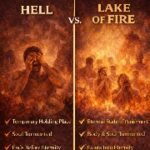 𝗛𝗘𝗟𝗟 𝘃𝘀. 𝗟𝗔𝗞𝗘 𝗢𝗙 𝗙𝗜𝗥𝗘
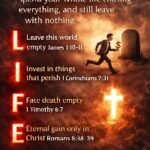 𝗟𝗜𝗙𝗘 — 𝗧𝗛𝗘 𝗚𝗥𝗘𝗔𝗧 𝗘𝗧𝗘𝗥𝗡𝗔𝗟 𝗤𝗨𝗘𝗦𝗧𝗜𝗢𝗡
 𝗝𝗨𝗗𝗚𝗠𝗘𝗡𝗧 𝗦𝗘𝗔𝗧 𝗢𝗙 𝗖𝗛𝗥𝗜𝗦𝗧 𝘃𝘀. 𝗚𝗥𝗘𝗔𝗧 𝗪𝗛𝗜𝗧𝗘 𝗧𝗛𝗥𝗢𝗡𝗘 𝗝𝗨𝗗𝗚𝗠𝗘𝗡𝗧
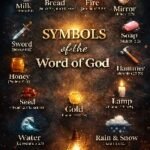 𝗦𝗬𝗠𝗕𝗢𝗟𝗦 𝗢𝗙 𝗧𝗛𝗘 𝗪𝗢𝗥𝗗 𝗢𝗙 𝗚𝗢𝗗
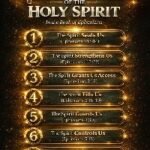 𝗧𝗛𝗘 𝟳 𝗕𝗟𝗘𝗦𝗦𝗜𝗡𝗚𝗦 𝗢𝗙 𝗧𝗛𝗘 𝗛𝗢𝗟𝗬 𝗦𝗣𝗜𝗥𝗜𝗧
 𝗧𝗛𝗘 𝗥𝗘𝗩𝗘𝗟𝗔𝗧𝗜𝗢𝗡 𝗢𝗙 𝗧𝗛𝗘 𝗧𝗥𝗜𝗡𝗜𝗧𝗬