
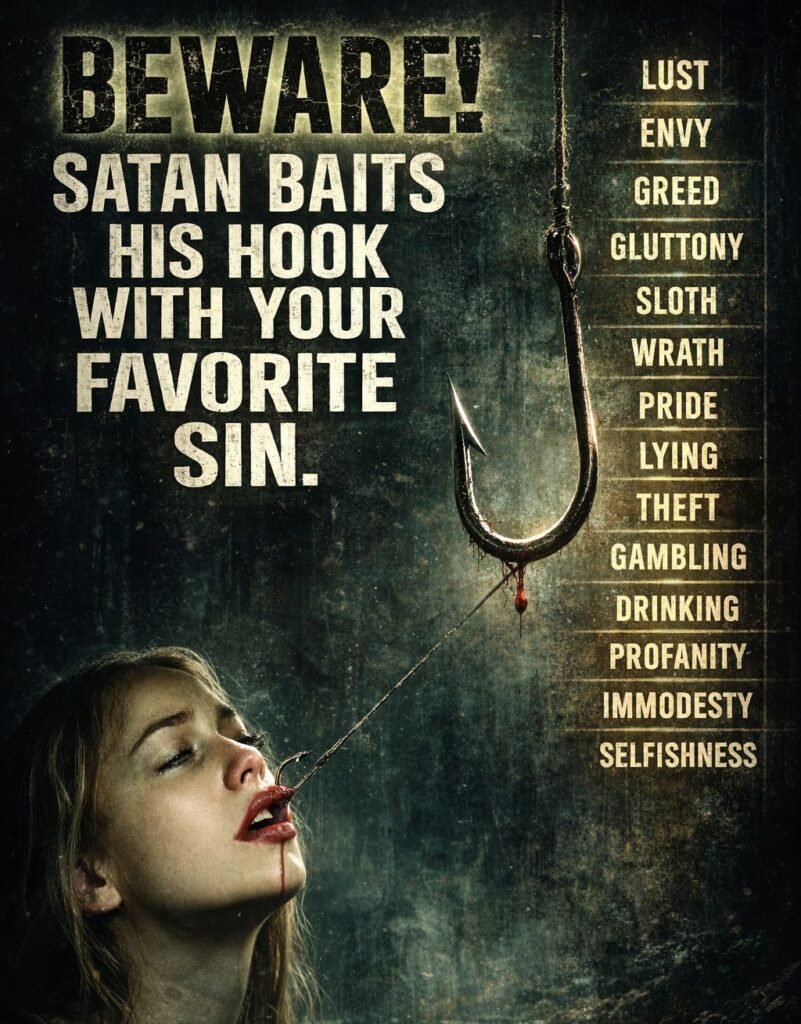
In the anatomical study of spiritual failure, the most recurring data point is not an overt display of malevolence, but a sophisticated, custom-tailored lure. Forensic analysis of the Pauline corpus, specifically 2 Corinthians 2:11, warns that the primary adversary operates through a system of “devices” or “schemes” rather than brute force. For the believer living under the dispensation of grace, the investigative challenge lies in recognizing that the “hook” is rarely a threat; it is almost always an invitation. This report examines the mechanics of spiritual deception, identifying how personal predilections are weaponized against the Body of Christ. By investigating the structural design of temptation, we find that the adversary is a master of “right division” in a perverse sense—carefully dividing the believer’s attention from their identity in Christ to their individual appetites. Understanding this requires a forensic look at the “wiles” of the devil, which are not designed to destroy salvation, but to paralyze the believer’s walk and utility within the grace-age program.
The strategy employed by the adversary is characterized by surgical precision. In Ephesians 6:11, Paul uses the Greek term methodeia, from which we derive the word “method.” This indicates a systematic, calculated approach. The investigation reveals that these methods are never random. Satanic strategy relies on subtle devices—microscopic compromises that do not immediately appear as rebellion. Because the believer is “sealed” (Ephesians 1:13), the adversary knows he cannot revoke the spirit’s security; therefore, he focuses his resources on the soul and the body. These selective targets are identified through long-term observation of a person’s vulnerabilities. Like a hunter tracking prey, the adversary monitors strategic timing, waiting for “convenient seasons” when the believer is physically exhausted, emotionally drained, or doctrinally negligent. This calculated patience is what makes the bait so effective; it appears exactly when the resistance is lowest.
The sequence of entrapment follows a predictable clinical path: bait precedes bondage. In James 1:14, the investigative record shows that every individual is “drawn away of his own lust, and enticed.” The bait is specifically designed to harmonize with existing desires, creating a feedback loop between the lure and the internal craving. This is the “deception of delight.” The lure is invariably beautiful in appearance; as Proverbs 14:12 notes, it “seemeth right unto a man.” It promises an shortcut to satisfaction or a temporary relief from the pressures of life. However, the forensic reality of Romans 6:16 is that we become “servants to whom we obey.” What starts as a choice to nibble at the bait evolves into a binding result of spiritual enslavement. The hook is hidden within the pleasure, and the weight of the bondage is only felt once the lure has been swallowed. The investigative researcher must acknowledge that the “pleasure” of sin is a physiological reality, but its “permanence” is a theological lie.
A primary investigative focus must be placed on the “favorite flesh”—the specific, recurring weaknesses that Paul describes as the “sin which doth so easily beset us” (Hebrews 12:1). The adversary does not waste time with lures that do not appeal to the individual’s history or personality. He studies familiar patterns of behavior. In Romans 7:18, Paul acknowledges that “in me (that is, in my flesh,) dwelleth no good thing.” This “flesh” is a vestigial system of the “old man” that remains biologically present after the spirit is saved. The investigation suggests that Satanic strategy involves agitating the conflict between the flesh and the Spirit (Galatians 5:17). Frequent temptations are directed at the believer’s most habituated failures, creating a sense of fast entrapment. The goal is to convince the believer that their “favorite sin” is an essential part of their identity, thereby making the hook feel like a natural part of their existence. This personalization of the bait is what distinguishes a skilled spiritual adversary from mere circumstantial difficulty.
The deception of delight is further reinforced by the promise of impermanence without consequence. In 2 Thessalonians 2:10, we see the “deceivableness of unrighteousness.” Sin offers “pleasures… for a season” (Hebrews 11:25), but it never advertises its expiration date. This produces a distorted thinking process where the believer begins to rationalize compromise. Romans 1:21 describes this as becoming “vain in their imaginations,” where the darkened understanding (Ephesians 4:18) prevents a clear view of the “end of those things” which is death. This investigative finding highlights that the primary damage of the “hook” is the deadening effect it has on spiritual perception. The more the mind dwells on the delight of the bait, the less it is able to perceive the danger of the hook. This is a form of spiritual anesthesia, where the “wound” of sin is not felt until the “poison” of the consequence has already entered the system. The researcher notes that “vanity of mind” is the ultimate byproduct of taking the bait, leading to a life that is busy but spiritually hollow.
If the bait is ignored and the hook is taken repeatedly, the forensic result is a hardening of the heart. Hebrews 3:13 warns of the “deceitfulness of sin” which leads to a loss of sensitivity. The investigative data shows that repeated exposure to “favorite sins” results in reduced hearing; the spiritual ears become “dull” (Matthew 13:15). Holiness is no longer seen as a high calling but as a restrictive burden, leading to a resistance of the very “sanctification” Paul describes in 1 Thessalonians 4:7. This hardening is not a sudden petrification but a slow, layered accumulation of callousness. The heart becomes “seared” like a cauterized nerve, unable to respond to the gentle conviction of the Spirit. Once the heart is hardened, the adversary no longer needs to hide the hook; the victim is so thoroughly deceived that they will fight to keep the hook in place. This state of “past feeling” (Ephesians 4:19) is the ultimate goal of the adversary’s long-term strategy.
Captivity by compromise is the inevitable endgame of the adversary’s strategy. Romans 6:12–13 provides the legal framework for this: “Let not sin therefore reign in your mortal body.” Compromise begins when a believer yields their “members”—their eyes, their hands, their minds—to be used as “instruments of unrighteousness.” The investigation reveals that compromise is never stationary; it is a progressive surrender of territory. This leads to a conflicted walk where the believer is “devouring” themselves and others through guilt and hypocrisy (Galatians 5:15). The “freedom” promised by the bait is revealed to be a prison of control. The believer who once stood fast in liberty finds themselves entangled again with the “yoke of bondage” (Galatians 5:1), not because they lost their salvation, but because they lost their self-control. This “entanglement” is a specialized form of spiritual paralysis where the believer is present in the Body of Christ but functionally useless to the Head.
A significant investigative finding is that Satan often baits the hook with a misunderstanding of grace itself. Romans 6:1–2 addresses the common rationalization: “Shall we continue in sin, that grace may abound?” The adversary suggests that because the believer is under grace and eternally secure, sin is no longer consequential. This is a forensic falsehood. Grace is not a license to indulge the flesh; it is the power to deny it. Romans 6:14 clarifies that “sin shall not have dominion over you: for ye are not under the law, but under grace.” True grace-age teaching, as documented in Titus 2:11–12, actually “teaches” the believer to deny ungodliness and worldly lusts. When grace is misunderstood as permission, the “hook” is swallowed under the guise of “liberty.” The investigator must conclude that any doctrine of grace that encourages sin is not the Pauline gospel, but a “device” of the devil designed to discredit the name of Christ and quench the Spirit’s influence in the community.
Resistance to the bait is won through renewal, not merely through willpower. Romans 12:2 provides the restorative blueprint: “Be ye transformed by the renewing of your mind.” The investigation into Pauline victory shows that the battlefield is cognitive. Victory is won in the mind before it is ever tested in the moment. This involves renewed thinking—replacing the “vain imaginations” with the “mind of Christ.” It requires the rejection of lies by “casting down” every high thing that exalts itself against the knowledge of God (2 Corinthians 10:5). The methodology for this renewal is the replacement of desires; by setting “affection on things above” (Colossians 3:2), the bait of the earth loses its gravitational pull. A mind saturated with the “strong meat” of doctrine is a mind that is no longer “ignorant of his devices.” This “metabolic” process of thought replacement is the only sustainable way to resist the adversary’s customized lures.
To deepen the investigation, we must examine the specific Greek term noema in 2 Corinthians 2:11, often translated as “devices.” It literally refers to “thoughts” or “mental schemes.” This indicates that the adversary’s primary theater of operations is the believer’s thought life. He injects “thoughts” that appear to be our own, but are actually “bait” designed to lead us toward the hook of sin. The researcher finds that these thoughts often center on self-pity, self-justification, or self-gratification. By recognizing the source of these thoughts through the lens of Pauline doctrine, the believer can perform a “cognitive interception.” This involves questioning the validity of the thought against the objective truth of our position in Christ. If the thought encourages the flesh, it is bait. If it encourages the Spirit, it is truth. This investigative discernment is the first line of defense in the spiritual war.
The role of “convenient seasons” in Satanic timing must also be forensicly analyzed. In the narrative of Christ’s temptation (Luke 4:13), the devil departed for a “season.” This implies that the adversary is a student of human cycles. He waits for the “low tide” of spiritual discipline. The investigative data suggests that a believer is most vulnerable following a significant spiritual victory or during a period of prolonged monotony. Monotony leads to a “thirst” for excitement, which the adversary is happy to quench with a baited hook. Conversely, after a victory, a believer may lower their “shield of faith,” assuming the battle is over. The investigation highlights that the “wiles of the devil” are most effective when they are least expected. Therefore, the “standing fast” mentioned in Galatians 5:1 is a perpetual state, not a temporary stance.
Furthermore, the “Binding” nature of sin is not merely spiritual; it is often neurological. The investigative focus on “favorite sins” reveals that these behaviors create deep grooves in the brain’s reward system. Each time a believer takes the bait, they reinforce a neural pathway that makes the next temptation harder to resist. This is why Paul speaks of being “servants” to sin. However, the Pauline solution of “renewal” leverages the brain’s own plasticity. By “watering” the brain with the Word daily, the believer is literally building new pathways that eventually bypass the old, “baited” routes. This is not “behavior modification” through effort; it is “spiritual renovation” through truth. The investigator concludes that the only way to break the binding power of the hook is to starve the old pathways and saturate the new ones with the “water of the word.”
The “Deception of Delight” also utilizes the social environment to validate the bait. In Ephesians 2:2, Paul speaks of walking “according to the course of this world.” The adversary uses the cultural consensus to make the bait look normal and the hook look non-existent. If everyone else is nibbling, the believer feels “enticed” to do the same. This investigative finding suggests that the “Body of Christ” serves as a critical defensive perimeter. By “exhorting one another daily” (Hebrews 3:13), believers provide the “reality check” needed to see the hook that the world has hidden. When a believer is isolated, they are much more likely to fall for the deception of delight. The community of grace serves as an “early warning system” against the adversary’s schemes, provided that community is grounded in sound Pauline doctrine.
The final investigative conclusion is that victory is a settled fact in Christ. 1 Corinthians 15:57 declares that God “giveth us the victory through our Lord Jesus Christ.” The believer does not fight for a position of victory; they fight from a position of victory. Colossians 2:15 records that Christ already “spoiled principalities and powers,” triumphing over them. The application of this victory occurs as the believer “mortifies” (puts to death) the deeds of the body through the Spirit (Romans 8:13). This is not an act of human strength but a realization of Christ’s life within the believer. Galatians 2:20 summarizes the sustained victory: “Christ liveth in me.” The bait loses its power when the believer realizes that the “old man” who wanted the bait is dead, and the “new man” has a nature that finds the hook repulsive. The investigator notes that the “new man” cannot be hooked, but the “flesh” can still be baited. The goal is to live consistently from the new nature.
In summary, the adversary’s strategy of baiting hooks with “favorite sins” is a sophisticated, psychological, and persistent effort to neutralize the Body of Christ. The investigation has shown that sin is always baited before it is binding, and it promises pleasure while delivering a darkened understanding and a hardened heart. However, the Pauline revelation provides a complete defense. By rightly dividing the truth about grace, renewal, and identity, the believer can recognize the “devices” of the devil before they take the bait. The “hook” only works on a mind that is disconnected from its citizenship in heaven. The investigator’s final thoughts remain fixed on the sufficiency of Christ: the bait is a lie, the hook is a trap, but the Savior is the Truth that makes us free. The Dispensation of Grace is the context in which we are empowered to see through the “wiles” and stand firm in our vocation.
The call to action for the reader is one of forensic self-examination. Identify the bait in your own life—the specific recurring lures that appeal to your personal flesh. Believe the truth of your identification with Christ’s death and resurrection. Yield your members to Him as instruments of righteousness, and walk in the liberty that grace provides. Do not play with the hook. Do not rationalize the nibble. Run to the Savior, not out of fear of losing your spirit, but out of a desire to walk worthy of the vocation wherewith you are called. Victory is not a future goal; it is a present reality for those who “stand fast” in the finished work of Christ. The “Rightly Divided Design” ensures that you have both the knowledge of the adversary’s methods and the power of the Spirit’s life.
The evidence is clear: Satan is a fisherman of the soul, but Christ is the Architect of the Spirit. The bait may be attractive, but the hook is always lethal to your peace and your service. Beware the “favorite sin,” for it is the most dangerous lure in the adversary’s tackle box. Rely on the “washing of water by the word” to keep your mind clear and your heart soft. In the dispensation of grace, we are not left defenseless; we are armed with the “whole armor of God” and led by the “Spirit of life.” Walk worthy, walk wise, and walk free. The investigation into the “devices” of the devil concludes with a final warning: the most dangerous bait is the one that looks the most like your own desires. Guard your heart with all diligence, for out of it are the issues of life—and into it, the adversary is always casting his hook.
As a final forensic note, consider the “Mastery” mentioned in 2 Corinthians 10:5. This is not a mastery over the devil, but a mastery over the “thoughts.” By bringing every thought into captivity, the believer renders the “bait” ineffective. If the thought is captured and evaluated, the hook is exposed. This investigative report affirms that the “renewing of the mind” is not an optional spiritual luxury, but a mandatory survival skill in the current age. The brain must be watered, the armor must be worn, and the bait must be avoided. To God be the glory for providing the “way of escape” through the revelation of the Mystery. The hook has no power over the one who knows they are already complete in Christ.
Related posts:
 𝗚𝗢𝗗 𝗔𝗡𝗗 𝗠𝗔𝗡: 𝗥𝗜𝗚𝗛𝗧𝗟𝗬 𝗗𝗜𝗩𝗜𝗗𝗘𝗗 𝗗𝗘𝗦𝗜𝗚𝗡
 𝗧𝗛𝗘 𝗕𝗥𝗔𝗜𝗡 𝗠𝗨𝗦𝗧 𝗕𝗘 𝗪𝗔𝗧𝗘𝗥𝗘𝗗 𝗪𝗜𝗧𝗛 𝗧𝗛𝗘 𝗪𝗢𝗥𝗗 𝗢𝗙 𝗚𝗢𝗗 𝗗𝗔𝗜𝗟𝗬
 𝗕𝗘𝗟𝗜𝗘𝗩𝗘𝗥’𝗦 𝗕𝗔𝗧𝗧𝗟𝗘𝗙𝗜𝗘𝗟𝗗 𝗢𝗙 𝗧𝗛𝗘 𝗠𝗜𝗡𝗗
 𝗧𝗛𝗘 𝟳 𝗕𝗟𝗘𝗦𝗦𝗜𝗡𝗚𝗦 𝗢𝗙 𝗧𝗛𝗘 𝗛𝗢𝗟𝗬 𝗦𝗣𝗜𝗥𝗜𝗧
 𝗔𝗟𝗖𝗢𝗛𝗢𝗟 — 𝗗𝗘𝗦𝗧𝗥𝗢𝗬𝗘𝗥 𝗢𝗙 𝗠𝗔𝗡𝗬 𝗟𝗜𝗩𝗘𝗦
 𝗧𝗛𝗘𝗥𝗘 𝗜𝗦 𝗣𝗢𝗪𝗘𝗥 𝗜𝗡 𝗧𝗛𝗘 𝗕𝗟𝗢𝗢𝗗 𝗢𝗙 𝗝𝗘𝗦𝗨𝗦 𝗖𝗛𝗥𝗜𝗦𝗧
 𝗧𝗛𝗘 𝗧𝗥𝗜𝗖𝗛𝗢𝗧𝗢𝗠𝗬 𝗢𝗙 𝗠𝗔𝗡
 𝗧𝗛𝗘 𝗖𝗛𝗥𝗜𝗦𝗧𝗜𝗔𝗡 𝗪𝗔𝗥𝗥𝗜𝗢𝗥
 𝗧𝗛𝗘 𝗖𝗥𝗢𝗦𝗦: 𝗚𝗢𝗗’𝗦 𝗣𝗢𝗪𝗘𝗥 𝗙𝗢𝗥 𝗦𝗔𝗟𝗩𝗔𝗧𝗜𝗢𝗡
 𝗪𝗛𝗔𝗧 𝗔𝗥𝗘 𝗬𝗢𝗨 𝗙𝗘𝗘𝗗𝗜𝗡𝗚 𝗬𝗢𝗨𝗥 𝗠𝗜𝗡𝗗? — 𝗪𝗢𝗥𝗟𝗗 𝗼𝗿 𝗪𝗢𝗥𝗗
 𝗧𝗛𝗘 𝗥𝗘𝗩𝗘𝗟𝗔𝗧𝗜𝗢𝗡 𝗢𝗙 𝗧𝗛𝗘 𝗧𝗥𝗜𝗡𝗜𝗧𝗬
 𝗟𝗜𝗚𝗛𝗧 𝗦𝗛𝗜𝗡𝗘𝗦 𝗜𝗡 𝗧𝗛𝗘 𝗗𝗔𝗥𝗞𝗡𝗘𝗦𝗦
 𝗪𝗘 𝗦𝗘𝗘 𝗧𝗛𝗘 𝗪𝗢𝗥𝗟𝗗 𝗧𝗛𝗥𝗢𝗨𝗚𝗛 𝗗𝗜𝗙𝗙𝗘𝗥𝗘𝗡𝗧 𝗟𝗘𝗡𝗦𝗘𝗦
 𝗧𝗛𝗘 𝗦𝗪𝗢𝗥𝗗 𝗢𝗙 𝗧𝗛𝗘 𝗦𝗣𝗜𝗥𝗜𝗧 — 𝗧𝗛𝗘 𝗪𝗢𝗥𝗗 𝗢𝗙 𝗚𝗢𝗗