Pastor vs. Bishop vs. Elder: Understanding Church Leadership in the Dispensation of Grace
Confusion about church leadership is not a modern problem, but it has certainly been amplified in the modern age. Across denominations, movements, and independent fellowships, Christians regularly encounter a maze of titles—pastor, bishop, elder, overseer, minister, reverend—each carrying expectations shaped more by tradition and culture than by Scripture. For many believers, this confusion leads either to unhealthy submission to authority or to total distrust of leadership altogether.
The problem does not lie in Scripture’s silence. On the contrary, the New Testament—particularly the epistles of the apostle Paul—speaks clearly about leadership within the Church. The difficulty arises when believers fail to recognize that church leadership today must be understood within the Dispensation of Grace and according to Pauline revelation, not through the lens of Israel’s priesthood, Old Testament kingship, or later ecclesiastical hierarchies.
Paul’s doctrine dismantles the idea that leadership exists to rule, dominate, or mediate between God and His people. Instead, leadership in the Body of Christ is functional, doctrinal, and relational. It exists for the benefit of the saints, not for the elevation of leaders. Titles describe responsibilities, not rank. Authority flows from truth, not position.
To rightly understand the roles of pastor, bishop, and elder, one must first understand why leadership exists at all in the Church today.
Leadership as God Intended It
Paul’s letter to the Ephesians provides the clearest framework for understanding church leadership in this age. When he writes that Christ “gave some, pastors and teachers,” he immediately clarifies their purpose: the perfecting of the saints, the work of the ministry, and the edifying of the Body of Christ. Leadership is presented not as control, but as provision. Not as domination, but as service.
This alone dismantles much of what modern Christianity assumes about authority. Leaders are not given to replace Christ’s headship. They are given to help believers grow into spiritual maturity. Their task is not to centralize power, but to distribute understanding. Their success is measured not by personal influence, but by the spiritual stability of the people they serve.
Paul reinforces this truth in his correspondence with the Corinthians, where he rebukes factionalism and personality-driven loyalty. He reminds them that leaders are merely servants through whom God works, and that God alone gives the increase. When leadership is elevated beyond this role, the Church inevitably drifts into imbalance.
Understanding this foundational purpose is essential before examining specific leadership roles. Without it, pastors become celebrities, bishops become executives, and elders become administrators—none of which reflect the biblical model.
The Pastor: Shepherding the Local Assembly
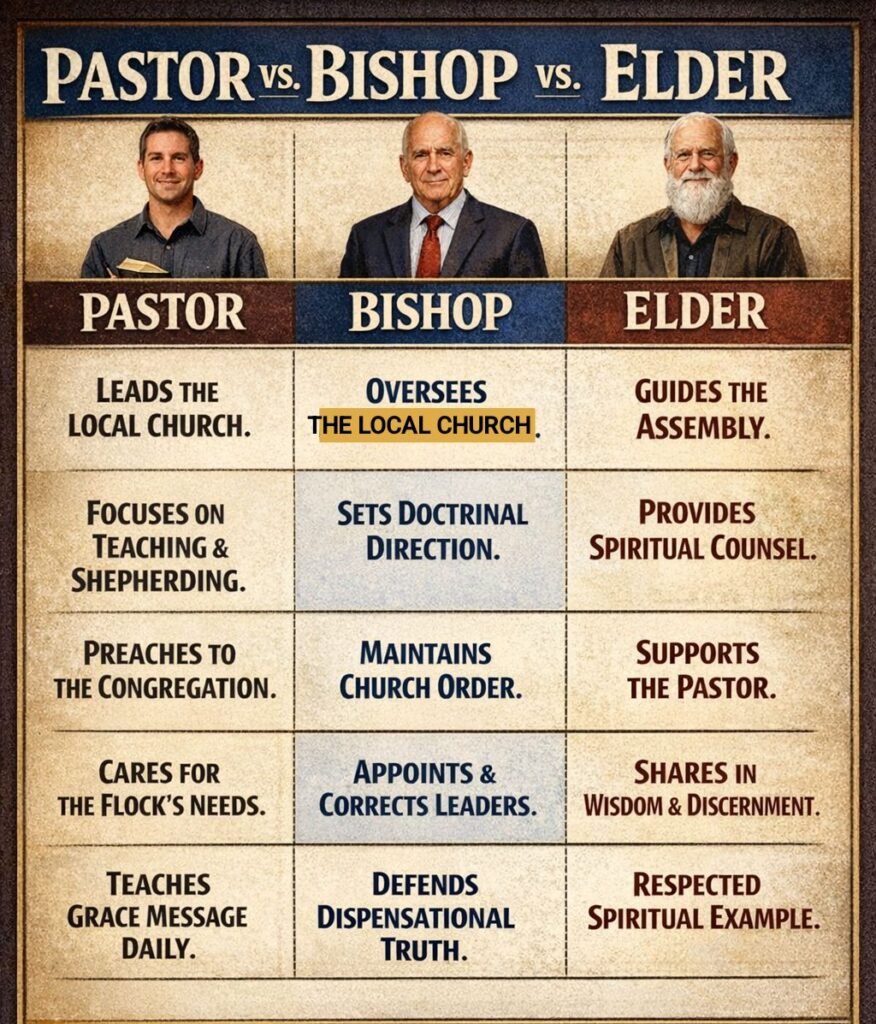
The pastoral role is one of the most visible expressions of leadership in the Church today, and consequently, one of the most distorted. In many modern settings, the pastor is expected to function as a chief executive officer, visionary strategist, public communicator, and organizational manager. While administrative skills may be useful, they are not what Scripture emphasizes.
Biblically, the pastor is a shepherd. The imagery is deliberate and deeply instructive. Shepherding involves feeding, guiding, protecting, and caring for sheep—creatures that are dependent, vulnerable, and prone to wandering. Paul’s instruction to pastors centers on teaching the Word, guarding doctrine, and nurturing spiritual growth.
A pastor’s primary responsibility is doctrinal. Paul repeatedly urged Timothy to give himself to reading, exhortation, and doctrine, warning him that neglecting sound teaching would endanger both himself and those who heard him. This emphasis is especially critical in the Dispensation of Grace, where false doctrine often masquerades as biblical truth by blending law and grace.
Pastoral ministry is not about motivational speaking or emotional stimulation. It is about instruction rooted in rightly divided Scripture. Believers cannot walk in grace if they are not taught grace. They cannot stand firm if they are not grounded in truth.
Beyond teaching, the pastor’s role is relational. He is called to know the flock, to care for individuals, and to guide the assembly with patience and compassion. Authority in pastoral ministry is earned through faithfulness, humility, and consistency—not demanded through title or position.
When pastors function biblically, they do not draw attention to themselves. They point believers to Christ, equip them to serve, and foster an environment where growth happens organically through truth.
The Bishop: Oversight With Accountability
The term bishop has accumulated centuries of institutional baggage. In many traditions, it conjures images of hierarchical power, ecclesiastical rank, and administrative control. However, Paul’s use of the term is far simpler and far more practical.
A bishop, in Scripture, is an overseer. The emphasis is on responsibility, not superiority. Oversight involves guarding doctrine, maintaining order, and ensuring that leadership itself remains accountable. Paul’s qualifications for a bishop focus almost entirely on character and doctrinal soundness, not influence, charisma, or organizational skill.
Oversight is necessary because the Church exists in a fallen world. False doctrine arises. Conflicts emerge. Leaders themselves are not immune to error. Paul understood this and provided clear instruction on how leadership should be corrected and disciplined when necessary.
Importantly, biblical oversight is never authoritarian. A bishop does not rule over the assembly as a monarch. He functions under Christ’s authority and in service to the Body. His role is preventative and protective, not punitive.
In assemblies where oversight is absent, chaos eventually follows. In assemblies where oversight becomes domination, spiritual damage occurs. The Pauline balance preserves both truth and freedom.
The Elder: Mature Guidance Through Example
Elders occupy a quieter, but equally vital, role in the Church. Rather than emphasizing public leadership or formal authority, Scripture presents elders as mature believers whose lives demonstrate consistency, stability, and wisdom.
Eldership is not primarily about appointment; it is about recognition. Paul’s instructions regarding elders highlight age, sobriety, soundness in faith, and proven character. These qualities develop over time through faithful walking, not through ambition.
Elders provide counsel, support pastoral leadership, and help guide the assembly through experience rather than command. Their influence flows from example. They are respected because they have lived what they believe.
In an era obsessed with visibility and platform, the elder’s role serves as a corrective reminder that spiritual influence does not require prominence. Quiet faithfulness often shapes the Church more deeply than public leadership.
Overlapping Roles, Unified Purpose
One of the most important observations in the New Testament is how fluid the functions of pastor, bishop, and elder often are. In several passages, these roles are addressed interchangeably, revealing that Scripture emphasizes function over title.
When Paul summoned the elders of Ephesus, he referred to them as overseers who were to shepherd the flock. In a single context, elder, bishop, and pastoral language are combined. This is not confusion—it is intentional simplicity.
The Church was never designed to operate under a single dominant leader. The Pauline pattern reflects plural leadership with shared responsibility and unified doctrine. This structure promotes accountability, prevents abuse, and reflects the cooperative nature of the Body of Christ.
Different roles exist, but they serve the same gospel, the same Lord, and the same Body.
No Clergy Class in the Body of Christ
Perhaps the most radical implication of Paul’s teaching on leadership is the dismantling of a clergy-laity divide. In the Dispensation of Grace, every believer is complete in Christ, indwelt by the Spirit, and granted direct access to God.
Leaders do not mediate grace. They do not dispense forgiveness. They do not possess a higher spiritual status. They serve within the Body, not above it.
Paul’s rebuke of Corinthian divisions underscores this truth powerfully. When believers align themselves with personalities, they lose sight of Christ’s headship. When leaders accept such alignment, they become obstacles rather than servants.
Christ alone is the Head of the Church. All others—pastors, bishops, elders—are members of the Body, accountable to Him and to the truth of His Word.
Leadership in the Dispensation of Grace
Understanding church leadership rightly requires understanding the age in which we live. This is not Israel under the law. There is no priesthood, no temple hierarchy, no theocratic structure. The Church operates under grace, not commandment; under truth, not ritual.
Leadership today is exercised through teaching, shepherding, oversight, and example. Its authority is doctrinal, not ceremonial. Its success is measured in edification, not expansion.
When leadership functions according to Pauline truth, the Church grows strong, stable, and discerning. When leadership imports systems from Israel, tradition, or worldly organization, confusion follows.
Conclusion: Servants Under One Head
The biblical distinction between pastor, bishop, and elder is not a hierarchy to ascend, but a framework for service. Titles do not produce authority. Truth does. Leadership exists for edification, not domination.
When pastors shepherd faithfully, bishops oversee responsibly, and elders guide wisely, the Church reflects Christ more clearly. And when Christ alone is exalted as Head, the Body thrives in grace, unity, and spiritual maturity.
Leadership in the Church is not about who stands above—but about who stoops to serve.
“Be ye followers of me, even as I also am of Christ.” (1 Corinthians 11:1)
Related posts:
 𝗙𝗔𝗟𝗦𝗘 𝗣𝗔𝗦𝗧𝗢𝗥 𝘃𝘀. 𝗧𝗥𝗨𝗘 𝗣𝗔𝗦𝗧𝗢𝗥
 𝗧𝗛𝗘 𝗣𝗔𝗦𝗧𝗢𝗥 𝗪𝗛𝗢 𝗖𝗔𝗥𝗘𝗦 -𝘃𝘀- 𝗧𝗛𝗘 𝗣𝗔𝗦𝗧𝗢𝗥 𝗪𝗛𝗢 𝗖𝗢𝗡𝗧𝗥𝗢𝗟𝗦
 𝗚𝗢𝗗𝗟𝗬 𝗣𝗔𝗦𝗧𝗢𝗥 𝘃𝘀 𝗚𝗥𝗘𝗘𝗗𝗬 𝗣𝗔𝗦𝗧𝗢𝗥
 𝗧𝗛𝗘 𝗣𝗥𝗜𝗢𝗥𝗜𝗧𝗬 𝗢𝗙 𝗧𝗛𝗘 𝗛𝗨𝗦𝗕𝗔𝗡𝗗
 𝗕𝗨𝗜𝗟𝗗𝗜𝗡𝗚 𝗣𝗘𝗢𝗣𝗟𝗘, 𝗡𝗢𝗧 𝗘𝗠𝗣𝗜𝗥𝗘𝗦
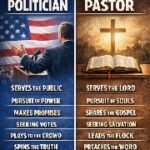 𝗣𝗢𝗟𝗜𝗧𝗜𝗖𝗦 𝗢𝗥 𝗣𝗥𝗘𝗔𝗖𝗛𝗜𝗡𝗚? — 𝗪𝗛𝗢 𝗔𝗥𝗘 𝗬𝗢𝗨 𝗧𝗥𝗨𝗦𝗧𝗜𝗡𝗚?
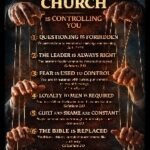 𝟳 𝗦𝗜𝗚𝗡𝗦 𝗔 𝗖𝗢𝗡𝗧𝗥𝗢𝗟𝗟𝗜𝗡𝗚 𝗖𝗛𝗨𝗥𝗖𝗛
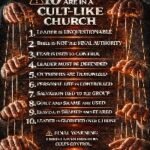 𝟭𝟬 𝗦𝗜𝗚𝗡𝗦 𝗬𝗢𝗨 𝗔𝗥𝗘 𝗜𝗡 𝗔 𝗖𝗨𝗟𝗧-𝗟𝗜𝗞𝗘 𝗖𝗛𝗨𝗥𝗖𝗛
 𝗛𝗢𝗪 𝗧𝗢 𝗦𝗣𝗢𝗧 𝗔 𝗙𝗔𝗞𝗘 𝗣𝗔𝗦𝗧𝗢𝗥
 𝗟𝗘𝗔𝗗𝗘𝗥𝗦𝗛𝗜𝗣 𝗦𝗧𝗔𝗥𝗧𝗦 𝗛𝗘𝗥𝗘: 𝗦𝗘𝗥𝗩𝗜𝗡𝗚 𝗟𝗜𝗞𝗘 𝗖𝗛𝗥𝗜𝗦𝗧
 𝗧𝗛𝗘 𝗣𝗔𝗨𝗟𝗜𝗡𝗘 𝗣𝗔𝗧𝗧𝗘𝗥𝗡 𝗢𝗙 𝗔 𝗚𝗢𝗗𝗟𝗬 𝗛𝗨𝗦𝗕𝗔𝗡𝗗
 𝗡𝗜𝗡𝗘 𝗗𝗔𝗡𝗚𝗘𝗥 𝗦𝗜𝗚𝗡𝗦 𝗢𝗙 𝗔 𝗕𝗔𝗗 𝗣𝗔𝗦𝗧𝗢𝗥
 𝗪𝗛𝗢 𝗛𝗢𝗟𝗗𝗦 𝗬𝗢𝗨𝗥 𝗟𝗢𝗬𝗔𝗟𝗧𝗬?
 𝗜𝗦 𝗜𝗧 𝗣𝗢𝗦𝗦𝗜𝗕𝗟𝗘 𝗧𝗛𝗔𝗧 𝗔 𝗣𝗔𝗦𝗧𝗢𝗥 𝗜𝗦 𝗨𝗡𝗦𝗔𝗩𝗘𝗗?