
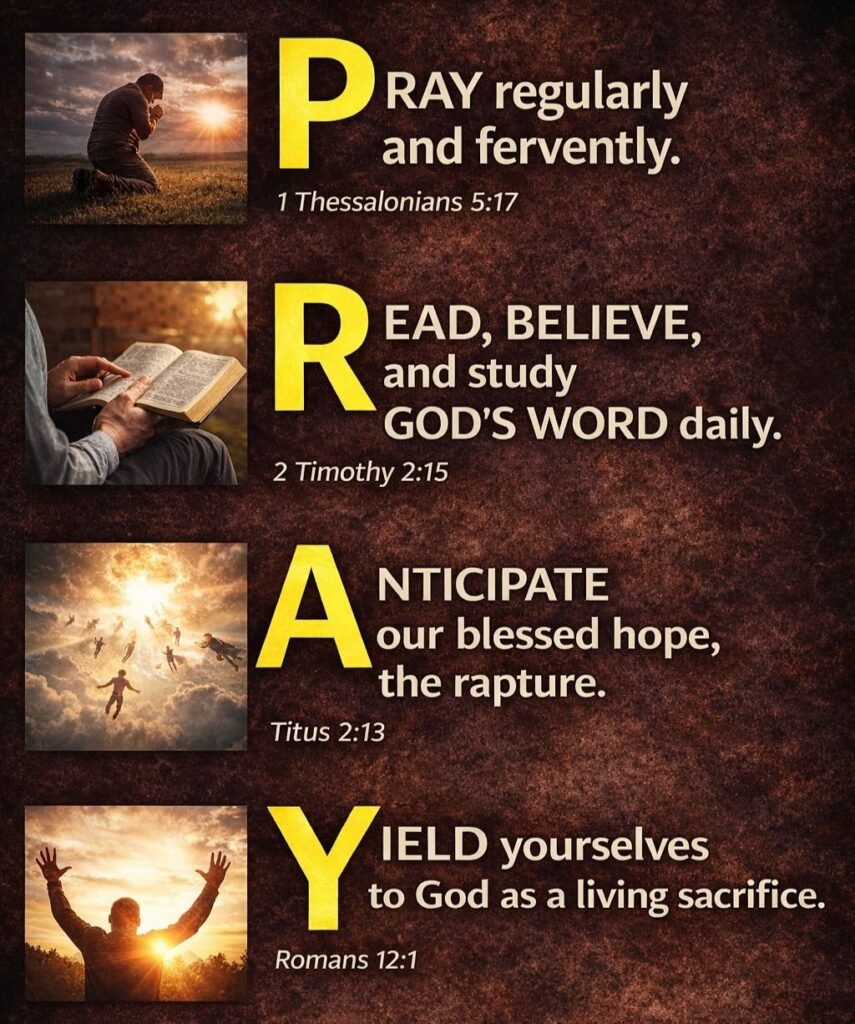
PRAY: A Pauline Pattern for the Body of Christ
“Continue in prayer, and watch in the same with thanksgiving.”
— Colossians 4:2 (KJV)
Prayer is one of the most familiar practices in Christianity—and yet one of the most misunderstood. For many believers, prayer has become a place of striving, pleading, or emotional bargaining with God. It is often framed as an effort to persuade heaven to act, to change circumstances, or to move a reluctant God into intervention. But when prayer is viewed through the lens of Pauline revelation, that entire framework shifts.
In this present dispensation of grace, prayer is not about convincing God to do something He has not already done. It is about aligning the believer with what God has accomplished in Christ. Paul does not teach prayer as spiritual negotiation. He teaches prayer as confident communion flowing from a settled position. When believers misunderstand who they are in Christ, prayer becomes anxious and repetitive. When they understand their position, prayer becomes restful, bold, and effective.
Paul’s letters reveal a pattern of prayer radically different from much of modern religious practice. His prayers are not rooted in fear, uncertainty, or desperation. They are grounded in assurance, identity, and hope. He writes not to people trying to earn God’s favor, but to those who already possess it fully. This distinction is critical. Prayer under law sounds very different from prayer under grace. And only one of those approaches reflects God’s current administration.
To pray according to grace, believers must first abandon the idea that prayer is a mechanism for achieving acceptance. Acceptance is already secured. Justification is complete. Peace with God is settled. Prayer does not repair a broken relationship; it expresses a living one.
Paul’s instruction to “pray without ceasing” is often misunderstood as a call to constant verbal repetition. In reality, it describes a posture of continual communion. Prayer, in Paul’s understanding, is not an event scheduled into the day but a relational awareness that permeates it. It is the recognition that the believer lives every moment in the presence of God, not occasionally approaching Him from a distance.
This kind of prayer flows naturally from grace. It is not driven by panic or pressure, but by dependence. It is not ritualistic or formalistic, but relational. The believer prays not because something is wrong, but because fellowship is ongoing. Grace prayer emerges from security, not fear. It assumes access rather than pleading for it.
That access is one of the defining truths of Pauline doctrine. Paul writes to the Ephesians that believers have boldness and access with confidence by the faith of Christ. This is a staggering statement when understood in its historical and theological context. Under previous dispensations, access to God was limited, mediated, and conditional. Priests stood between the people and God. Fear accompanied approach. Distance was emphasized.
Grace removes that distance entirely. Christ Himself is the mediator, and He is not approached through ritual or hierarchy. The believer stands before God accepted, welcomed, and secure. Prayer, therefore, is not timid. It is confident—not because of the believer’s worthiness, but because of Christ’s finished work. Grace eliminates intimidation. There is no need to soften God with words or posture. The believer prays boldly because their position is settled.
This confidence reshapes not only how believers pray, but how they think about prayer’s purpose. Under grace, thanksgiving takes precedence over petition. Paul instructs believers to bring their requests to God with thanksgiving, not after thanksgiving. Gratitude is not a polite conclusion to prayer; it is its foundation.
Thanksgiving reflects faith. It acknowledges that God’s will is good, that His work is complete, and that His purposes are unfolding according to divine wisdom. When thanksgiving precedes supplication, anxiety loses its power. Peace follows gratitude, not because circumstances immediately change, but because perspective does.
Grace prayer thanks God not merely for what He might do, but for what is already true. Forgiveness is complete. Righteousness is imputed. Eternal life is secure. The believer is seated in heavenly places in Christ. These realities do not fluctuate with emotion or circumstance. When prayer begins with thanksgiving for these truths, it becomes anchored rather than reactive.
However, prayer shaped by grace requires Scripture to be understood correctly. Wrong doctrine inevitably produces wrong prayer. Paul’s exhortation to rightly divide the word of truth is not academic; it is deeply practical. When believers pray promises made to Israel, or plead for blessings already given, prayer becomes confused and frustrating.
Paul is the apostle to the Gentiles in this present age, and his letters reveal how grace governs prayer today. When believers attempt to pray according to legal or prophetic frameworks, they often find themselves asking God to do what He is not currently doing or seeking signs He has not promised. Grace truth clarifies expectation. It anchors prayer in what God is doing now, not what He did under previous administrations.
Understanding right division does not limit prayer; it liberates it. It removes false expectations and replaces them with confidence. It allows believers to pray in alignment with God’s revealed will rather than in contradiction to it.
This alignment produces rest. One of the most striking features of Pauline prayer is its absence of striving. Paul writes that believers are justified by faith and therefore have peace with God. Peace is not the result of successful prayer; it is the foundation of it. There is no condemnation hanging over the believer’s head. No unresolved guilt. No pending judgment.
Prayer, then, is not an attempt to regain peace. It flows from peace already secured. Grace prayer rests in the finished work of Christ. It does not wrestle God into agreement. It trusts that God’s work is sufficient and His purposes are wise.
This resting posture does not produce passivity. On the contrary, it produces expectancy. Paul repeatedly directs believers toward the blessed hope—the appearing of Jesus Christ. This future reality shapes present prayer. Grace believers do not pray merely with earthly outcomes in view. They pray with eternity in mind.
The expectation of Christ’s return purifies motive. It lifts prayer above immediate gratification and grounds it in long-term purpose. The believer who lives in light of the rapture prays differently—not with despair over a broken world, but with hope rooted in coming glory. Prayer becomes forward-looking rather than reactionary.
This eternal perspective requires renewed thinking. Paul urges believers not to be conformed to this world, but to be transformed by the renewing of the mind. Prayer is directly affected by mindset. Flesh-driven thinking produces selfish, anxious prayer. Spirit-renewed thinking produces submissive, confident prayer.
The mind saturated with grace truth prays in harmony with God’s will. It does not demand outcomes; it trusts purposes. Transformation of thinking precedes transformation of prayer. When believers think rightly about God, they pray rightly to God.
This renewed mindset naturally leads to willing surrender. Paul’s call to present the body as a living sacrifice is not coercive. It is voluntary. Grace never forces obedience. It invites response. Prayer, in this sense, becomes an act of yielding rather than resistance.
The believer does not surrender in order to be accepted. They surrender because they are accepted. This distinction preserves joy and removes compulsion. Grace-motivated obedience flows from gratitude, not fear. Prayer becomes the place where surrender is expressed, not extracted.
As this pattern of prayer takes root, it inevitably manifests in daily life. Paul prays that believers would walk worthy of the Lord, being fruitful in every good work. Prayer is not isolated from conduct; it informs it. Doctrine shapes devotion, and devotion shapes direction.
True prayer produces a transformed walk. Not perfection, but progression. Not performance, but fruitfulness. When believers pray according to grace, their lives begin to reflect grace. Patience deepens. Love matures. Purpose clarifies. Christ is magnified.
This is the practical outcome of Pauline prayer. It does not withdraw believers from life; it equips them to live it meaningfully. It does not create religious isolation; it produces spiritual stability.
The tragedy is that many believers continue to pray as though they are still under law—approaching God as servants rather than sons, pleading rather than trusting, striving rather than resting. This posture robs prayer of its joy and believers of their confidence.
Paul’s revelation calls believers to something better. To pray from identity, not insecurity. To pray from position, not performance. To pray as those already seated with Christ, not those trying to climb toward Him.
Prayer in this dispensation is grounded in Christ’s finished work, shaped by Paul’s revelation, and fueled by the blessed hope. It is fellowship, not fear. It is rest, not wrestling. It is alignment, not negotiation.
When believers understand who they are in Christ, prayer becomes powerful—not because words are persuasive, but because truth is settled. It becomes peaceful—not because circumstances comply, but because identity is secure. It becomes productive—not because effort increases, but because grace governs.
The invitation is simple, but transformative. Pray according to grace, not law. Study Pauline doctrine with intention. Live consciously in light of Christ’s return. Yield fully, willingly, joyfully.
Do not pray like a beggar. Pray like a son.
And in doing so, discover that prayer was never meant to burden the believer—but to anchor them in grace, hope, and truth.
“Let us therefore come boldly unto the throne of grace, that we may obtain mercy, and find grace to help in time of need.”
— Hebrews 4:16 (KJV)
Related posts:
 𝗧𝗛𝗘 𝗣𝗢𝗪𝗘𝗥 𝗢𝗙 𝗣𝗥𝗔𝗬𝗘𝗥
 𝗧𝗛𝗘 𝗣𝗥𝗔𝗬𝗘𝗥 𝗢𝗙 𝗣𝗔𝗨𝗟, 𝗢𝗨𝗥 𝗣𝗔𝗧𝗧𝗘𝗥𝗡
 𝗖𝗛𝗔𝗥𝗚𝗘 𝗬𝗢𝗨𝗥 𝗦𝗢𝗨𝗟 𝗟𝗜𝗞𝗘 𝗬𝗢𝗨 𝗖𝗛𝗔𝗥𝗚𝗘 𝗬𝗢𝗨𝗥 𝗣𝗛𝗢𝗡𝗘
 𝗗𝗘𝗙𝗘𝗔𝗧𝗜𝗡𝗚 𝗧𝗛𝗘 𝗦𝗧𝗥𝗢𝗡𝗚𝗛𝗢𝗟𝗗𝗦 𝗧𝗛𝗔𝗧 𝗧𝗔𝗥𝗚𝗘𝗧 𝗬𝗢𝗨
 𝗧𝗛𝗘 𝗥𝗔𝗣𝗧𝗨𝗥𝗘: 𝗙𝗢𝗥 𝗕𝗘𝗟𝗜𝗘𝗩𝗘𝗥𝗦, 𝗡𝗢𝗧 𝗥𝗘𝗟𝗜𝗚𝗜𝗢𝗡
 𝗪𝗛𝗢 𝗜𝗦 𝗝𝗘𝗦𝗨𝗦?
 𝗟𝗢𝗪 𝗕𝗔𝗧𝗧𝗘𝗥𝗬 𝗦𝗢𝗨𝗟 𝘃𝘀 𝗙𝗨𝗟𝗟𝗬 𝗖𝗛𝗔𝗥𝗚𝗘𝗗 𝗦𝗢𝗨𝗟
 𝗧𝗛𝗘 𝟳 𝗕𝗟𝗘𝗦𝗦𝗜𝗡𝗚𝗦 𝗢𝗙 𝗧𝗛𝗘 𝗛𝗢𝗟𝗬 𝗦𝗣𝗜𝗥𝗜𝗧
 𝗪𝗢𝗥𝗟𝗗𝗟𝗬 𝗖𝗛𝗥𝗜𝗦𝗧𝗜𝗔𝗡 𝘃𝘀. 𝗦𝗣𝗜𝗥𝗜𝗧𝗨𝗔𝗟 𝗖𝗛𝗥𝗜𝗦𝗧𝗜𝗔𝗡
 𝗕𝗘𝗟𝗜𝗘𝗩𝗘𝗥’𝗦 𝗕𝗔𝗧𝗧𝗟𝗘𝗙𝗜𝗘𝗟𝗗 𝗢𝗙 𝗧𝗛𝗘 𝗠𝗜𝗡𝗗
 𝗪𝗢𝗥𝗞𝗦 𝗢𝗙 𝗧𝗛𝗘 𝗙𝗟𝗘𝗦𝗛 𝘃𝘀 𝗙𝗥𝗨𝗜𝗧𝗦 𝗢𝗙 𝗧𝗛𝗘 𝗦𝗣𝗜𝗥𝗜𝗧
 𝗧𝗛𝗘 𝗕𝗥𝗔𝗜𝗡 𝗠𝗨𝗦𝗧 𝗕𝗘 𝗪𝗔𝗧𝗘𝗥𝗘𝗗 𝗪𝗜𝗧𝗛 𝗧𝗛𝗘 𝗪𝗢𝗥𝗗 𝗢𝗙 𝗚𝗢𝗗 𝗗𝗔𝗜𝗟𝗬
 𝗚𝗢𝗗 𝗔𝗡𝗗 𝗠𝗔𝗡: 𝗥𝗜𝗚𝗛𝗧𝗟𝗬 𝗗𝗜𝗩𝗜𝗗𝗘𝗗 𝗗𝗘𝗦𝗜𝗚𝗡
 𝗜𝗡𝗙𝗟𝗨𝗘𝗡𝗖𝗜𝗡𝗚 𝗢𝗧𝗛𝗘𝗥𝗦 𝗧𝗢 𝗛𝗔𝗧𝗘: 𝗧𝗛𝗘 𝗦𝗣𝗜𝗥𝗜𝗧𝗨𝗔𝗟 𝗗𝗔𝗡𝗚𝗘𝗥