INTRODUCTION: WHEN “GOSPEL” NO LONGER MEANS GOOD NEWS
The word gospel appears constantly in Christian vocabulary. It is preached from pulpits, printed on banners, shared in tracts, and echoed across digital platforms. Yet the Bible issues a sobering warning: not every message labeled “gospel” is actually good news—and not every gospel saves.
The Apostle Paul did not mince words on this subject. Writing to the churches in Galatia, he warned that even if an angel from heaven preached a different gospel than the one he delivered, that messenger was to be rejected outright. “But though we, or an angel from heaven, preach any other gospel unto you than that which we have preached unto you, let him be accursed” (Galatians 1:8, KJV).
That warning raises an unavoidable question for modern believers: Which gospel is God proclaiming today?
Dispensationalism does not ask this question to divide Christians unnecessarily. It asks it because Scripture demands clarity. Throughout the Bible, God reveals truth progressively, administering His purposes in different ways at different times. Confusion arises when those distinctions are ignored, when messages meant for one audience are imposed on another, and when grace is mixed with law.
At stake is not theological preference, but eternal destiny.
1. THE PERIL OF A PERVERTED GOSPEL
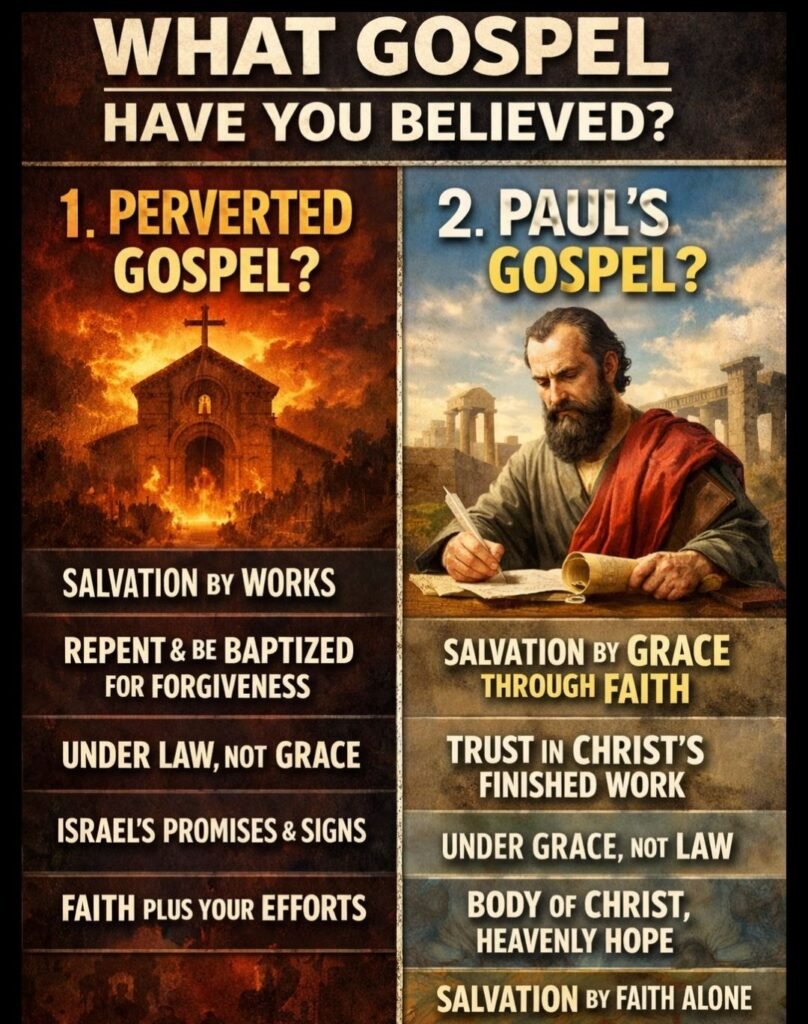
Paul describes false gospels not as harmless variations, but as perversions. “Which is not another; but there be some that trouble you, and would pervert the gospel of Christ” (Galatians 1:7, KJV). A perverted gospel does not openly deny Christ—it subtly alters His work.
The most common distortion is the addition of human effort to divine grace. When works are introduced as a requirement for justification, grace ceases to be grace. Paul states this unequivocally: “If by grace, then is it no more of works” (Romans 11:6, KJV).
Scripture also warns of deceptive ministers who present themselves as servants of righteousness while proclaiming a corrupted message. “For such are false apostles, deceitful workers, transforming themselves into the apostles of Christ” (2 Corinthians 11:13, KJV). The danger is not merely doctrinal error—it is eternal condemnation.
A gospel that cannot justify the sinner before God is not good news at all. According to Romans 10:3, Israel failed to attain righteousness because they sought it by works rather than by faith. The same error persists today whenever grace is diluted.
2. THE PROBLEM OF PERFORMANCE-BASED SALVATION
Human nature gravitates toward performance. Earning feels safer than trusting. Yet Scripture repeatedly dismantles the idea that salvation can be achieved through moral effort, religious observance, or personal reform.
“Not by works of righteousness which we have done, but according to his mercy he saved us” (Titus 3:5, KJV).
Performance-based salvation may appear spiritually disciplined, but it produces one of two outcomes: pride or panic. Those who believe they are succeeding boast in their obedience. Those who recognize their failure live in constant fear of falling short. Neither state reflects the peace promised in Christ.
Paul confronted believers who attempted to mix faith with works, asking bluntly: “Are ye so foolish? having begun in the Spirit, are ye now made perfect by the flesh?” (Galatians 3:3, KJV).
Partial faith is not biblical faith. Faith that relies even partially on self-effort undermines the sufficiency of Christ’s finished work. The cross either fully accomplished salvation—or it did not. Scripture insists that it did.
3. ISRAEL’S PAST PROGRAM: A DIFFERENT ADMINISTRATION
One of the most overlooked causes of gospel confusion is the failure to recognize Israel’s distinct role in biblical history. God’s dealings with Israel under the Law were real, purposeful, and divinely ordained—but they were not designed to be permanent or universal.
Jesus’ earthly ministry was directed explicitly to Israel. He proclaimed, “The kingdom of heaven is at hand” (Matthew 4:17, KJV), offering the promised earthly kingdom foretold by the prophets.
In Acts 2, Peter called Israel to repentance and baptism “for the remission of sins” (Acts 2:38, KJV). Miraculous signs accompanied this message, confirming its divine authority (Mark 16:17).
This was not the gospel of grace revealed later to Paul. It was a kingdom proclamation rooted in covenant promises made to Israel. Attempting to impose Israel’s program onto the present dispensation inevitably produces doctrinal confusion and mixed messages.
4. PAUL’S PECULIAR COMMISSION
The turning point in biblical revelation occurs with the calling of the Apostle Paul. Paul repeatedly emphasized that his apostleship, message, and mission were unique.
“I speak to you Gentiles, inasmuch as I am the apostle of the Gentiles” (Romans 11:13, KJV).
Paul insists that the gospel he preached was not taught by the twelve apostles nor derived from human tradition. “I neither received it of man, neither was I taught it, but by the revelation of Jesus Christ” (Galatians 1:11–12, KJV).
In Ephesians 3:2, Paul identifies his ministry as a dispensation of the grace of God. This was not a continuation of Israel’s kingdom program, but a new administration involving a new entity—the Body of Christ.
Failing to recognize Paul’s unique commission is one of the primary reasons believers struggle to reconcile Scripture.
5. THE PROCLAMATION OF THE PURE GOSPEL
Unlike vague or emotionally driven presentations, the saving gospel for today is clearly defined. Paul does not leave room for ambiguity.
“Moreover, brethren, I declare unto you the gospel… how that Christ died for our sins according to the scriptures; and that he was buried, and that he rose again the third day” (1 Corinthians 15:1–4, KJV).
This gospel rests entirely on Christ’s finished work:
- His death fully satisfied sin’s penalty.
- His burial confirmed the reality of that death.
- His resurrection secured victory over sin and death.
Romans 4:25 explains that Christ was “delivered for our offences, and was raised again for our justification.” Salvation is not a process—it is a completed transaction received by faith.
Any message that shifts the focus from Christ’s work to human performance ceases to be the gospel Paul preached.
6. GRACE, NOT LAW: THE BELIEVER’S PRESENT POSITION
Believers today are not under the Mosaic Law. This is not antinomianism; it is biblical truth. “For ye are not under the law, but under grace” (Romans 6:14, KJV).
Under grace, believers are declared righteous the moment they trust Christ (Romans 5:1). This righteousness is not earned—it is imputed. It is not maintained by works—it is secured by Christ.
Grace does not produce spiritual laziness; it produces peace. Colossians 2:10 states that believers are “complete in him.” Assurance replaces anxiety when salvation rests entirely on Christ’s sufficiency.
7. THE BODY OF CHRIST: A NEW CREATION
Salvation today places believers into something entirely new—the Body of Christ. This is not spiritual Israel, nor a continuation of the old covenant community.
“For by one Spirit are we all baptized into one body” (1 Corinthians 12:13, KJV).
This baptism is spiritual, not ceremonial. It is performed by the Holy Spirit, not by human hands. Believers are immediately blessed with “all spiritual blessings in heavenly places” (Ephesians 1:3, KJV).
The Body of Christ is united by one hope, one calling, and one destiny (Ephesians 4:4). Understanding this identity is essential to understanding the gospel.
8. THE POWER OF RIGHT DIVISION
Paul’s instruction to “rightly divide the word of truth” (2 Timothy 2:15, KJV) is not optional. It is the safeguard against doctrinal confusion.
When Scripture is not rightly divided, commands intended for Israel are misapplied to the Church, and grace is obscured by legalism. Paul reminds believers that God is not the author of confusion (1 Corinthians 14:33).
Romans 11:25 clarifies that Israel’s current blindness is temporary and distinct from God’s present work in the Body of Christ. Mixing these programs produces conflicting expectations and distorted gospels.
9. A HEAVENLY HOPE, NOT AN EARTHLY KINGDOM
The destiny of the Body of Christ is not an earthly kingdom, but a heavenly inheritance. Eternal life is a present possession (Titus 1:2), not a future uncertainty.
Paul reveals the promise of the rapture—the catching away of the Church to meet the Lord in the air (1 Thessalonians 4:16–17). This event is distinct from Israel’s prophetic timeline.
Believers are also promised participation in Christ’s reign (2 Timothy 2:12), not as subjects of an earthly theocracy, but as members of a heavenly body.
CALL TO ACTION: A PERSONAL EXAMINATION
Scripture places responsibility squarely on the individual believer:
- Examine the gospel you believed.
- Believe what God is doing today.
- Trust Christ’s finished work alone.
“Believe on the Lord Jesus Christ, and thou shalt be saved” (Acts 16:31, KJV).
CONCLUSION: TWO GOSPELS, TWO OUTCOMES
There is a perverted gospel that damns.
There is a pure gospel that saves.
Salvation today is by grace alone, through faith alone, in Christ alone. Anything added to that message corrupts it.
FINAL THOUGHTS
- Not every gospel saves
- Not every preacher preaches truth
- Not every verse applies the same way
- Now is the dispensation of grace
“Christ died for our sins” (1 Corinthians 15:3, KJV).
Related posts:
 𝗙𝗥𝗢𝗠 𝗣𝗥𝗢𝗣𝗛𝗘𝗖𝗬 𝗧𝗢 𝗠𝗬𝗦𝗧𝗘𝗥𝗬. 𝗧𝗛𝗘 𝗞𝗘𝗬 𝗧𝗢 𝗨𝗡𝗗𝗘𝗥𝗦𝗧𝗔𝗡𝗗𝗜𝗡𝗚 𝗦𝗖𝗥𝗜𝗣𝗧𝗨𝗥𝗘 – 𝗚𝗢𝗗 𝗜𝗦 𝗡𝗢𝗧 𝗧𝗛𝗘 𝗔𝗨𝗧𝗛𝗢𝗥 𝗢𝗙 𝗖𝗢𝗡𝗙𝗨𝗦𝗜𝗢𝗡!
 𝗚𝗢𝗗 𝗔𝗡𝗗 𝗠𝗔𝗡: 𝗥𝗜𝗚𝗛𝗧𝗟𝗬 𝗗𝗜𝗩𝗜𝗗𝗘𝗗 𝗗𝗘𝗦𝗜𝗚𝗡
 𝗧𝗛𝗘𝗥𝗘 𝗜𝗦 𝗣𝗢𝗪𝗘𝗥 𝗜𝗡 𝗧𝗛𝗘 𝗕𝗟𝗢𝗢𝗗
 𝗧𝗛𝗘 𝗞𝗜𝗡𝗚𝗗𝗢𝗠 𝗚𝗢𝗦𝗣𝗘𝗟 & 𝗧𝗛𝗘 𝗚𝗥𝗔𝗖𝗘 𝗚𝗢𝗦𝗣𝗘𝗟
 𝗜𝗚𝗡𝗢𝗥𝗜𝗡𝗚 𝗧𝗛𝗘 𝗧𝗥𝗨𝗧𝗛 𝗗𝗢𝗘𝗦𝗡’𝗧 𝗖𝗛𝗔𝗡𝗚𝗘 𝗧𝗛𝗘 𝗧𝗥𝗨𝗧𝗛
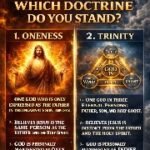 𝗪𝗛𝗜𝗖𝗛 𝗗𝗢𝗖𝗧𝗥𝗜𝗡𝗘 𝗗𝗢 𝗬𝗢𝗨 𝗦𝗧𝗔𝗡𝗗?
 𝗔𝗠𝗘𝗡: 𝗧𝗛𝗘 𝗚𝗥𝗔𝗖𝗘 𝗣𝗔𝗧𝗛 𝗢𝗙 𝗧𝗛𝗘 𝗕𝗢𝗗𝗬 𝗢𝗙 𝗖𝗛𝗥𝗜𝗦𝗧
 𝗧𝗢𝗣 𝗧𝗛𝗥𝗘𝗘 𝗖𝗨𝗟𝗧𝗜𝗖 𝗗𝗢𝗖𝗧𝗥𝗜𝗡𝗘𝗦
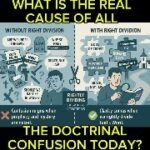 𝗪𝗛𝗔𝗧 𝗜𝗦 𝗧𝗛𝗘 𝗥𝗘𝗔𝗟 𝗖𝗔𝗨𝗦𝗘 𝗢𝗙 𝗔𝗟𝗟 𝗧𝗛𝗘 𝗗𝗢𝗖𝗧𝗥𝗜𝗡𝗔𝗟 𝗖𝗢𝗡𝗙𝗨𝗦𝗜𝗢𝗡 𝗧𝗢𝗗𝗔𝗬?
 𝗧𝗛𝗘 𝗗𝗢𝗖𝗧𝗥𝗜𝗡𝗘 𝗢𝗙 𝗧𝗛𝗘 𝗧𝗥𝗜𝗡𝗜𝗧𝗬
 𝗧𝗛𝗘 𝗖𝗥𝗢𝗦𝗦: 𝗚𝗢𝗗’𝗦 𝗣𝗢𝗪𝗘𝗥 𝗙𝗢𝗥 𝗦𝗔𝗟𝗩𝗔𝗧𝗜𝗢𝗡
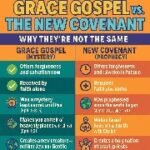 𝗥𝗜𝗚𝗛𝗧𝗟𝗬 𝗗𝗜𝗩𝗜𝗗𝗜𝗡𝗚 𝗧𝗛𝗘 𝗚𝗥𝗔𝗖𝗘 𝗚𝗢𝗦𝗣𝗘𝗟 𝗙𝗥𝗢𝗠 𝗧𝗛𝗘 𝗡𝗘𝗪 𝗖𝗢𝗩𝗘𝗡𝗔𝗡𝗧
 𝗚𝗢𝗜𝗡𝗚 𝗧𝗢 𝗧𝗛𝗘 𝗚𝗢𝗦𝗣𝗘𝗟𝗦 𝗜𝗡𝗦𝗧𝗘𝗔𝗗 𝗢𝗙 𝗣𝗔𝗨𝗟’𝗦 𝗚𝗢𝗦𝗣𝗘𝗟
 𝗙𝗔𝗟𝗦𝗘 𝗙𝗥𝗜𝗘𝗡𝗗𝗦: 𝗧𝗛𝗘 𝗗𝗔𝗡𝗚𝗘𝗥 𝗢𝗙 𝗣𝗥𝗘𝗧𝗘𝗡𝗗𝗘𝗗 𝗙𝗘𝗟𝗟𝗢𝗪𝗦𝗛𝗜𝗣