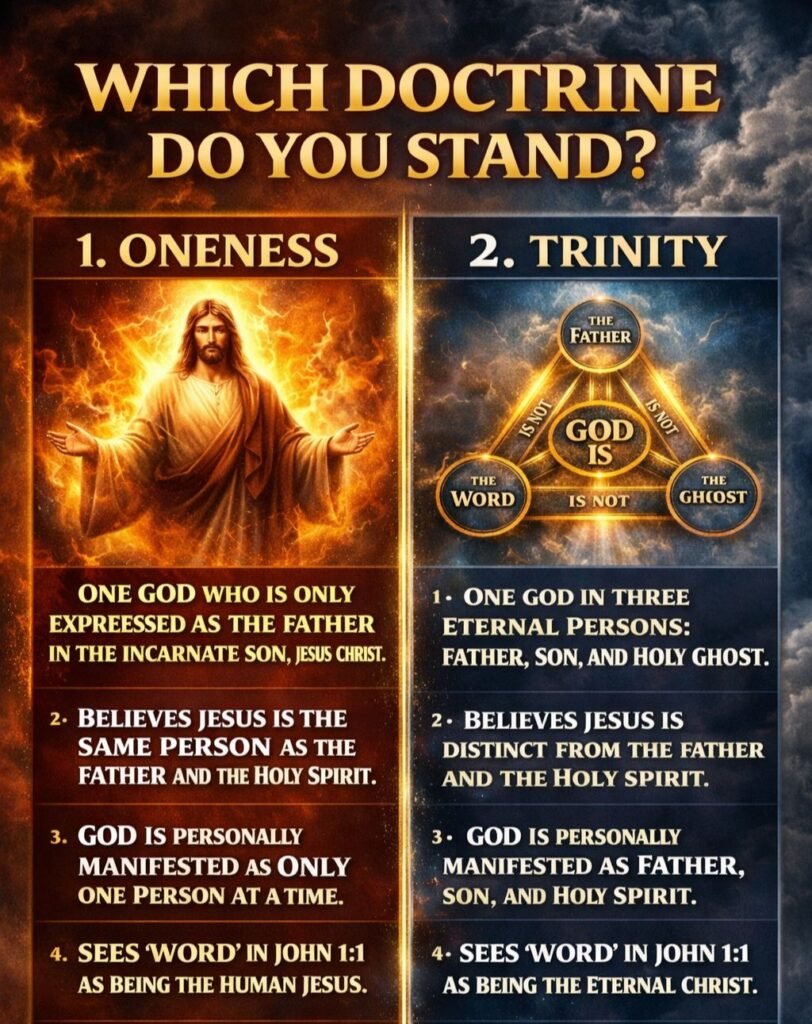
WHICH DOCTRINE DO YOU STAND?
Rightly Dividing Christ, the Godhead, and the Mystery
INTRODUCTION: WHEN DOCTRINE DETERMINES DESTINE
Confusion about the Godhead has never been a minor theological issue. Throughout church history, disputes over who God is have inevitably shaped how salvation is understood, preached, and believed. When doctrine about Christ is distorted, the gospel itself is altered—sometimes subtly, sometimes catastrophically.
Scripture is unambiguous on one point: “For God is not the author of confusion” (1 Corinthians 14:33, KJV). Yet confusion persists, not because the Bible is unclear, but because it is often mishandled. Competing doctrinal systems, theological traditions, and emotional allegiances frequently replace careful biblical study.
Dispensationalism does not attempt to solve these issues through philosophy or church creeds. Instead, it applies a biblical command: “Rightly dividing the word of truth” (2 Timothy 2:15, KJV). This article examines the doctrine of God, the identity of Jesus Christ, and the revelation of the mystery entrusted to the Apostle Paul—asking one pressing question: Which doctrine do you stand on?
1. DECLARATION OF ONE GOD: THE UNCOMPROMISING FOUNDATION
The Bible begins with a clear and uncompromising declaration: there is only one God. This truth is not philosophical monotheism but revealed reality.
“Hear, O Israel: The LORD our God is one LORD” (Deuteronomy 6:4, KJV).
Scripture consistently affirms the singularity of God’s being. Isaiah records God’s own words: “I am the LORD, and there is none else, there is no God beside me” (Isaiah 45:5, KJV). This is not a numerical argument but a statement of absolute sovereignty. God alone is supreme, unrivaled, and self-existent.
Jesus Himself reinforces this understanding when He declares that “God is a Spirit” (John 4:24, KJV). God is not composed of divisible material parts. He is not fragmented or distributed across space. The unity of God’s essence is foundational to biblical theology.
Any doctrine that compromises this singularity—by multiplying gods or dividing divine substance—stands in direct contradiction to Scripture.
2. DISTINCTION WITHIN THE GODHEAD: REVELATION WITHOUT DIVISION
While the Bible affirms one God, it also reveals distinctions within the Godhead. These distinctions are not philosophical constructs but biblical observations.
The Father sends the Son: “But when the fulness of the time was come, God sent forth his Son” (Galatians 4:4, KJV).
The Son intercedes to the Father: “Who also maketh intercession for us” (Romans 8:34, KJV).
The Spirit indwells believers: “If so be that the Spirit of God dwell in you” (Romans 8:9, KJV).
These are not poetic metaphors. They are functional and relational distinctions revealed in Scripture. The Father is not the Son. The Son is not the Spirit. Yet all are fully God, sharing the same divine essence.
Biblical Christianity affirms distinction without division—a unity of being with a plurality of persons. This balance guards against both polytheism and doctrinal reductionism.
3. THE DENIAL OF MODALISM: A NECESSARY CORRECTION
Modalism, often expressed in modern “Oneness” theology, teaches that God is a single person who manifests in different modes—sometimes as Father, sometimes as Son, sometimes as Spirit. While this view claims to protect monotheism, it collapses under biblical scrutiny.
At Jesus’ baptism, all three are present simultaneously:
- The Son is baptized.
- The Spirit descends like a dove.
- The Father speaks from heaven.
“And lo a voice from heaven, saying, This is my beloved Son” (Matthew 3:16–17, KJV).
In John 17, Jesus prays to the Father. This is not theatrical role-play. It is real communication between distinct persons. Furthermore, Jesus promises another Comforter—the Holy Spirit—who will come after Him (John 14:16).
Modalism cannot account for these passages without forcing Scripture into contradiction. In doing so, it creates confusion not only about the Godhead but about the gospel itself.
4. THE WORD OF JOHN 1:1 — ETERNAL AND PERSONAL
“In the beginning was the Word, and the Word was with God, and the Word was God” (John 1:1, KJV).
This verse has been debated for centuries, yet its meaning is precise. The Word did not begin at Bethlehem. The Word existed eternally. The Word was with God, indicating distinction. The Word was God, affirming full deity.
Paul reinforces this truth: “For by him were all things created” (Colossians 1:16, KJV). Creation is the work of God alone. If all things were created by the Word, the Word cannot be a created being.
The Word became flesh (John 1:14), but He did not begin there. Jesus Christ is the eternal Word manifested in time—not a temporary mode, not a lesser deity, but God Himself revealed.
5. THE DEITY OF JESUS CHRIST: EQUAL, NOT IDENTICAL
Jesus Christ is fully God, yet He is not the Father.
Paul writes: “God was manifest in the flesh” (1 Timothy 3:16, KJV). This is not symbolic language. It is a doctrinal assertion.
Hebrews states that the Son “sat down on the right hand of the Majesty on high” (Hebrews 1:3, KJV). One does not sit beside oneself. The distinction is explicit.
Philippians 2:6 explains that Christ was “equal with God”—not identical as a person, but equal in nature. This distinction preserves both the deity of Christ and the relational structure revealed in Scripture.
Any doctrine that collapses the Father and Son into one person ultimately distorts the atonement, intercession, and mediatorial work of Christ.
6. DISPENSATIONAL REVELATION OF THE MYSTERY: PAUL’S UNIQUE COMMISSION
A critical dividing line in Scripture is the revelation of the mystery given to the Apostle Paul.
Paul describes this mystery as “kept secret since the world began” (Romans 16:25, KJV). This truth was not revealed to the prophets, not taught by Christ during His earthly ministry, and not known in previous ages.
In Ephesians 3:2–6, Paul explains that the Body of Christ—Jew and Gentile united in one new man—is distinct from Israel’s kingdom program. This is not replacement theology. It is distinction by divine design.
Paul’s ministry emphasizes grace, not law; heavenly position, not earthly kingdom; faith alone, not covenant signs. Acts 20:24 defines his gospel as “the gospel of the grace of God.”
Failing to recognize this dispensational distinction results in doctrinal confusion and misplaced application.
7. DELIVERANCE THROUGH THE TRUE GOSPEL: WHY DOCTRINE MATTERS
The gospel is not vague. Paul defines it clearly:
“How that Christ died for our sins… was buried… and rose again the third day” (1 Corinthians 15:1–4, KJV).
A false Christ produces a false gospel. Paul warns of “another Jesus” and “another gospel” (2 Corinthians 11:4, KJV). Doctrinal errors about Christ’s identity inevitably corrupt the message of salvation.
Salvation is by grace alone through faith alone: “Not of works, lest any man should boast” (Ephesians 2:8–9, KJV). Any system that adds human effort, ritual, or law-keeping undermines grace. Doctrine is not academic—it is eternal.
8. DISCERNMENT BY RIGHT DIVISION: THE BIBLICAL SAFEGUARD
Paul instructs believers to be “approved workmen” through study—not emotion or tradition (2 Timothy 2:15).
When Scripture is not rightly divided, commands given to Israel are imposed on the Church, and kingdom doctrine is confused with grace doctrine. Paul warns against this mixture in 1 Corinthians 10:32, identifying three distinct groups: Jews, Gentiles, and the Church of God.
Romans 11:25 further clarifies that Israel’s blindness is temporary, and God’s program with the Body of Christ is distinct.
Right division preserves clarity, coherence, and confidence in Scripture.
9. THE DESTINY OF SOUND DOCTRINE: ASSURANCE, STABILITY, HOPE
Right doctrine produces right assurance.
Believers are “seated… in heavenly places in Christ Jesus” (Ephesians 2:6, KJV). This is positional truth, not emotional experience.
Sound doctrine prevents believers from being “tossed to and fro” by every new teaching (Ephesians 4:14, KJV). It grounds faith in truth rather than trends.
Ultimately, it leads to glory: “Christ in you, the hope of glory” (Colossians 1:27, KJV).
CALL TO ACTION: A NECESSARY EXAMINATION
Scripture commands believers to examine doctrine:
- Examine what you believe.
- Believe what the Bible says.
- Trust the Christ of Scripture—not tradition.
“Prove all things; hold fast that which is good” (1 Thessalonians 5:21, KJV).
CONCLUSION: DOCTRINE IS NOT OPTIONAL
Doctrine determines direction.
Who God is determines how God saves.
Confusion about the Godhead always leads to confusion about grace.
This is not about winning theological debates—it is about standing on biblical truth in an age of doctrinal compromise.
FINAL THOUGHTS
- Truth must be rightly divided
- Christ must be biblically defined
- Grace must be purely preached
- Now is the dispensation of grace
“Christ in you, the hope of glory” (Colossians 1:27, KJV).
Related posts:
 𝗧𝗛𝗘 𝗛𝗢𝗟𝗬 𝗧𝗥𝗜𝗡𝗜𝗧𝗬
 “𝗜 𝗔𝗡𝗗 𝗠𝗬 𝗙𝗔𝗧𝗛𝗘𝗥 𝗔𝗥𝗘 𝗢𝗡𝗘”
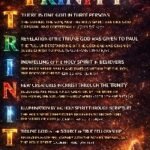 𝗧𝗛𝗘 𝗗𝗢𝗖𝗧𝗥𝗜𝗡𝗘 𝗢𝗙 𝗧𝗛𝗘 𝗧𝗥𝗜𝗡𝗜𝗧𝗬
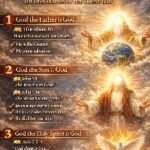 𝗧𝗛𝗘 𝗥𝗘𝗩𝗘𝗟𝗔𝗧𝗜𝗢𝗡 𝗢𝗙 𝗧𝗛𝗘 𝗧𝗥𝗜𝗡𝗜𝗧𝗬
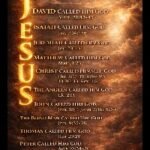 𝗪𝗛𝗢 𝗦𝗔𝗬𝗦 𝗝𝗘𝗦𝗨𝗦 𝗖𝗛𝗥𝗜𝗦𝗧 𝗜𝗦 𝗚𝗢𝗗?
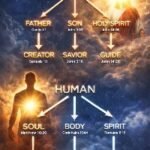 𝗚𝗢𝗗 𝗔𝗡𝗗 𝗠𝗔𝗡: 𝗥𝗜𝗚𝗛𝗧𝗟𝗬 𝗗𝗜𝗩𝗜𝗗𝗘𝗗 𝗗𝗘𝗦𝗜𝗚𝗡
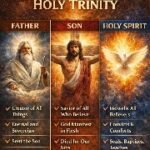 𝗧𝗛𝗘 𝗛𝗢𝗟𝗬 𝗧𝗥𝗜𝗡𝗜𝗧𝗬 — 𝗢𝗡𝗘 𝗚𝗢𝗗, 𝗧𝗛𝗥𝗘𝗘 𝗣𝗘𝗥𝗦𝗢𝗡𝗦
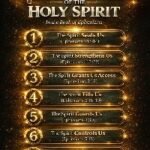 𝗧𝗛𝗘 𝟳 𝗕𝗟𝗘𝗦𝗦𝗜𝗡𝗚𝗦 𝗢𝗙 𝗧𝗛𝗘 𝗛𝗢𝗟𝗬 𝗦𝗣𝗜𝗥𝗜𝗧
 𝗚𝗛𝗢𝗦𝗧𝗦 𝗔𝗥𝗘𝗡’𝗧 𝗗𝗘𝗔𝗗 𝗣𝗘𝗢𝗣𝗟𝗘 — 𝗧𝗛𝗘𝗬’𝗥𝗘 𝗗𝗘𝗠𝗢𝗡𝗦
 𝗧𝗛𝗘 𝗕𝗥𝗔𝗜𝗡 𝗠𝗨𝗦𝗧 𝗕𝗘 𝗪𝗔𝗧𝗘𝗥𝗘𝗗 𝗪𝗜𝗧𝗛 𝗧𝗛𝗘 𝗪𝗢𝗥𝗗 𝗢𝗙 𝗚𝗢𝗗 𝗗𝗔𝗜𝗟𝗬
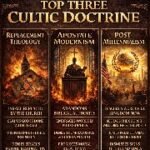 𝗧𝗢𝗣 𝗧𝗛𝗥𝗘𝗘 𝗖𝗨𝗟𝗧𝗜𝗖 𝗗𝗢𝗖𝗧𝗥𝗜𝗡𝗘𝗦
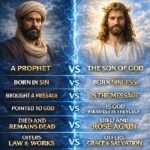 𝗠𝗨𝗛𝗔𝗠𝗠𝗔𝗗 𝗩𝗦. 𝗝𝗘𝗦𝗨𝗦 𝗖𝗛𝗥𝗜𝗦𝗧 — 𝗔 𝗠𝗔𝗧𝗧𝗘𝗥 𝗢𝗙 𝗧𝗥𝗨𝗧𝗛, 𝗡𝗢𝗧 𝗧𝗥𝗔𝗗𝗜𝗧𝗜𝗢𝗡
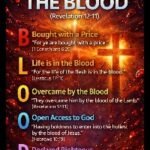 𝗧𝗛𝗘𝗥𝗘 𝗜𝗦 𝗣𝗢𝗪𝗘𝗥 𝗜𝗡 𝗧𝗛𝗘 𝗕𝗟𝗢𝗢𝗗
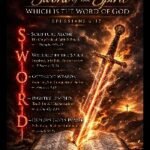 𝗧𝗛𝗘 𝗦𝗪𝗢𝗥𝗗 𝗢𝗙 𝗧𝗛𝗘 𝗦𝗣𝗜𝗥𝗜𝗧 — 𝗧𝗛𝗘 𝗪𝗢𝗥𝗗 𝗢𝗙 𝗚𝗢𝗗