
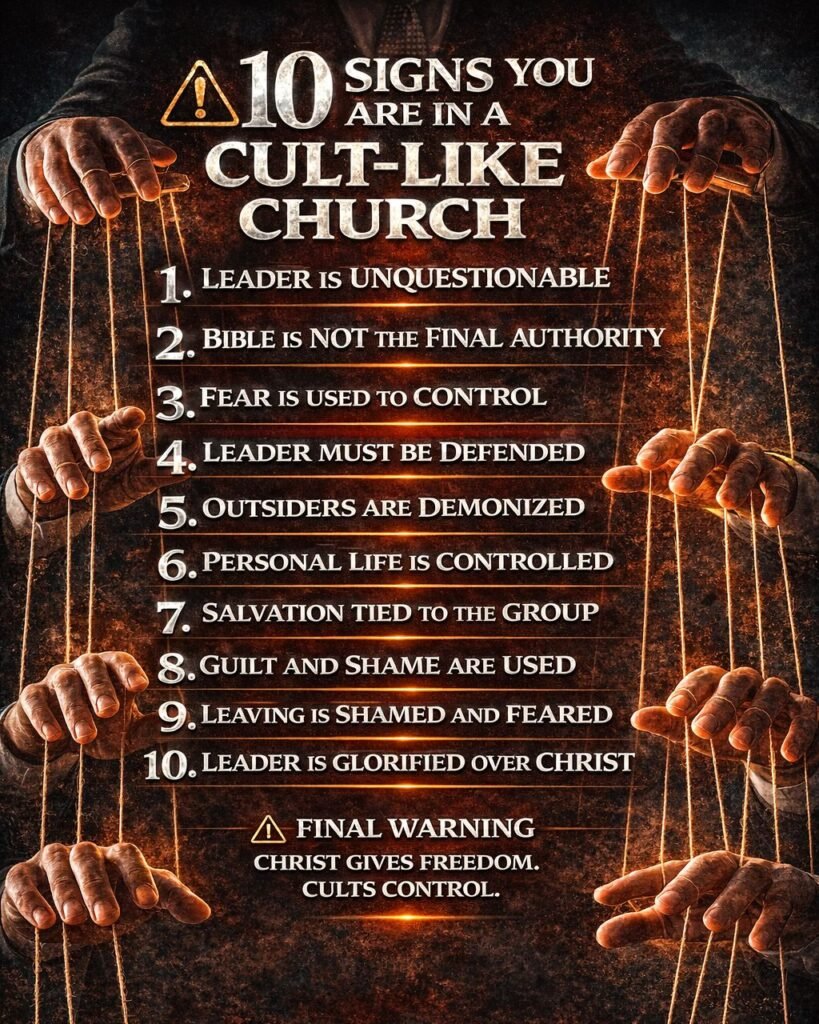
The forensic audit of human religious history reveals a recurring pathology wherein the divine architecture of the church is hijacked by terrestrial ambitions, resulting in the creation of high-control systems that mimic the form of godliness while denying the power thereof. Within the specialized framework of the current Administration of Grace, the believer’s standing is defined by a radical and categorical shift from the bondage of the law and human tradition to the perfect liberty found in the Lord Jesus Christ. Galatians 5:1 provides the diagnostic baseline for this investigative report: “Stand fast therefore in the liberty wherewith Christ hath made us free, and be not entangled again with the yoke of bondage.” This report asserts that any ecclesiastical structure which prioritizes the consolidation of human power over the spiritual emancipation of the believer has departed from the blueprints of the Mystery committed to the Apostle Paul. Under the light of rightly divided Scripture, the investigator identifies that a cult-like church replaces the Headship of Christ with the tyranny of men, utilizing a sophisticated array of psychological and spiritual manipulations to maintain an unscriptural hegemony over the conscience of the saint.
The primary indicator of a spiritually dangerous environment is the presence of Unquestionable Leadership, a condition where the fallibility of the human agent is systematically denied or suppressed. Acts 17:11 establishes the professional standard for the congregation, noting that the Bereans were “more noble than those in Thessalonica, in that they received the word with all readiness of mind, and searched the scriptures daily, whether those things were so.” In a healthy administrative setting, the leadership encourages the workman to test all things. However, a cult-like system views scriptural inquiry as a form of rebellion. By rejecting accountability and discouraging members from testing doctrine (1 Thessalonians 5:21), the leadership creates a vacuum of transparency. The investigator finds that when a leader is perceived as beyond correction, as seen in the clinical example of Paul withstanding Peter in Galatians 2:11, the church has entered a state of judicial imbalance that threatens the foundational principle of the priesthood of all believers.
A secondary finding in this investigative audit involves the marginalization of the Word of God as the final authority for faith and practice. 2 Timothy 3:16 asserts that “All scripture is given by inspiration of God, and is profitable for doctrine, for reproof, for correction, for instruction in righteousness.” In spiritually abusive systems, this divine objective standard is often replaced by the subjective decrees of a “Bishop” or a charismatic founder. Colossians 2:8 issues a sharp warning: “Beware lest any man spoil you through philosophy and vain deceit, after the tradition of men, after the rudiments of the world, and not after Christ.” The investigator identifies that when traditions are elevated above the text, the truth is inevitably twisted to maintain the power of the organization. Mark 7:13 describes this forensic failure as “Making the word of God of none effect through your tradition.”
The report further identifies the utilization of Fear as a primary tool of administrative control. 2 Timothy 1:7 confirms that “God hath not given us the spirit of fear; but of power, and of love, and of a sound mind.” Manipulation in a cult-like church often operates through the threat of spiritual curses, the loss of divine blessings, or the terrifying prospect of losing one’s salvation if one departs from the group. This investigative data suggests a reversal of the gospel of grace; instead of being “delivered from the power of darkness” (Colossians 1:13), the believer is placed back under a spirit of bondage to fear (Romans 8:15). Fear acts as an emotional shackle that prevents the saint from exercising their liberty in Christ, making them susceptible to the whims of an intimidating leadership that claims to hold the keys to their spiritual well-being.
The fifth sign, the Defense of the Leader Above Truth, reveals a shift in loyalty from the Person of Christ to the persona of the human representative. 1 Corinthians 3:4 records the forensic danger of saying, “I am of Paul; and I of Apollos,” noting that such carnal focus results in a divided and weakened body. In high-control groups, the devotion of the congregation is funneled toward a specific personality, creating a culture of celebrity that obscures the finished work of the Savior. The investigator find that in these systems, doctrine is often shaped by the leader’s personal opinion rather than the sound words of our Lord Jesus Christ. 2 Timothy 4:3 warns of a time when men “will not endure sound doctrine; but after their own lusts shall they heap to themselves teachers, having itching ears.” When the defense of a man becomes more important than the defense of the truth, the organization has ceased to be a church and has become a cult of personality.
A diagnostic review of the group’s relationship with the world reveals the Demonization of Outsiders as a key isolation tactic. John 7:24 commands believers to “Judge not according to the appearance, but judge righteous judgment.” Cult-like systems, however, create an “us versus them” mentality, labeling anyone outside the group—including other genuine Christians—as enemies of God or agents of deception. This isolation is designed to prevent members from being exposed to outside teaching that might challenge the group’s narrative. 1 John 4:1 commands the believer to “try the spirits whether they are of God,” a mandate that requires a degree of spiritual openness and discernment that is impossible in a closed, demonizing system. Isolation is not the mark of holiness, but the mark of a system that fears the light of external scrutiny.
The investigation further identifies the Control of Personal Life as a fundamental breach of the believer’s autonomy. 1 Corinthians 7:23 provides the forensic boundary: “Ye are bought with a price; be not ye the servants of men.” Cult-like churches frequently attempt to dictate personal decisions regarding relationships, finances, and career choices. By crossing these spiritual boundaries, the leadership attempts to micromanage the walk of the saint, replacing the internal leading of the Spirit with external, unscriptural dictates. 2 Corinthians 9:7 establishes the grace principle for giving: “Every man according as he purposeth in his heart, so let him give; not grudgingly, or of necessity: for God loveth a cheerful giver.” When giving or lifestyle choices are enforced by a central authority, the believer’s personal accountability to God (Romans 14:12) is subverted by a human hierarchy.
The eighth diagnostic marker is the claim that Salvation is Tied to the Group. Ephesians 2:8–9 provides the definitive legal baseline for the current dispensation: “For by grace are ye saved through faith; and that not of yourselves: it is the gift of God: Not of works, lest any man should boast.” Cults often introduce a subtle or overt requirement that membership in their specific organization is necessary for salvation. This is a direct assault on the sufficiency of Christ’s work and the simplicity of the gospel found in Acts 16:31: “Believe on the Lord Jesus Christ, and thou shalt be saved.” By linking salvation to rituals, works, or institutional loyalty, these groups replace the free gift of God with a contract of human bondage, effectively preaching “another gospel” which is not another (Galatians 1:6–8).
The audit of internal emotional dynamics reveals the use of Guilt and Shame Manipulation as an enforcement mechanism. Romans 8:1 declares a total cessation of judicial condemnation: “There is therefore now no condemnation to them which are in Christ Jesus.” A cult-like church, however, operates on a platform of constant shame, utilizing the believer’s conscience as a weapon against them. Grace is replaced with condemnation to ensure compliance and silence dissent. The investigator notes that this gaslighting of the believer’s spiritual experience produces a state of powerlessness and dependence that is the antithesis of the “spirit of power” promised in 2 Timothy 1:7. The gospel is meant to bring freedom from guilt, not to provide the tools for its exploitation.
A critical sign of institutional danger is the fact that Leaving is Shamed and Feared. Galatians 5:13 notes that believers are “called unto liberty,” yet in high-control groups, the exit path is blocked by threats of divine retribution or social ostracization. Former members are often demonized as apostates or rebels to prevent current members from contacting them. This behavior mimics the actions of Diotrephes in 3 John 9–10, who “loveth to have the preeminence” and “casteth them out of the church.” The investigator finds that a healthy assembly recognizes that its members belong to the Lord, and their departure—while perhaps saddening—should not be treated as a spiritual crime. Christ gives the believer the freedom to come and go; cults treat their members as captives.
The final and most damning indicator is the Idolizing of the Leader Over Christ. Colossians 1:18 establishes the cosmic order: “And he is the head of the body, the church: who is the beginning, the firstborn from the dead; that in all things he might have the preeminence.” The ultimate sign of a cult is when the identity of the group is tied more closely to the leader than to the Savior. When the influence of a man outweighs the authority of Scripture, and when the importance of the organization exceeds the glory of Christ, the system has become an idol. 1 Corinthians 3:7 reminds the workman that “neither is he that planteth any thing, neither he that watereth; but God that giveth the increase.” Any leader who takes the glory for themselves or demands the worship due only to Christ is a thief and a robber in the house of God.
The investigative summary concludes that the Body of Christ is called to walk in a state of spiritual vigilance. 2 Corinthians 3:17 declares, “Now the Lord is that Spirit: and where the Spirit of the Lord is, there is liberty.” A true biblical church is characterized by the preaching of the gospel of grace, the honoring of the final authority of Scripture, and the promotion of individual freedom in Christ. Cults enslave the mind and the soul; Christ liberates them. The investigator finds that the “Mystery” revealed to Paul is the ultimate antidote to cultic control, as it establishes the believer’s direct access to the Father through the Head, without the need for human mediators or institutional gatekeepers.
A call to action is issued for every saint to conduct a forensic audit of their spiritual environment. Ask yourself today: Is Christ truly the center of my church, or is it a man? Is Scripture the final authority, or is it a set of extra-biblical traditions? Is the atmosphere one of freedom and grace, or one of fear and manipulation? Acts 17:11 remains the gold standard for the believer’s protection: “These were more noble than those in Thessalonica, in that they received the word with all readiness of mind, and searched the scriptures daily, whether those things were so.” Stand in the gospel of grace, examine everything by the Word, and follow Christ alone—not controlling systems.
The forensic data regarding “Spiritual Edification” (Ephesians 4:12) reveals that the Body grows only when it is fed a diet of sound doctrine. In a controlling environment, the “joints” of the Body are frozen by the demands of a centralized hierarchy, preventing the organic growth of the individual. The investigator find that true spiritual maturity is only possible in an environment where the believer is free to operate according to the “measure of the gift of Christ.” Control stultifies growth; grace facilitates it. A workman who is constantly under the thumb of a human system will never develop the “full assurance of understanding” necessary to stand in these dark days.
Furthermore, the investigation into “The Law of Liberty” (James 1:25) confirms that our freedom in Christ is the greatest safeguard against deception. The investigator notes that those who are most susceptible to cultic control are often those who lack a clear understanding of their positional standing in Christ. When you know who you are in the Lord—justified, sanctified, and sealed—you cannot be easily manipulated by the threats of men. The audit shows that the most resilient believers are those who have mastered the Pauline epistles and recognize that they are “complete in him, which is the head of all principality and power” (Colossians 2:10).
The audit of “Ministerial Accountability” shows that every member of the Body has the right and responsibility to examine the doctrine of the assembly. 1 John 4:1 warns, “Beloved, believe not every spirit, but try the spirits whether they are of God: because many false prophets are gone out into the world.” This is a clinical necessity for the protection of the flock. A church that refuses to be “tried” by the Word of God is a church that has something to hide. The investigator concludes that the transparency of leadership and the encouragement of independent study are the primary hallmarks of a grace-centered assembly.
The final word of this investigative report is a reminder that you were bought with the blood of Christ. You do not belong to a pastor, a denomination, or a religious tradition. You belong to the Lord. Any system that tries to own your conscience or dictate your life is an intruder in the temple of God. Stand in the truth, study the Word rightly divided, and follow the Savior who has made you free. The investigation is finished. The signs are clear. Let the believer walk in liberty.
The investigative findings are summarized for final review:
- Unquestionable Leadership: Rejection of accountability is a primary sign of danger (Galatians 2:11).
- Bible Not Final Authority: Human traditions and decrees replace the inspired Word (Colossians 2:8).
- Fear-Based Control: Manipulation through threats and intimidation is unbiblical (2 Timothy 1:7).
- Defending the Leader: Loyalty to men over Christ creates spiritual blindness (1 Corinthians 1:12).
- Outsiders Demonized: Isolation prevents discernment and healthy scrutiny (1 John 4:1).
- Personal Life Control: The lordship of men over private decisions is a breach of liberty (1 Corinthians 7:23).
- Group-Linked Salvation: Membership must never replace the free gift of grace (Ephesians 2:8-9).
- Guilt and Shame: Condemnation is used to enforce obedience and silence questioning (Romans 8:1).
- Shamed Departure: The demonization of those who leave is a mark of captivity (Galatians 5:13).
- Idolizing Men: Christ alone must have preeminence in the local assembly (Colossians 1:18).
The case for “10 Signs You Are in a Cult-Like Church” is closed. The data is provided for the protection of the saint and the glory of the Lord. May the God of all grace grant you the discernment to recognize the truth and the courage to stand in the liberty wherewith Christ hath made us free. Amen.
Related posts:
 𝗟𝗜𝗚𝗛𝗧 𝗦𝗛𝗜𝗡𝗘𝗦 𝗜𝗡 𝗧𝗛𝗘 𝗗𝗔𝗥𝗞𝗡𝗘𝗦𝗦
 𝗦.𝗪.𝗢.𝗥.𝗗. — 𝗧𝗛𝗘 𝗪𝗢𝗥𝗗 𝗢𝗙 𝗚𝗢𝗗
 𝗧𝗛𝗘 𝗦𝗪𝗢𝗥𝗗 𝗢𝗙 𝗧𝗛𝗘 𝗦𝗣𝗜𝗥𝗜𝗧 — 𝗧𝗛𝗘 𝗪𝗢𝗥𝗗 𝗢𝗙 𝗚𝗢𝗗
 𝟳 𝗦𝗜𝗚𝗡𝗦 𝗔 𝗖𝗢𝗡𝗧𝗥𝗢𝗟𝗟𝗜𝗡𝗚 𝗖𝗛𝗨𝗥𝗖𝗛
 𝗧𝗛𝗘 𝗧𝗥𝗜𝗖𝗛𝗢𝗧𝗢𝗠𝗬 𝗢𝗙 𝗠𝗔𝗡
 𝗦𝗬𝗠𝗕𝗢𝗟𝗦 𝗢𝗙 𝗧𝗛𝗘 𝗪𝗢𝗥𝗗 𝗢𝗙 𝗚𝗢𝗗
 𝗧𝗛𝗘 𝗙𝗜𝗡𝗔𝗟 𝗔𝗨𝗧𝗛𝗢𝗥𝗜𝗧𝗬 — 𝗧𝗛𝗘 𝗪𝗢𝗥𝗗 𝗢𝗙 𝗚𝗢𝗗
 𝗢𝗡𝗟𝗬 𝗢𝗡𝗘 𝗘𝗠𝗣𝗧𝗬 𝗧𝗢𝗠𝗕
 𝗕𝗘𝗟𝗜𝗘𝗩𝗘𝗥’𝗦 𝗕𝗔𝗧𝗧𝗟𝗘𝗙𝗜𝗘𝗟𝗗 𝗢𝗙 𝗧𝗛𝗘 𝗠𝗜𝗡𝗗
 𝗧𝗛𝗘 𝗛𝗢𝗟𝗬 𝗧𝗥𝗜𝗡𝗜𝗧𝗬
 𝗛𝗢𝗪 𝗚𝗢𝗗 𝗗𝗘𝗖𝗟𝗔𝗥𝗘𝗦 𝗔 𝗦𝗜𝗡𝗡𝗘𝗥 𝗥𝗜𝗚𝗛𝗧𝗘𝗢𝗨𝗦
 𝗧𝗛𝗘 𝗖𝗥𝗢𝗦𝗦: 𝗚𝗢𝗗’𝗦 𝗣𝗢𝗪𝗘𝗥 𝗙𝗢𝗥 𝗦𝗔𝗟𝗩𝗔𝗧𝗜𝗢𝗡
 𝗔𝗟𝗖𝗢𝗛𝗢𝗟 — 𝗗𝗘𝗦𝗧𝗥𝗢𝗬𝗘𝗥 𝗢𝗙 𝗠𝗔𝗡𝗬 𝗟𝗜𝗩𝗘𝗦
 𝗧𝗛𝗘𝗥𝗘 𝗜𝗦 𝗣𝗢𝗪𝗘𝗥 𝗜𝗡 𝗧𝗛𝗘 𝗕𝗟𝗢𝗢𝗗 𝗢𝗙 𝗝𝗘𝗦𝗨𝗦 𝗖𝗛𝗥𝗜𝗦𝗧